100+ Blog Examples for Students: Templates & Ideas (2026)

A blank page rarely means you've run out of creativity. Usually it means you haven't figured out what you're actually trying to say.
When students search for examples of student blogs, they're typically wrestling with four questions at once:
- What's worth writing about in the first place?
- How do I lay this thing out?
- Do I write like a friend, a scholar, or a professional?
- Will any of this matter for my coursework, applications, or future job hunt?
This guide answers all four. You'll see live blog examples from real student writers at Princeton, Stanford, Duke, and others. You'll find 111 blog title ideas sorted by theme. And you'll walk away with six fill-in-the-blanks templates designed to take you from blank page to working draft in well under an hour.
No long preambles. No academic theory. Just student blog examples you can put to work right now.
Why Student Blogs Matter More in 2026
The student blog has outgrown the diary phase. These sites pull real weight now.
Universities around the world publish student-written posts covering campus tours, daily routines, international transition stories, advice for incoming students, and reflections on coursework. Some institutions push the model further by hosting research-driven articles authored by their own students — not just casual life updates. The University of London's student blog shows what that approach looks like in practice.
There's a second shift happening: your blog often functions as a public portfolio. Webflow's student portfolio guide suggests showcasing your strongest work for hiring managers using a confident hero section, highlighted projects, written case studies, and a clear call-to-action. The University of Arkansas highlights student ePortfolios as a method for students to express their skill set, experience, and professional voice. In their case study, students who completed the process reported feeling more career-ready simply by going through it.
Advice from writing centers continues to link blogging with stronger writing voice, sharper audience awareness, and greater confidence in your own ideas.
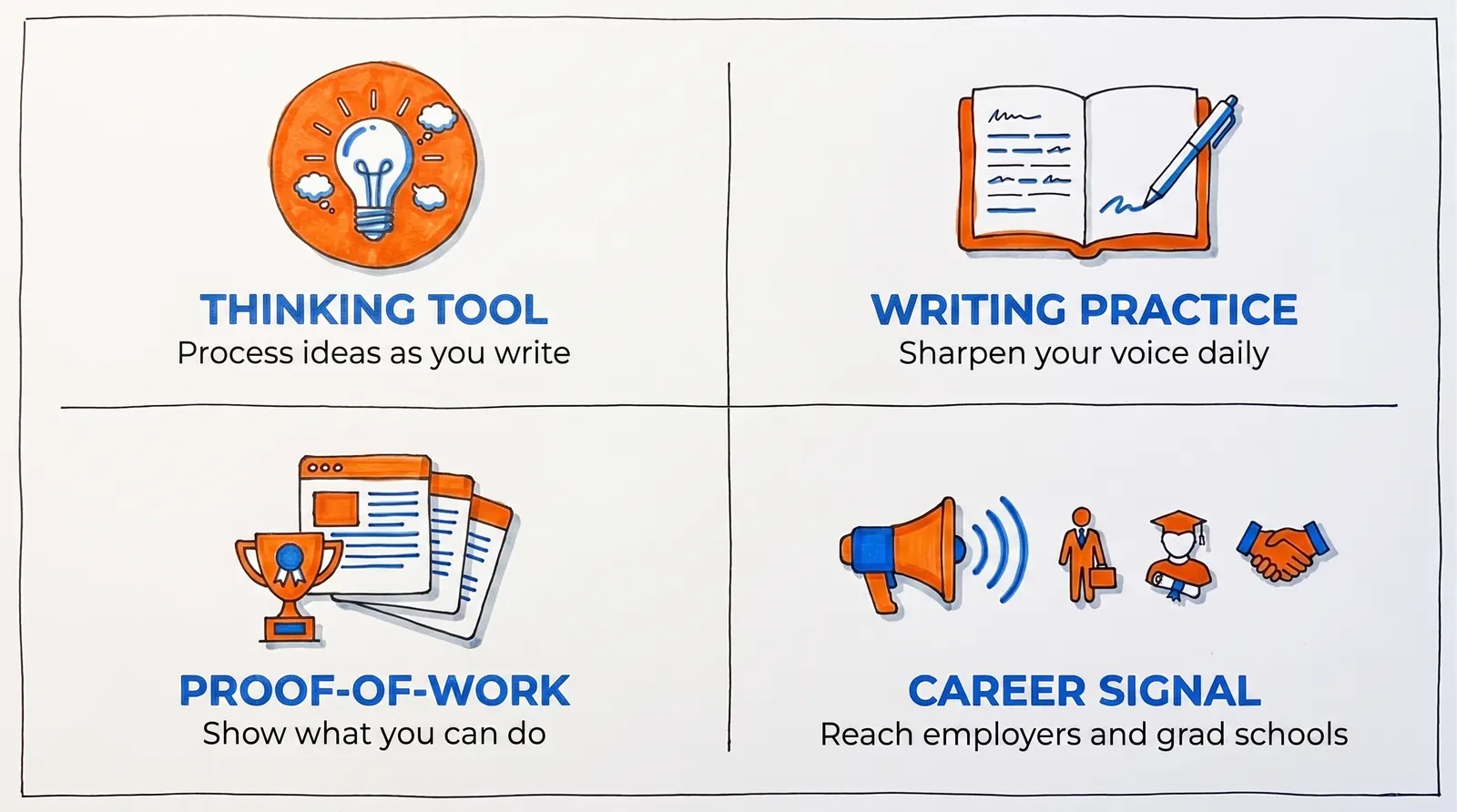
The implications are big. A student blog in 2026 isn't a bonus activity. It can be:
- A space to think where you actually process what you're learning
- A writing gym where your voice gets sharper with reps
- A record of your work that makes your skills visible
- A trust signal for recruiters, professors, and collaborators that you can extract insight from experience
So the question isn't whether to blog. It's which version of a blog will actually serve you. And if you want what you write to reach the people you're writing for, learning the basics of how SEO drives growth and brand awareness early on pays off more than most students expect.
What Makes a Good Student Blog in 2026
UNC's Writing Center reduces topic selection to three overlapping circles: pick something you understand, something you genuinely care about, and something a real person would want to read. Cambridge and Oxford both make the same structural points: an obvious title, a friendly tone, a brief intro, tight body sections, and a closing line that leaves the reader with something to chew on. Wix's March 2026 writing guide layers on a useful insight: real voice beats polished prose. Subheadings and short paragraphs make pieces far more readable than dense blocks of text.Roll all of that together and the strongest student blogs share five qualities:
1. A single, clear purpose
The post understands its own job. It isn't a meandering journal. It isn't trying to do five things at once.
2. A single, clear reader
It speaks to a specific person, not a vague "everyone." Posts that try to serve all students typically end up serving none.
3. Concrete examples
A specific moment beats abstract advice every time. "I parked myself in the library basement every Tuesday for three hours" lands harder than "find somewhere quiet to work."
4. Skimmable structure
A reader scrolling fast can still pick up the message. Subheadings, short paragraphs, and breathing room do most of the work. If you want to see how a well-designed website supports SEO and readability, that's worth a quick detour.
5. Something to walk away with
The reader ends with a lesson, a method, a fresh angle, or an action. Not just a flat "thanks for reading."
University blogging advice tends to keep circling the same use cases. Oxford groups useful posts into student narratives, opinion pieces, in-depth analyses, and explainers. UMW splits content into process/reflection, scholarly commentary, and writing for general audiences.
Strip away the labels and almost every student blog post falls into one of six functional buckets.
6 Types of Student Blog Posts (and When to Use Each)
Before choosing a topic, choose a job. This is the single most important call you'll make for any post — and most students never make it consciously.

1. Reflect: Turn Experience Into a Lesson
Convert what happened into what it meant.
Best for: first-semester stories, burnout pieces, failure narratives, growth arcs, personal essays.
Reflection pieces succeed when you go beyond reporting events and articulate what shifted in how you see things. The story pulls the reader in. The realization is what they remember.
2. Help: Solve a Real Problem for Another Student
Tackle a tangible problem on behalf of another student.
Best for: study methods, budgeting walkthroughs, routines, campus survival guides, how-to posts.
Help posts are the engine of student blogging. They get found in search, they get shared, and they're genuinely useful. Specificity is the secret. "How I Study for Exams Without Pulling All-Nighters" beats "Study Tips" by a mile.
3. Document: Show a Process Over Time
Track a process as it unfolds.
→ Best for: project journals, research logs, semester abroad diaries, day-in-the-life pieces.
Documentation is wildly underrated. You don't need authority or strong takes. You just need to record what you're working on and notice what you're picking up along the way.
4. Explain: Break Down Complex Topics Simply
Convert something dense into something plain.
Best for: concepts from class, lab procedures, research findings, niche subjects in your field.
If you can teach your field to an outsider, you understand it more deeply than people who can only repeat the textbook. Explainer posts also double as great portfolio pieces because they prove both communication chops and subject knowledge.
5. Argue: Take a Position and Back It Up
Stake a position and defend it honestly.
→ Best for: campus debates, education trends, lifestyle conversations, commentary on your field.
A good opinion piece needs a genuine claim (not "this is interesting"), supporting evidence, and a fair confrontation with the most serious objection to your view.
6. Prove: Show Evidence of Skill and Growth
Demonstrate ability, progress, and craft.
Best for: portfolio entries, case studies, internship retrospectives, project breakdowns.
Proof posts are what shift a blog from "hobby" to "career tool." They show what you can make, not just what you can think about. For a sense of how strong portfolio-style content gets structured, check out this guide on building an authority website step by step.
Choose the job first. Then write the title. Most students reverse the order, which is exactly why so many student posts feel fuzzy and generic.
Real Student Blog Examples From Top Universities
These aren't made-up examples. They're current, live blogs from real universities that show what student writing looks like in the wild.
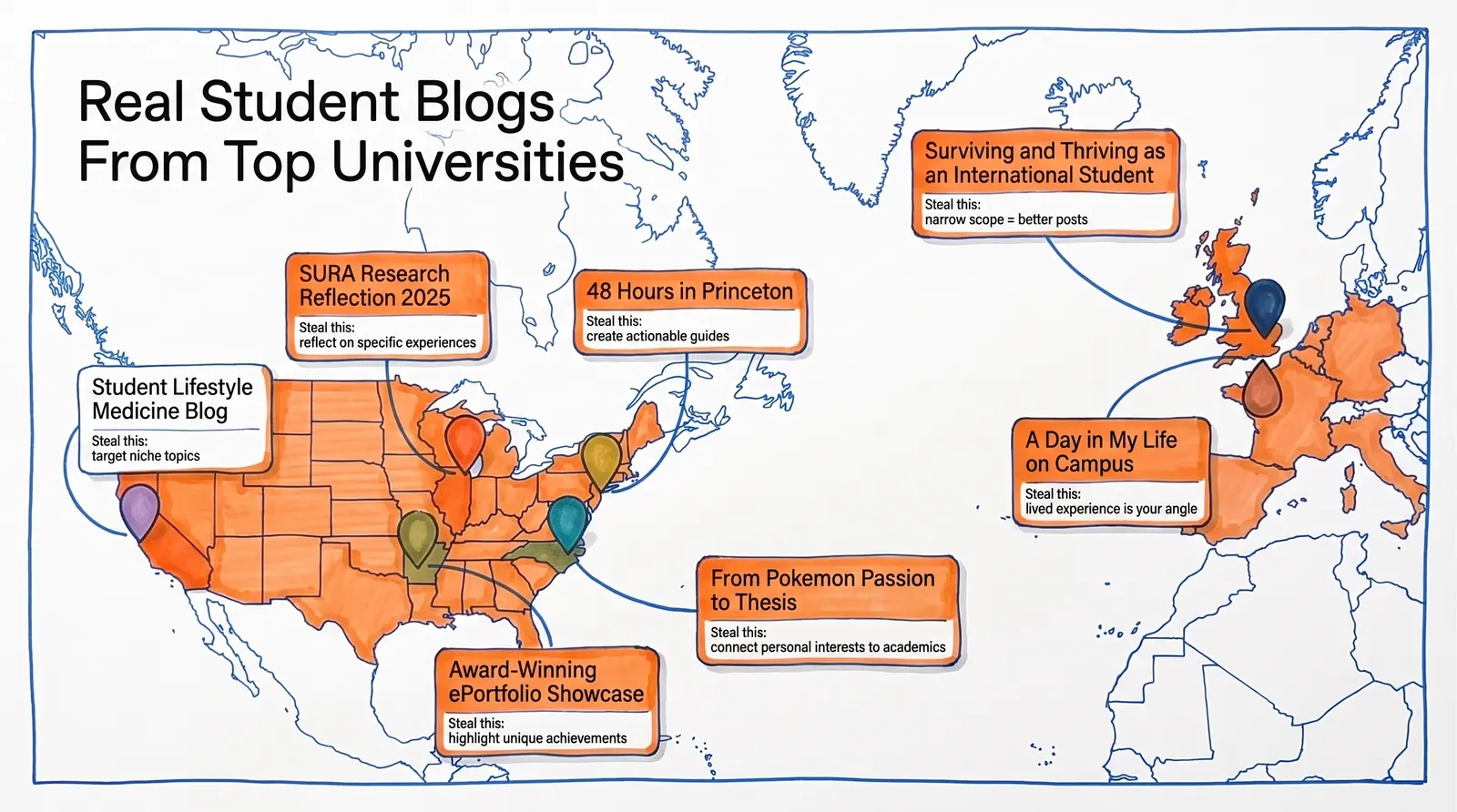
University of London Student Blogs
Current students worldwide share their experience. Steal this: your lived perspective is already a unique angle. Expert status isn't required to write something worth reading.
Bournemouth's "A day in my life on Talbot Campus" and "Immersing myself in UK culture"
These pieces work because they keep the scope tight. One day, one campus, one transition, one feeling. Steal this: small frames make better posts.
Duke MQM's "Surviving and Thriving: Tips for International Students at Fuqua"
A real friction point plus genuine experience equals a useful guide. Steal this: take your hardest adjustment and turn it into advice for whoever comes next.
Anderson University's "My Top Study Tips!"
Straightforward, experience-based study advice. Not fancy. It works because the author has actually used what they're recommending. Steal this: resist the urge to overengineer a simple useful post.
Princeton's "48 Hours in Princeton, NJ"
Hyperlocal, narrowly scoped, practically useful. Steal this: make guides specific enough that someone could actually follow your steps.
Princeton's "From Pokemon Passion to Thesis"
This piece shows how a personal interest can fuel serious academic work. Steal this: build a bridge between hobby and scholarship. That connection is what makes a post stick.
Northwestern's SURA 2025 Student Blog
Research reflection that still reads like a human being wrote it. It covers what the project was, why it mattered, and how it changed the writer. Steal this: describe both the work and your own development inside it.
Stanford Lifestyle Medicine's Student Blog Program
Students writing evidence-driven explainers, not just personal posts. Steal this: students can absolutely write research-backed pieces when they translate the material clearly.
University of Arkansas ePortfolio Winners
These winners show how pulling projects, experiences, and reflections together in one place can reshape your professional self-image. Steal this: your blog can do double duty as a career asset.
For career-oriented student sites, the layout pattern is remarkably consistent. Webflow suggests a confident hero, clear navigation, case studies, featured work, and direct CTAs. A March 2026 Colorlib roundup repeats the same fundamentals: a strong hero, three to five top projects, and an easy contact path.
111 Student Blog Post Ideas and Title Examples
Use them as-is, or swap in your major, city, campus, year, or own story. They're grouped by theme so you can jump straight to what fits.
Personal Stories and Self-Discovery
- What I Wish I'd Known Before My First Week of College
- 7 Things No One Warned Me About Changing Majors
- How I Went From Feeling Lost to Finding My Groove This Semester
- The First Exam I Failed, and What It Taught Me
- Why I Stopped Chasing Productivity All the Time
- What Being a First-Gen Student Actually Feels Like
- How I Learned to Ask for Help Without Feeling Like a Failure
- The Semester I Overcommitted, and What It Taught Me
- What My Part-Time Job Taught Me About Studying
- The Best Decision I Made All Year as a Student
- How My Definition of Success Shifted in College
- A Letter to Past-Me Before Finals Season
Study Habits and Academics
- How I Prep for Exams Without Pulling All-Nighters
- The Note-Taking System That Finally Clicked for Me
- How to Read Academic Papers Without Drowning in Them
- My 5-Step Process for Writing Essays Faster
- The Best Way to Break a Massive Assignment Into Small Steps
- How I Run the Pomodoro Method During Exam Week
- How to Catch Up When You're Already Falling Behind in Class
- 10 Study Mistakes Almost Every Student Makes
- How to Build a Weekly Study Plan You'll Actually Stick To
- The AI Tools I Use for Coursework, and Where I Draw the Line
- How to Prep for Oral Presentations Without Panicking
- What to Actually Do the Night Before a Big Exam
Campus Life and Belonging
- A Day in the Life of a First-Year College Student
- 48 Hours on Campus: My Favorite Cheap, Fun Things to Do
- How I Made Real Friends Without Forcing It
- What Orientation Week Was Really Like
- The Clubs That Unexpectedly Helped Me Grow
- How I Built a Routine After Moving to a New City
- What Living With Roommates Taught Me About Setting Boundaries
- The Hardest Part About Moving Away From Home
- My Honest Take on Campus Events, Clubs, and FOMO
- How I Built a Sense of Belonging in My First Semester
- The Quiet Spots on Campus Where I Actually Get Work Done
- What I Learned From Saying Yes to More Campus Events
High School, Applications, and the Transition
- How I Decided Between Two Colleges
- What I Wish I'd Known in High School Before Applying to College
- How to Build a Student Resume With Nothing Fancy on It
- The Extracurriculars That Helped Me Grow the Most
- How I Wrote My Personal Statement Without Sounding Generic
- What Senior Year Taught Me About Handling Pressure
- How to Pick a Major When You Love Too Many Things
- My College Decision Process, and What Actually Mattered
- Things I Regret Stressing Over During Admissions Season
- A Realistic Plan for Your Last Month Before Starting College
Major-Specific Explainers and Deep Dives
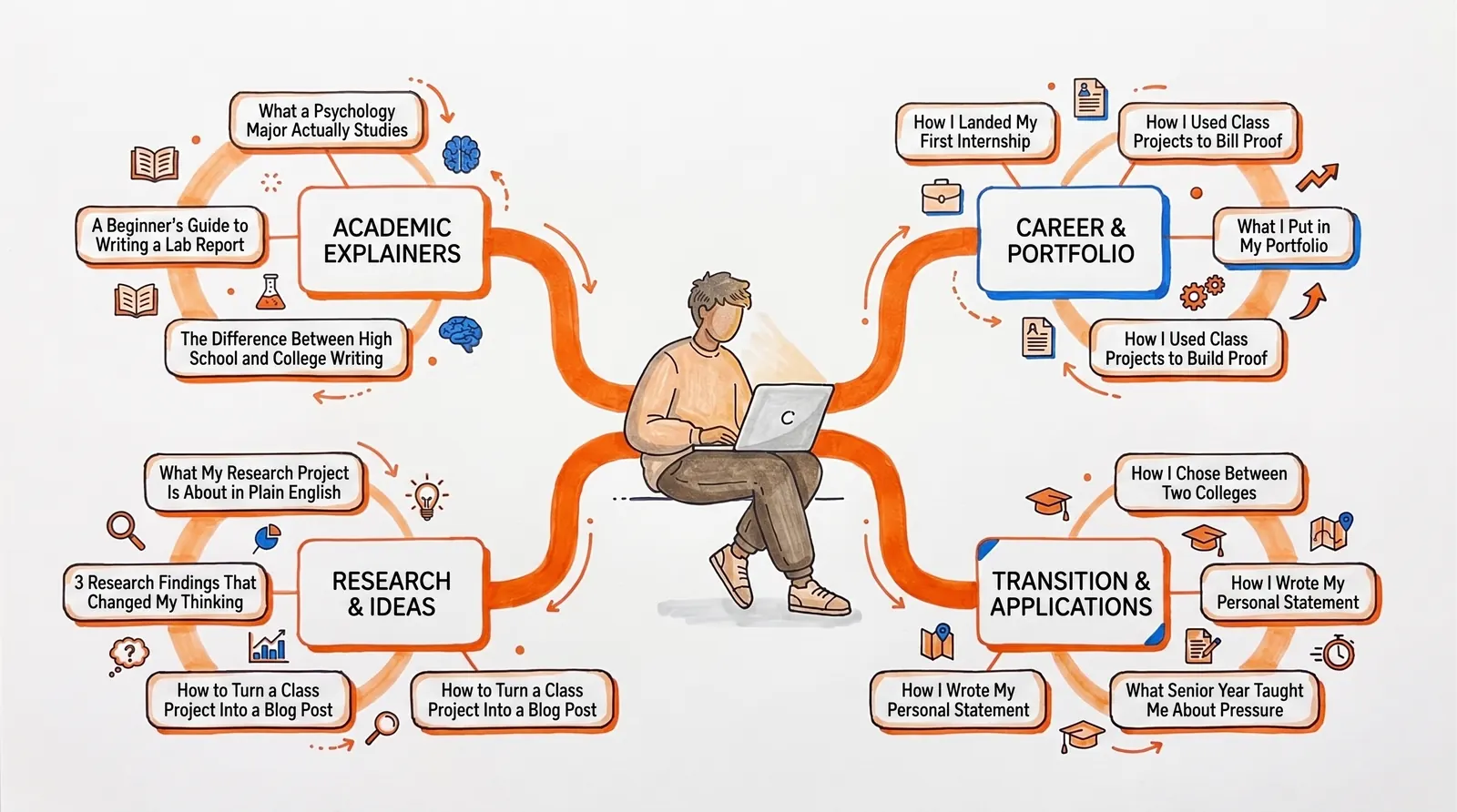
- What a Psychology Major Actually Learns
- A Beginner's Guide to Writing Your First Lab Report
- What I Took Away From My First Coding Class
- The Most Useful Idea I Picked Up in Economics This Year
- How to Survive Your First College Math Course
- A Plain-English Take on [Insert Complex Concept From Your Major]
- The Real Difference Between High School Writing and College Writing
- What a Literature Seminar Actually Feels Like
- 5 Skills I Didn't Expect to Pick Up in [Your Major]
- The Best Classes I've Taken in [Your Department], and Why
- What Research Actually Looks Like in [Your Field]
- How to Explain Your Major to Someone Outside the Field
Research, Ideas, and Big Questions
- What My Research Project Is Actually About, in Plain English
- The Most Interesting Paper I Read All Semester
- A Student's Guide to [Current Issue], Viewed Through [Your Subject]
- What This Semester's Big Debate in [Your Field] Is Actually About
- 3 Research Findings That Shifted How I Think About [Topic]
- Why More Students Should Care About [Topic]
- What Popular Media and AI Summaries Miss About [Academic Topic]
- My Biggest Surprise From Joining a Lab or Research Group
- How to Turn a Class Project Into a Public Blog Post
- What I Learned From Explaining My Research to Non-Specialists
Career, Internships, and Portfolios
- How I Landed My Very First Internship
- What I Actually Put in My Portfolio as a Student
- How I Wrote a Better LinkedIn Without Sounding Cringe
- 5 Networking Lessons I Picked Up the Hard Way
- How I Turned Class Projects Into Professional Proof
- What Recruiters Actually Care About More Than Students Think
- How to Ask for an Informational Interview Without Cringing
- My First Interview Mistakes, and What I'd Do Differently Now
- The Projects That Helped Me Stand Out During Internship Apps
- How to Turn a Class Assignment Into a Portfolio Piece
- What I Learned From Freelancing While in School
- The Personal Website Sections Every Student Should Have in 2026
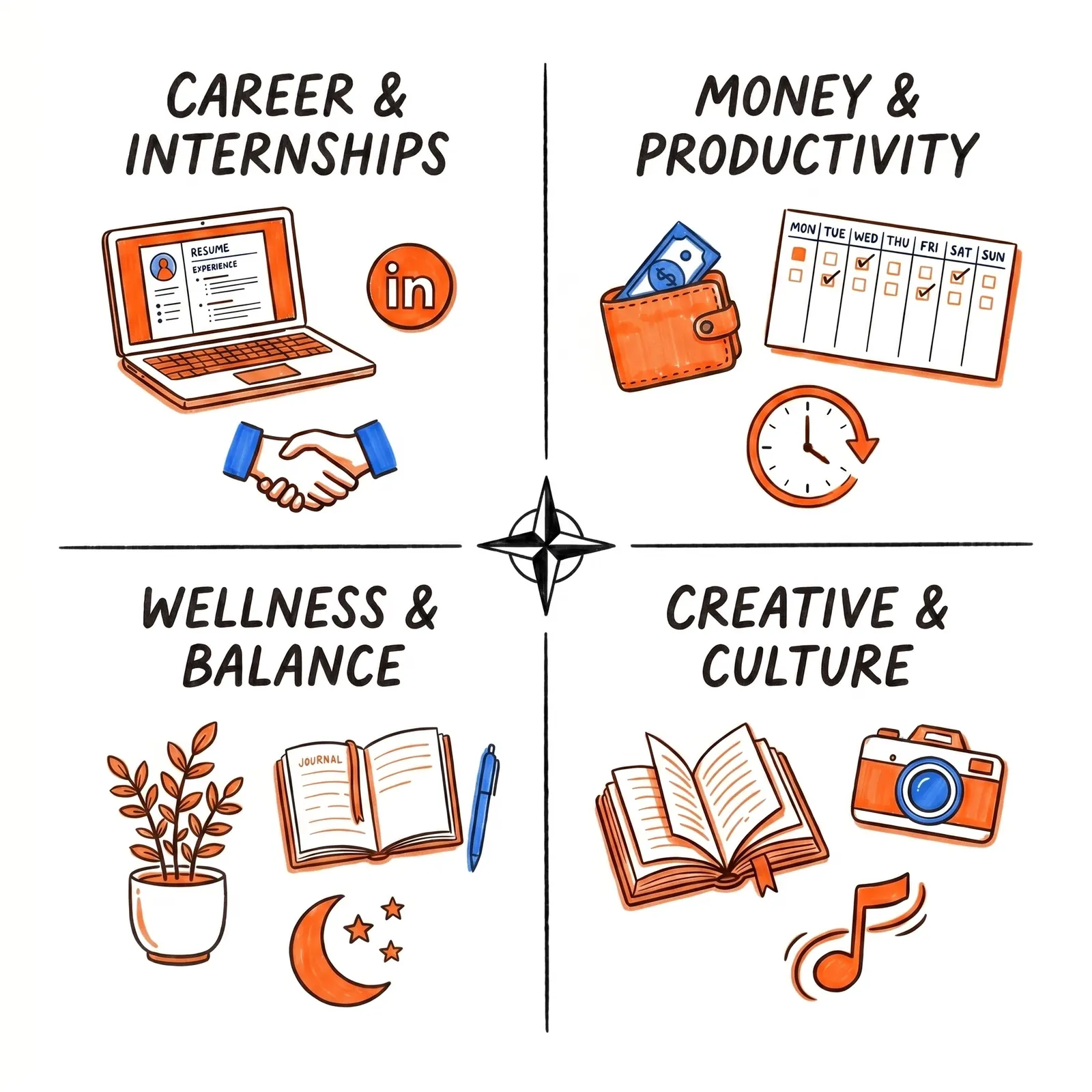
Money, Time, and Life Admin
- How I Budget on a Tight Student Income
- The Cheapest Meals I Actually Enjoy Cooking
- How I Stopped Wasting Money on Tiny Weekly Expenses
- The Productivity Advice That Worked, and What Completely Flopped
- How I Plan My Week When Everything Feels Urgent
- The AI Tools I Actually Use as a Student, and the Ones I Skip
- How to Balance School, Work, and Rest Without Burning Out
- How I Cleaned Up My Online Footprint Before Internship Season
- How I Plan a Busy Week Without Overbooking My Calendar
- The Tiny Habits That Save Me Time Every Day
Wellness, Mental Health, and Balance
- How I Protect My Energy During the Toughest Weeks
- What Burnout Actually Felt Like Before I Admitted It
- 5 Tiny Habits That Lifted My Mood This Semester
- How I Built an Actual Sleep Routine in College
- My Honest Take on Homesickness in College
- What Actually Helped Me Cope With Academic Anxiety
- How I Reset After a Brutal Week
- Why Rest Made Me a Better Student, Not a Slacker
- The Wellness Advice Students Hear Constantly, and What Actually Helps
- How I Stay Active Through the Busiest Parts of the Semester
Hobbies, Creativity, and Culture
- The Books That Reshaped How I Think This Year
- What My Favorite Movie Taught Me About [Topic]
- A Beginner's Guide to Picking Up [Photography / Drawing / Music / Coding] as a Student
- The Creative Side Project I Started Just for Fun
- How I Keep a Hobby Going During Busy Semesters
- My Favorite Student-Friendly Cafes, Study Spots, and Hidden Corners
- How Traveling or Studying Abroad Changed Me
- A Playlist for [Mood] — and the Story Behind It
- The Campus Trend Everyone's Talking About, Explained
- My Favorite Student Discounts, Resources, and Local Finds
- The Internet Rabbit Hole That Sparked a New Academic Interest
6 Copy-and-Paste Blog Templates for Students
These templates are the quickest path from "I have an idea" to "I have a draft." Choose the template that matches your post's job, fill in the blanks, and you'll have a working first draft in under an hour.
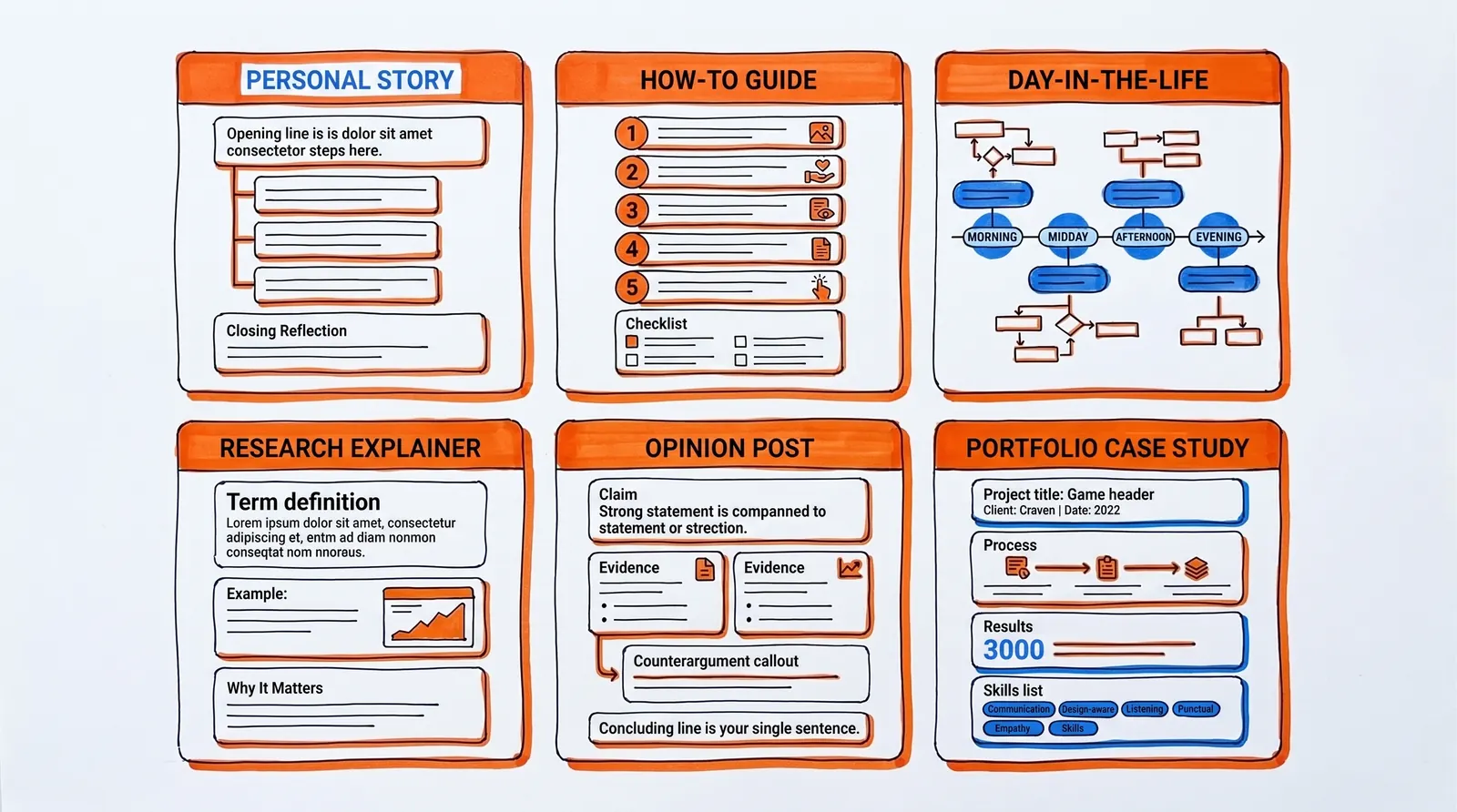
Template 1: Personal Story
Title formula:
What [Experience] Taught Me About [Bigger Lesson]
Use this when:
You want the post to feel personal, memorable, and reflective. This is your default for the Reflect job.
Structure:
- Open on one specific moment.
- Say what you assumed going in.
- Describe what actually happened.
- Show what shifted in your thinking.
- Surface the lesson for your reader.
Starter paragraph:
Template 2: How-To Guide
Title formula:
How to [Specific Goal] as a Student
Use this when:
You want to help another student get through a real problem. This is the Help job.
Structure:
→ Name the problem. → Identify who this is for. → Walk through the steps in sequence. → Flag common mistakes. → Wrap with a quick checklist.
Starter paragraph:
Template 3: Day-in-the-Life
Title formula:
A Day in the Life of a [Major / Role / Year] Student
Use this when:
You want to document the experience and make your world visible. This is the Document job.
Structure:
- Set expectations.
- Morning routine.
- Classes / work / lab / commute.
- Afternoon challenges.
- Evening reset.
- Biggest surprise of the day.
- Three takeaways for someone considering the same path.
Starter paragraph:
Template 4: Research Explainer
Title formula:
What [Concept / Study / Debate] Actually Means, in Plain English
Use this when:
You want to translate dense material for non-specialists. This is the Explain job.
Structure:
→ Identify the confusing term or topic. → Translate it into simple language. → Provide one concrete example. → Explain why anyone should care. → Correct one common misconception. → Close with the big idea.
Starter paragraph:
Template 5: Opinion or Commentary
Title formula:
Why [Policy / Trend / Habit] Needs to Change
Use this when:
You have a genuine perspective and the evidence to back it up. This is the Argue job.
Structure:
- State your claim plainly.
- Establish context.
- Lay out your first reason.
- Lay out your second reason.
- Take on the strongest objection.
- Suggest a better approach.
- Close with a clear takeaway.
Starter paragraph:
Template 6: Portfolio or Case Study
Title formula:
How I Built [Project], and What I Learned
Use this when:
You want to demonstrate skill, show your process, and turn schoolwork into professional proof. This is the Prove job.
Structure:
- Describe the project and goal.
- Lay out the constraints.
- Walk through your process.
- Show the final outcome.
- Note what worked.
- Note what you'd change.
- List the skills involved.
Starter paragraph:
How to Format a Student Blog Post
You don't need an elaborate content framework. For most student posts, this six-step structure produces something clear and easy to read:
| Step | Job | Example |
| 1. Title | Makes the topic obvious | "How I Study for Exams Without Pulling All-Nighters" |
| 2. Hook | Grabs attention with a moment, question, surprise, or problem | A specific scene from exam week |
| 3. Context | Explains why this matters | Why the typical advice fails |
| 4. Main Sections | Splits the post into 3-5 subheadings | Each step or lesson gets its own section |
| 5. Specific Proof | Adds reality with examples, quotes, routines, screenshots, short stories | "I got a 92 on the midterm using this exact method" |
| 6. Ending | Sums up the lesson and points toward a next step | A takeaway, reflection, or question for the reader |
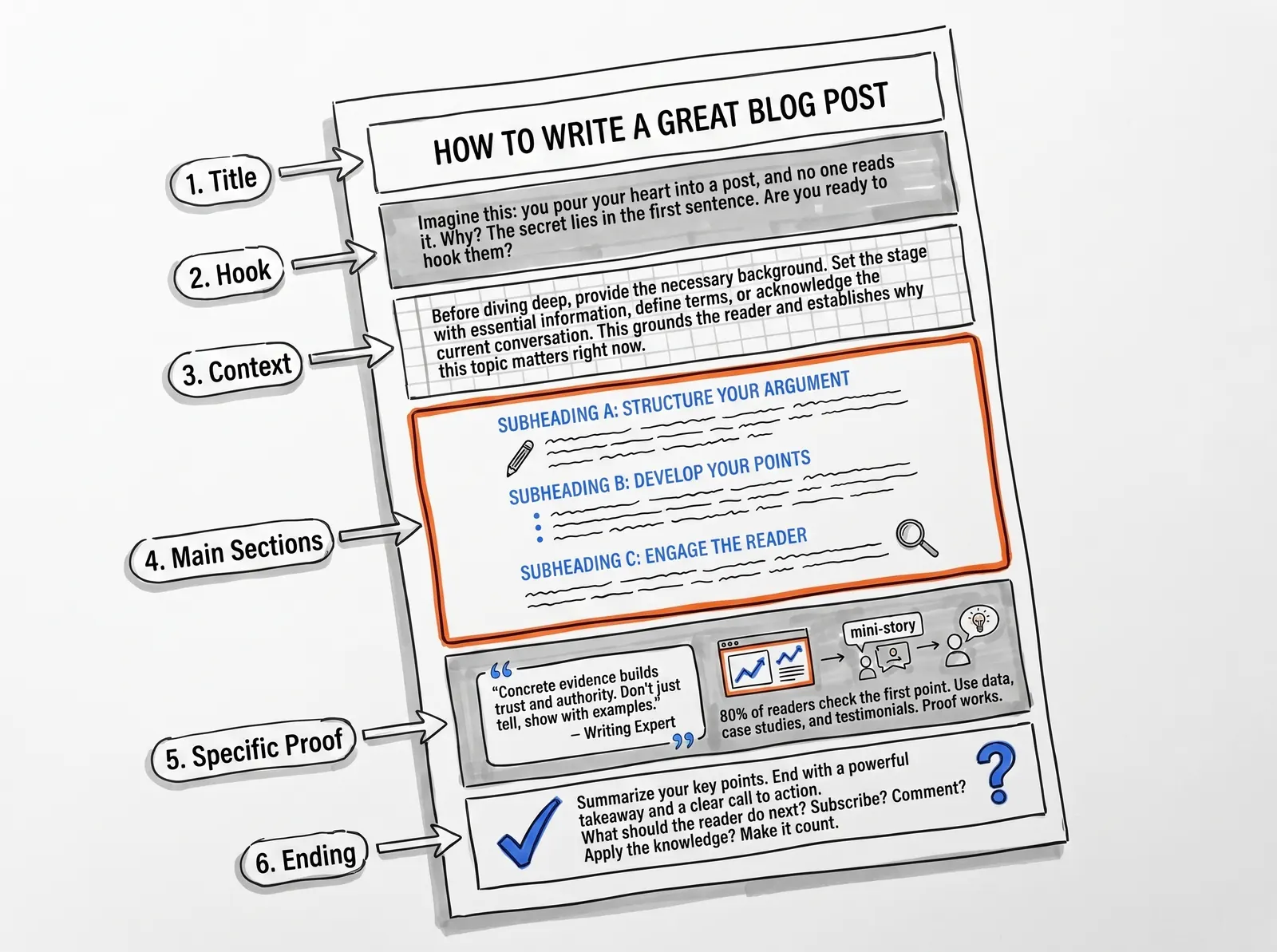
This matches Cambridge's recommended blog structure, Oxford's emphasis on short paragraphs and signposting, and Wix's 2026 guidance on flow and readability.
You aren't reinventing anything. You're following this structure and pouring your experience into it. For more on planning before you write, here's a useful walkthrough on building an SEO content calendar step by step.
How Long Should a Student Blog Post Be?
Short version: long enough to be useful, short enough to stay sharp.
Wix's March 2026 guide suggests practical ranges by post type:| Post Type | Word Count | When to Use It |
| Quick reflection or update | 300 to 600 words | Campus snapshots, short personal pieces, quick tips |
| How-to or opinion piece | 800 to 1,200 words | Study guides, advice columns, experience breakdowns |
| Deep dive or portfolio case study | 1,200 to 2,000+ words | Research explainers, project write-ups, comprehensive guides |
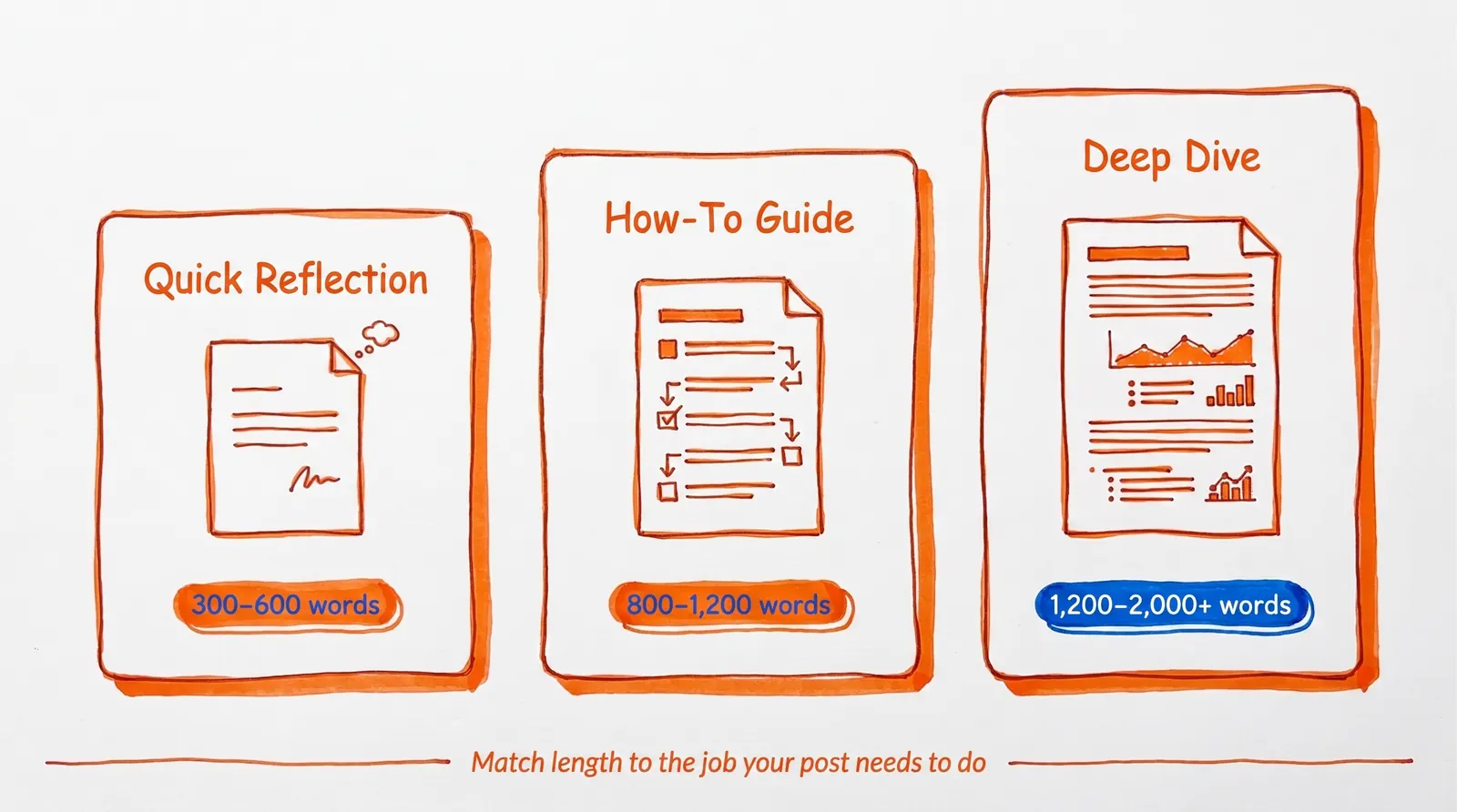
For a first post, skip the 3,000-word epic. Start with something you can finish. A clean 800-word how-to outperforms an unpublished 2,500-word draft every single time.
The right length is whatever it takes to fulfill the promise your title makes. A "5 Study Tips" headline owes you five well-developed tips. A "Day in the Life" piece owes you enough detail to picture the day.
Student Blog Privacy and Safety Checklist
Student blogging has real upside. But the more public the writing gets, the more deliberate your boundaries need to be.
Here's what to think through before publishing:
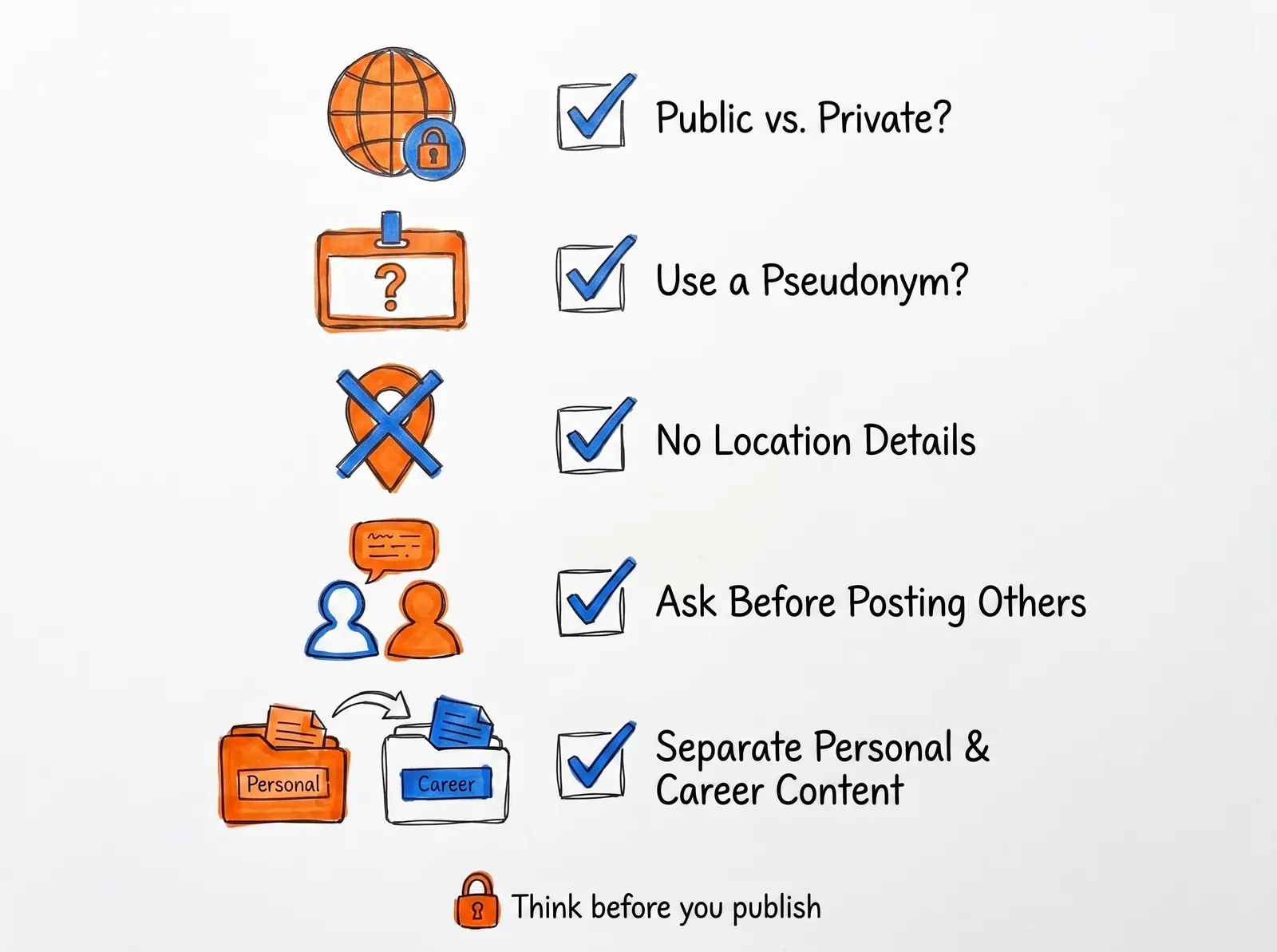
→ Decide upfront whether the blog is public, classroom-only, or private.
University of Michigan treats this as a setup decision, not an afterthought. A public blog widens your audience, but it also reshapes the privacy tradeoff.→ Consider a pseudonym or modified display name.
UMW notes this can make sense for students who'd rather not publicly attach their name. For personal or experimental work, it gives you room to breathe.→ Don't post live location data. Skip dorm address, class schedule, phone number, and anything that makes you easier to find offline.
→ Get permission before writing about other people. Classmates, roommates, and friends haven't agreed to become characters in your blog.
→ Keep deeply personal writing separate from career-facing writing when needed. One blog can still have walls inside it. A burnout post and a portfolio case study don't need to share a homepage.
Honest writing is great. Oversharing isn't the same as honest.
Common Mistakes That Make Student Blogs Forgettable
Most student blogs don't flop because the writing is weak. They flop because of structural decisions that destroy readability before the reader reaches the good part.
1. Writing for everyoneA post for "all students" usually helps nobody. Pick one specific reader. Write for them.
2. Choosing a vague title"My Thoughts on College" is weak. "What I Wish I Knew Before My First Week of College" is specific, findable, and gives readers a reason to click. The same discipline matters when you're crafting headlines that actually work for SEO.
3. Writing like it's a graded essayA blog needs voice and clarity, not stiffness. Contractions are fine. Starting sentences with "and" is fine. Write the way you actually talk.
4. Opening too broadlyOne specific moment beats three paragraphs of general framing. Lead with the concrete and zoom out from there.
5. Giving advice you haven't actually testedReaders can feel the gap between "I read that Pomodoro works" and "I used Pomodoro for six weeks — here's what happened." Real experience is your edge.
6. Building giant paragraphsBig walls of text kill reading speed. Keep paragraphs to two to four sentences for most sections. Let the whitespace breathe.
7. Ending without a takeawayA solid post leaves something behind: a lesson, a tool, a perspective, a next step. Don't just... stop.
8. Publishing generic AI-written contentReaders don't reward polish. They reward writing that feels lived, specific, and helpful. If your post could've been written about any student at any school, it won't connect.
Frequently Asked Questions About Student Blogging
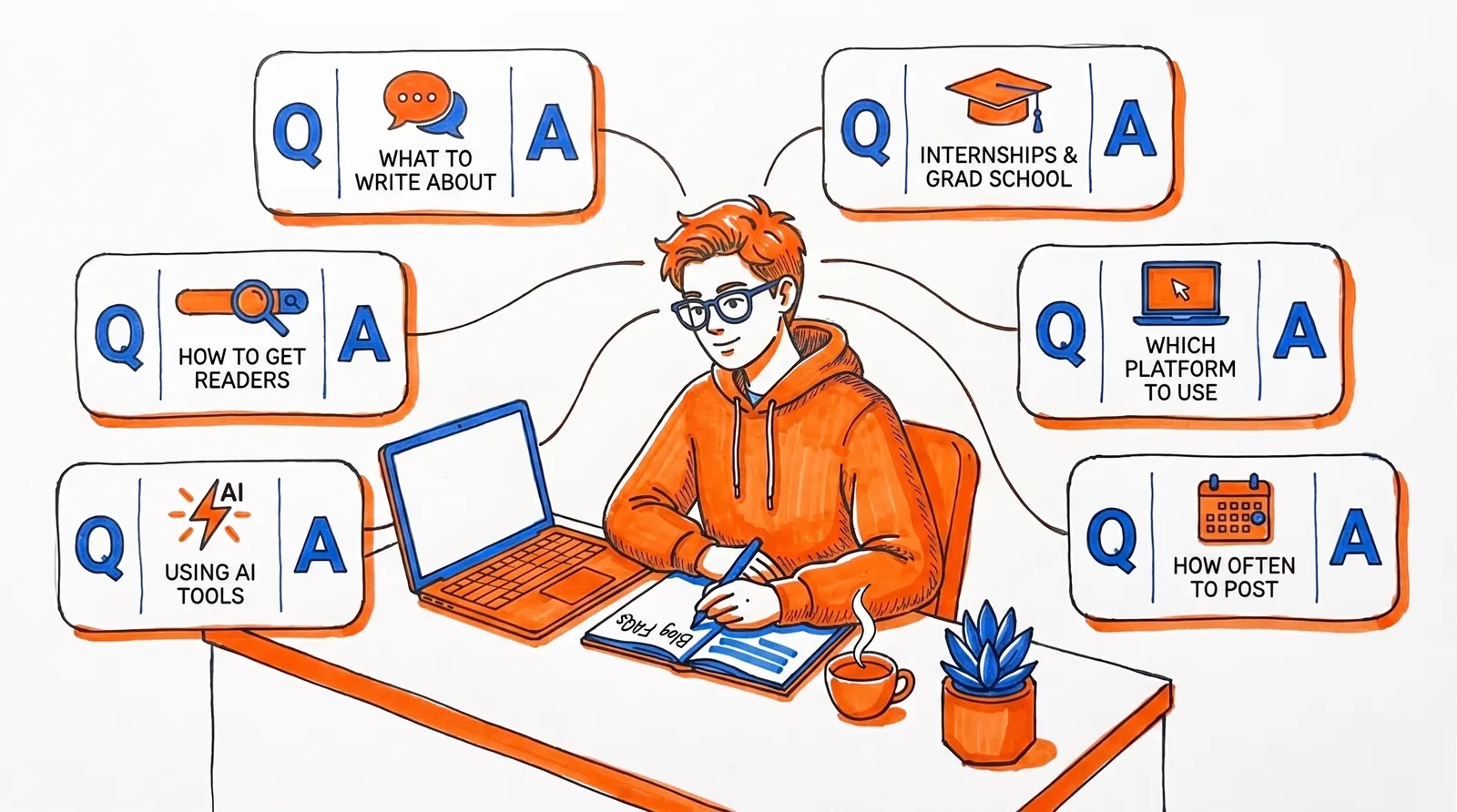
What should a student blog be about?
Start where three things overlap: what you know, what you care about, and what a real person would want to read. UNC's Writing Center uses the same logic. If you're stuck, scan the 111 title ideas above and pick the one that makes you think "I could actually write that."
Can a student blog help with internships or grad school?
Yes — especially when it doubles as proof of work. The University of Arkansas ePortfolio program is built around showcasing skills, experiences, and professional identity. Webflow's portfolio guide emphasizes surfacing strong work, case studies, and a clear CTA fast. A blog that proves you can write, think, and ship is a serious advantage.
Do I need my own website to start a blog?
No. TopUniversities recommends starting on a free platform while you find your style. University of Michigan notes that platforms like WordPress are widely used and likely to come in handy again. Start simple. You can upgrade once you have momentum and know what kind of blog you want.
Should I use my real name on my student blog?
For career-facing writing, your real name builds recognition and makes you findable for employers or collaborators. For personal, sensitive, or experimental writing, a pseudonym makes sense. UMW explicitly notes that pseudonyms can be desirable, and University of Michigan recommends deciding the public/private question early.
Should a student blog sound like an essay?
No. It should sound more conversational and direct. Cambridge and Oxford both push for an approachable tone, clear structure, short paragraphs, and practical takeaways. You aren't writing for a grade. You're writing to be read.
How long should my first blog post be?
For a first post, 600 to 1,000 words usually works. Wix's current guidance puts most how-to and educational posts in the 800-1,200 range, while quick updates can do 300-600. Don't overthink it. Pick one template above, fill it in, and aim for something you can actually finish.
What platform should I use to start my student blog?
It depends on goals. For free and simple, WordPress.com or Blogger work fine to get started. For a portfolio focus, Webflow or Carrd give you more design control. Platform matters less than the act of publishing. You can migrate later.
How often should I post on my student blog?
There's no magic cadence. Weekly is great if you can sustain it. Monthly is fine. Consistency outranks volume. One solid monthly post beats four rushed posts that don't say anything. Start at a pace you can hold alongside your coursework and adjust.
Can I use AI tools to help write my student blog?
Yes, but use them wisely. AI is genuinely helpful for brainstorming topics, drafting outlines, and catching grammar slips. It's bad at providing the specific, lived experience that makes student blogs worth reading. Use AI as a starting point, then layer in your real examples, your actual takes, and your real voice. That's what separates a bookmarked post from a forgettable one.
How do I get people to actually read my student blog?
Three moves do most of the work: pick specific, searchable titles (not "My Thoughts on College"), share where your audience already gathers (Reddit, Discord servers, class Slack channels, LinkedIn), and write posts that solve real problems. If readers can find your post through Google or a friend's recommendation — and it actually helps — readership builds over time.
How to Start Your First Student Blog
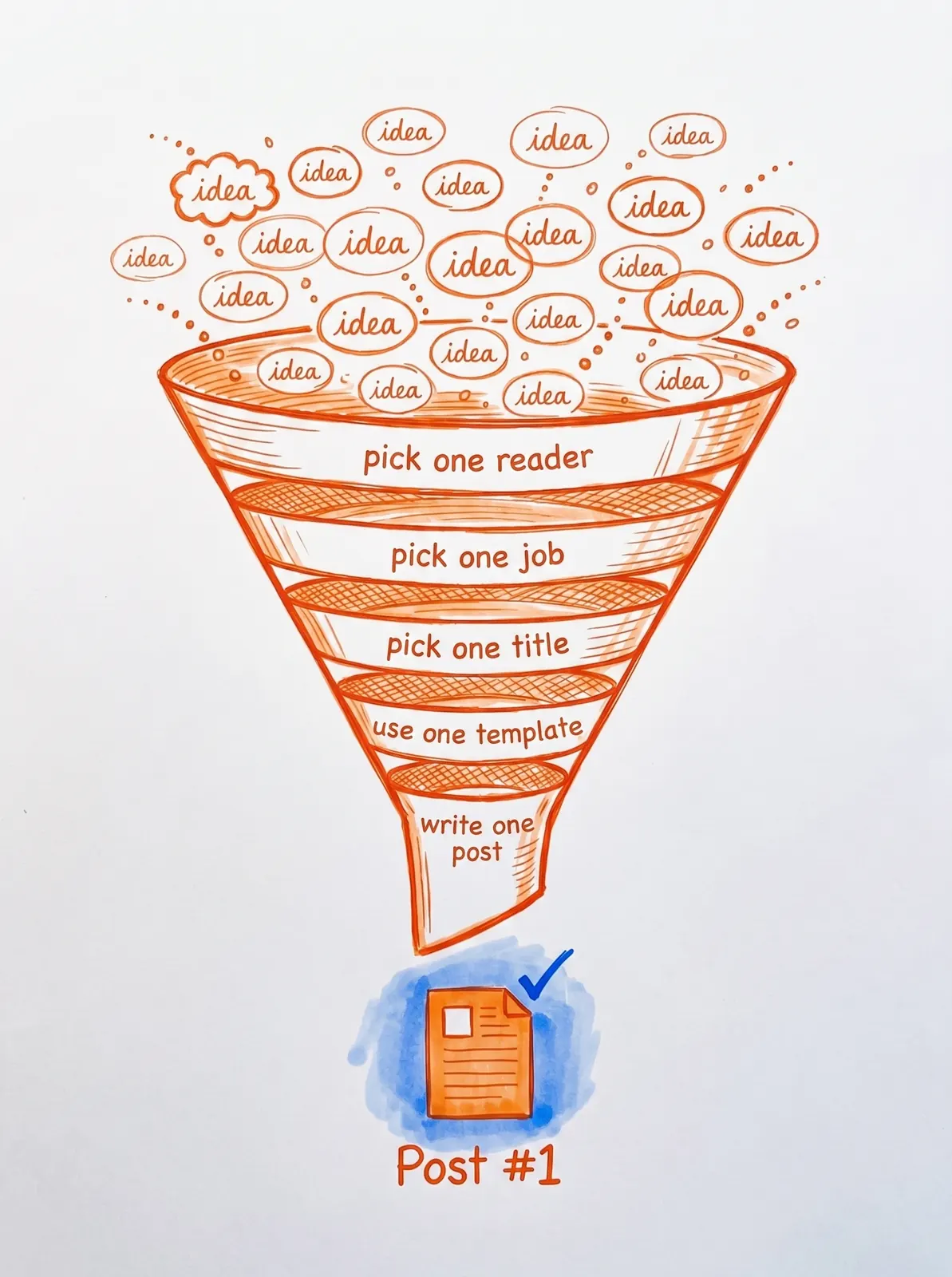
Most students don't need more blog ideas. They need a better filter.
So here's the filter:
- Pick one reader.
- Pick one job.
- Pick one title.
- Use one template.
- Write one honest, specific post.
That's how a real student blog actually starts. Not with a perfect niche. Not with a perfect website. Not with a perfectly tuned content calendar.
With one useful post.