Building Authority Websites: A Step-by-Step Guide for 2026


Struggling to stand out online often feels like chasing shifting trends that never deliver lasting results. For ambitious business owners and digital marketers in places like Canada, the United States, or Europe, finding the right SEO solution is about more than quick fixes. This guide walks you through actionable steps to build credible authority sites, harness intelligent automation, and deliver impactful, SEO-optimized content for your target customers worldwide. Bold strategies replace guesswork, helping you create meaningful connections and scalable growth.
Table of Contents
- Step 1: Define Your Niche And Target Audience
- Step 2: Develop A Content Strategy Powered By Ai Tools
- Step 3: Build High-Quality, Seo-Optimized Website Content
- Step 4: Establish Authority With Strategic Backlinks
- Step 5: Measure Website Performance And Refine Strategies
Quick Summary
| Key Insight | Explanation |
|---|---|
| 1. Define Your Niche Clearly | Identify a specific area where you can establish authority based on your skills and market needs. |
| 2. Leverage AI for Content Creation | Use advanced AI tools for audience analysis and efficient content development, integrating various content formats. |
| 3. Optimize for SEO Effectively | Create comprehensive, insightful content that addresses user intent while adhering to SEO best practices for ranking. |
| 4. Build Quality Backlinks Strategically | Focus on establishing high-quality, relevant backlinks to enhance your website's credibility and authority. |
| 5. Measure and Refine Performance Continuously | Implement a data-driven approach to monitor and improve website effectiveness, adapting strategies based on analytics insights. |
Step 1: Define your niche and target audience
Building an authority website starts with understanding the precise market segment where you can become the go-to expert. Your goal is to identify a narrow, specific area where you can deliver unparalleled value and establish deep credibility.
Successful niche selection requires strategic analysis. Start by examining your existing skills, professional background, and unique insights. Look for topics where you can solve targeted customer problems. The most powerful authority websites emerge from a combination of personal expertise and underserved market needs.
To pinpoint your ideal niche, consider these strategic steps:
- Assess your professional skills and personal passions
- Research market gaps and unmet customer challenges
- Analyze competitor landscapes for potential opportunities
- Validate potential niches through audience demand research
- Determine your unique value proposition
The key is finding a balance between a topic you're passionate about and a market segment with genuine demand. Narrow focus creates depth. Instead of being a generic website about "fitness," become the definitive resource for "strength training for remote workers" or "nutrition for software engineers."
The most successful authority websites solve specific problems for well-defined audiences.
Once you've identified your niche, develop a comprehensive understanding of your target audience. Create detailed customer personas that go beyond basic demographics. Understand their pain points, aspirations, online behaviors, and information consumption preferences.
Pro Tip: Continuously validate your niche selection by engaging directly with potential audience members through online forums, social media groups, and targeted surveys.
Step 2: Develop a content strategy powered by AI tools
Transforming your content creation approach requires leveraging cutting-edge AI technologies that can revolutionize how you plan, produce, and optimize digital content. Your goal is to create a strategic framework that maximizes efficiency and impact through intelligent automation and data-driven insights.
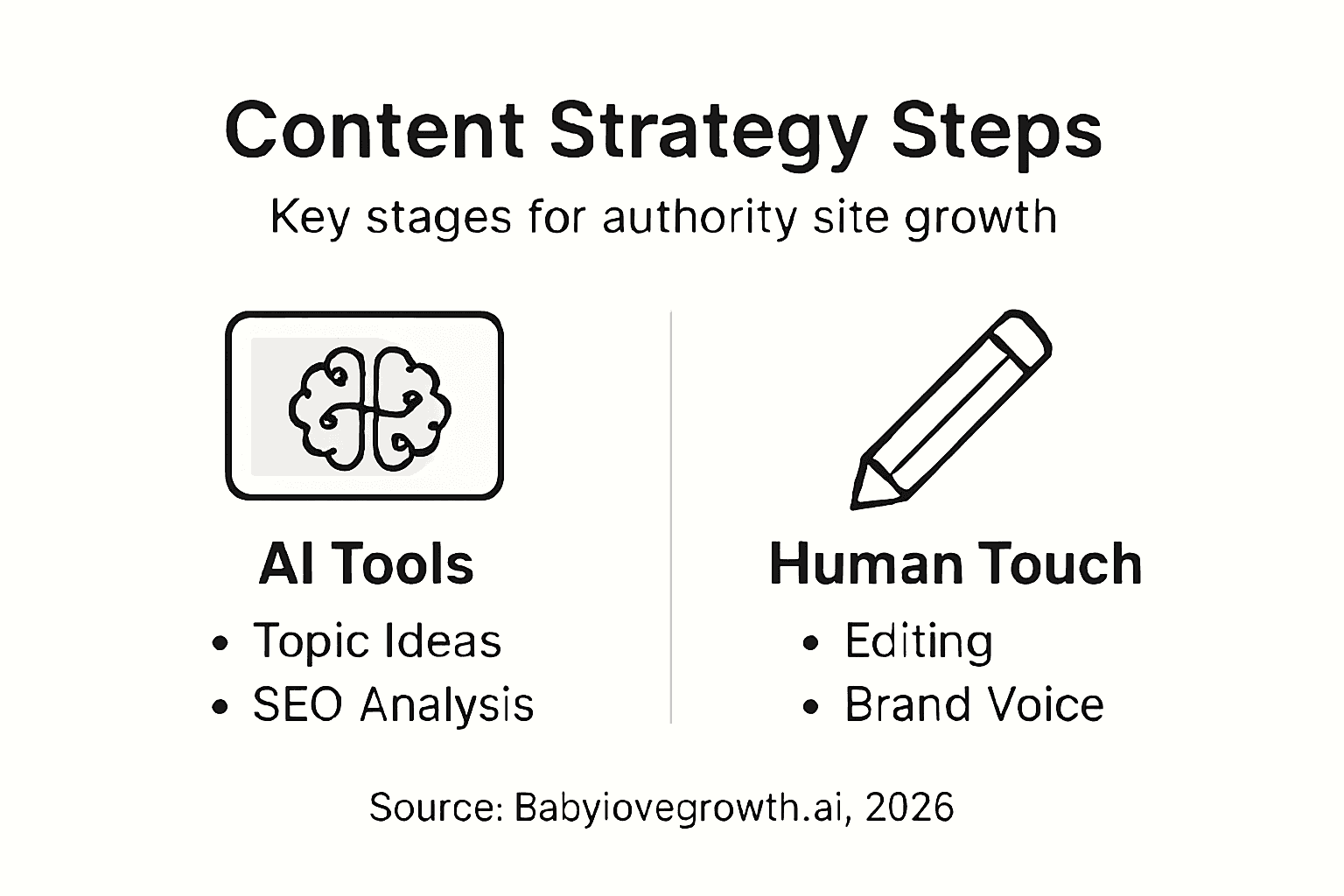
AI-powered content strategies have become essential for modern digital marketers seeking to streamline their workflow and deliver personalized experiences. These advanced tools can handle complex tasks like audience research, content ideation, and performance prediction with remarkable precision.Consider implementing these strategic AI-driven content development approaches:
- Utilize AI for comprehensive audience analysis
- Generate topic ideas using machine learning algorithms
- Automate content research and competitive intelligence
- Create personalized content variations for different audience segments
- Implement real-time content performance tracking
Intelligent content creation goes beyond simple text generation. Modern AI tools can now integrate multiple content formats, transforming a single brief into comprehensive multimedia campaigns. This means you can develop text, images, and video content simultaneously, dramatically reducing production time.
Here's a comparison of traditional vs. AI-powered content strategies for websites:
| Aspect | Traditional Strategy | AI-Powered Strategy |
|---|---|---|
| Content Creation Speed | Slower, manual writing | Fast, automated drafts |
| Personalization Level | Basic targeting | Advanced segmentation |
| Research Depth | Manual competitor review | Automated data analysis |
| Adaptability | Requires manual review | Real-time optimization |
| Human Oversight | Full control required | Supports editorial guidance |
AI transforms content strategy from a manual process to an intelligent, adaptive ecosystem.
When selecting AI tools, prioritize platforms that offer transparent workflows and allow significant human oversight. The most effective strategies combine machine efficiency with human creativity and strategic thinking.
Pro Tip: Always maintain a balance between AI-generated content and human editing, treating AI as a powerful assistant rather than a complete replacement for creative expertise.
Step 3: Build high-quality, SEO-optimized website content
Creating exceptional website content requires a strategic approach that balances technical optimization with genuine audience value. Your mission is to develop content that not only ranks well in search engines but also delivers meaningful insights to your readers.

To craft compelling SEO-optimized content, focus on these critical elements:
- Research comprehensive user intent behind search queries
- Create in-depth, authoritative content that addresses specific questions
- Structure content with clear headings and scannable sections
- Incorporate multimedia elements like images and videos
- Develop content that provides unique perspectives and original insights
Semantic content optimization is key to success. This means creating comprehensive resources that explore topics from multiple angles, demonstrating deep expertise and addressing user needs more thoroughly than competitors.
High-quality content transforms your website from a simple information source to a trusted industry authority.
Your content should blend technical precision with conversational clarity. Avoid jargon-heavy writing and instead focus on explaining complex concepts in accessible language. Each piece should offer clear value, whether through detailed explanations, actionable advice, or unique industry insights.
Pro Tip: Always write content as if you're having a direct conversation with your ideal customer, focusing on solving their specific problems and answering their most pressing questions.
Step 4: Establish authority with strategic backlinks
Backlinks represent the backbone of digital credibility, transforming your website from an unknown entity into a respected industry resource. Your objective is to systematically build a network of high-quality, relevant connections that signal your expertise to search engines and potential readers.
Building authoritative backlinks requires a multifaceted approach that goes beyond simple link acquisition. You need a strategic framework that prioritizes quality, relevance, and genuine value. Link building strategies must focus on creating meaningful connections within your industry ecosystem.
Consider these strategic backlink development techniques:
- Produce exceptional, shareable content that naturally attracts links
- Collaborate with industry thought leaders and respected publications
- Guest post on high-authority websites in your niche
- Participate in expert roundups and interviews
- Leverage professional networks and industry associations
Domain authority development is not about quantity but strategic positioning. Each backlink should serve as a vote of confidence from a reputable source, demonstrating your website's credibility and expertise.
Strategic backlinks transform your website from an information source to an industry recognized authority.
When pursuing backlinks, always prioritize relevance and authenticity over raw numbers. A single link from a highly respected industry publication carries significantly more weight than dozens of low-quality, irrelevant connections.
Pro Tip: Treat each potential backlink as a relationship-building opportunity, focusing on mutual value and genuine professional connections rather than transactional link exchanges.
Step 5: Measure website performance and refine strategies
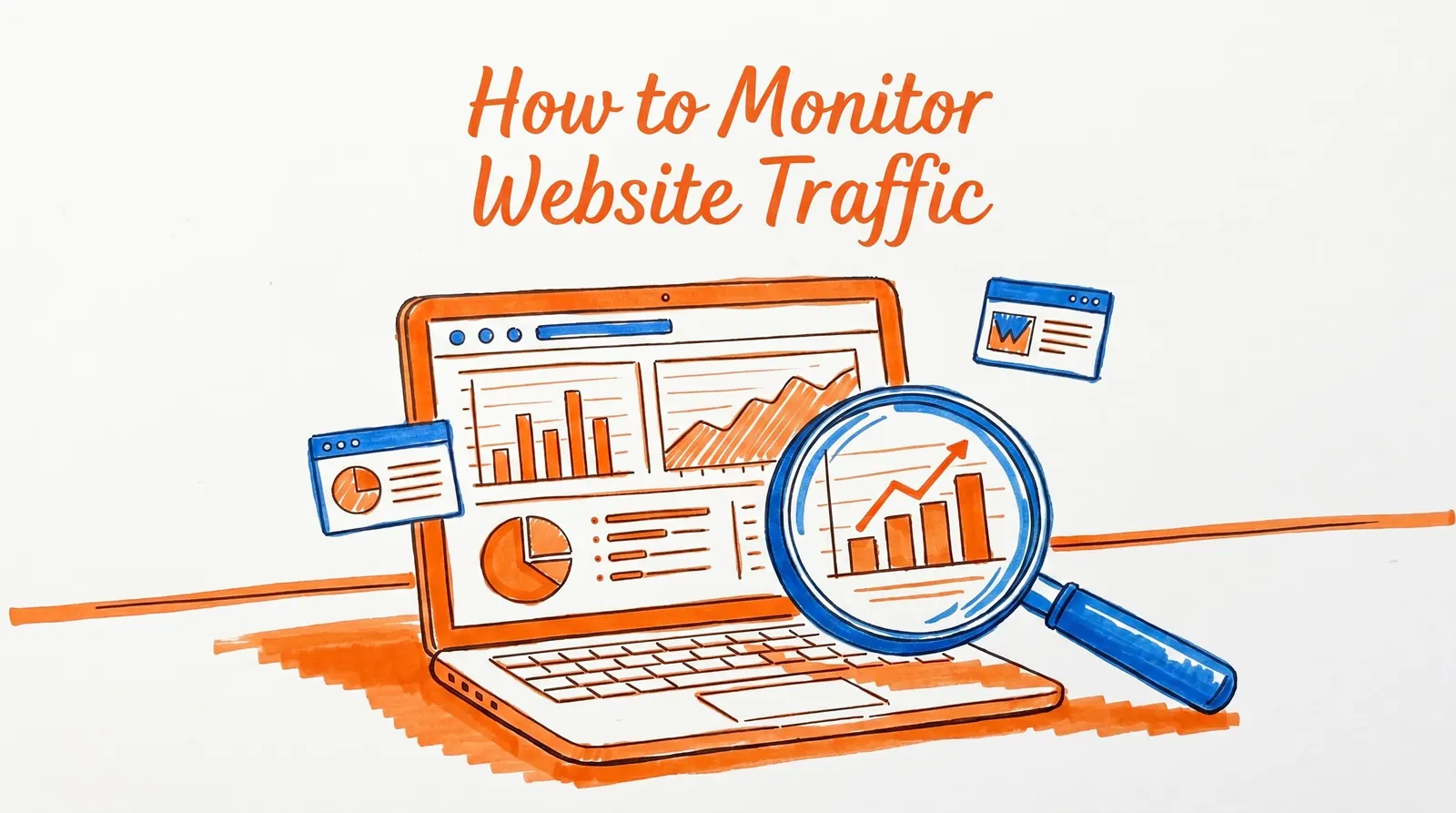
Transforming your website from good to exceptional requires a data-driven approach to performance measurement. Your goal is to develop a comprehensive monitoring system that provides actionable insights into your website's effectiveness across multiple dimensions.
Website performance metrics represent the critical diagnostic tools that reveal how your digital platform is truly performing. Advanced monitoring goes beyond traditional measurements, integrating predictive analytics and machine learning to provide deeper understanding of user interactions and site effectiveness.Key performance measurement strategies include:
- Track core user experience metrics
- Monitor website speed and responsiveness
- Analyze user engagement and conversion rates
- Implement advanced analytics tracking
- Compare performance against industry benchmarks
Performance optimization demands continuous assessment and strategic adjustments. Each metric tells a story about your website's strengths and potential improvement areas, requiring nuanced interpretation and proactive refinement.
Performance measurement is not about collecting data, but transforming insights into meaningful strategic actions.
Successful websites treat performance measurement as an ongoing process of incremental improvement. This means regularly reviewing analytics, understanding user behavior patterns, and making data-driven decisions that enhance overall site effectiveness.
Below is a summary of essential website performance metrics and what each reveals:
| Metric | Reveals | Typical Tool |
|---|---|---|
| Bounce Rate | Visitor engagement levels | Google Analytics |
| Conversion Rate | Sales or signup effectiveness | CRM Analytics |
| Page Load Time | User experience quality | PageSpeed Insights |
| Session Duration | Content relevance | Behavior Analytics |
| Traffic Source | Marketing channel impact | UTM Tracking |
Pro Tip: Develop a quarterly performance review process that combines quantitative metrics with qualitative user feedback to create a holistic view of your website's performance.
Elevate Your Authority Website with AI-Powered Growth Solutions
Building an authority website in 2026 means mastering niche targeting, AI-driven content strategy, and strategic backlinking as key steps to success. You may face challenges like creating high-quality SEO content efficiently or establishing strong backlink authority. At Babylovegrowth.ai, we understand these hurdles and offer an AI-powered platform designed to simplify your organic growth journey by automating content creation and backlink strategies without sacrificing quality.
With features like a 30-day personalized content plan and an exclusive backlinks exchange ecosystem, you can harness advanced AI tools to boost your site’s Google and ChatGPT rankings while maintaining deep audience relevance. Our platform combines intelligent automation with human creativity so you can focus on growing your business rather than wrestling with traditional SEO complexities.
Discover how our comprehensive approach aligns perfectly with the strategies outlined in the Building Authority Websites guide.
Ready to transform your website into a trusted industry authority and accelerate your organic traffic?

Start your AI-powered SEO journey today with Babylovegrowth.ai and unlock the full potential of automated, high-impact content and backlinks tailored for your niche market.
Frequently Asked Questions
How do I determine the right niche for my authority website?
Identifying the right niche involves assessing your skills and passions while researching market gaps. Start by analyzing areas where you can provide unique insights and address specific customer problems.
What steps can I take to develop a content strategy for my website?
To develop an effective content strategy, utilize AI tools for audience analysis and generate relevant topic ideas. Focus on automating content research and implementing performance tracking capabilities to enhance your workflow.
How can I optimize my website content for search engines?
To optimize your website content, research user intent behind search queries and create in-depth responses to common questions. Structure your content with clear headings and incorporate multimedia elements to improve engagement and search ranking.
What are the best practices for building backlinks to my authority website?
To build backlinks effectively, focus on creating exceptional content that naturally attracts links and collaborate with respected industry publications. Engage in guest posting and professional networks to enhance your credibility and visibility.
How do I measure and refine my website's performance?
You can measure website performance by tracking core metrics like bounce rate, conversion rate, and page load time. Analyze these metrics regularly and make data-driven adjustments to improve user experience and site effectiveness.