How SEO builds brand awareness and drives growth


TL;DR:
- SEO builds brand recognition through repeated visibility and branded search growth.
- Strategies like content clusters and E-E-A-T signals enhance long-term brand authority.
- Automation tools enable scalable, lasting brand growth without increasing team size.
Most business owners treat SEO as a traffic machine. You publish content, rank for keywords, and watch visitors roll in. That mental model is not wrong, exactly. It's just incomplete. The bigger opportunity lies in what happens before anyone clicks. Every time your brand appears in search results, on page one or even page two, it registers in the user's memory. Over time, those repeated exposures build something far more valuable than a single visit: recognition, trust, and the instinct to search for you by name. That's the real brand-building power of SEO, and it's what this article is going to break down for you.
Table of Contents
- How SEO fuels brand awareness
- Core SEO strategies that amplify brand recognition
- Measuring SEO's effects: Data, ROI, and branded search volume
- The new era: AI, zero-click SERPs, and brand-conditioned SEO performance
- Our take: Why brand-first SEO beats old-school tactics
- Next step: Automate your SEO for lasting brand growth
- Frequently asked questions
Key Takeaways
| Point | Details |
|---|---|
| SEO builds lasting visibility | Consistent search presence grows brand awareness beyond just website traffic. |
| Authority signals matter now | Trust factors like E-E-A-T and content clusters shape brand recognition in search engines. |
| Brand metrics drive decisions | Measuring branded search volume and ROI helps optimize strategies for greater awareness. |
| AI changes the game | Brand strength now sets the ceiling for SEO performance as zero-click searches rise. |
How SEO fuels brand awareness
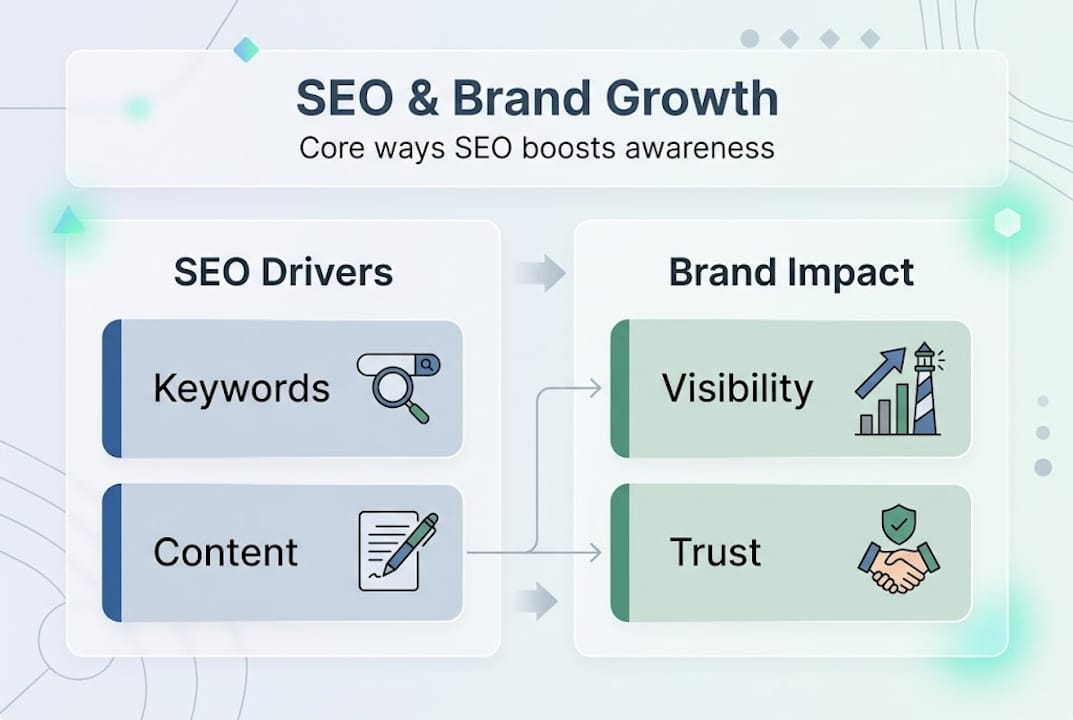
Most marketers measure SEO success in clicks and rankings. Those metrics matter, but they're downstream of something more fundamental. SEO increases brand awareness primarily through repeated visibility in search results, leading to higher branded search volume and recognition as an authority. In other words, showing up consistently across a wide range of searches trains potential customers to recognize your brand before they even need your product.
Think about how this plays out in real life. A user searches "how to manage team projects," sees your brand's blog post. Two weeks later, they search "project management tools comparison," and there you are again. A month later, they search directly for your brand name. You didn't convert them on the first visit. But you built the mental association that made them come back. That's enhancing brand visibility at its most powerful.
Branded search volume, meaning how often people type your company name directly into Google, is one of the clearest signals that SEO-driven brand awareness is working. When branded searches increase alongside your content efforts, you know the exposure is sticking. It's a metric that most small and mid-size businesses ignore, and that's a mistake.
Here's what SEO-driven brand awareness actually does for your business:
- Increases recall: Repeated appearances in search results build mental shortcuts in your audience's mind.
- Signals authority: Ranking for informational and industry-specific queries positions you as a credible expert.
- Expands reach: You appear to users who have never heard of you but are searching for problems you solve.
- Drives organic trust: Users perceive organic results as more credible than paid ads, boosting your brand's reputation by association.
- Compounds over time: Unlike paid campaigns, organic visibility continues working after you stop actively publishing.
"Organic search isn't just a traffic channel. It's a brand-building engine that runs 24 hours a day, seven days a week, reaching users at the exact moment they're curious about what you offer."
For a deeper breakdown of how this works technically, the search engine visibility guide covers the fundamentals that every business owner should understand before building a content strategy.
Core SEO strategies that amplify brand recognition
Understanding the mechanics is only the start. You also need a practical playbook. Core methodologies include topical authority via content clusters, E-E-A-T signals (author bios, citations, original data), keyword clustering for non-branded terms, internal linking, and schema markup. Each of these deserves attention because they work together, not in isolation.
Here's how to think about building brand recognition through strategic SEO:
-
Build topical authority with content clusters. Instead of publishing random blog posts, group your content around central themes. Create a pillar page on a broad topic, then support it with detailed subtopic articles. This signals to search engines that you know your field deeply, and it keeps users on your site longer, reinforcing your brand at multiple touchpoints. You can learn the full approach in this topical authority guide.
-
Apply E-E-A-T signals consistently. E-E-A-T stands for Experience, Expertise, Authoritativeness, and Trustworthiness. These are the criteria Google uses to evaluate content quality. Author bios with real credentials, original data, external citations, and consistent publishing under a recognizable brand name all strengthen these signals. Building authority with E-E-A-T is no longer optional for brands that want long-term visibility.
-
Use keyword clustering for non-branded coverage. Target a broad range of relevant search queries, not just the ones that mention your product. If you sell email marketing software, you want to rank for "how to write a welcome email," "email open rate benchmarks," and "newsletter best practices." These non-branded searches are where new audiences discover your brand.
-
Optimize internal linking and schema markup. Internal links help users and search engines navigate your content, while schema markup (structured data added to your website's code) gives Google rich context about your content. Both serve as trust signals that improve your visibility and make your brand listings more visually prominent in search results.
Comparison of brand-driven vs. generic SEO:
| Factor | Brand-driven SEO | Generic SEO |
|---|---|---|
| Primary goal | Build recognition and authority | Drive clicks and traffic |
| Content focus | Topical depth, expert voice | Keyword density, volume |
| Key metrics | Branded searches, return visits | Organic sessions, bounce rate |
| Long-term value | Very high (compounds over time) | Moderate (requires continuous output) |
| AI search compatibility | Strong (brand signals carry over) | Weaker (generic content gets replaced) |
Pro Tip: Audit your existing content and group it into topic clusters. Even if you haven't published systematically, you can reorganize existing posts around pillar themes and rebuild your internal linking structure. This alone can improve your topical authority signals without publishing a single new piece.
Measuring SEO's effects: Data, ROI, and branded search volume
Once strategies are implemented, it's crucial to track their impact with reliable data. The good news is that SEO is one of the most measurable marketing investments available to small and mid-size businesses.

A meta-analysis of 10 studies (2022-2024) shows SEO significantly boosts organic rankings and traffic with a high effect size (d=1.049). An effect size that large means the results are not marginal or inconsistent. They're substantial and replicable across different industries and company sizes. That's meaningful data for any business owner deciding where to invest marketing budget.
Key benchmarks every SEO-driven brand should know:
| Metric | Benchmark | Why it matters |
|---|---|---|
| First position CTR | 28.5% (Ahrefs) | Dramatically more clicks than position 2 or below |
| SEO ROI | 748% average | One of the highest returns of any marketing channel |
| Effect size (d=1.049) | High, across 10 studies | Confirms SEO reliably improves rankings and traffic |
| Branded search growth | Tracks recall and recognition | Key measure of SEO-driven brand awareness |
Here's what these numbers mean in practice. If your current SEO investment brings in 1,000 organic visitors per month and you improve to the first position on a high-volume query, you could realistically see 2,500 to 4,000 monthly visitors from that single ranking. At a 748% ROI benchmark, every dollar invested in SEO is generating roughly $7.48 back in value. That's not just traffic. That's compounding brand equity.
The metrics you should track for brand awareness specifically include:
- Branded search volume: Use Google Search Console to monitor how many people search your brand name directly.
- Direct traffic trends: An increase in direct visits often signals growing brand recall from organic exposure.
- Return visitor rate: Users who come back are starting to associate your brand as a trusted resource.
- Impression share: In Search Console, impressions show how often your brand appears even when users don't click.
- Average position trends: Movement toward the top of page one correlates with greater brand exposure frequency.
Tracking these through a consistent search visibility metrics framework gives you a clear picture of how your SEO efforts translate into brand recognition, not just raw traffic numbers.
Statistic callout: SEO delivers an average ROI of 748%, making it the highest-returning organic channel for brand growth when executed with a consistent, authority-driven strategy.
The new era: AI, zero-click SERPs, and brand-conditioned SEO performance
As search engines and user behavior evolve, brands must adapt to new realities. The biggest shift in search right now is the rise of AI-generated answers, zero-click results, and what researchers now call brand-conditioned performance.
In AI era, SEO is 'brand-conditioned performance': Brand strength (mentions, authority, positioning) sets ceiling for rankings; zero-click SERPs shift focus to influence over traffic. What this means for you is that your brand's offline and online reputation now directly limits how high you can rank, regardless of how good your content is technically.
Zero-click SERPs (search engine results pages) are results where the user gets an answer directly in Google without clicking any link. AI Overviews, featured snippets, and knowledge panels all fall into this category. At first glance, this sounds terrible for traffic. But here's the counter-intuitive truth: zero-click results are enormous brand exposure opportunities. When your content is featured in an AI Overview or a snippet, your brand name appears prominently, even if the user never visits your site. That is brand awareness at scale.
Key trends shaping AI-driven SEO trends in 2026 and beyond:
- AI amplifies brand signals: ChatGPT, Perplexity, and Google's AI Mode pull from sources they perceive as authoritative. Brands with strong E-E-A-T signals get cited more often in AI-generated answers.
- Mentions matter as much as links: Brand mentions across the web, even without a hyperlink, contribute to the authority ceiling that determines your ranking potential.
- Positioning in AI outputs is the new first page: Appearing in an AI-generated summary is equivalent to ranking position zero. Brands that optimize for this will dominate awareness in the next era of search.
- Generic content is being commoditized: AI can produce generic, low-authority content at scale. What differentiates your brand is unique experience, original data, and a recognizable voice that AI cannot replicate.
Pro Tip: Actively build your brand's presence across third-party sources, such as industry publications, podcast mentions, and partner websites. These off-page signals feed directly into the authority metrics that AI search platforms use to decide whose content to surface and cite.
Understanding brand authority insights is now a prerequisite for any SEO strategy that expects to survive the next wave of search evolution.
Our take: Why brand-first SEO beats old-school tactics
Here's the perspective most SEO agencies won't give you, because it's not in their interest. Old-school SEO was about gaming algorithms. Stuff enough keywords, build enough links, and the rankings follow. That era is essentially over. What we've seen consistently is that the brands winning in search today are the ones that would rank even if the algorithm changed tomorrow, because their authority is genuine.
Brand-first SEO is not a softer strategy. It's actually harder and more durable. When you invest in building a recognizable brand through search, you're stacking benefits that persist through algorithm updates, AI platform shifts, and market changes. Traffic-first SEO collapses the moment Google adjusts how it rewards thin content.
The mistake many SME owners make is treating brand awareness and SEO as separate budgets and separate goals. They're not. Every piece of content you publish either strengthens or weakens your brand's authority ceiling. Every search impression either builds or wastes an exposure opportunity.
Building authority websites is the foundation that makes every other SEO tactic work better and last longer. When you start from a position of genuine authority, your content ranks faster, gets cited in AI results more often, and generates the branded searches that signal real market presence. That's the compounding advantage that makes SEO the most powerful brand-building channel available to businesses at any scale.Next step: Automate your SEO for lasting brand growth
You now have the strategy. The next question is execution. Building topical authority, maintaining E-E-A-T signals, producing consistent content, and tracking branded search metrics is a significant operational lift for any small or mid-size team.
That's where automation changes everything. Babylovegrowth.ai's SEO automation platform handles the heavy lifting by generating AI-optimized content, building your authority signals, and delivering a personalized 30-day content plan tailored to your brand. Pair that with the automated backlink software to strengthen your off-page authority, and you have a system that runs your brand-building SEO on autopilot. For businesses ready to scale organic visibility without scaling headcount, the organic traffic growth tool gives you a measurable, repeatable path to sustained brand awareness and compounding search presence.
Frequently asked questions
What is the relationship between SEO and brand awareness?
SEO increases brand awareness by ensuring your brand is repeatedly visible in search results, which drives recognition and branded searches over time. Every search impression plants a memory, and repeated exposure is what converts a stranger into a brand-loyal customer.
How does AI influence SEO's impact on branding?
AI intensifies the importance of brand authority, making mentions and positioning critical for search rankings and brand exposure. In the AI era, SEO is 'brand-conditioned performance', meaning your brand's overall strength sets the ceiling for how high you can rank and how often you appear in AI-generated answers.
Which SEO metrics best measure brand awareness growth?
Branded search volume, CTR, organic ranking positions, and SEO ROI are valuable indicators of increases in brand awareness. A meta-analysis of 10 studies (2022-2024) shows SEO significantly boosts organic rankings and traffic with a high effect size, confirming these metrics reliably reflect real growth.
Can small businesses increase brand awareness using SEO?
Yes. Small businesses can build brand recognition through strategic SEO content, authority signals, and consistent search visibility. Core methodologies include topical authority via content clusters, E-E-A-T signals (author bios, citations, original data), keyword clustering for non-branded terms, internal linking, and schema markup, all of which are accessible to businesses of any size with the right tools.
Recommended
Smart SEO,
Faster Growth!
Most Read Articles
Generative Engine Optimization (GEO)
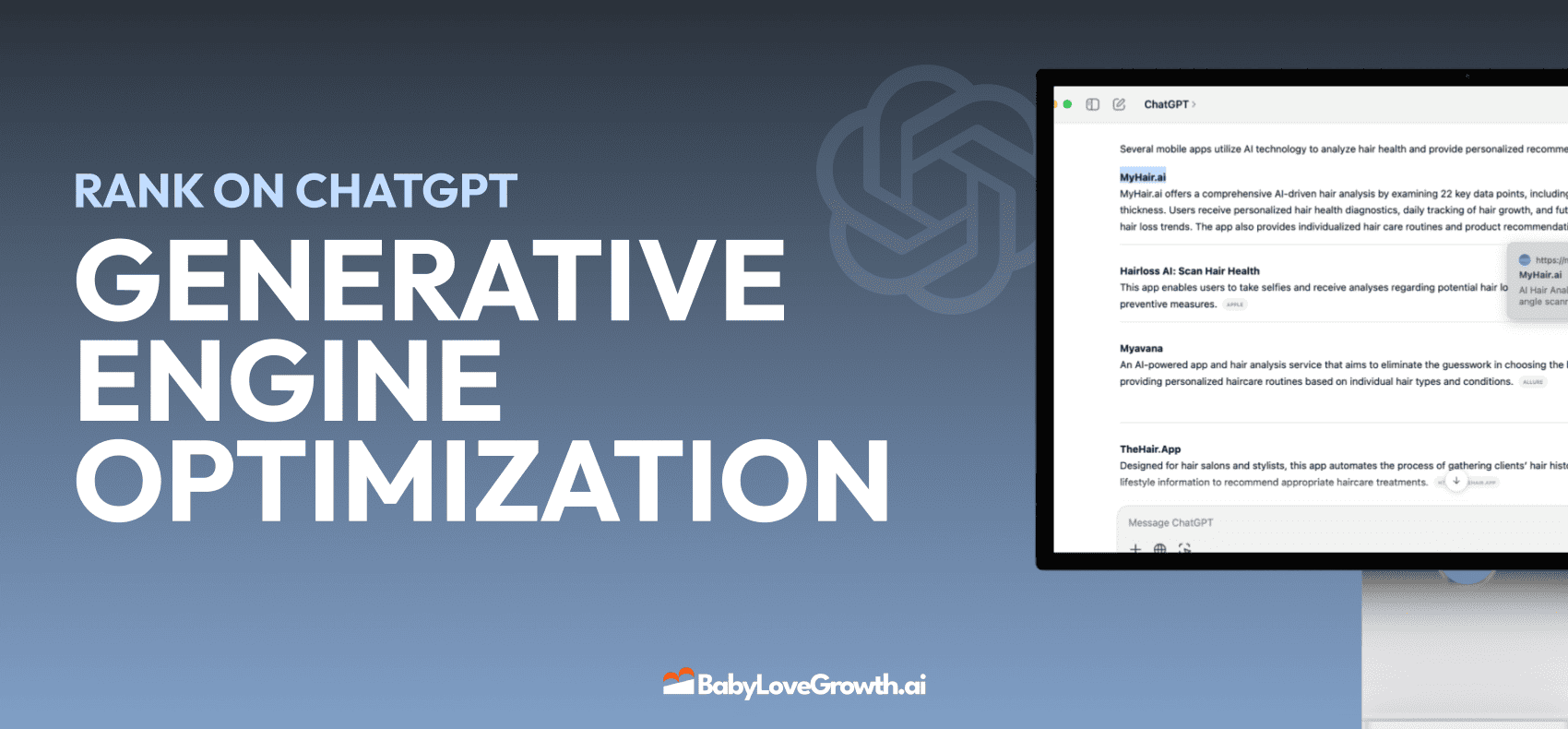
Learn how Generative Engine Optimization (GEO) helps your content rank in AI search engines like ChatGPT and Google AI. This comprehensive guide explains the differences between SEO and GEO, why it matters for your business, and practical steps to implement GEO strategies for better visibility in AI-generated responses.
DylenJan 18, 2025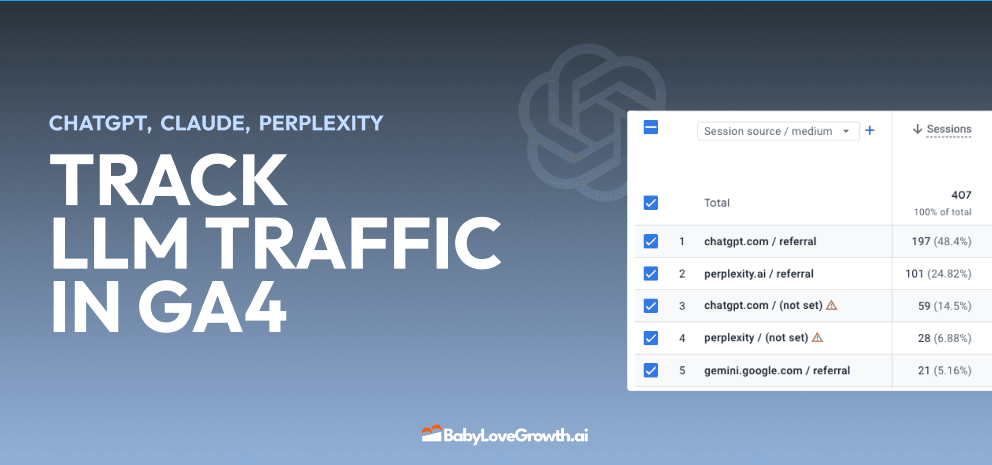
Track LLM Traffic in Google Analytics 4 (GA4)
Learn how to track and analyze traffic from AI sources like ChatGPT, Claude, Perplexity, and Google Gemini in Google Analytics 4. This step-by-step guide shows you how to set up custom filters to monitor AI-driven traffic and make data-driven decisions for your content strategy.
DylenMar 18, 2025
How to Humanize AI Text with Instructions
Learn practical techniques to make AI-generated content sound more natural and human. This guide covers active voice, direct addressing, concise writing, and other proven strategies to transform robotic text into engaging content.
DylenApril 7, 2025
Moz DA vs Ahrefs DR: Which Metric Should You Actually Use?
Moz Domain Authority and Ahrefs Domain Rating look similar but measure very different things. Learn what each score actually tells you, when to use each one, and what to track instead for real SEO results in 2026.
DylenApr 23, 2026
Open AI Revenue and Statistics (2024)
Comprehensive analysis of OpenAI financial performance, user engagement, and market position in 2023. Discover key statistics including $20B valuation, $1B projected revenue, and 100M+ monthly active users.
DylenOctober 03, 2025
"Search Google or Type a URL": What It Means & What to Do
Learn what "Search Google or type a URL" actually means, how your browser decides whether to search or navigate, and what to do if your address bar starts behaving unexpectedly. Includes browser settings guides for Chrome, Firefox, Edge, and Safari.
DylenApr 21, 2026