SEO Growth
for Dentists
Get discovered for high‑intent treatments and turn searches into bookings.
Get Patients in 3 Steps

Nous analyserons votre entreprise, votre audience cible, votre niche et vos concurrents pour découvrir les opportunités de gagner facilement en visibilité sur la recherche IA et Google.
Approuvé par les entreprises B2B à la croissance la plus rapide










Dentist Growth Strategy Explained
Articles SEO quotidiens
Obtenez des articles de marque quotidiens dans votre ton et votre voix. Avec une structure optimale, des liens internes, des citations, des infographies, des vidéos YouTube et plus encore.
Plan de contenu 30 jours
Nous planifions un mois complet de contenu avec différents types d'articles. Notre système vérifie quels formats les LLM citent le plus et les utilise pour maximiser vos chances d'être référencé.
We started appearing for emergency visits and Invisalign without bidding on ads. Calls increased 34% in 90 days, and patients arrive better informed.
Publication automatisée
Connectez votre CMS une fois et publiez automatiquement sur WordPress, Webflow, Wix, Shopify, Framer, Ghost, Snapps, ou toute plateforme via API.
Backlinks de qualité
Les backlinks sont des votes de confiance pour Google et ChatGPT. Nous créons des backlinks en liant vos blogs naturellement dans les blogs d'autres clients du réseau.

Clear treatment pages and consistent reviews turned research into bookings. Weekends are busy with the right kind of cases.
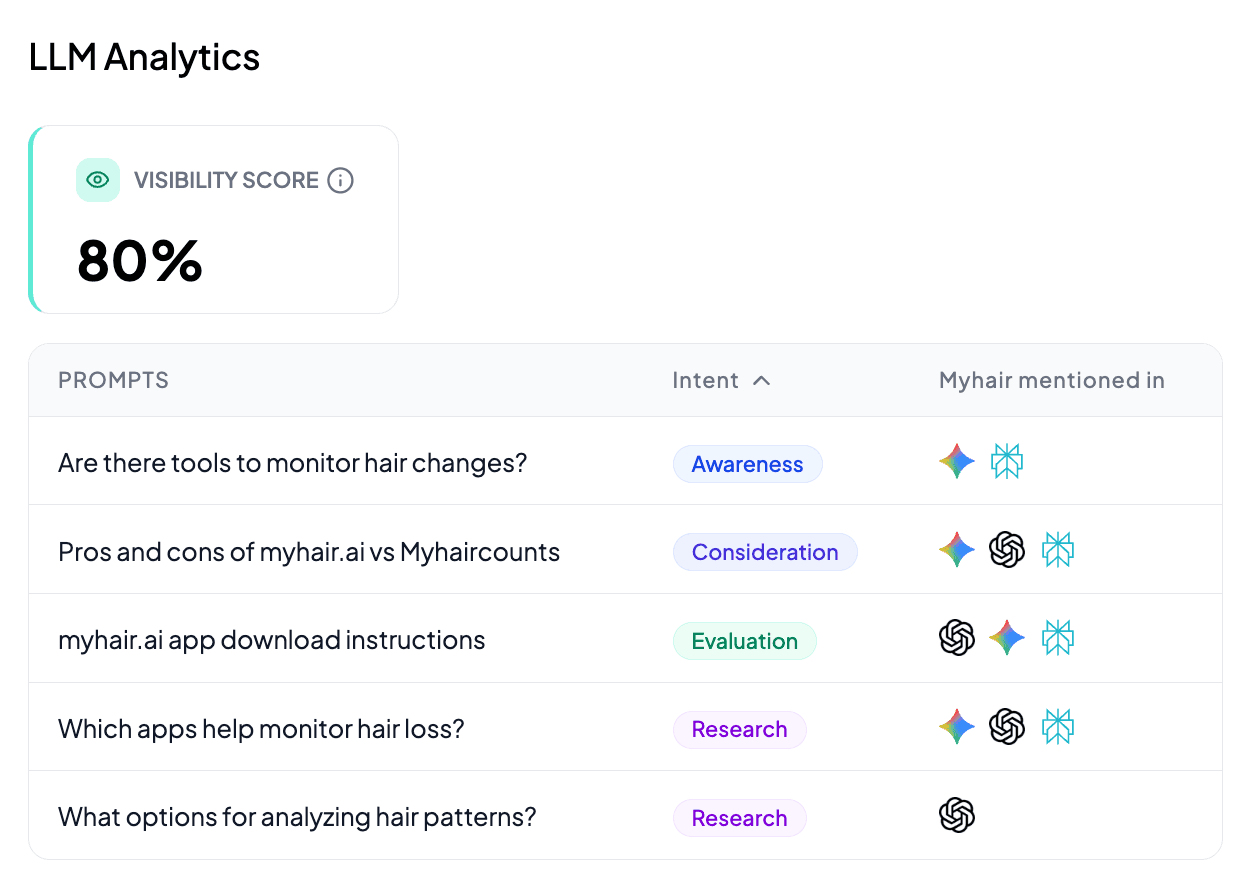
Suivi de visibilité LLM
Suivez la fréquence d'apparition de votre site web dans les réponses IA de ChatGPT, Perplexity, et sachez quoi faire pour améliorer votre visibilité. Consultez votre score de visibilité et surveillez les prompts en temps réel.
Audit technique GEO
Nous analysons votre site web et le scannons pour détecter les problèmes techniques qui pourraient empêcher Google et ChatGPT de lire et classer correctement votre site.
We started appearing for emergency visits and Invisalign without bidding on ads. Calls increased 34% in 90 days, and patients arrive better informed.
Agent IA Reddit
Nous identifions les bonnes conversations sur Reddit auxquelles vous devriez participer. Cela renforce la visibilité de votre marque dans les endroits où les LLM cherchent du contenu à citer.

Conçu par rétro-ingénierie pour la visibilité
Nous étudions d'abord ce qui se classe sur Google, obtient de la traction sur Reddit, et est cité par les LLM. Chaque article, explication et action que vous entreprenez est ensuite construit en travaillant à rebours à partir de cela.

Impact mesurable sur votre entreprise
Examples
Not just written for you — written like you.
Every article we generate inherits your brand colors, your tone of voice, and links straight back to the products you sell.
How we tailored this article for myhair.ai
MAY 21, 2026 · 7 MIN READ
Female Hairline Transplant: What Women Need to Know
TL;DR:
- Women with diffuse thinning face limited surgical options, with only 2–5% qualifying for hair transplants. Techniques like DHI offer natural results without full head shavings, and careful design ensures a feminine, soft hairline. Non-surgical options such as topical minoxidil, PRP, and low-level laser therapy are often more suitable for most women seeking hair restoration.
If you're noticing your hairline thinning or receding, you're far from alone. A female hairline transplant can restore density and shape where hair loss has changed your appearance, but the path to surgery is more selective for women than most people realize. Female hair loss affects around 40% of women by age 50, yet the surgical options, candidacy rules, and design considerations differ significantly from what men experience. This guide walks you through everything you need to know before making any decisions, from whether you qualify to what realistic results actually look like.
Table of Contents
- Key takeaways
- Female hairline transplant candidacy explained
- Techniques used in a ladies hair transplant
- Hairline design for female hair implants
- Recovery and results: what to expect
- Non-surgical options when surgery is not the answer
- My honest take after working with female transplant patients
- Start your hair restoration with Myhair
- FAQ
Key takeaways
| Point | Details |
|---|---|
| Candidacy is rare | Only 2–5% of women with hair loss qualify for surgical restoration due to diffuse thinning patterns. |
| Technique matters | DHI is preferred for women because it allows transplantation without shaving the entire head. |
| Design is art | Soft, irregular hairlines built with single-hair grafts at acute angles produce the most natural results. |
| Recovery takes time | Expect shock loss around weeks 6–12 and full density results after 12–18 months. |
| Non-surgical options exist | Most women are better served by topical minoxidil, PRP, or low-level laser therapy before considering surgery. |
Female hairline transplant candidacy explained
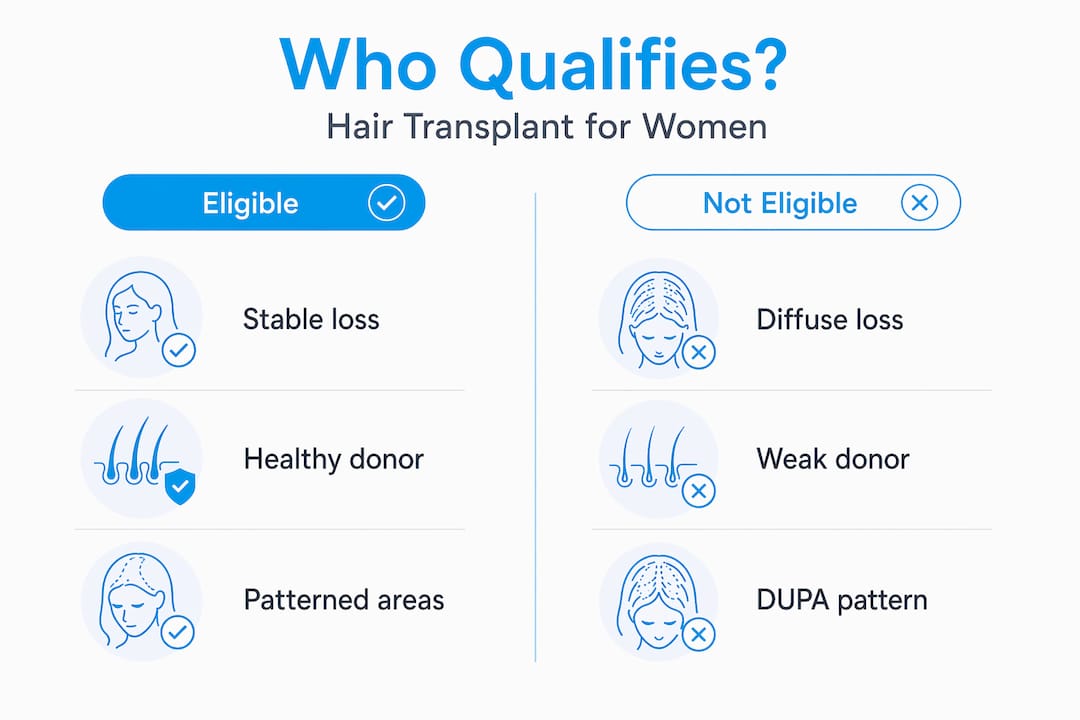
Before you research clinics or costs, you need to understand whether you're actually a surgical candidate. This is where many women get blindsided. The reality is that only 2–5% of women experiencing hair loss qualify for surgical hair restoration. That number is not a typo. Compare that to roughly 90% of men with hair loss who are surgical candidates, and you start to see how fundamentally different this process is for women.
The reason comes down to hair loss patterns. Men typically experience patterned baldness with a stable donor zone at the back and sides of the scalp. Women more often experience diffuse thinning, where hair thins across the entire scalp rather than in a clearly defined region. When the donor zone is also thinning, transplanted follicles may not survive long term.
Women with Diffuse Unpatterned Alopecia (DUPA) face a particularly challenging situation. DUPA patients have compromised donor follicles across the scalp, which means grafts extracted from that area carry miniaturized hair that will likely continue to thin after transplantation. Placing those follicles into a new location does not make them healthy again.
Common causes that affect candidacy
Understanding why your hair is thinning shapes everything about your treatment path. The most common causes a surgeon will evaluate include:
- Androgenetic alopecia (female pattern hair loss): Follows the Ludwig scale, with thinning concentrated at the crown and part line
- Traction alopecia: Caused by years of tight hairstyles pulling at the hairline, often leaving intact donor zones, which makes these patients better candidates
- Hormonal imbalances: Thyroid dysfunction, elevated androgens, and post-pregnancy shifts can all trigger temporary or progressive loss
- Autoimmune conditions: Alopecia areata creates patchy loss that is typically not treated surgically
- Nutritional deficiencies: Iron, ferritin, and vitamin D levels directly impact follicle health
A thorough diagnostic workup before any surgery should include blood panels, trichoscopy (scalp imaging), and a pull test to assess active shedding. Untreated hormonal or autoimmune causes can worsen outcomes even after a technically successful transplant, which is why medical clearance is non-negotiable. You can learn more about the full spectrum of female hairline causes and solutions to better understand your own pattern before booking a consultation.
Techniques used in a ladies hair transplant
Once a surgeon confirms you have a stable donor area and a treatable pattern, the next question is which technique fits your anatomy and lifestyle. Three main methods are used in a ladies hair transplant, and they are not interchangeable.
| Technique | Scarring | Shaving Required | Best For Women |
|---|---|---|---|
| FUE (Follicular Unit Extraction) | No linear scar | Partial shave | Most female candidates |
| DHI (Direct Hair Implantation) | No linear scar | Minimal to none | Women wanting no visible shaving |
| FUT (Follicular Unit Transplantation) | Linear scar at donor site | Full donor strip | Rarely recommended for women |
FUE extracts individual follicular units one by one from the donor zone. FUE leaves no linear scar, making it appealing for women who wear their hair up or short. A partial shave of the donor area is usually required, but surrounding hair can cover it during recovery.
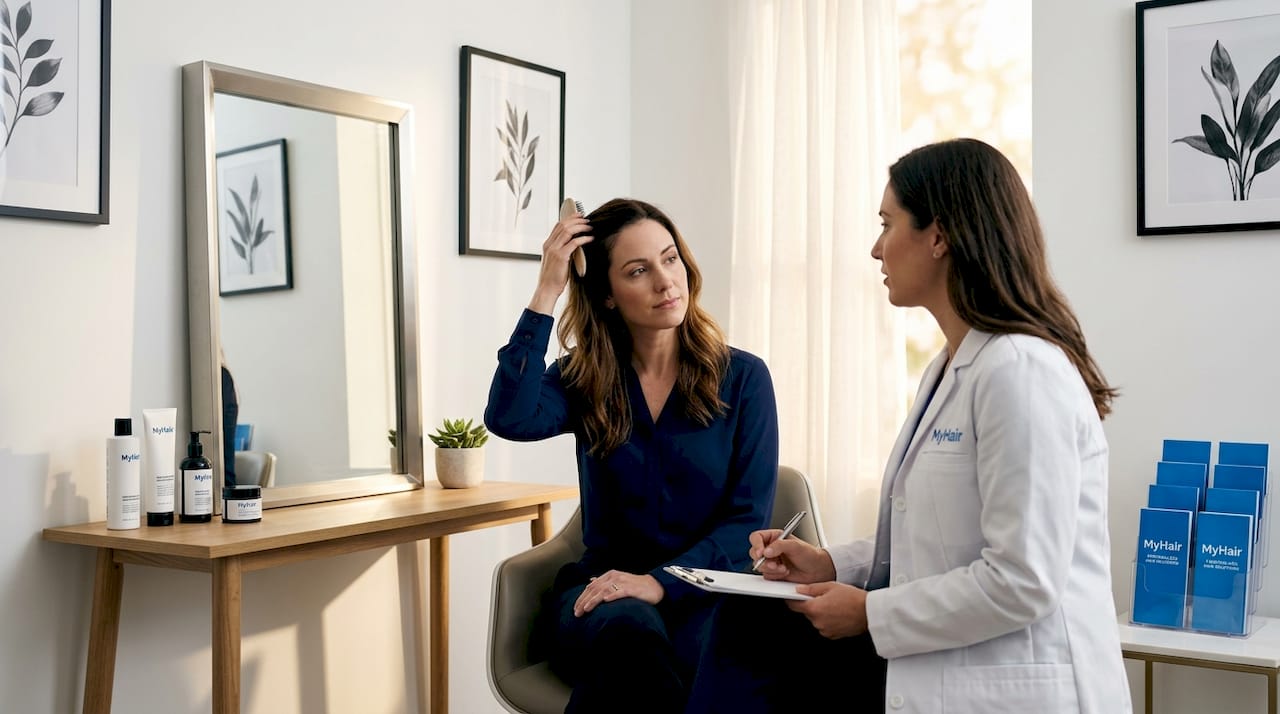
DHI takes the process a step further. Using a specialized implanting pen called a Choi implanter, grafts go directly into the recipient area without pre-made incisions. DHI enables graft implantation without shaving the entire head, which addresses one of the biggest cosmetic concerns women bring to consultations. You walk out of the procedure with your existing hair largely intact and no obvious signs of surgery to your social circle.
FUT involves removing a strip of scalp from the donor area, dissecting it into individual grafts, and implanting them. It does allow for a higher graft count per session, but the linear scar it leaves makes it a poor fit for most women. Sessions across all techniques typically involve 1,500 to 3,500 grafts and last between 4 and 8 hours, usually completed in a single day.
Pro Tip: Ask your surgeon specifically whether DHI is available at their clinic and whether they have experience performing it on female patients without full head shaving. Not all clinics offer this option, and experience with female cases makes a significant difference in outcomes.
Hairline design for female hair implants
The surgical technique is only half the picture. For female hair implants, the design of the hairline itself is where artistry separates good results from truly natural ones. A woman's hairline is fundamentally different from a man's, and designing one requires a different eye entirely.
Female hairlines tend to be rounded and softer, with a natural irregularity at the front edge. There is no sharp, defined border. Instead, the transition from forehead to hairline is gradual, with fine, wispy strands creating a feathered look rather than a hard line. Replicating that in surgery is genuinely difficult.
Single-hair grafts placed at 10–15 degree angles mimic the way natural frontal hair emerges from the scalp at an acute, forward-facing angle. Using multi-hair grafts or placing them too upright at the hairline is what creates the "pluggy" or doll-like appearance that has become shorthand for a bad transplant.
Key design priorities your surgeon should discuss with you:
- Facial proportions: The ideal female hairline sits roughly 6–8 cm above the brow, but this varies with forehead height and face shape
- Soft frontal fringe: The leading edge should use only single-hair grafts to create a natural transition
- Temple area restoration: Women often lose hair at the temples first, and restoring soft temple points can dramatically rejuvenate the overall framing of the face
- Part line density: Thinning along the central part is one of the most visible signs of female pattern loss and a key area for targeted density restoration
Pro Tip: Bring reference photos of your own hairline from 10 years ago to your consultation. Surgeons who design hairlines using your historical photos rather than a generic template produce far more personalized and satisfying results.
You can explore the detailed differences in female hairline patterns and care to understand how your specific type shapes the design approach.
Recovery and results: what to expect
Setting realistic expectations before surgery protects you emotionally and physically. The recovery from a female hairline correction procedure follows a predictable arc, but knowing each phase in advance makes the harder stretches much easier to handle.
- Days 1–5: Mild swelling around the forehead and donor area. Scabbing appears at graft sites. Sleep with your head elevated and avoid touching the recipient zone.
- Days 7–10: Most patients can return to desk work and light daily activities. Redness begins to fade. Scabs start to fall naturally.
- Weeks 2–4: Transplanted hairs begin to shed. This is expected and does not mean the grafts have failed. The follicle is still alive beneath the scalp.
- Weeks 6–12: Shock loss typically occurs in this window, which is the temporary shedding of native hairs near the transplant zone triggered by surgical trauma. For women, longer existing hair often camouflages this phase effectively.
- Months 4–6: New growth begins emerging. Hair is often fine and uneven at first. Patience is critical here.
- Months 12–18: Full results are visible at the 12–18 month mark, when transplanted follicles have fully cycled and reached mature thickness.
"The transplant improves what you have. It does not restore the hair density of your twenties. Pairing surgery with ongoing medical treatment is what produces lasting, satisfying results."
One thing many women underestimate is the emotional weight of the "ugly duckling" phase between months two and four, when hair looks patchy and the new growth has not yet appeared. Having a surgeon or care team who prepares you for this window genuinely matters.
Non-surgical options when surgery is not the answer
Because most women do not qualify for the best hair transplant for women (surgical route), understanding your non-surgical options is not a consolation prize. For many women, these treatments produce real, lasting results without any of the surgical risk or recovery time.
- Topical minoxidil (2% or 5%): The most widely used over-the-counter treatment for female pattern hair loss, shown to slow loss and stimulate regrowth in many women with consistent use
- PRP (Platelet-Rich Plasma) injections: Concentrated growth factors from your own blood are injected into the scalp to stimulate follicle activity, often used as a standalone treatment or alongside surgery
- Low-level laser therapy (LLLT): FDA-cleared devices and in-clinic treatments that use red light wavelengths to energize hair follicles and reduce shedding
- Nutritional and hormonal optimization: Correcting iron, ferritin, vitamin D, and thyroid imbalances under clinical guidance often stabilizes shedding before any procedural option is considered
- Scalp micropigmentation (SMP): A cosmetic tattooing technique that creates the appearance of density and a defined hairline without any actual follicle transplantation
Pro Tip: Before booking a surgical consultation, spend six months on a medically supervised treatment plan. If your hair loss stabilizes or improves, you may not need surgery at all. If it progresses despite treatment, you have a much clearer picture of your pattern and candidacy.
Addressing underlying causes matters as much as the treatment itself. Correcting thyroid levels, improving iron stores, or changing tight hairstyling habits can halt active loss and create the stable environment that either a medical or surgical treatment needs to work. Visit Myhair's guide on hair growth treatment for women for a deeper look at how to stack these approaches effectively.
My honest take after working with female transplant patients
I've worked alongside enough surgeons and patients to say this clearly: the most common mistake I see women make is not being given an honest candidacy assessment early enough. A consultation that ends with "you're a candidate" without a full hormonal workup, trichoscopy, and a real conversation about your hair loss stability is a consultation that is rushing past the most important step.
The other thing that strikes me every time is how much the artistic quality of hairline design varies between surgeons. Two surgeons using the exact same DHI technique on similar patients can produce dramatically different results. The surgeon who understands the feathered, soft architecture of a feminine hairline will always outperform one who applies a male-pattern template.
I've also seen the emotional side of recovery reshape how women feel about the decision entirely. The patients who were prepared for the ugly duckling phase, who understood shock loss was temporary and that results take over a year, came through the process with their confidence intact. The patients who were not prepared for it often experienced deep regret at the four-month mark, even when their final outcome was excellent.
My honest advice: be skeptical of any clinic that minimizes the difficulty of female candidacy, rushes the design conversation, or can't show you a portfolio of female-specific results. The best outcomes come from surgeons who treat your case as the specialized, nuanced procedure it actually is.
— Cyriac
Start your hair restoration with Myhair
Understanding how to fix your female hairline starts with knowing exactly what you're dealing with. Not all hair loss is the same, and the difference between a pattern that responds to non-surgical care and one that requires surgery is not always visible to the naked eye.
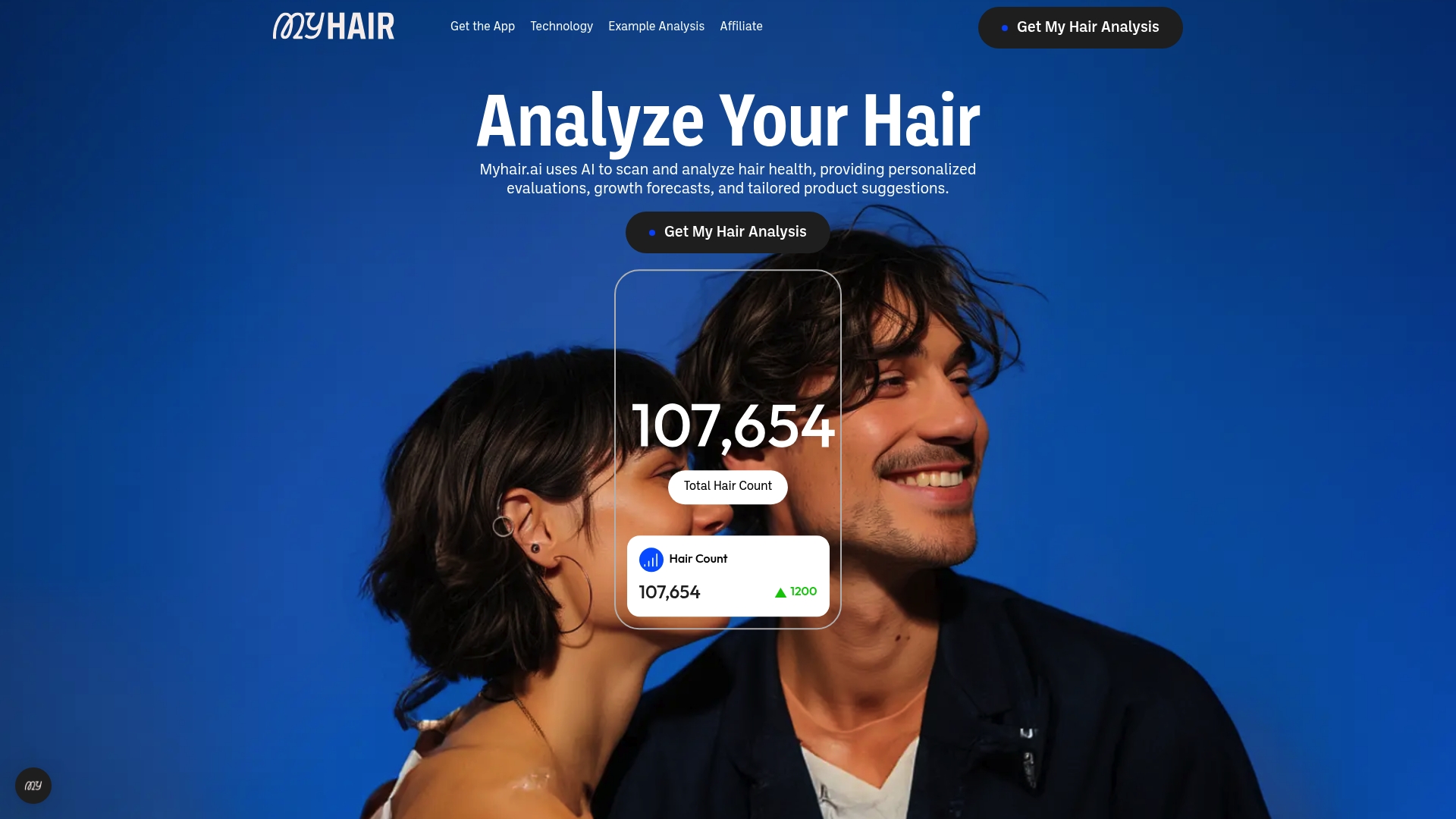
Myhair's AI-powered hair analysis scanner gives you a detailed assessment of your scalp and hair health using your phone camera, providing the kind of personalized insight that typically requires a clinic visit. Whether you're tracking changes over time, preparing for a surgeon consultation, or exploring treatment options for the first time, Myhair helps you understand your scalp's current state with precision. You can also use the hair analysis onboarding to get started with a structured, guided approach to tracking your restoration progress.
FAQ
Who is a good candidate for a female hairline transplant?
Women with stable, localized hair loss (such as traction alopecia or a clearly receded hairline) and a healthy donor zone are the strongest candidates. Only about 2–5% of women with hair loss qualify for surgical restoration, making thorough pre-surgical evaluation critical.
What is the best hair transplant technique for women?
DHI (Direct Hair Implantation) is widely preferred for women because it allows graft implantation with minimal to no shaving of the recipient area, preserving cosmetic appearance during and after the procedure.
How long does it take to see results from a female hairline correction?
Initial growth appears around months 4–6, but full, mature results from a female hairline correction take 12–18 months to develop as transplanted follicles complete their growth cycles.
Can women with diffuse hair loss get a transplant?
Women with Diffuse Unpatterned Alopecia (DUPA) are generally not good candidates because their donor follicles are also affected by miniaturization, which means transplanted grafts are likely to continue thinning over time.
What non-surgical options work best for women who are not transplant candidates?
Topical minoxidil, PRP injections, and low-level laser therapy are among the most commonly recommended first-line options. Many women also see meaningful improvement once iron, vitamin D, and thyroid levels are corrected, so a medically supervised plan that starts with these approaches is usually the smartest step before considering surgery.
Recommended
Article Score
Published to myhair.ai/blog
View the full articleHow we tailored this article for myhair.ai
Article Score
MAY 21, 2026 · 7 MIN READ
Female Hairline Transplant: What Women Need to Know
TL;DR:
- Women with diffuse thinning face limited surgical options, with only 2–5% qualifying for hair transplants. Techniques like DHI offer natural results without full head shavings, and careful design ensures a feminine, soft hairline. Non-surgical options such as topical minoxidil, PRP, and low-level laser therapy are often more suitable for most women seeking hair restoration.
If you're noticing your hairline thinning or receding, you're far from alone. A female hairline transplant can restore density and shape where hair loss has changed your appearance, but the path to surgery is more selective for women than most people realize. Female hair loss affects around 40% of women by age 50, yet the surgical options, candidacy rules, and design considerations differ significantly from what men experience. This guide walks you through everything you need to know before making any decisions, from whether you qualify to what realistic results actually look like.
Table of Contents
- Key takeaways
- Female hairline transplant candidacy explained
- Techniques used in a ladies hair transplant
- Hairline design for female hair implants
- Recovery and results: what to expect
- Non-surgical options when surgery is not the answer
- My honest take after working with female transplant patients
- Start your hair restoration with Myhair
- FAQ
Key takeaways
| Point | Details |
|---|---|
| Candidacy is rare | Only 2–5% of women with hair loss qualify for surgical restoration due to diffuse thinning patterns. |
| Technique matters | DHI is preferred for women because it allows transplantation without shaving the entire head. |
| Design is art | Soft, irregular hairlines built with single-hair grafts at acute angles produce the most natural results. |
| Recovery takes time | Expect shock loss around weeks 6–12 and full density results after 12–18 months. |
| Non-surgical options exist | Most women are better served by topical minoxidil, PRP, or low-level laser therapy before considering surgery. |
Female hairline transplant candidacy explained
Before you research clinics or costs, you need to understand whether you're actually a surgical candidate. This is where many women get blindsided. The reality is that only 2–5% of women experiencing hair loss qualify for surgical hair restoration. That number is not a typo. Compare that to roughly 90% of men with hair loss who are surgical candidates, and you start to see how fundamentally different this process is for women.
The reason comes down to hair loss patterns. Men typically experience patterned baldness with a stable donor zone at the back and sides of the scalp. Women more often experience diffuse thinning, where hair thins across the entire scalp rather than in a clearly defined region. When the donor zone is also thinning, transplanted follicles may not survive long term.
Women with Diffuse Unpatterned Alopecia (DUPA) face a particularly challenging situation. DUPA patients have compromised donor follicles across the scalp, which means grafts extracted from that area carry miniaturized hair that will likely continue to thin after transplantation. Placing those follicles into a new location does not make them healthy again.
Common causes that affect candidacy
Understanding why your hair is thinning shapes everything about your treatment path. The most common causes a surgeon will evaluate include:
- Androgenetic alopecia (female pattern hair loss): Follows the Ludwig scale, with thinning concentrated at the crown and part line
- Traction alopecia: Caused by years of tight hairstyles pulling at the hairline, often leaving intact donor zones, which makes these patients better candidates
- Hormonal imbalances: Thyroid dysfunction, elevated androgens, and post-pregnancy shifts can all trigger temporary or progressive loss
- Autoimmune conditions: Alopecia areata creates patchy loss that is typically not treated surgically
- Nutritional deficiencies: Iron, ferritin, and vitamin D levels directly impact follicle health
A thorough diagnostic workup before any surgery should include blood panels, trichoscopy (scalp imaging), and a pull test to assess active shedding. Untreated hormonal or autoimmune causes can worsen outcomes even after a technically successful transplant, which is why medical clearance is non-negotiable. You can learn more about the full spectrum of female hairline causes and solutions to better understand your own pattern before booking a consultation.
Techniques used in a ladies hair transplant
Once a surgeon confirms you have a stable donor area and a treatable pattern, the next question is which technique fits your anatomy and lifestyle. Three main methods are used in a ladies hair transplant, and they are not interchangeable.
| Technique | Scarring | Shaving Required | Best For Women |
|---|---|---|---|
| FUE (Follicular Unit Extraction) | No linear scar | Partial shave | Most female candidates |
| DHI (Direct Hair Implantation) | No linear scar | Minimal to none | Women wanting no visible shaving |
| FUT (Follicular Unit Transplantation) | Linear scar at donor site | Full donor strip | Rarely recommended for women |
FUE extracts individual follicular units one by one from the donor zone. FUE leaves no linear scar, making it appealing for women who wear their hair up or short. A partial shave of the donor area is usually required, but surrounding hair can cover it during recovery.
DHI takes the process a step further. Using a specialized implanting pen called a Choi implanter, grafts go directly into the recipient area without pre-made incisions. DHI enables graft implantation without shaving the entire head, which addresses one of the biggest cosmetic concerns women bring to consultations. You walk out of the procedure with your existing hair largely intact and no obvious signs of surgery to your social circle.
FUT involves removing a strip of scalp from the donor area, dissecting it into individual grafts, and implanting them. It does allow for a higher graft count per session, but the linear scar it leaves makes it a poor fit for most women. Sessions across all techniques typically involve 1,500 to 3,500 grafts and last between 4 and 8 hours, usually completed in a single day.
Pro Tip: Ask your surgeon specifically whether DHI is available at their clinic and whether they have experience performing it on female patients without full head shaving. Not all clinics offer this option, and experience with female cases makes a significant difference in outcomes.
Hairline design for female hair implants
The surgical technique is only half the picture. For female hair implants, the design of the hairline itself is where artistry separates good results from truly natural ones. A woman's hairline is fundamentally different from a man's, and designing one requires a different eye entirely.
Female hairlines tend to be rounded and softer, with a natural irregularity at the front edge. There is no sharp, defined border. Instead, the transition from forehead to hairline is gradual, with fine, wispy strands creating a feathered look rather than a hard line. Replicating that in surgery is genuinely difficult.
Single-hair grafts placed at 10–15 degree angles mimic the way natural frontal hair emerges from the scalp at an acute, forward-facing angle. Using multi-hair grafts or placing them too upright at the hairline is what creates the "pluggy" or doll-like appearance that has become shorthand for a bad transplant.
Key design priorities your surgeon should discuss with you:
- Facial proportions: The ideal female hairline sits roughly 6–8 cm above the brow, but this varies with forehead height and face shape
- Soft frontal fringe: The leading edge should use only single-hair grafts to create a natural transition
- Temple area restoration: Women often lose hair at the temples first, and restoring soft temple points can dramatically rejuvenate the overall framing of the face
- Part line density: Thinning along the central part is one of the most visible signs of female pattern loss and a key area for targeted density restoration
Pro Tip: Bring reference photos of your own hairline from 10 years ago to your consultation. Surgeons who design hairlines using your historical photos rather than a generic template produce far more personalized and satisfying results.
You can explore the detailed differences in female hairline patterns and care to understand how your specific type shapes the design approach.
Recovery and results: what to expect
Setting realistic expectations before surgery protects you emotionally and physically. The recovery from a female hairline correction procedure follows a predictable arc, but knowing each phase in advance makes the harder stretches much easier to handle.
- Days 1–5: Mild swelling around the forehead and donor area. Scabbing appears at graft sites. Sleep with your head elevated and avoid touching the recipient zone.
- Days 7–10: Most patients can return to desk work and light daily activities. Redness begins to fade. Scabs start to fall naturally.
- Weeks 2–4: Transplanted hairs begin to shed. This is expected and does not mean the grafts have failed. The follicle is still alive beneath the scalp.
- Weeks 6–12: Shock loss typically occurs in this window, which is the temporary shedding of native hairs near the transplant zone triggered by surgical trauma. For women, longer existing hair often camouflages this phase effectively.
- Months 4–6: New growth begins emerging. Hair is often fine and uneven at first. Patience is critical here.
- Months 12–18: Full results are visible at the 12–18 month mark, when transplanted follicles have fully cycled and reached mature thickness.
"The transplant improves what you have. It does not restore the hair density of your twenties. Pairing surgery with ongoing medical treatment is what produces lasting, satisfying results."
One thing many women underestimate is the emotional weight of the "ugly duckling" phase between months two and four, when hair looks patchy and the new growth has not yet appeared. Having a surgeon or care team who prepares you for this window genuinely matters.
Non-surgical options when surgery is not the answer
Because most women do not qualify for the best hair transplant for women (surgical route), understanding your non-surgical options is not a consolation prize. For many women, these treatments produce real, lasting results without any of the surgical risk or recovery time.
- Topical minoxidil (2% or 5%): The most widely used over-the-counter treatment for female pattern hair loss, shown to slow loss and stimulate regrowth in many women with consistent use
- PRP (Platelet-Rich Plasma) injections: Concentrated growth factors from your own blood are injected into the scalp to stimulate follicle activity, often used as a standalone treatment or alongside surgery
- Low-level laser therapy (LLLT): FDA-cleared devices and in-clinic treatments that use red light wavelengths to energize hair follicles and reduce shedding
- Nutritional and hormonal optimization: Correcting iron, ferritin, vitamin D, and thyroid imbalances under clinical guidance often stabilizes shedding before any procedural option is considered
- Scalp micropigmentation (SMP): A cosmetic tattooing technique that creates the appearance of density and a defined hairline without any actual follicle transplantation
Pro Tip: Before booking a surgical consultation, spend six months on a medically supervised treatment plan. If your hair loss stabilizes or improves, you may not need surgery at all. If it progresses despite treatment, you have a much clearer picture of your pattern and candidacy.
Addressing underlying causes matters as much as the treatment itself. Correcting thyroid levels, improving iron stores, or changing tight hairstyling habits can halt active loss and create the stable environment that either a medical or surgical treatment needs to work. Visit Myhair's guide on hair growth treatment for women for a deeper look at how to stack these approaches effectively.
My honest take after working with female transplant patients
I've worked alongside enough surgeons and patients to say this clearly: the most common mistake I see women make is not being given an honest candidacy assessment early enough. A consultation that ends with "you're a candidate" without a full hormonal workup, trichoscopy, and a real conversation about your hair loss stability is a consultation that is rushing past the most important step.
The other thing that strikes me every time is how much the artistic quality of hairline design varies between surgeons. Two surgeons using the exact same DHI technique on similar patients can produce dramatically different results. The surgeon who understands the feathered, soft architecture of a feminine hairline will always outperform one who applies a male-pattern template.
I've also seen the emotional side of recovery reshape how women feel about the decision entirely. The patients who were prepared for the ugly duckling phase, who understood shock loss was temporary and that results take over a year, came through the process with their confidence intact. The patients who were not prepared for it often experienced deep regret at the four-month mark, even when their final outcome was excellent.
My honest advice: be skeptical of any clinic that minimizes the difficulty of female candidacy, rushes the design conversation, or can't show you a portfolio of female-specific results. The best outcomes come from surgeons who treat your case as the specialized, nuanced procedure it actually is.
— Cyriac
Start your hair restoration with Myhair
Understanding how to fix your female hairline starts with knowing exactly what you're dealing with. Not all hair loss is the same, and the difference between a pattern that responds to non-surgical care and one that requires surgery is not always visible to the naked eye.
Myhair's AI-powered hair analysis scanner gives you a detailed assessment of your scalp and hair health using your phone camera, providing the kind of personalized insight that typically requires a clinic visit. Whether you're tracking changes over time, preparing for a surgeon consultation, or exploring treatment options for the first time, Myhair helps you understand your scalp's current state with precision. You can also use the hair analysis onboarding to get started with a structured, guided approach to tracking your restoration progress.
FAQ
Who is a good candidate for a female hairline transplant?
Women with stable, localized hair loss (such as traction alopecia or a clearly receded hairline) and a healthy donor zone are the strongest candidates. Only about 2–5% of women with hair loss qualify for surgical restoration, making thorough pre-surgical evaluation critical.
What is the best hair transplant technique for women?
DHI (Direct Hair Implantation) is widely preferred for women because it allows graft implantation with minimal to no shaving of the recipient area, preserving cosmetic appearance during and after the procedure.
How long does it take to see results from a female hairline correction?
Initial growth appears around months 4–6, but full, mature results from a female hairline correction take 12–18 months to develop as transplanted follicles complete their growth cycles.
Can women with diffuse hair loss get a transplant?
Women with Diffuse Unpatterned Alopecia (DUPA) are generally not good candidates because their donor follicles are also affected by miniaturization, which means transplanted grafts are likely to continue thinning over time.
What non-surgical options work best for women who are not transplant candidates?
Topical minoxidil, PRP injections, and low-level laser therapy are among the most commonly recommended first-line options. Many women also see meaningful improvement once iron, vitamin D, and thyroid levels are corrected, so a medically supervised plan that starts with these approaches is usually the smartest step before considering surgery.
Recommended
Published to myhair.ai/blog
View full articlefor Dentists succès
 Matthew Johnson
Le seul véritable outil de croissance organique que j'ai pu trouver qui fait tout automatiquement. Leurs articles quotidiens sont optimisés LLM, les backlinks sont naturellement insérés dans les articles, les liens internes pointent vers les pages piliers, les schémas JSON-LD sont générés automatiquement et les sujets sont priorisés selon nos classements actuels. Je recommande vivement !
 Gasper Babnik
Nous avons commencé à être classés sur ChatGPT et Perplexity avec notre marque, ce qui nous apporte maintenant près de 20 % de notre trafic ! Toutes les métriques organiques sont également en hausse !

 Marusa
Nous avons augmenté notre domain rating (DR) de 30 à 38 en moins de 60 jours ! Je suis sûr que ce n'est qu'un début !
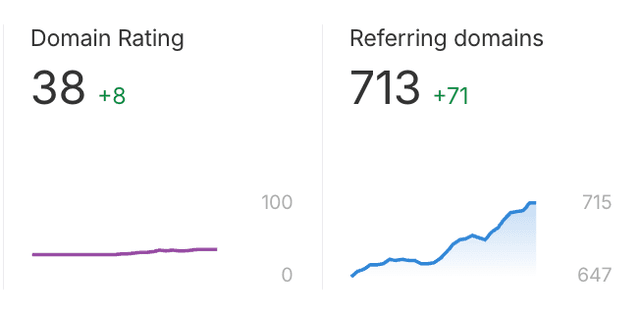


Leur programme d'échange de backlinks est inestimable et incroyablement bien conçu ! Chaque mois, nous obtenons environ 7 backlinks de haute qualité et 30 articles optimisés, y compris des listes qui sont essentielles pour les classements LLM. Nous sommes classés pour 700 mots-clés de plus qu'avant !

 Stefan Coetzer
Ces gars vont au-delà de leurs obligations pour vous comprendre et comprendre vos besoins en tant qu'entreprise. Je suggère d'utiliser BabyLoveGrowth car ils regardent vers l'avenir et évoluent avec lui. Merci beaucoup pour votre aide Dylon. Vous êtes vraiment uniques en votre genre et indispensables pour tout type d'entreprise.
J'ai trouvé babylovegrowth.ai sur reddit et j'ai immédiatement su que c'était pour mon agence. Cela a éliminé les incertitudes de la rédaction de blog et nous a fait gagner beaucoup de temps précieux. Nous le recommandons vivement et le suggérons à tous nos clients d'agence.
 Mariam M.
J'ai testé plein d'outils et celui-ci est de loin le meilleur ! Les articles ont des images hyper réalistes, une excellente structure, des infographies, des liens internes pertinents et des citations pertinentes. Le support est également excellent.

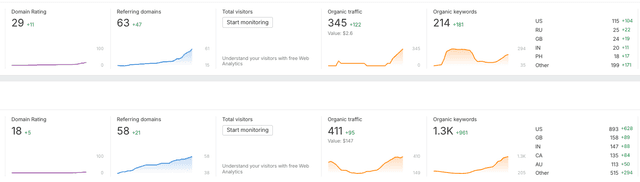
Nous avons réussi à intégrer 15 clients de plus ces 2 derniers mois. Tout le processus est automatisé et nous ne pourrions pas être plus sincèrement satisfaits des résultats !
 Dimeji Iwalesin
J'utilise Baby Love Growth depuis plus de 3 mois et je suis sincèrement satisfait du service. Leur échange de liens et publication d'articles sont fantastiques — cohérents, bien organisés et livrés comme promis. La communication a été fluide, et le travail a bien soutenu mes efforts SEO. Je les recommande à quiconque cherche un support fiable pour la création de liens et la publication de contenu.
 Rohan Kundu
Je dois dire que je suis impressionné.
 Gaurav Malik
Le trafic provenant des réponses IA était inattendu mais très bienvenu. GEO fonctionne clairement.
Darren Flynn
Nous voyons une croissance constante du DR sans faire de prospection nous-mêmes.
Michael Rupp
J'utilise Babylovegrowth.ai depuis quelques semaines maintenant et j'ai déjà vu de la croissance. Les articles et backlinks que je reçois sont de grande qualité, et j'ai vu un impact positif dans mes résultats Search Console.
 Thomas Jordan
Nous avons commencé à voir du mouvement dès le premier mois, ce qui nous a surpris.


Nous avons passé des années à payer des agences pour le SEO. Beaucoup d'appels, beaucoup de rapports, très peu d'impact. Nous sommes passés à @BabyLoveGrowth et l'expérience est incroyable. Tout fonctionne en pilote automatique, contenu, publication et backlinks inclus. Le trafic organique se compose enfin, et nous n'avons eu à embaucher ou gérer personne. C'est comme ça que le SEO devrait fonctionner en 2026.
 Peter Reichert
Nous avons complètement remplacé la planification manuelle de contenu. Un énorme gain de temps pour notre équipe.


En tant que fondateur, j'essaie de supprimer autant de friction opérationnelle que possible. Le SEO était l'une des dernières choses encore très manuelles pour nous chez Rekla.Ai. BabyLoveGrowth | SEO for AI search a changé cela. Nous l'avons activé, laissé tourner, et nous sommes concentrés sur le produit pendant que la visibilité organique continuait de s'améliorer en arrière-plan. C'est très simple à configurer, et ça marche pour toutes les langues/marchés. Honnêtement, l'une des décisions de croissance les plus faciles que nous ayons prises cette année. Jetez-y un œil !
PatrykDu bon travail, je viens de créer un compte avec eux, on verra comment ça se passe.
 Sam J.
Je suis tellement surpris d'avoir pu connecter babylovegrowth à ma plateforme via API qui est purement du code et n'utilise pas WordPress ou d'autres CMS populaires.

De plus en plus d'entreprises investissent dans la visibilité sur Google et dans les outils IA comme ChatGPT. Nous ne voulions pas qu'Oxfordmagictours soit en retard sur ce changement. Nous avons commencé à utiliser @BabyLoveGrowth pour construire cette visibilité tôt. Après quelques semaines, les premiers résultats étaient déjà là, et ça continue de s'améliorer. La recherche se compose avec le temps. Vous devriez jeter un œil à cette plateforme !
 Frank Reinecke
Honnêtement, BabyLoveGrowth.ai est un vrai sauveur. J'étais sceptique au sujet du SEO IA au début, mais voir ma marque effectivement citée dans les réponses ChatGPT et Gemini a été le vrai moment wow. C'est super facile à configurer et gère tout le gros du travail avec le contenu et les backlinks. Si vous en avez marre du SEO à l'ancienne et voulez vraiment être trouvé là où les gens cherchent aujourd'hui, c'est ça.

Nous avons commencé à utiliser BabyLoveGrowth il y a quelques mois, surtout par curiosité. C'est impressionnant à quel point c'est autonome. Le contenu est créé, publié et optimisé automatiquement, et nous pouvons réellement voir le trafic organique croître semaine après semaine.
 Mrs Nicole Isherwood
Le processus de configuration était étonnamment rapide et facile, il suffit d'entrer vos infos et tout se génère. J'ai déjà reçu quelques backlinks de qualité après quelques semaines.
 Fotis Kontargiris
Génération d'articles facile à utiliser avec une excellente qualité qui génère du trafic organique !
Matthew JohnsonLe seul véritable outil de croissance organique que j'ai pu trouver qui fait tout automatiquement. Leurs articles quotidiens sont optimisés LLM, les backlinks sont naturellement insérés dans les articles, les liens internes pointent vers les pages piliers, les schémas JSON-LD sont générés automatiquement et les sujets sont priorisés selon nos classements actuels. Je recommande vivement !
Gasper BabnikNous avons commencé à être classés sur ChatGPT et Perplexity avec notre marque, ce qui nous apporte maintenant près de 20 % de notre trafic ! Toutes les métriques organiques sont également en hausse !
MarusaNous avons augmenté notre domain rating (DR) de 30 à 38 en moins de 60 jours ! Je suis sûr que ce n'est qu'un début !
Leur programme d'échange de backlinks est inestimable et incroyablement bien conçu ! Chaque mois, nous obtenons environ 7 backlinks de haute qualité et 30 articles optimisés, y compris des listes qui sont essentielles pour les classements LLM. Nous sommes classés pour 700 mots-clés de plus qu'avant !
Stefan CoetzerCes gars vont au-delà de leurs obligations pour vous comprendre et comprendre vos besoins en tant qu'entreprise. Je suggère d'utiliser BabyLoveGrowth car ils regardent vers l'avenir et évoluent avec lui. Merci beaucoup pour votre aide Dylon. Vous êtes vraiment uniques en votre genre et indispensables pour tout type d'entreprise.
Matthew JohnsonLe seul véritable outil de croissance organique que j'ai pu trouver qui fait tout automatiquement. Leurs articles quotidiens sont optimisés LLM, les backlinks sont naturellement insérés dans les articles, les liens internes pointent vers les pages piliers, les schémas JSON-LD sont générés automatiquement et les sujets sont priorisés selon nos classements actuels. Je recommande vivement !
Gasper BabnikNous avons commencé à être classés sur ChatGPT et Perplexity avec notre marque, ce qui nous apporte maintenant près de 20 % de notre trafic ! Toutes les métriques organiques sont également en hausse !
MarusaNous avons augmenté notre domain rating (DR) de 30 à 38 en moins de 60 jours ! Je suis sûr que ce n'est qu'un début !
Leur programme d'échange de backlinks est inestimable et incroyablement bien conçu ! Chaque mois, nous obtenons environ 7 backlinks de haute qualité et 30 articles optimisés, y compris des listes qui sont essentielles pour les classements LLM. Nous sommes classés pour 700 mots-clés de plus qu'avant !
Stefan CoetzerCes gars vont au-delà de leurs obligations pour vous comprendre et comprendre vos besoins en tant qu'entreprise. Je suggère d'utiliser BabyLoveGrowth car ils regardent vers l'avenir et évoluent avec lui. Merci beaucoup pour votre aide Dylon. Vous êtes vraiment uniques en votre genre et indispensables pour tout type d'entreprise.
J'ai trouvé babylovegrowth.ai sur reddit et j'ai immédiatement su que c'était pour mon agence. Cela a éliminé les incertitudes de la rédaction de blog et nous a fait gagner beaucoup de temps précieux. Nous le recommandons vivement et le suggérons à tous nos clients d'agence.
Mariam M.J'ai testé plein d'outils et celui-ci est de loin le meilleur ! Les articles ont des images hyper réalistes, une excellente structure, des infographies, des liens internes pertinents et des citations pertinentes. Le support est également excellent.
Nous avons réussi à intégrer 15 clients de plus ces 2 derniers mois. Tout le processus est automatisé et nous ne pourrions pas être plus sincèrement satisfaits des résultats !
Dimeji IwalesinJ'utilise Baby Love Growth depuis plus de 3 mois et je suis sincèrement satisfait du service. Leur échange de liens et publication d'articles sont fantastiques — cohérents, bien organisés et livrés comme promis. La communication a été fluide, et le travail a bien soutenu mes efforts SEO. Je les recommande à quiconque cherche un support fiable pour la création de liens et la publication de contenu.
Rohan KunduJe dois dire que je suis impressionné.
J'ai trouvé babylovegrowth.ai sur reddit et j'ai immédiatement su que c'était pour mon agence. Cela a éliminé les incertitudes de la rédaction de blog et nous a fait gagner beaucoup de temps précieux. Nous le recommandons vivement et le suggérons à tous nos clients d'agence.
Mariam M.J'ai testé plein d'outils et celui-ci est de loin le meilleur ! Les articles ont des images hyper réalistes, une excellente structure, des infographies, des liens internes pertinents et des citations pertinentes. Le support est également excellent.
Nous avons réussi à intégrer 15 clients de plus ces 2 derniers mois. Tout le processus est automatisé et nous ne pourrions pas être plus sincèrement satisfaits des résultats !
Dimeji IwalesinJ'utilise Baby Love Growth depuis plus de 3 mois et je suis sincèrement satisfait du service. Leur échange de liens et publication d'articles sont fantastiques — cohérents, bien organisés et livrés comme promis. La communication a été fluide, et le travail a bien soutenu mes efforts SEO. Je les recommande à quiconque cherche un support fiable pour la création de liens et la publication de contenu.
Rohan KunduJe dois dire que je suis impressionné.
Gaurav MalikLe trafic provenant des réponses IA était inattendu mais très bienvenu. GEO fonctionne clairement.
Darren FlynnNous voyons une croissance constante du DR sans faire de prospection nous-mêmes.
Michael RuppJ'utilise Babylovegrowth.ai depuis quelques semaines maintenant et j'ai déjà vu de la croissance. Les articles et backlinks que je reçois sont de grande qualité, et j'ai vu un impact positif dans mes résultats Search Console.
Thomas JordanNous avons commencé à voir du mouvement dès le premier mois, ce qui nous a surpris.
Nous avons passé des années à payer des agences pour le SEO. Beaucoup d'appels, beaucoup de rapports, très peu d'impact. Nous sommes passés à @BabyLoveGrowth et l'expérience est incroyable. Tout fonctionne en pilote automatique, contenu, publication et backlinks inclus. Le trafic organique se compose enfin, et nous n'avons eu à embaucher ou gérer personne. C'est comme ça que le SEO devrait fonctionner en 2026.
Peter ReichertNous avons complètement remplacé la planification manuelle de contenu. Un énorme gain de temps pour notre équipe.
En tant que fondateur, j'essaie de supprimer autant de friction opérationnelle que possible. Le SEO était l'une des dernières choses encore très manuelles pour nous chez Rekla.Ai. BabyLoveGrowth | SEO for AI search a changé cela. Nous l'avons activé, laissé tourner, et nous sommes concentrés sur le produit pendant que la visibilité organique continuait de s'améliorer en arrière-plan. C'est très simple à configurer, et ça marche pour toutes les langues/marchés. Honnêtement, l'une des décisions de croissance les plus faciles que nous ayons prises cette année. Jetez-y un œil !
PatrykDu bon travail, je viens de créer un compte avec eux, on verra comment ça se passe.
Sam J.Je suis tellement surpris d'avoir pu connecter babylovegrowth à ma plateforme via API qui est purement du code et n'utilise pas WordPress ou d'autres CMS populaires.
De plus en plus d'entreprises investissent dans la visibilité sur Google et dans les outils IA comme ChatGPT. Nous ne voulions pas qu'Oxfordmagictours soit en retard sur ce changement. Nous avons commencé à utiliser @BabyLoveGrowth pour construire cette visibilité tôt. Après quelques semaines, les premiers résultats étaient déjà là, et ça continue de s'améliorer. La recherche se compose avec le temps. Vous devriez jeter un œil à cette plateforme !
Frank ReineckeHonnêtement, BabyLoveGrowth.ai est un vrai sauveur. J'étais sceptique au sujet du SEO IA au début, mais voir ma marque effectivement citée dans les réponses ChatGPT et Gemini a été le vrai moment wow. C'est super facile à configurer et gère tout le gros du travail avec le contenu et les backlinks. Si vous en avez marre du SEO à l'ancienne et voulez vraiment être trouvé là où les gens cherchent aujourd'hui, c'est ça.
Nous avons commencé à utiliser BabyLoveGrowth il y a quelques mois, surtout par curiosité. C'est impressionnant à quel point c'est autonome. Le contenu est créé, publié et optimisé automatiquement, et nous pouvons réellement voir le trafic organique croître semaine après semaine.
Mrs Nicole IsherwoodLe processus de configuration était étonnamment rapide et facile, il suffit d'entrer vos infos et tout se génère. J'ai déjà reçu quelques backlinks de qualité après quelques semaines.
Fotis KontargirisGénération d'articles facile à utiliser avec une excellente qualité qui génère du trafic organique !
Gaurav MalikLe trafic provenant des réponses IA était inattendu mais très bienvenu. GEO fonctionne clairement.
Darren FlynnNous voyons une croissance constante du DR sans faire de prospection nous-mêmes.
Michael RuppJ'utilise Babylovegrowth.ai depuis quelques semaines maintenant et j'ai déjà vu de la croissance. Les articles et backlinks que je reçois sont de grande qualité, et j'ai vu un impact positif dans mes résultats Search Console.
Thomas JordanNous avons commencé à voir du mouvement dès le premier mois, ce qui nous a surpris.
Nous avons passé des années à payer des agences pour le SEO. Beaucoup d'appels, beaucoup de rapports, très peu d'impact. Nous sommes passés à @BabyLoveGrowth et l'expérience est incroyable. Tout fonctionne en pilote automatique, contenu, publication et backlinks inclus. Le trafic organique se compose enfin, et nous n'avons eu à embaucher ou gérer personne. C'est comme ça que le SEO devrait fonctionner en 2026.
Peter ReichertNous avons complètement remplacé la planification manuelle de contenu. Un énorme gain de temps pour notre équipe.
En tant que fondateur, j'essaie de supprimer autant de friction opérationnelle que possible. Le SEO était l'une des dernières choses encore très manuelles pour nous chez Rekla.Ai. BabyLoveGrowth | SEO for AI search a changé cela. Nous l'avons activé, laissé tourner, et nous sommes concentrés sur le produit pendant que la visibilité organique continuait de s'améliorer en arrière-plan. C'est très simple à configurer, et ça marche pour toutes les langues/marchés. Honnêtement, l'une des décisions de croissance les plus faciles que nous ayons prises cette année. Jetez-y un œil !
PatrykDu bon travail, je viens de créer un compte avec eux, on verra comment ça se passe.
Sam J.Je suis tellement surpris d'avoir pu connecter babylovegrowth à ma plateforme via API qui est purement du code et n'utilise pas WordPress ou d'autres CMS populaires.
De plus en plus d'entreprises investissent dans la visibilité sur Google et dans les outils IA comme ChatGPT. Nous ne voulions pas qu'Oxfordmagictours soit en retard sur ce changement. Nous avons commencé à utiliser @BabyLoveGrowth pour construire cette visibilité tôt. Après quelques semaines, les premiers résultats étaient déjà là, et ça continue de s'améliorer. La recherche se compose avec le temps. Vous devriez jeter un œil à cette plateforme !
Frank ReineckeHonnêtement, BabyLoveGrowth.ai est un vrai sauveur. J'étais sceptique au sujet du SEO IA au début, mais voir ma marque effectivement citée dans les réponses ChatGPT et Gemini a été le vrai moment wow. C'est super facile à configurer et gère tout le gros du travail avec le contenu et les backlinks. Si vous en avez marre du SEO à l'ancienne et voulez vraiment être trouvé là où les gens cherchent aujourd'hui, c'est ça.
Nous avons commencé à utiliser BabyLoveGrowth il y a quelques mois, surtout par curiosité. C'est impressionnant à quel point c'est autonome. Le contenu est créé, publié et optimisé automatiquement, et nous pouvons réellement voir le trafic organique croître semaine après semaine.
Mrs Nicole IsherwoodLe processus de configuration était étonnamment rapide et facile, il suffit d'entrer vos infos et tout se génère. J'ai déjà reçu quelques backlinks de qualité après quelques semaines.
Fotis KontargirisGénération d'articles facile à utiliser avec une excellente qualité qui génère du trafic organique !
Investissez dans une croissance durable, maximisez votre ROI
Forfait Grow
Pour les fondateurs solo occupés et les startups lean qui recherchent une automatisation à 100 %
Facturation mensuelle · annulation à tout moment
Ce qui est inclus
- 30 articles SEO et LLM auto-publiés / mois
- 800 $+ de backlinks créés mensuellement
- Recherche de mots-clés automatisée
- Audit GEO + analyse des écarts concurrentiels
- Agent de développement de marque Reddit
- Suivi de citations IA — ChatGPT et Perplexity
- Plus de 20 langues, qualité native
- Intégrations CMS — WordPress, Webflow, Shopify, Wix, API
- Support email standard
Forfait Scale
Pour les petites et moyennes entreprises qui cherchent à développer leur SEO/GEO.
Facturation mensuelle · annulation à tout moment
L'avantage Scale
Spécialiste SEO/GEO dédié en tête-à-tête
Appels stratégiques, révision de contenu et planification d'autorité thématique avec un expert senior. 2 heures incluses par mois.
- 3 langues de contenu supplémentaires en plus de Grow
- Accès anticipé aux fonctionnalités bêta
- Support prioritaire · réponses le jour même
Vous voulez proposer le SEO à vos clients — sans le construire vous-même ?
Revendez BabyLoveGrowth à vos clients et gérez tout depuis un seul endroit.
Revendez sous votre marque
Proposez des services SEO à vos clients à votre tarif
Contrôlez la visibilité
Résultats uniquement ou tableau de bord complet
Montez en charge facilement
Gérez tous vos clients en un seul endroit
Exécution en pilote automatique
Contenu, backlinks et SEO gérés pour vous
FAQ
Vous n'avez pas trouvé ce que vous cherchiez ?
Envoyez-nous un email