Why SEO Matters for Ecommerce Growth Worldwide


Most american e-commerce brands face tough competition as over 90 percent of online shopping journeys begin with a search engine. Getting noticed is more difficult than ever, especially as AI-driven SEO continues to rewrite the rules. Understanding the real potential and common misconceptions of search optimization matters whether you serve local customers or target global markets. This guide reveals how modern SEO and AI-powered automation help drive sustainable growth, avoid costly mistakes, and strengthen your digital presence.
Table of Contents
- Defining SEO And Common Misconceptions
- Core Types Of SEO For Ecommerce Brands
- How AI Is Transforming SEO Strategies
- Key Features Of Scalable SEO Automation
- Comparing SEO With Paid Marketing Channels
- Risks, Costs, And Common Ecommerce Mistakes
Key Takeaways
| Point | Details |
|---|---|
| Modern SEO is Dynamic | SEO is an ongoing process that requires continuous adaptation to evolving search algorithms and user expectations. |
| Focus on Quality Content | High-quality, comprehensive content that answers user questions is more effective than simply optimizing for keywords. |
| Integrate AI Tools | Use AI-powered SEO tools to enhance strategy development while maintaining human oversight for creative integrity. |
| Balance SEO with Paid Marketing | Combining organic SEO with paid marketing strategies offers a more holistic approach to achieving online visibility and credibility. |
Defining SEO and Common Misconceptions
Search Engine Optimization (SEO) is a strategic digital marketing approach designed to improve website visibility and organic search rankings. Contrary to outdated beliefs, modern SEO has evolved far beyond simple keyword insertion, transforming into a sophisticated discipline that prioritizes user experience, content quality, and technical website performance.
Many business owners mistakenly view SEO as a static, one-time task, but it's actually a dynamic process requiring continuous adaptation. SEO trends are rapidly changing with AI technologies, challenging traditional optimization strategies. The rise of artificial intelligence in search algorithms means businesses must now create content that serves both human readers and machine learning systems, focusing on comprehensive, authoritative information rather than surface-level keyword matching.
Common misconceptions about SEO include believing that high keyword density automatically improves rankings or that technical optimization can compensate for poor content quality. In reality, search engines like Google prioritize websites offering genuine value, comprehensive information, and excellent user experiences. Future SEO strategies demand deeper integration of brand visibility, structured data, and AI-friendly content, moving far beyond traditional optimization techniques.
Pro Tip: Invest in creating high-quality, comprehensive content that genuinely answers user questions and provides unique insights, rather than trying to game search engine algorithms with superficial optimization techniques.
Core Types of SEO for Ecommerce Brands
Ecommerce search engine optimization encompasses multiple strategic approaches designed to enhance online visibility and drive organic traffic to digital storefronts. Technical SEO, On-Page SEO, and Off-Page SEO represent the core pillars that collectively determine a brand's search engine performance and digital marketing effectiveness.
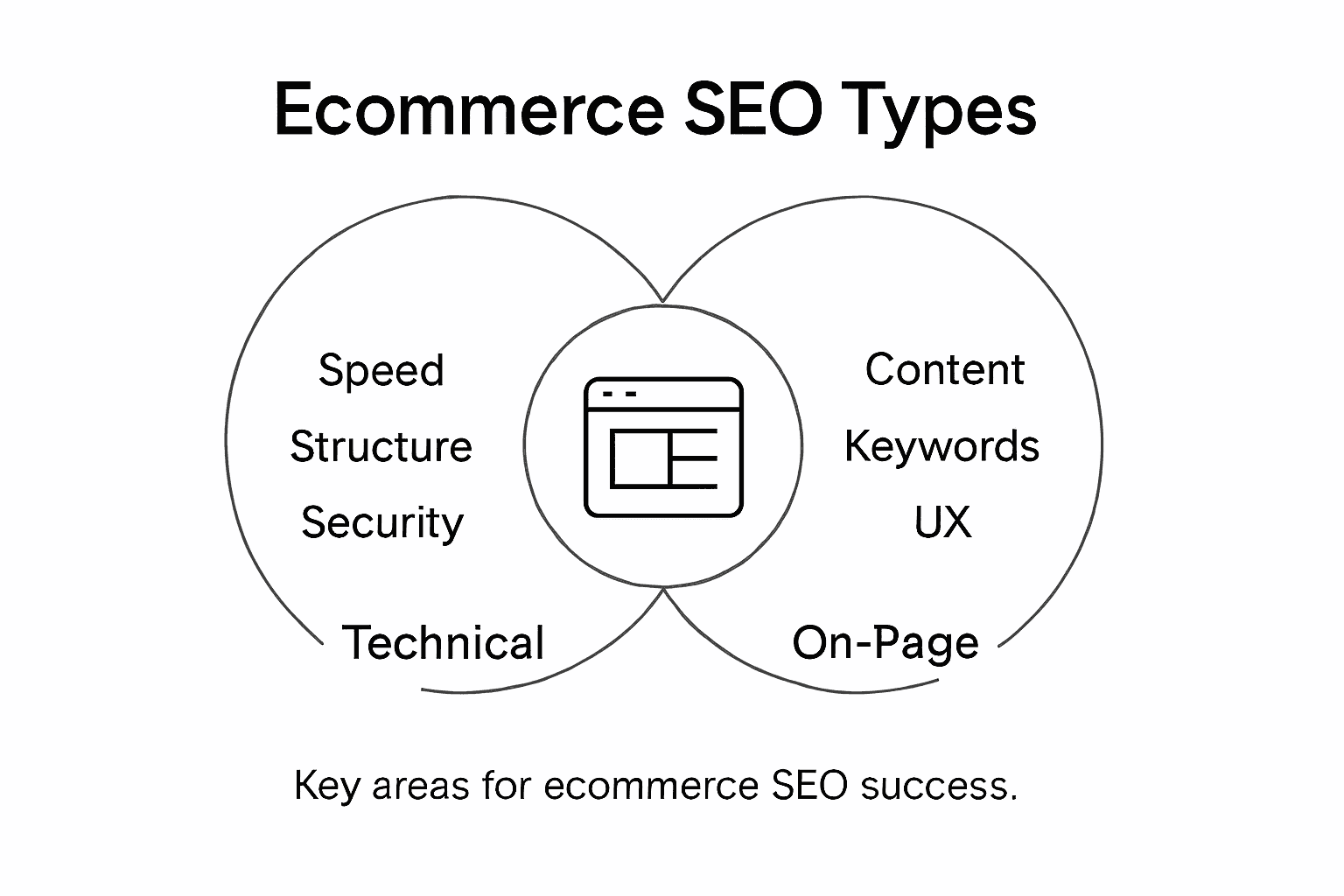
Technical SEO focuses on website infrastructure and performance optimization, ensuring search engines can efficiently crawl and index product pages, improve site speed, implement structured data markup, and create mobile-responsive designs. Key elements include site architecture, page load times, secure connections, XML sitemaps, and resolving potential crawl errors that might prevent search engines from understanding website content. Scalable SEO automation strategies can significantly streamline these technical optimization processes, enabling brands to maintain sophisticated technical foundations without constant manual intervention.

On-Page SEO involves optimizing individual product pages and content elements to improve search rankings. This includes crafting compelling product descriptions, using strategic keywords, creating unique meta titles and descriptions, implementing header tags effectively, and ensuring high-quality, informative content that addresses potential customer questions. Off-Page SEO complements these efforts by building external credibility through quality backlinks, social media engagement, and brand mentions across digital platforms, which signal to search engines that the ecommerce brand is authoritative and trustworthy.
Pro Tip: Develop a comprehensive SEO strategy that balances technical optimization, high-quality content creation, and strategic external relationship building to create a holistic approach to improving search engine visibility.
Here's a summary comparing the main types of SEO for ecommerce brands:
| SEO Type | Main Focus | Key Benefit | Typical Activities |
|---|---|---|---|
| Technical | Site infrastructure | Improved crawlability | Site speed, mobile readiness |
| On-Page | Content optimization | Higher page relevance | Metadata, keywords, content |
| Off-Page | External credibility | Stronger authority signals | Backlinks, brand mentions |
How AI Is Transforming SEO Strategies
Artificial Intelligence is fundamentally reshaping the landscape of search engine optimization, introducing unprecedented capabilities for content creation, strategic analysis, and personalized user experiences. Modern SEO professionals must now navigate a complex ecosystem where machine learning algorithms increasingly dictate content visibility and search result relevance.
AI-powered search strategies are dramatically shifting how brands approach online visibility, moving beyond traditional keyword optimization toward more nuanced, context-aware content development. Machine learning algorithms now prioritize user intent, semantic understanding, and comprehensive content depth over simplistic ranking metrics. This evolution means ecommerce brands must develop more sophisticated content strategies that demonstrate expertise, answer complex user queries, and provide genuinely valuable information.
The transformation extends to technical SEO processes, where AI tools can now automatically analyze website performance, suggest optimization strategies, generate content outlines, and predict potential ranking improvements. Automated research capabilities allow marketers to understand emerging trends, competitive landscapes, and user search behaviors with unprecedented speed and accuracy. However, human oversight remains critical - AI provides powerful insights and recommendations, but strategic implementation requires nuanced human understanding and creative problem solving.
Pro Tip: Integrate AI-powered SEO tools as collaborative partners, using their insights to inform strategy while maintaining your unique brand voice and creative approach to content development.
Key Features of Scalable SEO Automation
Scalable SEO automation represents a transformative approach to digital marketing, enabling businesses to optimize their online presence through intelligent, adaptive technologies. These advanced systems leverage cutting-edge artificial intelligence to streamline complex optimization processes that would traditionally require extensive manual intervention.
Comprehensive SEO automation platforms integrate sophisticated tools for content generation, technical analysis, and performance prediction, dramatically reducing the time and resources required for effective search engine optimization. Key features include natural language generation capabilities that produce high-quality, contextually relevant content, automated insight mining for identifying emerging market trends, and AI-assisted technical audits that can rapidly diagnose and recommend website performance improvements.The most advanced automation tools go beyond simple data collection, offering predictive analytics that help businesses anticipate search algorithm changes, user behavior shifts, and competitive landscape transformations. These systems can automatically generate content outlines, suggest keyword strategies, perform comprehensive website audits, and provide real-time recommendations for improving search engine rankings. However, successful implementation requires a critical balance - while AI tools provide powerful insights and efficiency, human strategic oversight remains essential to maintain creative integrity and ensure alignment with brand-specific objectives.
Pro Tip: Implement AI-powered SEO automation as a strategic partner, not a complete replacement for human expertise, by using automated insights to inform and accelerate your optimization efforts while maintaining your unique brand perspective.
Comparing SEO With Paid Marketing Channels
Search engine optimization and paid marketing channels represent two fundamentally different approaches to digital visibility, each with unique strengths and strategic implications for ecommerce businesses. While paid channels offer immediate traffic and precise targeting, organic SEO builds sustainable, long-term brand credibility and audience trust.
SEO is increasingly integrating with paid marketing strategies, creating a more nuanced approach to online visibility, challenging traditional binary thinking about marketing channels. Paid advertising delivers instant results through targeted campaigns with precise audience segmentation, allowing businesses to quickly drive traffic and conversions. However, these channels require continuous financial investment, with costs escalating as competition increases and advertising platforms become more complex.
Organic SEO, by contrast, generates compounding returns by developing authoritative content, improving website infrastructure, and creating meaningful audience connections. While initial SEO investments require time and strategic effort, the long-term benefits include reduced customer acquisition costs, enhanced brand credibility, and sustained organic traffic that continues generating value without additional per-click expenses. Advanced marketers increasingly recognize the power of integrating both strategies - using paid channels for immediate visibility while simultaneously building robust organic search presence that provides enduring marketing momentum.
Pro Tip: Develop a holistic digital marketing strategy that leverages both SEO and paid channels, treating them as complementary approaches rather than competing tactics.
Risks, Costs, and Common Ecommerce Mistakes
Ecommerce businesses operate in an increasingly complex digital landscape where strategic risk management and proactive problem solving are critical to sustained growth. Understanding potential pitfalls and implementing robust mitigation strategies can mean the difference between thriving and merely surviving in competitive online markets.
Emerging risks in ecommerce encompass sophisticated challenges ranging from AI-powered fraud to complex regulatory environments, demanding comprehensive and adaptive approaches to business protection. Common mistakes include overlooking mobile optimization, creating complex checkout processes, and failing to develop strategic frameworks for supply chain logistics and international tariff management. These errors can significantly escalate operational costs and undermine consumer trust, potentially causing substantial revenue losses.Technical and strategic vulnerabilities often emerge from neglecting fundamental user experience principles and inadequate risk management infrastructure. Successful ecommerce brands invest in robust verification systems, continuous monitoring technologies, and flexible adaptation strategies that anticipate potential disruptions. This means developing seamless mobile experiences, simplifying transaction processes, implementing advanced fraud detection mechanisms, and creating transparent communication channels that build long-term customer confidence.
The table below highlights strategic risks and prevention techniques for ecommerce:
| Ecommerce Risk | Potential Impact | Prevention Technique |
|---|---|---|
| AI-powered fraud | Financial loss, disputes | Implement advanced detection |
| Mobile neglect | Lost customers, low sales | Optimize mobile experiences |
| Complex checkout | Cart abandonment rates | Simplify transaction process |
| Supply chain issues | Delays, higher costs | Use flexible logistics systems |
| Weak security protocols | Damaged trust, breaches | Continuous security monitoring |
Pro Tip: Conduct quarterly comprehensive audits of your ecommerce platform's user experience, security protocols, and technical infrastructure to proactively identify and mitigate potential risks before they escalate into significant business challenges.
Unlock Ecommerce Growth with AI-Powered SEO Solutions
The article highlights the critical challenges ecommerce brands face in today’s evolving digital landscape such as mastering technical SEO, creating high-quality content, and staying ahead with AI-driven search strategies. If you struggle with balancing complex SEO tasks like automated keyword discovery, backlink building, or ensuring your website is optimized for AI-powered search engines, you are not alone. Many brands want scalable automation that delivers real long-term growth without sacrificing quality or creativity.
Babylovegrowth.ai offers an all-in-one SaaS platform designed specifically to address these pain points by combining advanced AI-powered SEO and content strategies. With features like automatic structured data markup, daily SEO articles, and tailored 30-day content plans, it helps ecommerce businesses improve their search engine rankings on Google and emerging AI platforms such as ChatGPT and Claude. By integrating intelligent automation with human insight, you get a sustainable way to boost organic traffic and brand visibility while reducing time-intensive manual work.
Discover how your ecommerce store can thrive with smarter SEO at Babylovegrowth.ai. Explore tools for seamless keyword discovery, backlink building, and comprehensive content planning designed to keep you ahead of rapid SEO changes.
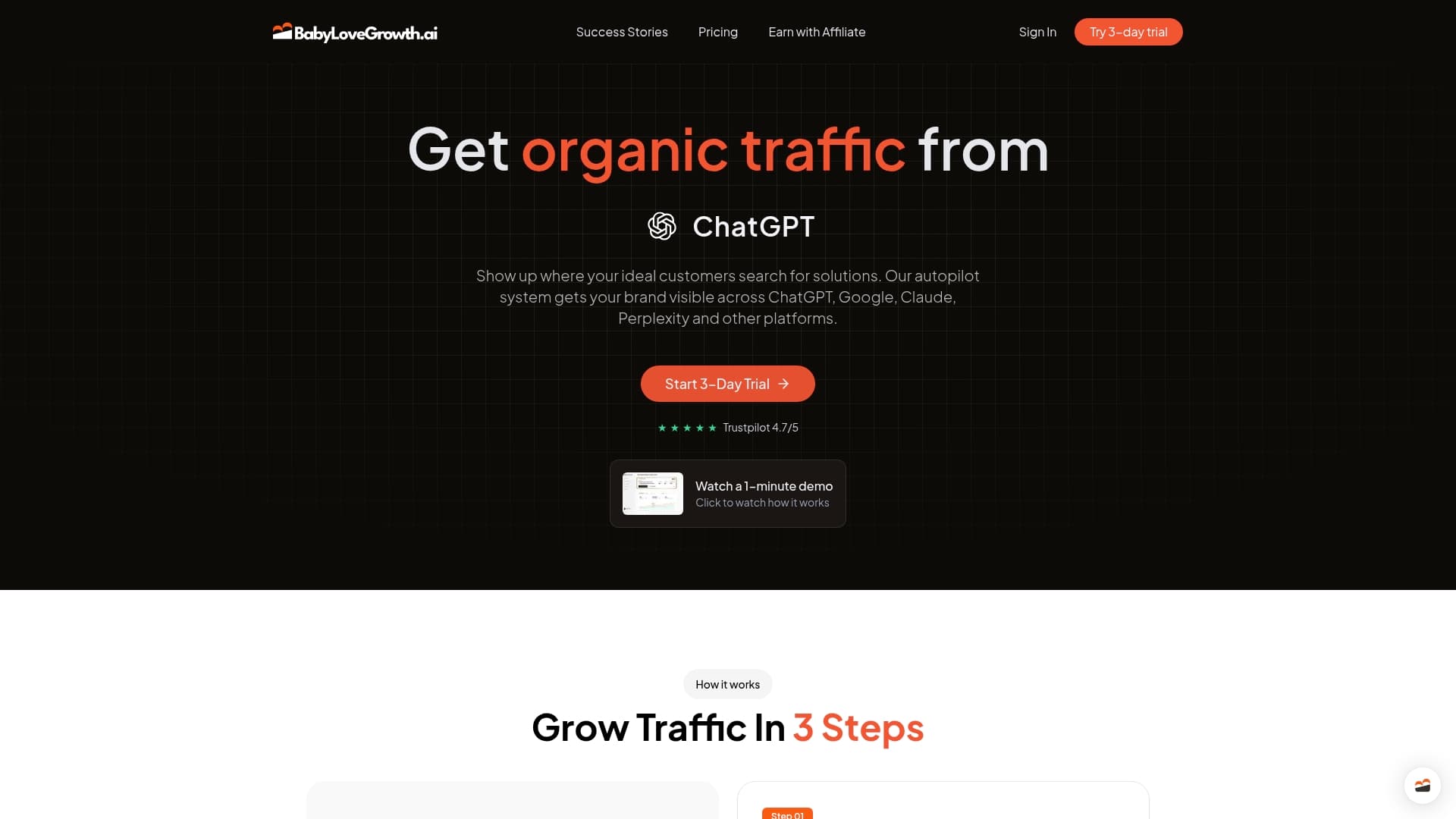
Take control of your ecommerce growth now by embracing AI-driven SEO automation that adapts to the future of search. Visit Babylovegrowth.ai to start elevating your brand’s online presence today.
Frequently Asked Questions
What is SEO and why is it important for ecommerce?
Search Engine Optimization (SEO) is a digital marketing strategy that improves a website's visibility and organic search rankings. For ecommerce, SEO is vital because it drives valuable traffic to online stores, enhances brand credibility, and increases sales by helping potential customers find products more easily.
How can technical SEO impact my ecommerce site's performance?
Technical SEO focuses on optimizing your website's infrastructure, like site speed, mobile responsiveness, and crawlability. A well-optimized site allows search engines to index your product pages more efficiently, improving your search ranking and ultimately enhancing user experience, which can lead to increased sales and customer satisfaction.
What are the key differences between On-Page SEO and Off-Page SEO for ecommerce?
On-Page SEO refers to optimizing individual product pages, including content, metadata, and keywords, to improve search relevance. Off-Page SEO involves building credibility through backlinks and brand mentions, signaling trustworthiness to search engines. Both are necessary for a well-rounded SEO strategy that boosts rankings and visibility.
How does AI influence SEO strategies for ecommerce brands?
AI is transforming SEO by enabling more sophisticated content creation, performance analysis, and personalized user experiences. Modern ecommerce brands leverage AI tools to better understand user intent, optimize content for search algorithms, and streamline technical audits, ultimately enhancing their online visibility and effectiveness in reaching customers.