Why Diversify Backlinks: Lasting SEO Growth Insights


Ranking volatility creates constant headaches for SEO professionals tasked with scaling organic growth for clients in competitive markets. The challenge lies not just in acquiring backlinks, but in building a profile that search engines interpret as genuine and resilient. By prioritizing backlink diversity across multiple domains and sources, agencies can signal natural authority, reduce penalty risk, and deliver credibility that supports lasting search results improvements.
Table of Contents
- Backlink Diversity: Core SEO Concepts
- Types of Backlink Sources Explained
- How Diversified Backlinks Boost Rankings
- Backlinks, AI Algorithms, and Link Decay
- Risks of Over-Reliance on Single Link Type
- Best Practices for Safe, Scalable Link Building
Key Takeaways
| Point | Details |
|---|---|
| Backlink Diversity is Essential | A diverse backlink profile enhances credibility and search engine authority. Aim for links from various unique domains and platforms. |
| Quality Over Quantity | Not all backlinks are equal; prioritize links from authoritative, contextually relevant sources to improve SEO effectiveness. |
| Monitor Backlink Health | Regular audits are crucial to maintain link diversity and address potentially harmful links promptly. |
| Avoid Single Link Type Dependence | Relying on one link type can lead to penalties; strive for a balanced approach with at least five different link sources. |
Backlink Diversity: Core SEO Concepts
Backlink diversity represents a sophisticated search engine optimization strategy where websites acquire links from multiple unique domains and platforms. Backlink profile complexity signals search engines that your content is credible and relevant across different contexts.
The fundamental goal of backlink diversity involves creating a natural, multi-dimensional linking ecosystem that demonstrates your website's authority and expertise. Effective diversity means strategically obtaining links from varied sources such as:
- Academic research publications
- Industry blogs and news sites
- Professional forums and discussion platforms
- Social media channels
- Niche industry directories
- Government and educational websites
- Reputable community platforms
By cultivating links from multiple domains, websites can reduce algorithmic risk and improve their overall search engine positioning. Search engines interpret diverse backlink profiles as indicators of genuine, high-quality content that resonates across different audience segments.
Backlink Quality Metrics play a critical role in determining the effectiveness of your linking strategy. Not all backlinks carry equal weight - search algorithms prioritize links from authoritative, contextually relevant domains over random or low-quality sources.
A diverse backlink profile signals natural growth and genuine content value to search engine algorithms.
Pro tip: Continuously audit your backlink portfolio quarterly to ensure ongoing diversity and remove potentially harmful links that might negatively impact your SEO performance.
Types of Backlink Sources Explained
Understanding the various sources of backlinks is crucial for developing a robust SEO strategy. Effective backlink strategies encompass multiple types of link acquisition methods that contribute to a website's overall search engine authority.
Backlink sources can be categorized into several key types, each offering unique SEO benefits:
- Editorial Links: High-authority mentions from respected publications
- Guest Posts: Contributed content on industry-related websites
- Digital PR: Press releases and media coverage links
- Directory Links: Listings in reputable industry or regional directories
- Social Media Backlinks: Mentions and links from social platforms
- Forum and Community Links: Engagement-based links from discussion platforms
- Academic and Government Links: Authoritative institutional references
Not all backlinks carry equal weight in search engine algorithms. Backlink Quality Factors include relevance, domain authority, content context, and natural placement. Search engines prioritize links that demonstrate genuine editorial recommendation and contextual value.
Diverse backlink sources signal to search engines that your content is valuable across multiple platforms and audience segments.
By strategically combining different backlink types, websites can create a comprehensive and natural link profile that enhances overall search engine visibility and credibility.
Here is a summary of key backlink types and their primary SEO contributions:
| Backlink Type | Trust/Authority Impact | Typical Use Case |
|---|---|---|
| Editorial Links | High, boosts credibility | Trusted sources validate content |
| Guest Posts | Moderate, builds reach | Industry collaboration |
| Digital PR | High, increases visibility | Brand announcements and news |
| Directory Links | Low to moderate, aids discovery | Local or industry listings |
| Social Media Backlinks | Moderate, extends audience | Content promotion and engagement |
| Forum/Community Links | Low to moderate, encourages discussion | Niche community involvement |
| Academic/Government Links | Very high, strong authority | Cited research, official reference |
Pro tip: Prioritize acquiring backlinks from sources directly related to your industry and with demonstrable domain authority to maximize SEO impact.
How Diversified Backlinks Boost Rankings
Search engine rankings are dramatically influenced by the strategic diversity of backlink profiles. SEO backlink strategies provide a complex framework for improving website authority and search engine positioning.
Diversified backlinks offer multiple ranking advantages through several key mechanisms:
- Algorithmic Trust Signals: Multiple link sources demonstrate content credibility
- Reduced Ranking Volatility: Varied links minimize vulnerability to algorithm changes
- Increased Domain Authority: Links from different domains enhance overall site reputation
- Enhanced Referral Traffic: Diverse sources attract visitors from multiple channels
- Contextual Relevance: Links from different platforms showcase content versatility
Search engines evaluate backlink diversity as a critical indicator of content quality and authenticity. Ranking Metrics consider not just the quantity of backlinks, but the breadth and quality of linking domains. Websites with a natural, diverse link profile are perceived as more authoritative and trustworthy.
A comprehensive backlink strategy acts as a powerful signal of content legitimacy and expertise.
By intentionally cultivating links across various platforms, websites can create a robust digital footprint that significantly improves search engine visibility and organic traffic potential.

Pro tip: Develop a systematic approach to acquiring backlinks from at least five different domain types to maximize SEO performance and ranking stability.
Backlinks, AI Algorithms, and Link Decay
The intersection of artificial intelligence and search engine optimization has revolutionized how we understand link decay dynamics. Modern AI algorithms are increasingly sophisticated in predicting and managing backlink health, transforming traditional SEO strategies.
Key aspects of AI-driven backlink analysis include:
- Predictive Link Health: AI identifies potential link deterioration before it impacts rankings
- Automated Decay Detection: Algorithms track link quality in real-time
- Pattern Recognition: Machine learning models understand complex link relationship patterns
- Proactive Link Management: Early warning systems for potential link failures
- Dynamic Ranking Adjustments: Continuous evaluation of backlink strength and relevance
Link Decay Mechanisms represent a critical challenge in SEO strategy. Search engine algorithms continuously assess the quality, relevance, and longevity of backlinks, removing or devaluing links that no longer provide substantive value. This dynamic environment requires constant monitoring and strategic link portfolio management.
AI technologies are transforming backlink analysis from a reactive to a predictive discipline.
By leveraging advanced algorithmic insights, websites can develop more resilient and adaptive link-building strategies that maintain consistent search engine visibility and ranking performance.
Below is a comparison of manual versus AI-powered backlink analysis approaches:
| Approach | Speed of Analysis | Adaptability to Trends | Maintenance Effort |
|---|---|---|---|
| Manual Audits | Slow and resource-heavy | May miss fast changes | High, ongoing work |
| AI-Driven Tools | Real-time, automated | Quickly adapts to updates | Low, automated alerts |
Pro tip: Implement quarterly comprehensive backlink audits using AI-powered tools to proactively identify and replace declining or potentially toxic links.
Risks of Over-Reliance on Single Link Type
Link source uniformity creates significant vulnerabilities in SEO strategies. Backlink strategy risks demonstrate how narrow linking approaches can compromise website search performance and digital visibility.
The primary risks of depending on a single link type include:
- Algorithmic Suspicion: Search engines interpret uniform link profiles as potentially manipulative
- Reduced Credibility: Lack of link diversity signals low-quality content
- Increased Penalty Vulnerability: Narrow link sources are more susceptible to algorithmic downgrades
- Limited Audience Reach: Single-source links restrict potential traffic channels
- Diminished Domain Authority: Narrow linking strategies reduce overall site credibility
Search Engine Evaluation involves complex assessments of link authenticity and diversity. Websites with monolithic link profiles appear less organic and trustworthy, potentially triggering automatic ranking penalties or manual review processes.
Authentic digital authority emerges from a natural, multifaceted linking ecosystem.
Strategic link building requires a holistic approach that integrates multiple credible sources, platforms, and content types to create a robust and resilient digital presence.
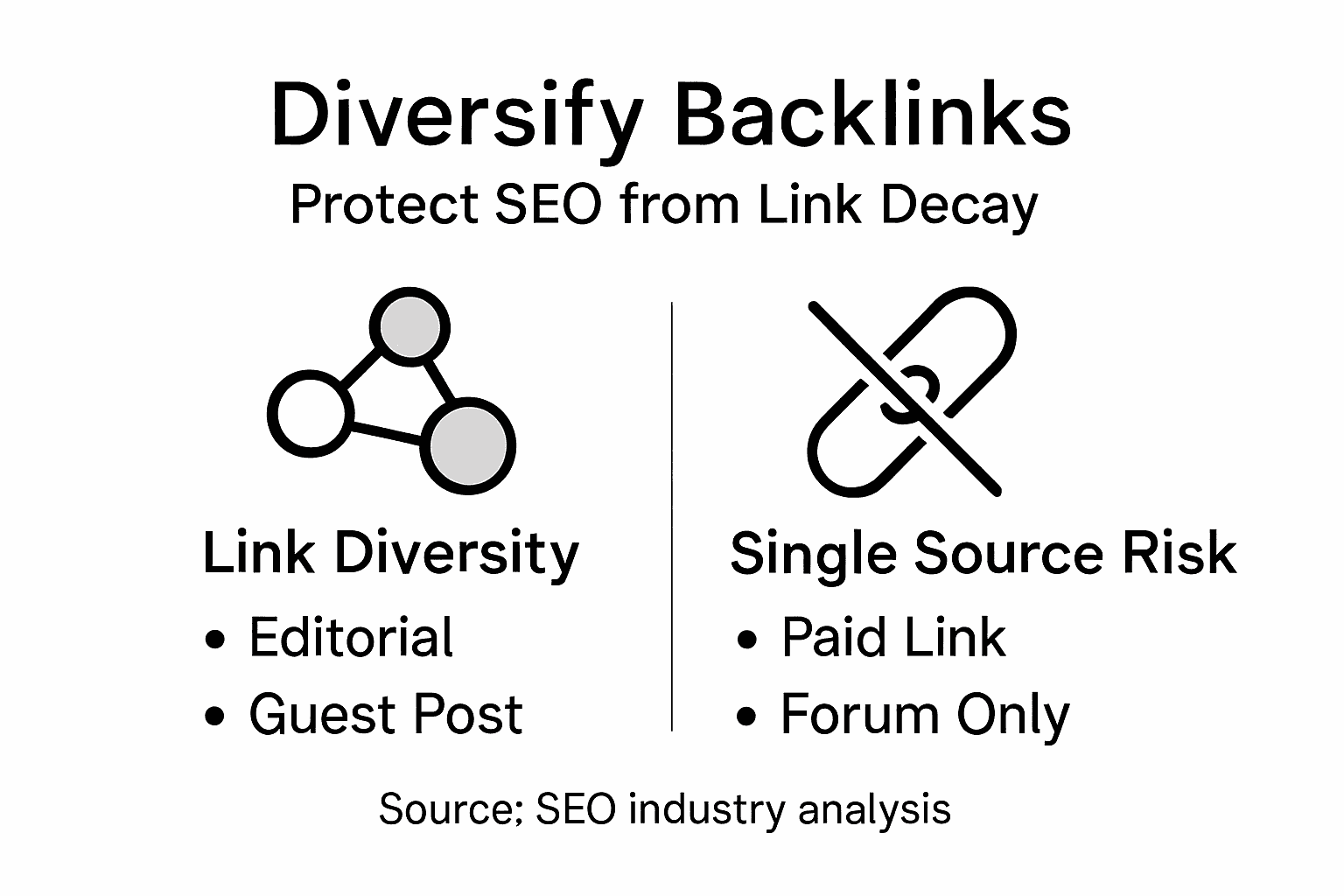
Pro tip: Aim to acquire backlinks from at least five distinctly different domain types to maintain a healthy, natural link profile and minimize algorithmic risks.
Best Practices for Safe, Scalable Link Building
Successful link building requires a strategic, methodical approach that prioritizes quality and authenticity. Backlink tactics for SEO success provide a framework for developing sustainable and effective linking strategies.
Key principles for safe and scalable link building include:
- Natural Link Acquisition: Earn links through high-quality content and genuine value
- Contextual Relevance: Focus on links from domains closely aligned with your industry
- Domain Authority Assessment: Prioritize links from reputable, high-credibility websites
- Gradual Link Profile Growth: Avoid sudden, suspicious link volume spikes
- Diverse Link Sources: Integrate multiple types of backlinks across different platforms
- Content-Driven Strategies: Create link-worthy content that naturally attracts backlinks
Link Building Ethics play a crucial role in maintaining long-term SEO performance. Search engines continuously refine algorithms to distinguish between manipulative link practices and genuine, valuable link acquisition.
Authentic link building is about creating meaningful connections, not gaming the system.
Effective link building transcends technical tactics, requiring a holistic approach that combines strategic outreach, exceptional content creation, and genuine industry engagement.
Pro tip: Develop a comprehensive link building spreadsheet to track potential link sources, outreach efforts, and link acquisition progress.
Strengthen Your SEO with Smart Backlink Diversity Using AI
The challenge of building a naturally diverse backlink profile is critical to lasting SEO success. This article shows how relying on a single link type puts your site at risk and limits growth. Achieving backlink diversity with links from multiple authoritative sources boosts domain authority, reduces algorithm vulnerability, and drives authentic referral traffic. If you want to avoid penalties and ensure your site's credibility shines across Google and emerging AI-driven search engines, you need a scalable, data-driven approach to backlinks.
Discover how Babylovegrowth.ai uses AI-powered tools to automate backlink building while maintaining quality and relevance. Our platform supports comprehensive strategies including backlink network expansion, content-driven link acquisition, and targeted outreach on forums and Reddit to diversify your link sources naturally. Combine this with features like automated site audits and structured data markup to keep your link profile healthy and rankings stable. Start leveraging AI to secure authentic, multi-dimensional backlinks that foster long-term growth by visiting Babylovegrowth.ai today.
Frequently Asked Questions
What is backlink diversity and why is it important for SEO?
Backlink diversity refers to the acquisition of links from multiple unique domains and platforms. It's crucial for SEO because it demonstrates to search engines that your content is credible and relevant across various contexts, helping to improve search engine rankings and website authority.
How can I effectively diversify my backlink profile?
To effectively diversify your backlink profile, aim to acquire links from different sources such as academic publications, industry blogs, professional forums, social media, niche directories, and authoritative websites. This varied approach helps signal to search engines that your content is valuable across various platforms.
What are some common types of backlink sources?
Common types of backlink sources include editorial links from respected publications, guest posts on industry-related websites, digital PR from press releases, directory links from reputable listings, social media mentions, and community forum links. Each type contributes uniquely to your SEO strategy.
How does artificial intelligence impact backlink analysis?
AI impacts backlink analysis by offering predictive insights into link health, automating decay detection, recognizing complex link patterns, and facilitating proactive link management. This allows website owners to maintain a quality backlink profile and adapt to changes in search engine algorithms more efficiently.