What Is Intent-Driven SEO? A 2026 Strategy Guide


TL;DR:
- Intent-driven SEO focuses on optimizing content to fulfill the specific goal behind a user's search query rather than just targeting keywords. Matching content format to search intent improves rankings, user engagement, and conversions, regardless of search volume. Analyzing SERP dominant formats and clustering keywords by user goal ensures effective, purpose-aligned content creation.
Intent-driven SEO is the practice of optimizing content to satisfy the specific purpose behind a user's search query, not just to match keywords. Search engines like Google prioritize results that match searcher intent over pages that simply repeat target phrases. This distinction matters because two pages can target the same keyword yet serve completely different user goals. Platforms like Semrush and Search Engine Land have built entire research frameworks around this principle. Mastering intent alignment is what separates pages that rank and convert from pages that technically exist but never get clicked.
What is intent-driven SEO and why does it matter?
Intent-driven SEO is defined as the process of aligning your content with the underlying goal a user has when typing a query into a search engine. The industry standard term for this practice is "search intent optimization," and understanding it is the foundation of any modern SEO strategy.

Better user experience and CTR follow directly when your page gives users exactly what they came for. Search engines interpret strong engagement signals as proof that a page deserves its ranking. That feedback loop means intent alignment compounds over time: the better your content fits user purpose, the more traffic it attracts, which further reinforces its position.
The practical stakes are high for digital marketers. A product page optimized for "best CRM software" will underperform if the searcher wants a comparison article, not a purchase prompt. Recognizing that gap and fixing it is the core skill in intent-based SEO strategies.
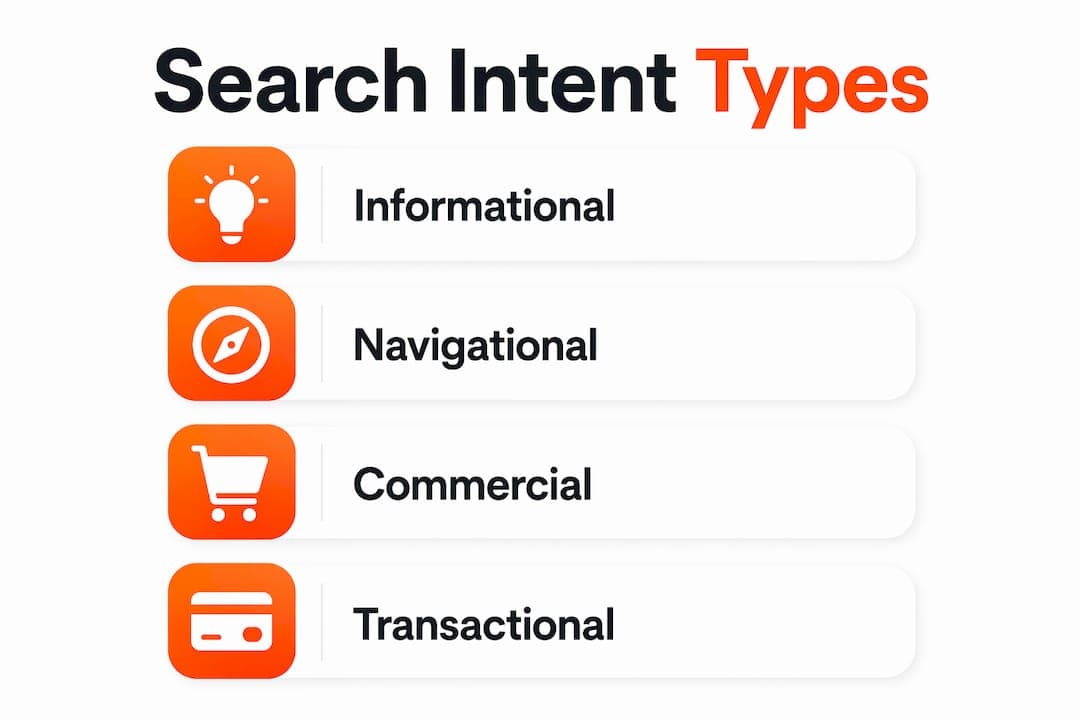
What are the four types of search intent?
Google's ranking algorithm classifies queries into four main intent categories and adapts its SERP layout accordingly. Each type demands a different content format.
- Informational: The user wants to learn something. Queries like "how does CRM software work" trigger featured snippets, AI Overviews, and long-form guides. Your content should teach, not sell.
- Navigational: The user wants a specific website or brand. Queries like "Salesforce login" signal brand recognition. Optimizing here means owning your branded terms.
- Commercial investigation: The user is comparing options before buying. Queries like "best CRM for small business" surface comparison articles and review roundups. Listicles and comparison tables perform best.
- Transactional: The user is ready to act. Queries like "buy HubSpot CRM" trigger product pages and shopping ads. Your page needs a clear offer and frictionless conversion path.
Keyword modifiers are your fastest signal for classifying intent. Words like "how to" and "what is" signal informational intent. "Best" and "buy" signal commercial investigation and transactional intent respectively.
| Intent Type | Example Query | Best Content Format |
|---|---|---|
| Informational | "what is intent-driven SEO" | Long-form guide, FAQ |
| Navigational | "Semrush login" | Brand page, homepage |
| Commercial investigation | "best SEO tools 2026" | Comparison article, listicle |
| Transactional | "buy Semrush Pro plan" | Product page, landing page |
Pro Tip: Many queries carry hybrid intent. A search like "email marketing software pricing" blends commercial investigation with transactional signals. Hybrid intent queries require content that balances educational comparison with a clear conversion path. Build a pricing section into your comparison article rather than separating them.
Why intent alignment beats keyword volume every time
The most common SEO mistake is chasing high-volume keywords without checking whether your content format matches what the SERP actually rewards. Intent alignment drives measurable results even when target keywords carry lower search volumes. A 500-search-per-month keyword that perfectly matches your page's format will outperform a 5,000-search-per-month keyword that does not.
Here is a concrete example. Imagine you publish a detailed blog post targeting "project management software." If the SERP for that query is dominated by product pages and free trial offers, Google reads your informational article as a poor match. The page stalls at position 15 regardless of its quality. Switching your format to a comparison page with trial CTAs aligns with dominant SERP intent and unlocks ranking potential.
"Intent match is more critical than superficial keyword matching for SEO success because search engines reward fulfillment of user purpose." — Search Engine Land
The fix is straightforward once you know what to look for:
- Search your target keyword in Google and note the top five results.
- Identify whether they are articles, product pages, videos, or tools.
- Match your content format to the dominant result type.
- Check meta descriptions for language clues about what users want.
Pro Tip: SERP analysis is the most reliable method for confirming intent before you write a single word. Run this check for every target keyword, not just your primary one.
How to conduct intent-driven keyword research
Intent-driven keyword research is the process of identifying, clustering, and prioritizing keywords based on user goals rather than volume alone. This approach ensures content matches what users want, which improves both ranking probability and conversion rate.
Follow this process to build an intent-first keyword strategy:
- Start with SERP analysis. Enter your seed keyword into Google and record the dominant content formats, featured snippets, and ad placements. These signals tell you what intent Google has already assigned to the query.
- Identify modifier patterns. Group keywords by their modifiers. "How to," "what is," and "guide" cluster as informational. "Best," "top," and "vs." cluster as commercial investigation. "Buy," "price," and "discount" cluster as transactional.
- Cluster by intent, not just topic. Grouping keywords by intent prevents you from creating pages that try to serve two incompatible user goals at once. A single page cannot simultaneously satisfy someone who wants to learn and someone who wants to buy.
- Map clusters to content types. Assign each intent cluster to the content format that dominates its SERP. Informational clusters get guides. Transactional clusters get product or landing pages.
- Prioritize by business value. Transactional and commercial investigation keywords sit closer to conversion. Weight them higher when allocating content production resources.
| Approach | Focus | Strength | Weakness |
|---|---|---|---|
| Volume-first research | Search volume | Identifies high-traffic terms | Ignores user purpose, high competition |
| Intent-first research | User goal alignment | Matches content to SERP format | Requires more upfront analysis |
| Topic cluster research | Topical authority | Builds site-wide relevance | Can miss intent mismatches within clusters |
Tools like Semrush's Keyword Magic Tool and Google's People Also Ask boxes accelerate this process. They surface related queries that reveal the full range of intent signals around a topic. Babylovegrowth's AI keyword discovery platform automates intent clustering at scale, which is particularly useful when you are managing hundreds of keywords across multiple content categories.
Pro Tip: Build a content calendar organized by intent type, not just topic. Aim for a mix of roughly 50% informational, 30% commercial investigation, and 20% transactional content. This mirrors the natural distribution of search behavior and builds authority before asking for conversions.
How to create content that matches user intent
Content format is the first decision, and it must follow intent. Tailoring format, meta descriptions, and titles to reflect user goals directly maximizes organic visibility and engagement. Getting this wrong wastes every other optimization effort.
Here is how to match content structure to each intent type:
- Informational content should lead with a direct answer in the first paragraph. Use H2 and H3 headings that mirror the questions users are asking. Include a FAQ section to capture featured snippet placements.
- Commercial investigation content should open with a clear comparison framework. Use tables, scoring criteria, and named product examples. Readers at this stage want to make a decision, so give them the criteria to do so.
- Transactional content should remove friction. Lead with the offer, include social proof near the top, and make the call to action visible without scrolling. Every sentence should move the user toward conversion.
Meta descriptions deserve more attention than most marketers give them. Write meta descriptions that reflect the user's goal, not just the page topic. For an informational page, your meta should promise an answer. For a transactional page, it should state the offer. This alignment improves click-through rates from the SERP before a user even lands on your page.
User experience signals reinforce intent alignment after the click. Pages with low bounce rates and high time-on-page tell Google the content delivered on its promise. A well-structured content creation workflow that builds intent checks into every stage prevents the mismatch from happening in the first place.
Pro Tip: Avoid building one long page that tries to serve all four intent types. A single page optimized for informational intent will confuse users who arrive with transactional intent. Create separate pages for each dominant intent, then link between them strategically.
Key takeaways
Intent-driven SEO succeeds because aligning content format with user purpose is what search engines reward, and what users actually convert on.
| Point | Details |
|---|---|
| Intent beats keyword volume | Pages matching user intent outrank high-volume pages with mismatched formats. |
| Four intent types guide format | Informational, navigational, commercial investigation, and transactional each require a distinct content structure. |
| SERP analysis confirms intent | Check the top five results for any keyword before writing to identify the dominant content format. |
| Cluster keywords by intent | Group keywords by user goal, not just topic, to prevent pages from serving conflicting purposes. |
| Format and meta must align | Titles, meta descriptions, and page structure should all reflect the specific user goal the page targets. |
The shift i keep watching marketers miss
Most SEO teams I have observed still build their content calendars around keyword volume reports. They pull a list of high-traffic terms, assign writers, and publish. The intent check never happens. The result is a site full of technically optimized pages that rank on page two and never move.
The shift that actually changes organic performance is treating intent as a content brief requirement, not an afterthought. Before any page goes into production, the SERP for its primary keyword should be analyzed, the dominant intent confirmed, and the content format locked in to match. This single change in process produces more ranking movement than any amount of on-page optimization applied to the wrong format.
What I find most interesting about 2026 is how AI-powered search features like Google's AI Overviews have made intent alignment even more critical. These features pull answers from pages that directly satisfy informational intent. If your content buries the answer three paragraphs in, it will not get cited. If it leads with a direct claim, it will.
The marketers winning in organic search right now are not the ones with the biggest content budgets. They are the ones who understand that a 600-word page perfectly matched to transactional intent will outperform a 3,000-word guide aimed at the wrong goal. Intent specificity is the actual competitive advantage, and most teams are leaving it on the table.
— MEET
How Babylovegrowth automates intent-driven SEO
Babylovegrowth is built for exactly the kind of intent-first strategy this article describes. Its AI-powered keyword research tool identifies and clusters keywords by user intent automatically, so you skip the manual SERP analysis phase and move directly to content production. The platform maps informational, commercial, and transactional keyword clusters to the right content formats, then generates 30-day content plans aligned to your business goals.
For digital marketers managing large keyword sets, Babylovegrowth's keyword discovery platform surfaces hidden intent-aligned opportunities that volume-first tools miss entirely. If you want to stop guessing at intent and start building content that ranks and converts, Babylovegrowth gives you the infrastructure to do it at scale.
FAQ
What is intent-driven SEO in simple terms?
Intent-driven SEO is the practice of optimizing content to match the specific goal behind a user's search query, not just the keywords they use. Search engines reward pages that fulfill user purpose over pages that simply repeat target phrases.
How does search intent affect google rankings?
Google's algorithm classifies queries by intent and adapts SERP layouts accordingly, surfacing the content format that best matches what users want. Pages that mismatch their format to the dominant intent consistently underperform regardless of their technical optimization.
What are the four types of search intent?
The four types are informational, navigational, commercial investigation, and transactional. Each type signals a different user goal and requires a distinct content format to satisfy it effectively.
How do i identify the search intent for a keyword?
SERP analysis is the most reliable method: search the keyword, observe the top five results, and match your content format to the dominant type you see. Keyword modifiers like "best," "how to," and "buy" provide additional intent signals during research.
Why does intent alignment matter more than keyword volume?
Intent-aligned pages drive conversions even at lower search volumes because they deliver exactly what the searcher needs. High-volume keywords with mismatched content formats produce traffic that bounces, which signals poor quality to search engines and suppresses rankings over time.