What Is a Call to Action and Why It Drives Growth


Bold statements in marketing can be persuasive, but a powerful call to action does far more than ask users to click. Every american SaaS marketer knows that getting visitors to take the next step is no small feat. Over 90 percent of online consumers admit CTAs often feel generic or ignorable. Understanding what truly motivates action is vital for turning traffic into real growth. This guide clears up common CTA misconceptions and shares practical insights for creating high-converting prompts.
Table of Contents
- Call to Action Defined and Common Misconceptions
- Types of Calls to Action in SaaS Marketing
- Key Elements of High-Converting CTAs
- How CTAs Impact User Behavior and SEO
- Common CTA Mistakes and Effective Solutions
Key Takeaways
| Point | Details |
|---|---|
| Importance of CTAs | Calls to action are crucial marketing strategies that prompt immediate user engagement and must be designed carefully to be effective. |
| Types of SaaS CTAs | Effective CTAs in SaaS marketing, such as free trials and demo requests, drive user interaction and conversion by addressing specific user needs. |
| Enhancing User Behavior | Well-designed CTAs simplify the user journey, improve engagement metrics, and positively impact SEO by enhancing content quality signals. |
| Avoiding Common Mistakes | Addressing issues like vague messaging and choice overload can significantly improve conversion rates and create a clearer path for user decisions. |
Call to Action Defined and Common Misconceptions
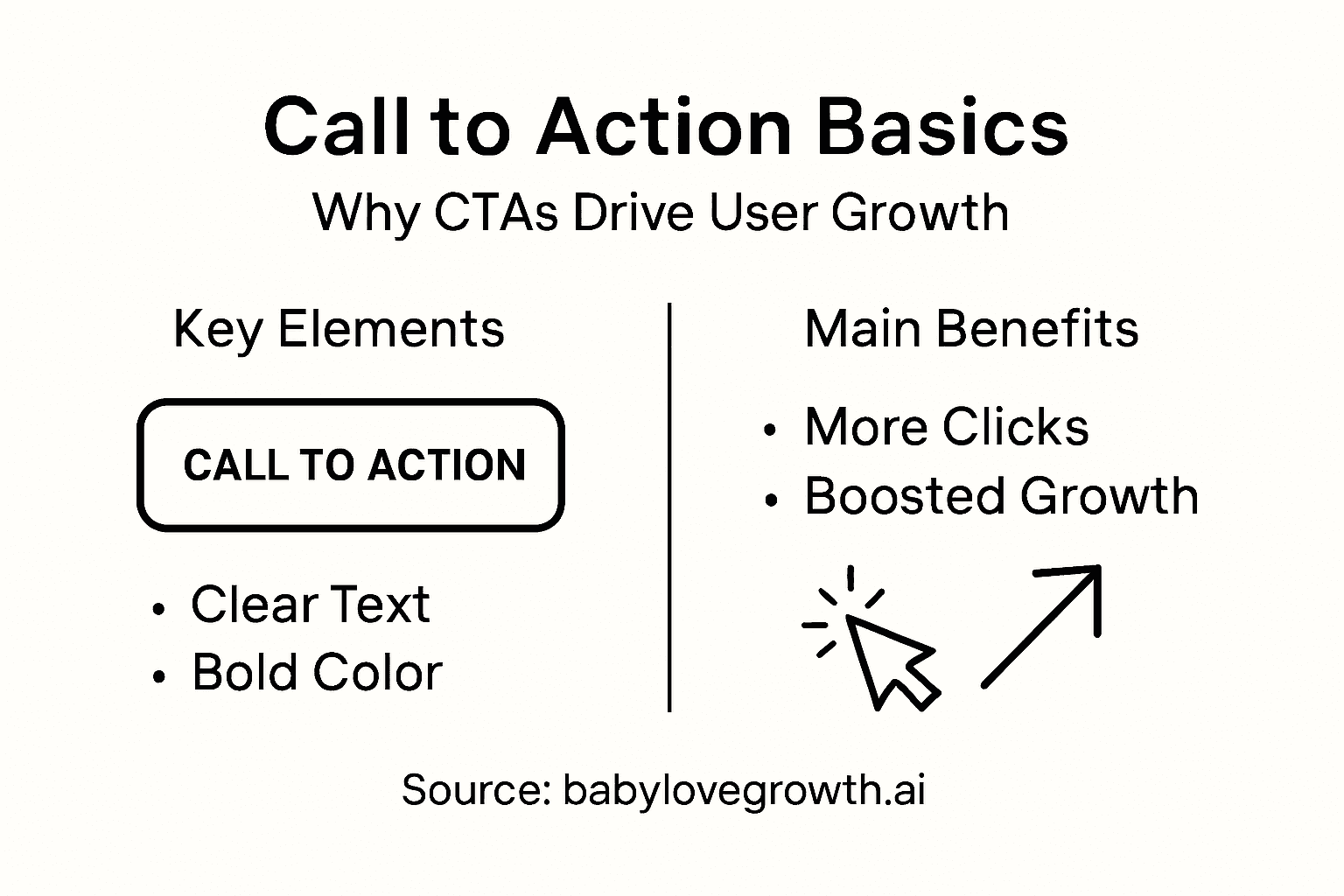
A call to action (CTA) is a strategic marketing element designed to prompt immediate audience engagement. Marketing terminology defines a CTA) as text specifically crafted to trigger an instant response or encourage an immediate purchase. Unlike generic instructions, effective CTAs create a sense of urgency and provide clear, compelling reasons for consumers to take swift action.
Common misconceptions about CTAs often stem from oversimplified understanding. Many marketers mistakenly believe that any button or text can serve as a call to action. In reality, successful CTAs require nuanced psychological triggers that motivate users beyond surface-level requests. They are not just about commanding action, but about creating a persuasive narrative that speaks directly to audience needs and desires. Actionable appeals can span multiple contexts, from marketing campaigns to social movements, each designed to inspire immediate engagement.
Understanding CTA effectiveness involves recognizing key characteristics. Powerful CTAs typically include:
- Concise, action-oriented language
- Clear value proposition
- Sense of urgency
- Minimal friction in the conversion path
- Emotional resonance with target audience
Pro tip: Design CTAs that solve a specific problem for your audience, focusing on benefits rather than just demanding action.
Types of Calls to Action in SaaS Marketing
In the competitive landscape of Software as a Service (SaaS) marketing, strategic calls to action play a critical role in converting potential customers. SaaS marketing CTAs focus on driving user engagement) through targeted, compelling prompts that encourage immediate interaction. These CTAs are carefully designed to minimize user hesitation and maximize conversion potential.
The most effective SaaS marketing CTAs typically fall into several distinct categories. SaaS marketing strategies emphasize low-risk conversion paths, with CTAs that provide clear, compelling reasons for prospects to take the next step. Common CTA types include:
- Free Trial Sign-ups: Allowing users to experience the product without financial commitment
- Demo Request: Offering personalized product walkthroughs
- Download Resources: Providing valuable content in exchange for contact information
- Subscription Initiation: Presenting tiered pricing plans with easy entry points
- Feature Exploration: Inviting users to explore specific product capabilities
Successful SaaS CTAs go beyond simple button text. They address specific user pain points, highlight unique value propositions, and create a sense of urgency that compels potential customers to act. The most powerful CTAs speak directly to the user's needs, transforming a simple request into an irresistible opportunity for solving their business challenges.
Here's a summary of CTA types and how they benefit SaaS marketers:
| CTA Type | Primary Purpose | Business Impact |
|---|---|---|
| Free trial sign-up | Facilitate hands-on experience | Boosts user acquisition |
| Demo request | Showcase product capabilities | Drives qualified leads |
| Download resources | Exchange content for contacts | Builds email list |
| Subscription initiation | Start paid user journey | Increases recurring revenue |
| Feature exploration | Promote specific functionalities | Highlights unique value |
Pro tip: Craft CTAs that focus on the immediate value users will receive, using action-oriented language that speaks directly to their specific business needs.
Key Elements of High-Converting CTAs
High-converting calls to action are precision-engineered psychological triggers that transform passive website visitors into active customers. Effective CTAs combine strategic design with emotional engagement to simplify decision-making and drive conversions. These critical marketing elements go far beyond simple button text, representing a sophisticated blend of visual communication and persuasive language.
The core elements of a powerful CTA typically include:
- Compelling Headline: Clear, concise language that speaks directly to user needs
- Visual Prominence: Design that draws immediate attention
- Emotional Trigger: Language that connects with user pain points
- Specific Value Proposition: Explicit benefits of taking action
- Minimal Friction: Easy, straightforward path to conversion

Pro tip: Test multiple CTA variations using A/B testing to identify the most resonant language and design that converts effectively for your specific audience.
How CTAs Impact User Behavior and SEO
Calls to action fundamentally transform digital interactions by guiding user psychology and search engine performance. CTAs influence cognitive processing mechanisms that drive user engagement, reducing decision complexity and inspiring immediate action. These strategic elements serve as critical touchpoints that bridge user intent with website objectives.
The behavioral impact of CTAs extends across multiple dimensions:
- Attention Capture: Drawing immediate visual focus
- Emotional Engagement: Triggering psychological responses
- Decision Simplification: Reducing cognitive load
- User Journey Acceleration: Streamlining conversion paths
- Interaction Tracking: Providing measurable engagement metrics
Pro tip: Design CTAs that align closely with user search intent, creating a seamless pathway that simultaneously satisfies user needs and search engine algorithms.
Common CTA Mistakes and Effective Solutions
Designing effective calls to action requires understanding the nuanced psychological landscape of user engagement. Common CTA design mistakes create significant conversion barriers that can derail even the most well-intentioned marketing strategies. These pitfalls often emerge from overlooking critical user experience principles and failing to align messaging with audience expectations.
The most prevalent CTA mistakes include:
Here's a comparison of common CTA pitfalls and practical solutions:
| Design Mistake | Negative Impact | Effective Solution |
|---|---|---|
| Vague messaging | Unclear value, low response | Use specific, relevant language |
| Choice overload | User confusion, lower clicks | Limit options to one main CTA |
| Poor visual hierarchy | Action missed by users | Increase button prominence |
| Emotional disconnect | Lack of user motivation | Align messaging with user goals |
| Lack of urgency | Delayed decisions | Incorporate time-sensitive cues |
- Vague Messaging: Using unclear or generic language
- Choice Overload: Presenting multiple competing actions
- Poor Visual Hierarchy: Ineffective button placement or design
- Emotional Disconnect: Failing to create resonant user connection
- Lack of Urgency: Missing psychological triggers that prompt immediate action
Pro tip: Conduct regular user testing and heat map analysis to continuously refine your CTA design, ensuring maximum engagement and conversion potential.
Unlock the Power of Effective Calls to Action for Your SaaS Growth
Understanding the true impact of a well-crafted call to action is essential for any business aiming to boost user engagement and conversions. The article highlights common challenges such as vague messaging and lack of urgency that prevent CTAs from driving meaningful growth. At Babylovegrowth.ai, we specialize in turning these challenges into opportunities by offering AI-driven content strategies designed to create clear, compelling CTAs that resonate with your audience and accelerate your SEO success.
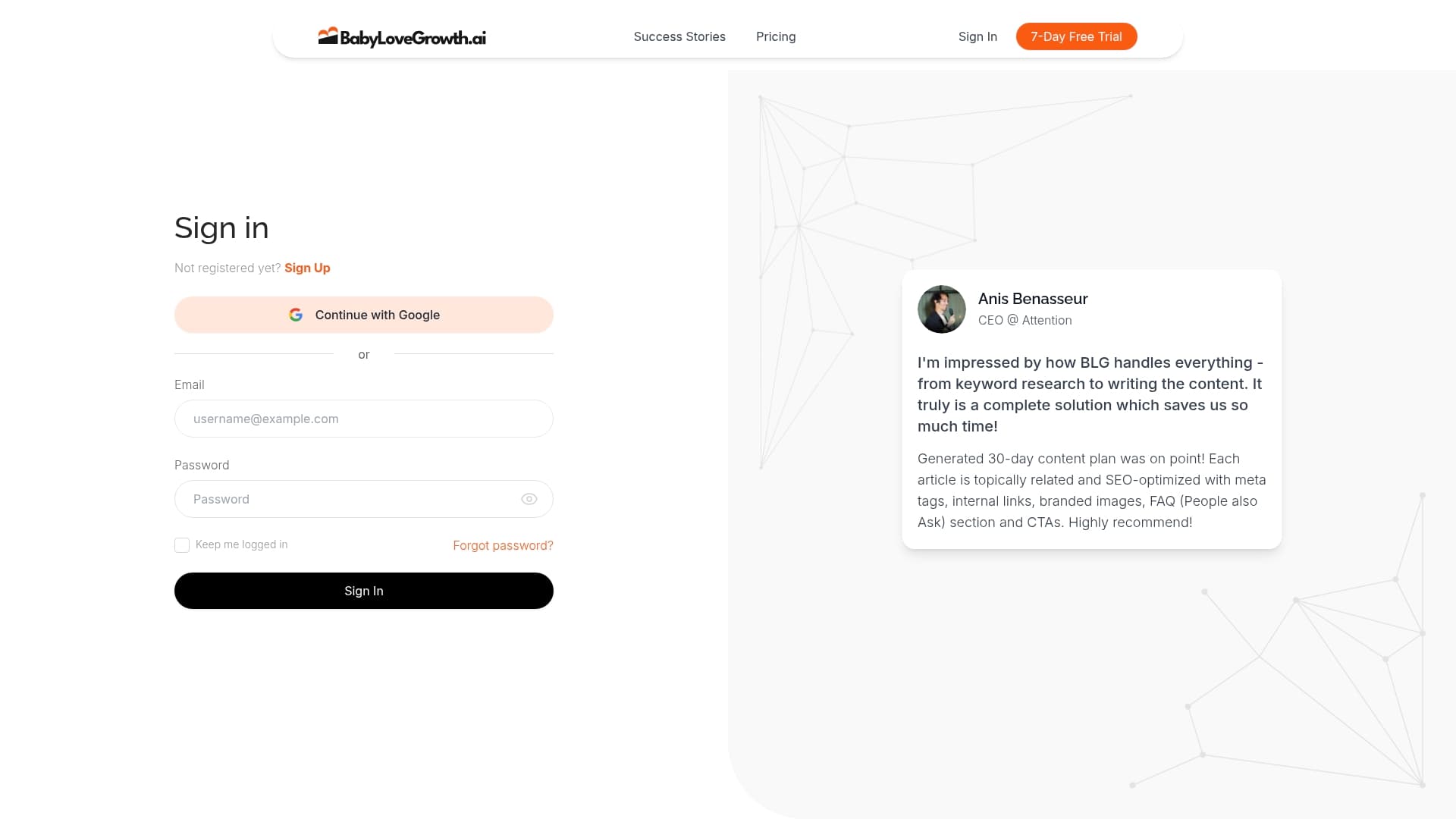
Take control of your organic growth today with Babylovegrowth.ai, your all-in-one platform for automated, high-quality, SEO-optimized content. Our proven step-by-step approach enables you to craft CTAs that speak directly to user pain points while increasing your Google and ChatGPT rankings. Start your free trial now and experience the confidence that comes with a data-driven growth engine tailored for business owners and marketers like you. Learn more about how to simplify your SEO journey at Babylovegrowth.ai and turn your call to action into an unstoppable growth driver.
Frequently Asked Questions
What is a call to action (CTA) in marketing?
A call to action (CTA) is a strategic element used in marketing to prompt immediate engagement from the audience, encouraging them to take specific actions, such as making a purchase or signing up for a service.
Why are effective CTAs important for SaaS marketing?
Effective CTAs in SaaS marketing help drive user engagement and conversions by addressing user pain points, providing clear value propositions, and encouraging immediate responses, which is crucial in a competitive landscape.
How can I create a high-converting CTA?
To create a high-converting CTA, focus on compelling language, visual prominence, emotional triggers, specific value propositions, and minimizing friction in the conversion path to guide users effectively toward action.
What common mistakes should I avoid when designing a CTA?
Common mistakes to avoid when designing a CTA include using vague messaging, creating choice overload, poor visual hierarchy, failing to resonate emotionally with users, and lacking a sense of urgency, all of which can hinder user engagement and conversions.