What AI truly means for your marketing growth


TL;DR:
- AI shifts marketing focus from mere efficiency to strategic growth through reinvestment of savings into targeted campaigns and high-quality content.
- Effective AI implementation depends on organizational clarity, data governance, and deliberate reinvestment, not just tool adoption or speed. Marketers who reinvest AI gains thoughtfully and establish ownership and measurement frameworks outperform those who treat AI as a simple cost-cutting measure.
AI is rewriting the rules of marketing faster than most teams can keep up. The real surprise is not that AI saves time. It is that most businesses pocket the efficiency gains instead of putting them back into growth. That gap between using AI as a cost-cutter versus using it as a growth engine explains why some brands pull ahead while others simply run the same race a little faster. This article breaks down the practical frameworks, real risks, and honest perspective you need to use AI strategically, not just operationally.
Table of Contents
- AI's transforming role in marketing: From efficiency to growth
- AI and organic discovery: Search visibility, AEO, and brand impact
- The power and pitfalls of AI personalization
- AI-driven ad automation: Workflow design and pitfalls
- AI adoption, governance, and organizational alignment
- Perspectives: What most marketers overlook about AI's impact
- Take the next step in AI-powered marketing
- Frequently asked questions
Key Takeaways
| Point | Details |
|---|---|
| Efficiency fuels growth | AI's real power comes from reinvesting efficiency gains to create more marketing value. |
| Visibility beyond SEO | AI search visibility drives brand influence even without click-throughs. |
| Personalization has risks | Irrelevant AI targeting can backfire—best practice is to optimize for relevance and customer trust. |
| Automation needs oversight | Human controls and validation are crucial to avoid campaign errors and maximize benefits. |
| Governance drives results | Clear roles and strategic alignment are essential for successful AI adoption. |
AI's transforming role in marketing: From efficiency to growth
Most conversations about AI in marketing start and end with efficiency. Faster content. Cheaper ads. Fewer hours spent on reporting. That framing misses the bigger opportunity entirely.
AI in marketing is increasingly positioned as a shift from mere efficiency to growth outcomes, meaning efficiency gains plus reinvestment and real value creation, rather than simply replacing manual work. The distinction matters enormously for SMBs. When you cut your content production cost by 40%, the question is not "did we save money?" The question is "where did those savings go?" Reinvesting them into better distribution, more targeted campaigns, or higher-quality creative is where compound growth begins.Consider a practical reinvestment framework for SMBs:
| AI Efficiency Gain | Reinvestment Opportunity | Expected Growth Lever |
|---|---|---|
| Faster content production | More topic coverage and frequency | Broader organic reach |
| Automated reporting | More time on strategy and testing | Smarter campaign decisions |
| Reduced ad management hours | Budget shifted to audience testing | Higher conversion rates |
| AI-assisted customer segmentation | Personalized outreach at scale | Improved retention and LTV |
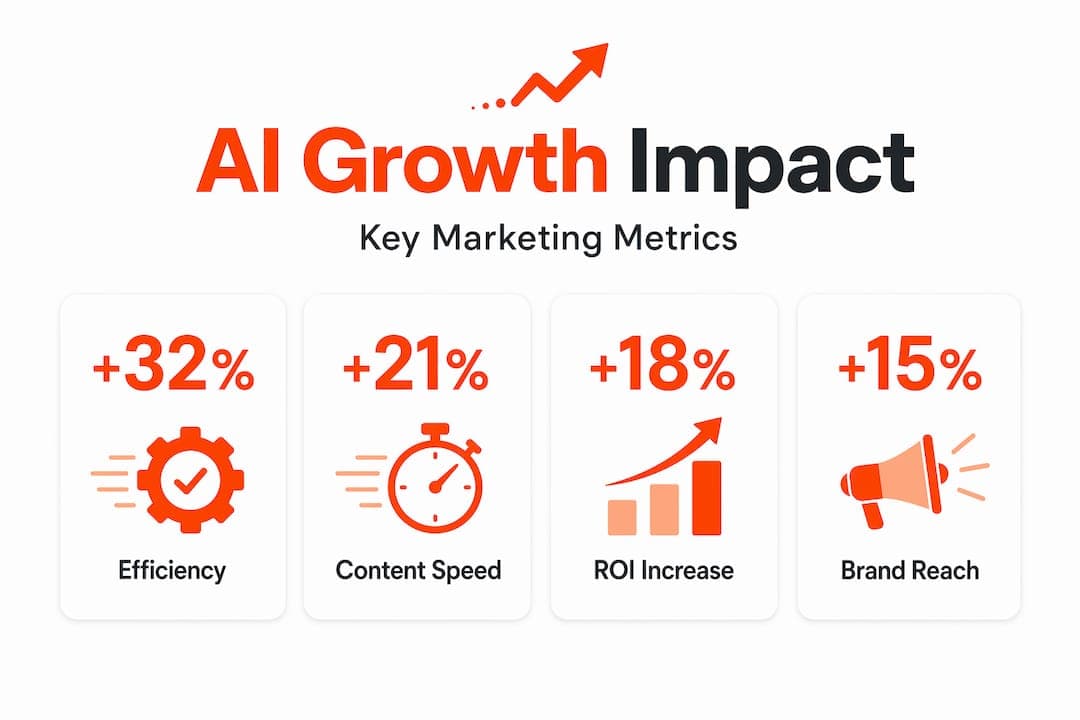
If you want a smarter starting point, the foundations of AI-driven marketing planning can help you move from ad-hoc AI use to a structured growth strategy. And if brand building is a priority, understanding building your brand with AI gives you the narrative scaffolding to do it consistently.
The core takeaway: AI-driven efficiency is the input. Growth is the output. The reinvestment decision in between is where most marketers leave money on the table.
AI and organic discovery: Search visibility, AEO, and brand impact
Search is changing in ways that make traditional SEO metrics feel incomplete. You can rank on page one and still lose ground if your brand is invisible in AI-generated answers.
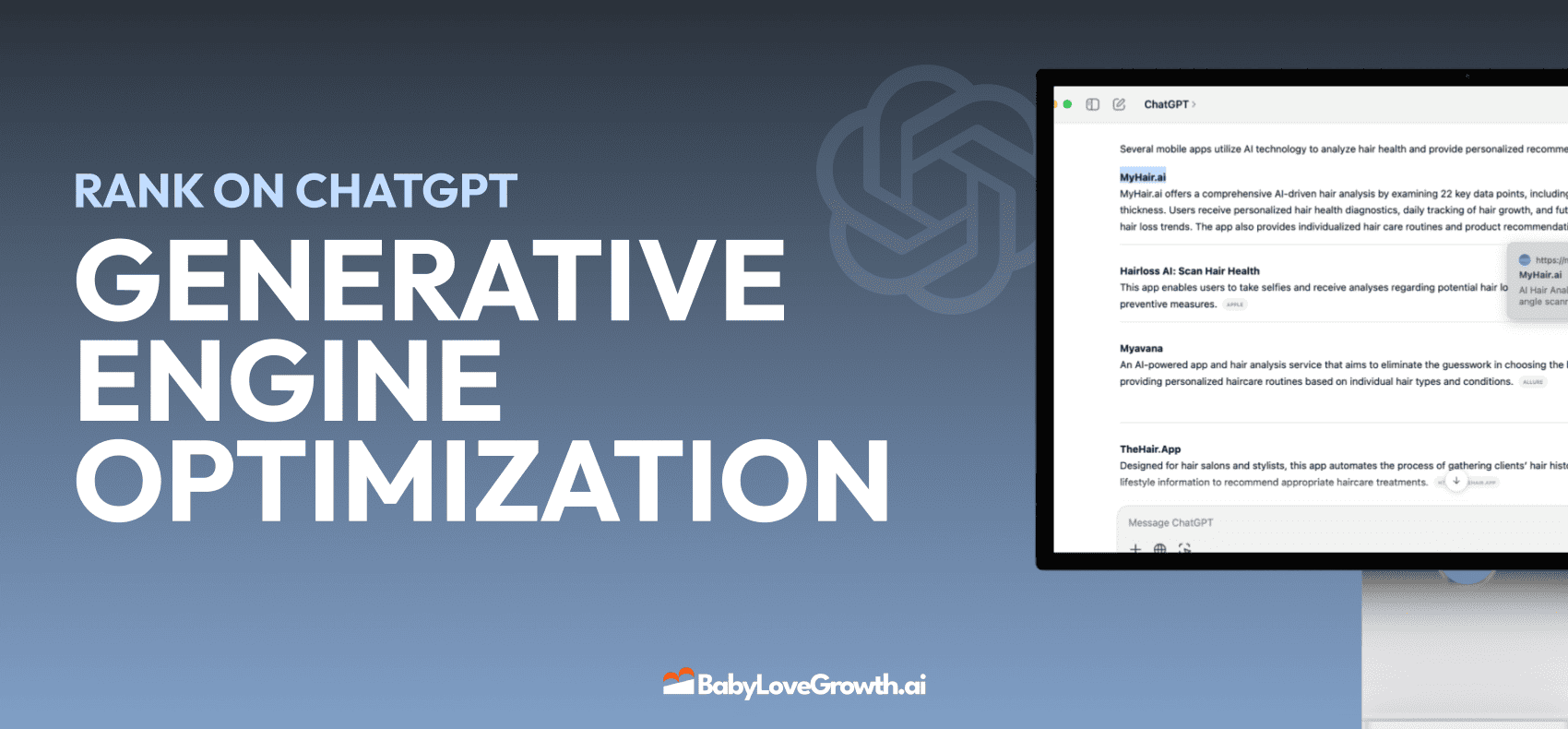
For organic discovery in 2026, AI search visibility is the new competitive center of gravity, meaning being eligible to be cited or recommended in AI answers alongside traditional SEO. Organic clicks may decline as zero-click environments grow, but influence still accrues to the brands that get mentioned. A customer who sees your brand cited in a ChatGPT answer is being primed, even if they never clicked a link.

Here is how AI search visibility compares to traditional SEO at a glance:
| Factor | Traditional SEO | AI search visibility |
|---|---|---|
| Primary goal | Rank in Google SERPs | Be cited in AI answers |
| Success metric | Click-through rate | Brand mentions, downstream conversions |
| Content format | Keywords, meta optimization | Structured, self-contained answer blocks |
| Freshness weight | Moderate | High |
| Authority signals | Backlinks, domain rating | E-E-A-T, citation frequency in trusted sources |
To improve your visibility in AI summaries, the approach recommended by HubSpot's AI content optimization framework focuses on four pillars:
- Authority: Build topical depth and demonstrate expertise across a cluster of related content
- Structure: Use clear headings, concise paragraphs, and Q&A formats that AI models can extract easily
- Freshness: Update existing content regularly, not just publish new pieces
- Extractable answer blocks: Write self-contained paragraphs that answer a specific question without requiring additional context
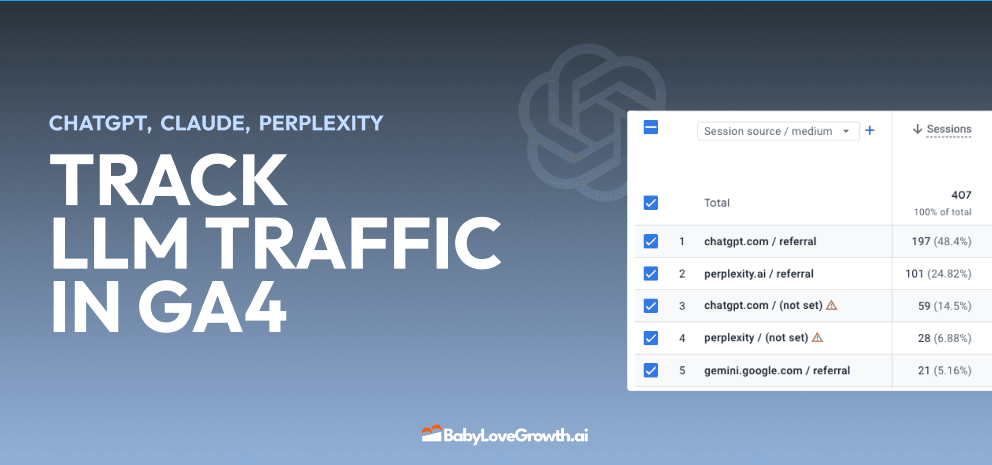
Pro Tip: Stop measuring AI marketing success only by clicks. Track branded search volume, direct traffic trends, and whether your brand appears in AI tool outputs for your core topics. These signals reveal influence that click-through data hides entirely.
For specific tactics, the guide on AI SEO visibility tips covers how to optimize for both Google and AI answer engines simultaneously. Pair that with keyword discovery with AI to find the exact questions your audience is feeding into AI search tools. And when you need to report progress to stakeholders, search visibility metrics offers a cleaner measurement framework than raw traffic numbers.
The power and pitfalls of AI personalization
AI personalization is one of the highest-leverage moves in digital marketing. It is also one of the easiest to get badly wrong.
Well-executed AI personalization can materially improve marketing outcomes. Better relevance means higher engagement, stronger loyalty, and more repeat purchases. The risk comes when relevance tips into intrusiveness. When customers feel like a brand knows too much or is following them too aggressively, the relationship breaks down fast.The numbers are sobering. Gartner's research reveals that 53% of customers report negative experiences with personalization and are substantially more likely to feel regret, meaning they second-guess purchases made under personalized pressure. That statistic should make every marketer pause before scaling any AI targeting initiative.
"Personalization done right feels like a brand that understands you. Personalization done wrong feels like a brand that watches you."
Here are the best practices that separate effective AI personalization from the kind that backfires:
- Start with explicit preference signals. Use data customers have voluntarily shared, such as purchase history, saved items, and stated preferences, before layering in inferred behavioral data.
- Set frequency and channel limits. AI can trigger personalized messages constantly. Human governance needs to cap how often a customer is contacted across all channels combined.
- Test before you scale. Run personalization experiments on small audience segments with proper control groups. Measure both conversion lift and satisfaction signals before expanding.
- Give customers visibility and control. Let users see why they are receiving personalized content and give them an easy way to adjust or opt out. Transparency reduces the "creepy factor" significantly.
- Audit your segments regularly. AI-driven segmentation can drift over time and produce irrelevant groupings. Schedule quarterly reviews to keep models aligned with current customer behavior.
Pro Tip: Before scaling any AI personalization program, run a small governance sprint. Identify who owns the decision to expand targeting, what data sources are approved, and what signals trigger a pause or rollback. Organizations that skip this step often discover problems at scale, when they are expensive to fix.
For e-commerce applications specifically, personalized marketing in e-commerce covers the channel-specific nuances that determine whether personalization feels helpful or invasive. And if retention is the goal, fostering brand loyalty with AI gives you a content-driven path to building long-term relationships rather than short-term conversion spikes.
AI-driven ad automation: Workflow design and pitfalls
Ad automation is where AI promises the most and, if handled carelessly, delivers the most unpleasant surprises.
Google's AI Max and Final URL Expansion are good examples of how AI-driven automation can improve ad-query matching and URL relevance while also introducing operational edge cases. When tracking templates and dynamic URL parameters are not compatible with expanded landing pages, the result can be broken 404 pages receiving paid traffic. That is budget wasted at scale, automatically.Here is a practical checklist for SMBs implementing AI-driven ad automation:
- Audit all tracking templates before enabling URL expansion. Confirm that UTM parameters, third-party tracking pixels, and redirect chains work correctly with dynamically generated URLs.
- Set up 404 monitoring alerts. Use Google Search Console or a site monitoring tool to catch broken landing pages before they drain your budget.
- Define exclusion lists proactively. AI systems will match broadly by default. Build keyword exclusions and audience exclusions before launch, not after you see unwanted results.
- Assign a human reviewer to weekly performance checks. Automated bidding and targeting should accelerate your strategy, not replace the thinking behind it.
- Document your attribution model clearly. AI-driven automation can obscure the customer journey. Know upfront how you are attributing conversions so you can catch discrepancies early.
Pro Tip: Always run a controlled test with a small budget before enabling any new AI automation feature across full campaigns. Two weeks of controlled data is worth more than weeks of troubleshooting at full spend.
The connection between ad automation and long-term brand building is often underestimated. For a framework that ties both together, brand loyalty via AI shows how automation and content strategy can work in parallel to grow both acquisition and retention.
AI adoption, governance, and organizational alignment
Here is an uncomfortable truth most AI marketing content skips entirely: the technology is rarely the bottleneck. The organization usually is.
Forrester's analysis argues that without decision-rights clarity, role accountability, and alignment, AI can accelerate confusion and inefficiency rather than outcomes. Every tool you add to your marketing stack without clear ownership creates ambiguity about who decides what, who reviews outputs, and who is responsible when something goes wrong.For SMBs scaling up, the alignment stages to complete before serious automation are straightforward but frequently skipped:
- Define who owns AI decisions. Is it the marketing director, the campaign manager, or a shared team? Ambiguity leads to either paralysis or unchecked automation.
- Document approved use cases. List the specific tasks AI is authorized to perform without human approval, and the tasks that require a review step before going live.
- Establish a data governance baseline. Know which customer data sources feed your AI tools, who has access, and how long data is retained.
- Create a feedback loop between results and strategy. AI outputs should inform human decisions about direction, not just execute existing ones.
- Schedule alignment reviews quarterly. As AI tools update and business goals shift, your governance framework needs to keep pace.
Rushing AI adoption without this foundation is one of the most common and costly mistakes SMBs make. Speed feels productive until a misconfigured automation runs for three weeks unnoticed. For strategic alignment resources, the guide on AI strategy for alignment offers a practical starting point for marketing teams at any stage.
Perspectives: What most marketers overlook about AI's impact
After watching businesses adopt AI marketing tools, the pattern becomes clear quickly. The teams that win are almost never the ones who move fastest. They are the ones who reinvest most deliberately.
AI creates slack in your marketing operations, whether that is time, budget, or mental bandwidth. The organizations that treat that slack as an opportunity to do better work, sharper strategy, more creative testing, deeper customer research, consistently outperform the ones who simply treat it as a cost reduction. The efficiency gain is only valuable if it funds something meaningful.
There is also a measurement problem that holds most marketers back. If you are only tracking clicks, open rates, and direct conversions, you are measuring a shrinking share of AI's actual impact. Brand mentions in AI tools, increases in branded search queries, and downstream conversions that happen days after an AI-cited encounter all fall outside standard dashboards. These signals represent real influence. Ignoring them leads to bad resource allocation.
The third overlooked factor is organizational clarity. Most teams want to talk about prompts, tools, and platforms. The harder and more important conversation is about who owns what, who reviews what, and what happens when AI makes a mistake. For SMBs especially, rushing past this conversation creates fragility at scale.
The perspective that ties it together: AI SEO strategies are not separate from your brand or your governance. They are expressions of both. When you align your AI tools with clear ownership, reinvestment discipline, and measurement beyond clicks, you stop chasing the technology and start leading with it.
Take the next step in AI-powered marketing
Understanding how AI reshapes marketing is one thing. Putting it into practice efficiently is another challenge entirely.
Babylovegrowth.ai is built specifically for business owners and marketers who want AI-powered organic growth without the complexity of managing dozens of tools. The platform automates high-quality, SEO-optimized content, provides a personalized 30-day content plan, and connects you to a backlink exchange ecosystem, all designed to help you rank on both Google and AI answer engines. Whether you need an organic traffic tool to accelerate visibility, backlink building software to strengthen your authority, or a full SEO automation platform to put your growth on autopilot, you can start with a free trial and see results grounded in the strategies covered in this article.
Frequently asked questions
How does AI-driven personalization affect customer loyalty?
AI personalization can strengthen loyalty when it feels relevant and timely, but personalization risks regret and reduced repeat purchases when it feels intrusive or overly aggressive.
What's the difference between SEO and AI search visibility?
Traditional SEO focuses on ranking in search results, while AI search visibility means being cited in AI-generated answers, which drives brand influence and conversions even when no click occurs.
Is AI marketing automation risk-free?
No. AI-driven ad automation can cause broken landing pages and attribution gaps if tracking templates are not compatible with dynamically expanded URLs. Always test on a small budget first.
How can small businesses start integrating AI into marketing?
Begin with AI-augmented workflows that include human review checkpoints, validate results with analytics before scaling, and document who owns each AI decision before expanding.
Does AI adoption improve marketing performance for every business?
Not automatically. AI adoption and performance correlate positively, but outcomes depend on your implementation maturity, whether you are B2B or B2C, and how clearly your use cases and data controls are defined.