Trends in Digital Content: Driving Growth in 2024


Over eighty percent of American businesses are shifting to personalized digital content strategies as consumer demands evolve. Staying ahead in this fast-moving online world means understanding how technology and audience preferences are reshaping content discovery. This article breaks down what these changes mean for American creators and companies, from AI-powered personalization to ethical data practices, so you can adapt and thrive in today’s competitive digital space.
Table of Contents
- Digital Content Trends: Core Concepts Explained
- AI-Generated Content: Types and Impact
- Video, Visuals, and Interactive Media Evolution
- SEO and Content Personalization Advances
- Risks, Pitfalls, and Avoiding Common Missteps
Key Takeaways
| Point | Details |
|---|---|
| AI-Powered Personalization | Companies should leverage AI to create personalized content experiences that are contextually relevant to specific audience segments. |
| Ethical Data Usage | Maintaining transparency and user trust is essential while utilizing sophisticated targeting techniques in digital content strategy. |
| Holistic Content Strategy | A successful content approach must blend technological capabilities with human insight, ensuring authenticity and engagement in narrative experiences. |
| Risks of Automation | Creators should avoid overreliance on AI tools, emphasizing the importance of human verification to maintain content quality and authenticity. |
Digital Content Trends: Core Concepts Explained
The digital content landscape is undergoing a transformative shift driven by technological innovation and changing audience expectations. Digital content discovery has evolved into a complex ecosystem that goes beyond traditional consumption patterns, creating new pathways for engagement and interaction.
At the core of these emerging trends is a fundamental reimagining of content strategy. The 2024 Digital Trends report highlights the growing importance of personalized experiences powered by advanced data analytics and artificial intelligence. Businesses are moving away from generic, one-size-fits-all content approaches and instead focusing on hyper-targeted, contextually relevant material that speaks directly to specific audience segments.
Key digital content trends for 2024 include:
- AI-Powered Personalization: Using machine learning to create dynamically adjusted content experiences
- Interactive Storytelling: Developing immersive narratives that encourage active audience participation
- Multimedia Integration: Blending text, video, audio, and interactive elements into cohesive content experiences
- Ethical Data Usage: Maintaining transparency and user trust while leveraging sophisticated targeting techniques
Successful content strategies now require a holistic approach that combines technological capability with genuine human insight. Creators must balance algorithmic precision with authentic storytelling, ensuring that content remains engaging, meaningful, and aligned with audience expectations.
AI-Generated Content: Types and Impact
Artificial intelligence has dramatically transformed content creation, introducing unprecedented capabilities for generating diverse digital materials. Research exploring AI-generated content reveals a complex ecosystem of technological innovations that spans multiple domains including text, images, video, and interactive media.

The landscape of AI content generation encompasses several critical types. Text generation allows for rapid production of articles, reports, and marketing copy, while image synthesis enables creators to produce visual content without traditional photography or graphic design processes. Video generation and audio synthesis represent emerging frontiers where AI can create nearly indistinguishable multimedia experiences. Emerging research highlights significant risks associated with AI-generated disinformation, particularly in sensitive sectors like finance, where misleading content can potentially trigger widespread economic disruptions.
Key characteristics of AI-generated content include:
- Rapid Production: Creating large volumes of content in minimal time
- Scalability: Generating materials across multiple formats and languages
- Customization: Tailoring content to specific audience segments
- Cost Efficiency: Reducing traditional content creation expenses
Professional content strategists must balance the technological potential of AI with ethical considerations, ensuring generated materials maintain authenticity, accuracy, and genuine human connection. The future of content creation lies not in replacing human creativity, but in augmenting and amplifying our innate storytelling capabilities through intelligent technological tools.
Video, Visuals, and Interactive Media Evolution
The digital media landscape is experiencing a radical transformation driven by technological innovation and emerging creative paradigms. Visual art in the age of artificial intelligence represents a profound shift in creative production, challenging traditional boundaries between human creativity and machine-generated content.
Interactive media has evolved beyond passive consumption, embracing immersive experiences that engage audiences in unprecedented ways. Multimedia content now integrates sophisticated technologies like augmented reality, virtual environments, and adaptive storytelling platforms that respond dynamically to user interactions. However, this technological revolution brings complex challenges, including the proliferation of low-quality AI-generated content known as 'AI slop', which threatens the authenticity and quality of digital experiences.
Key developments in visual and interactive media include:
- Personalized Visualization: Creating adaptive content that responds to individual user preferences
- Immersive Storytelling: Developing narrative experiences that blur lines between viewer and participant
- Real-Time Rendering: Generating high-quality visual content with minimal latency
- Cross-Platform Compatibility: Designing media that seamlessly transitions across different devices and interfaces
The future of visual media lies in striking a delicate balance between technological capability and human creativity. Successful content creators will leverage AI and interactive technologies not as replacements for human imagination, but as powerful tools that amplify our ability to communicate, express, and connect in increasingly sophisticated and meaningful ways.
SEO and Content Personalization Advances
Digital content strategies are undergoing a transformative evolution, driven by sophisticated data analytics and artificial intelligence technologies that redefine how content reaches and engages target audiences. The emerging discovery ecosystem represents a sophisticated approach to understanding user behavior and content interactions, moving far beyond traditional search engine optimization techniques.
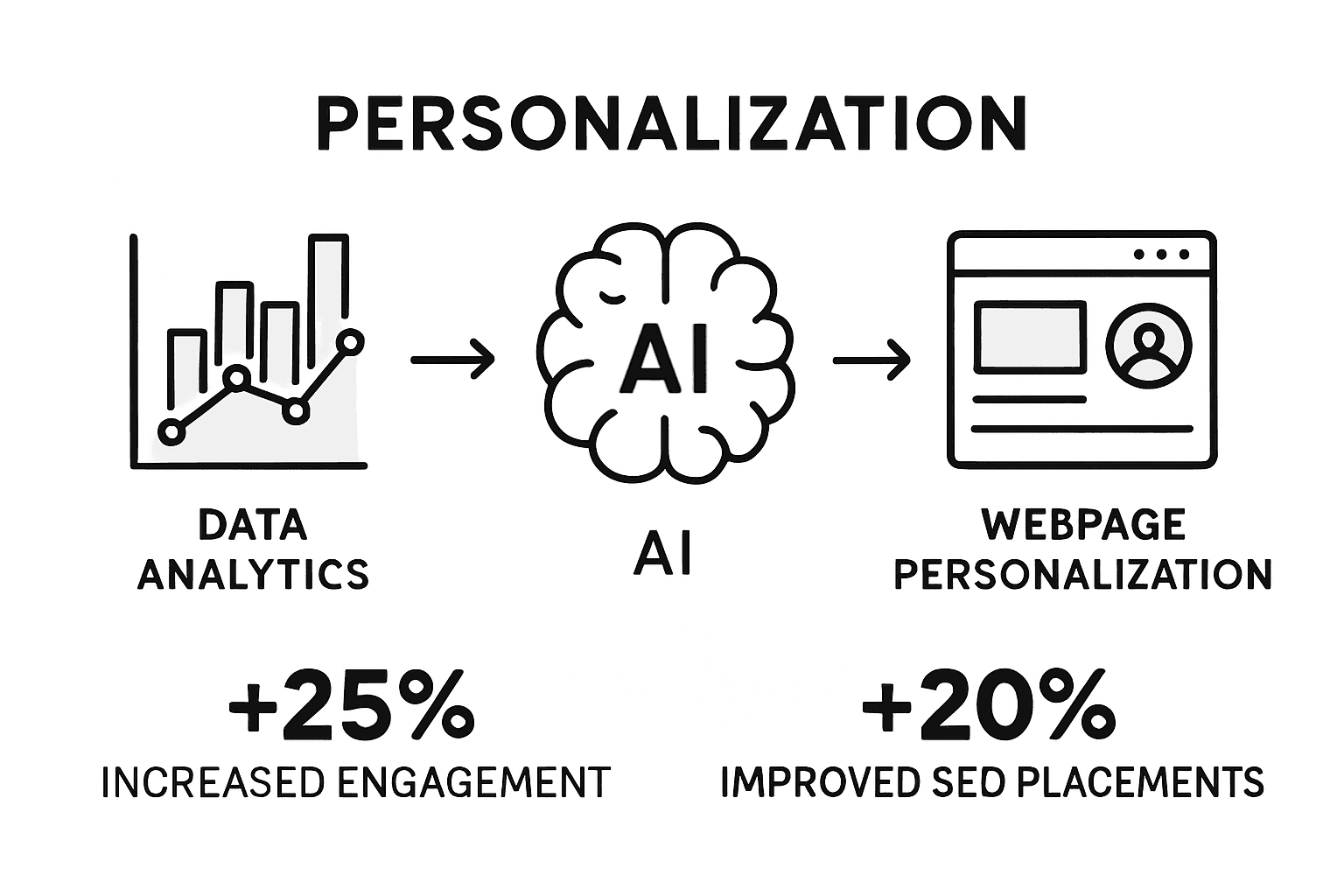
Adobe's 2024 Digital Trends report highlights the critical role of personalized content experiences in modern digital marketing strategies. Advanced algorithms now enable hyper-targeted content delivery that adapts in real-time to individual user preferences, browsing history, and contextual signals, creating a more responsive and engaging digital experience.
Key advances in SEO and content personalization include:
- Predictive Content Matching: Using machine learning to anticipate user interests
- Dynamic User Segmentation: Creating granular audience profiles for precise targeting
- Contextual Content Adaptation: Automatically adjusting content format and messaging
- Semantic Search Optimization: Understanding user intent beyond keyword matching
Successful digital strategies now demand a holistic approach that integrates advanced technologies with genuine human insights. Content creators must leverage AI-driven personalization tools while maintaining authentic, meaningful connections that resonate with their target audiences, transforming data-driven insights into compelling narrative experiences.
Risks, Pitfalls, and Avoiding Common Missteps
Digital content creation involves navigating a complex landscape of technological challenges and ethical considerations. Large language models frequently oversimplify scientific studies and critical research details, presenting significant risks for content creators who rely too heavily on automated generation tools without rigorous verification.
Content authenticity has become a critical concern in the digital ecosystem. Academic journals are increasingly struggling with undetected AI-generated content, highlighting the urgent need for robust verification mechanisms and transparent content creation practices. The proliferation of AI tools has created an environment where distinguishing between human-generated and machine-produced content has become increasingly challenging.
Common missteps in digital content strategy include:
- Overreliance on Automation: Replacing human creativity and critical thinking with AI-generated content
- Lack of Fact-Checking: Accepting AI-generated information without independent verification
- Ignoring Contextual Nuance: Failing to recognize the limitations of algorithmic content generation
- Ethical Blindspots: Overlooking potential biases and inaccuracies in machine-generated materials
Successful content creators must adopt a balanced approach that leverages technological tools while maintaining human oversight. This means using AI as an enhancement tool rather than a complete replacement for human creativity, critical thinking, and authentic storytelling. The most effective strategies will integrate advanced technologies with robust human verification, ensuring content remains accurate, engaging, and fundamentally meaningful.
Unlock the Power of AI-Driven Content to Accelerate Your Growth in 2024
The article highlights how AI-powered personalization and advanced SEO strategies are no longer optional but essential to navigate challenges like rapid content production, maintaining authenticity, and delivering highly targeted digital experiences. If you struggle with balancing automation and genuine storytelling or want to avoid common pitfalls such as overreliance on generic AI content, it is time to discover smarter solutions. Leveraging AI to create personalized, SEO-optimized articles that speak directly to your audience is now critical for scalable, cost-effective organic growth.
At Babylovegrowth.ai, we specialize in transforming these challenges into opportunities by automating high-quality content creation and backlink strategies tailored to your business goals. Our platform simplifies organic growth by offering a 30-day personalized content plan, rank-high services on Google and ChatGPT, and a unique backlinks exchange ecosystem designed to amplify your visibility.
Elevate your digital content strategy today with proven AI tools that balance authenticity and automation.

Discover how to harness AI for explosive SEO growth. Visit Babylovegrowth.ai now and start your free trial. Take control of your digital future and connect with your audience like never before.
Frequently Asked Questions
What are the key digital content trends for 2024?
Key trends for 2024 include AI-powered personalization, interactive storytelling, multimedia integration, and ethical data usage.
How does AI influence digital content creation?
AI enhances content creation by enabling rapid production, scalability, customization, and cost efficiency, transforming how diverse digital materials are generated.
What is the significance of personalization in digital content strategies?
Personalization is crucial as it allows content to be hyper-targeted and contextually relevant, creating more engaging experiences tailored to specific audience segments.
What are the main risks associated with AI-generated content?
Risks include a lack of content authenticity, the possibility of spreading misinformation, and the challenges in distinguishing between human-generated and AI-generated content.