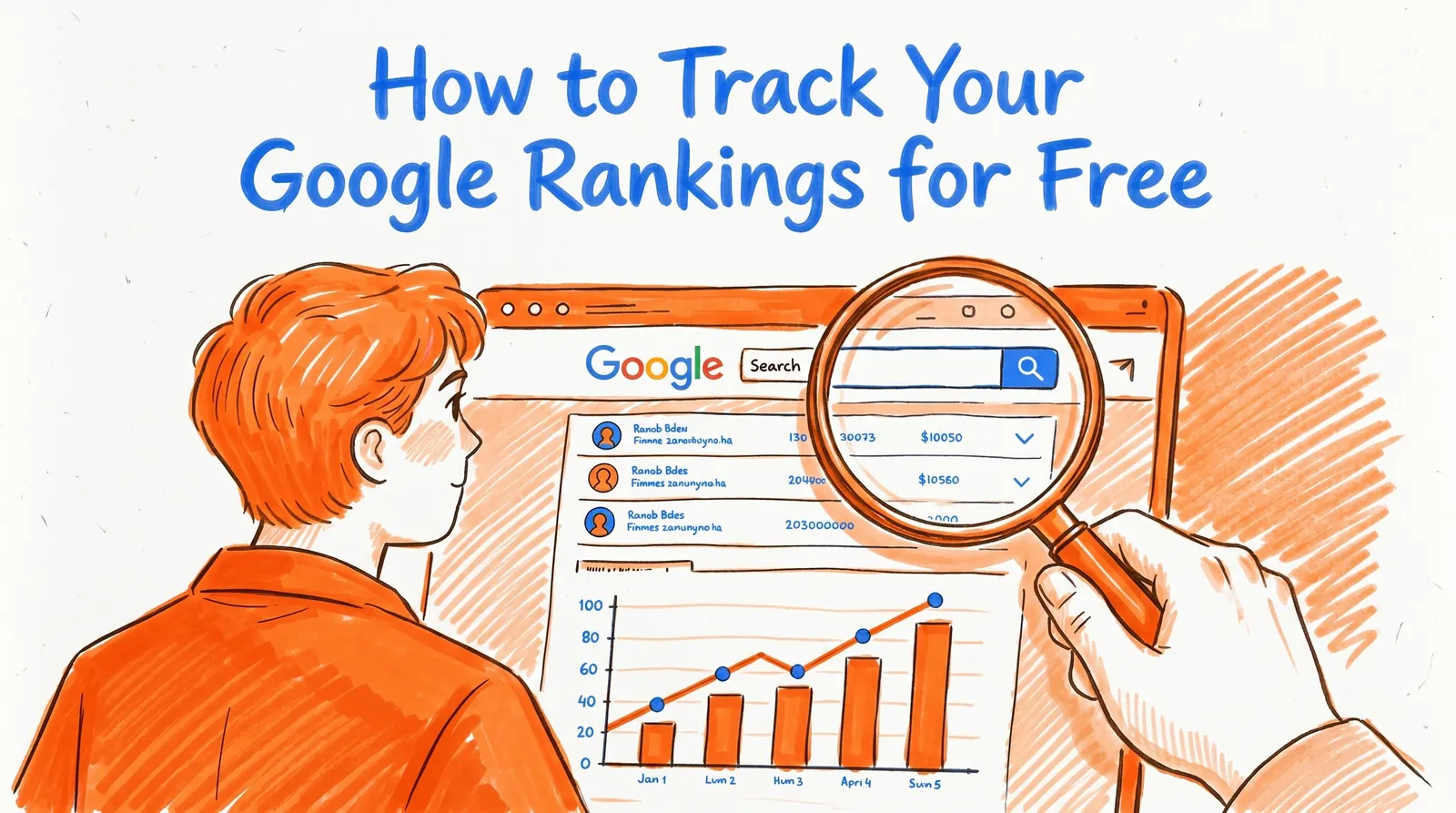
Top keyword discovery methods to boost SEO & organic growth


TL;DR:
- Proper keyword research focuses on intent, moderate volume, and low difficulty for SMBs.
- Gap analysis and clustering help SMBs find less competitive, high-impact keywords.
- Combining free tools and AI platforms can maximize organic growth efficiently.
Finding the right keywords is one of the highest-leverage activities in digital marketing, yet most small and medium-sized businesses (SMBs) approach it backward. They chase the same high-volume terms as Fortune 500 brands, lose every ranking battle, and wonder why organic traffic flatlines. The truth is, keyword research done right can drive exponential organic traffic growth, especially when you apply clustering and competitive gap analysis. This guide walks you through the most effective, actionable keyword discovery methods built specifically for SMBs that need results without enterprise-level budgets.
Table of Contents
- How to identify the right keyword criteria for SMBs
- Using keyword research tools: Free vs. paid options
- Keyword gap analysis: Find what competitors rank for (and you don't)
- Harnessing intent, clusters, and long-tail keywords for greater impact
- Uncover keywords with Google autocomplete, People Also Ask, and social forums
- Our perspective: Why most SMBs get keyword discovery wrong
- Next steps: Supercharge your keyword discovery with AI tools
- Frequently asked questions
Key Takeaways
| Point | Details |
|---|---|
| Tailor criteria for SMBs | Focus on low-competition, intent-based keywords for scalable growth. |
| Use gap analysis | Identify missed opportunities by comparing your site with competitors’ keywords. |
| Leverage free tools first | Free tools like Google Search Console can cover most keyword discovery needs. |
| Cluster and prioritize long-tails | Grouping related keywords and targeting long-tails increases conversions and traffic. |
| Refresh keyword research monthly | Continuous discovery ensures you adapt to changing trends and market shifts. |
How to identify the right keyword criteria for SMBs
With the right criteria in mind, you can move beyond guesswork. Before you open any tool, you need a clear filter for what makes a keyword worth pursuing. For SMBs, that filter looks very different from what a large brand uses.
Here are the core criteria to evaluate every keyword against:
- Search volume: Aim for 100 to 5,000 monthly searches. High enough to matter, low enough that giants aren't dominating every result.
- Keyword difficulty (KD): Stick to KD scores under 49% for realistic ranking chances. Long-tail keywords in this range also convert better than broad head terms.
- Search intent: Is the searcher looking to learn, compare, or buy? Match your content format to the intent.
- Conversion potential: A keyword with 200 monthly searches and strong purchase intent beats a 10,000-search term with zero buying signals.
- Local modifiers: Adding city or region terms ("SEO agency in Austin") reduces competition and attracts buyers in your market.
- Trend direction: A keyword growing 20% month over month is worth more than a flat 5,000-search term.
The biggest mistake SMBs make is treating search volume as the only metric. Volume tells you how many people search, not whether those people are ready to act. Intent drift, where a keyword sounds relevant but attracts the wrong audience, wastes content budget fast. Explore keyword research essentials and choosing keyword tactics to sharpen your evaluation process. You can also browse free keyword research tools to start validating these criteria without spending a dollar.
Pro Tip: Before finalizing any keyword, Google it yourself. Look at the top 10 results. If they're all major publications or e-commerce giants, that's a red flag. If you see blogs, local businesses, or niche sites ranking, you have a real shot.
Using keyword research tools: Free vs. paid options
Once you've chosen your criteria, the next step is leveraging the right tools. The good news: you don't need to spend hundreds of dollars a month to build a solid keyword list.
Top free tools:
- Google Keyword Planner: Great for volume ranges and ad-based intent signals.
- Google Search Console (GSC): Shows what queries already bring visitors to your site, a goldmine for expansion.
- AnswerThePublic: Surfaces question-based queries your audience is already asking.
Top paid tools:
- Semrush Keyword Magic Tool: Excellent for seed keyword expansion and SERP analysis.
- Ahrefs Keywords Explorer: Strong for KD accuracy and click-through rate estimates.
| Tool | Price | Data scope | Standout feature |
|---|---|---|---|
| Google Keyword Planner | Free | Google Ads data | Volume ranges, ad intent |
| Google Search Console | Free | Your site's queries | Real performance data |
| AnswerThePublic | Free/Paid | Question clusters | Conversational keyword maps |
| Semrush | From $139/mo | 25B+ keywords | Keyword Magic Tool |
| Ahrefs | From $129/mo | 20B+ keywords | KD accuracy, click data |
Review our keyword research checklist to make sure you're extracting maximum value from whichever tools you choose. For a deeper look at automation, our AI keyword discovery tips show how machine learning accelerates the process. You can also check this review of keyword research tools for independent comparisons.
Pro Tip: Free tools cover roughly 70% of SMB keyword research needs. Use paid tools for competitive gap work or when you're entering a new market where you need precise KD data fast.
Keyword gap analysis: Find what competitors rank for (and you don't)
Having explored tools, it's essential to know how to use them for true competitive advantage. Keyword gap analysis is the process of comparing your keyword rankings against competitors to find terms they rank for that you don't. For SMBs in competitive niches, gap analysis reveals exactly where you're leaving organic traffic on the table.
Here's how to run one in five steps:
- List your top three to five competitors (search your main keyword and note who ranks on page one).
- Enter your domain and competitor domains into Semrush's Keyword Gap tool or Ahrefs' Content Gap feature.
- Filter results to show keywords competitors rank for in positions 1 to 20 that you don't rank for at all.
- Apply your criteria filter: KD under 49, relevant intent, reasonable volume.
- Prioritize the top 20 to 30 keywords and map each to a new or existing content piece.
The results can be dramatic. Empirical data shows that clustering and gap analysis can produce 100% organic traffic growth in competitive markets. SMBs that run gap analysis consistently report 3x to 4x more page-one keywords within six months.
"Keyword gap analysis is one of the fastest ways for SMBs to identify high-value opportunities that competitors are already validating. You're not guessing; you're following a proven trail."
| Metric | Before gap analysis | After gap analysis (6 months) |
|---|---|---|
| Page-1 keywords | 12 | 47 |
| Monthly organic traffic | 1,800 | 4,200 |
| Ranking keywords total | 85 | 310 |
Use our gap analysis tool to find missing keywords automatically, and pair findings with a solid SEO content strategy to turn those gaps into published, ranking content.

Harnessing intent, clusters, and long-tail keywords for greater impact
Uncovering gaps is powerful, but maximizing their value requires smarter structuring and targeting. Keyword clustering groups related terms by shared SERP overlap or parent topic, so a single content piece can rank for dozens of queries instead of just one.
Why does this matter? Because long-tail keywords drive 70% of organic traffic and convert at higher rates than head terms. When you cluster them around a parent topic, you build topical authority, which signals to Google that your site is the go-to resource for that subject.
Practical methods for building clusters and finding long-tail terms:
- SERP overlap method: Search your seed keyword, then note which other keywords appear in the top 10 results. Group terms that share 3 or more of the same ranking pages.
- Parent topic grouping: Use Ahrefs' "Parent Topic" feature to find the broadest keyword a cluster should target.
- GSC mining: Filter Search Console for queries with 10 to 100 impressions and low clicks. These are intent-rich clusters hiding in your existing data, ready to be developed into full content pieces.
- Modifier expansion: Take a core keyword and add modifiers like "best," "how to," "near me," "for beginners," or "cost" to surface long-tail variations.
- Competitor content gaps: Look at what topics competitors cover in depth that you only touch on lightly.
Learn more about keyword clustering and how to build a content cluster strategy that compounds authority over time.
Pro Tip: Open GSC, filter by queries with fewer than 50 clicks but more than 500 impressions, and sort by position 11 to 20. These are your quick-win clusters sitting just off page one, often requiring only a content refresh to break through.
Uncover keywords with Google autocomplete, People Also Ask, and social forums
In addition to structured tools and techniques, don't overlook free, crowd-sourced sources. Google's own interface hands you real user language every time someone types a query. That language is pure keyword gold.
Google autocomplete, People Also Ask (PAA), and forums like Reddit and Quora surface valuable questions and topics that keyword tools often miss because the search volume is too new or too niche to register.
Here's how to extract and validate keywords from these sources:
- Autocomplete sweep: Type your seed keyword and note every suggestion Google offers. Then add each letter of the alphabet after your keyword ("content strategy a," "content strategy b") to surface dozens of variations.
- PAA mining: Click every PAA question on a relevant SERP. Each answer triggers new related questions, creating a branching map of user intent.
- Reddit and Quora search: Search your topic on both platforms. Look at thread titles and upvoted questions. These are real questions real people are asking right now.
- YouTube autocomplete: Search your keyword on YouTube. Video search suggestions often surface conversational, long-tail terms that text-based tools miss.
- Forum thread titles: Copy exact phrases from popular threads. These often make perfect H2 headings or FAQ answers.
For automating question discovery at scale, our guide on discovering questions with AI shows how to process hundreds of queries in minutes.
Pro Tip: Don't skip zero-volume keywords from autocomplete or PAA. A single zero-volume keyword might bring 10 visitors a month, but 50 of them across a cluster adds up to 500 targeted visitors, often with purchase intent that broad terms can't match.
Our perspective: Why most SMBs get keyword discovery wrong
Bringing these methods together, let's step back for strategic perspective. After working with hundreds of SMBs on organic growth, the pattern is consistent: businesses copy big-site keyword strategies and then wonder why they can't rank. Large brands can rank for competitive head terms because of domain authority built over years and thousands of backlinks. SMBs trying to compete on those same terms are fighting with the wrong weapons.
The hidden value lies in zero-volume and intent-rich queries. A keyword with zero reported search volume in a tool might still bring consistent traffic because tools sample data, they don't capture everything. We've seen advanced keyword research on zero-volume terms generate real leads because the intent was so specific that every visitor was a qualified buyer.
Sustainable results come from combining gap analysis, clustering, and ongoing GSC mining into a repeatable monthly process. It's not glamorous. It doesn't produce overnight viral traffic. But it builds a compounding asset that grows month after month without paying for every click.
Next steps: Supercharge your keyword discovery with AI tools
To accelerate and automate many of these methods, dedicated platforms can help. Manual keyword research is time-consuming, and even the best spreadsheet system breaks down when you're managing dozens of topics across multiple content pillars.
Babylovegrowth.ai's keyword discovery platform automates gap detection, clustering, and intent mapping so your team focuses on strategy instead of spreadsheets. The keyword research tool surfaces opportunities your competitors haven't found yet, and the keyword gap analysis tool runs competitive comparisons in seconds. If you're ready to scale organic traffic without scaling your workload, start with a free analysis today.
Frequently asked questions
What is the most effective keyword discovery method for small businesses?
Combining keyword gap analysis with long-tail clustering delivers the strongest results for SMBs. Clustering and gap analysis can double organic traffic in competitive markets by targeting validated, lower-competition opportunities.
How can I find competitor keywords I'm missing?
Use a keyword gap analysis tool like Semrush or Ahrefs to compare your domain against competitors. Gap analysis reveals the exact terms competitors rank for that you don't, giving you a prioritized list of content opportunities.
Are free keyword research tools enough for SEO?
For most SMBs, yes. Free tools cover 70% of keyword research needs, with Google Search Console and Keyword Planner handling volume validation and query discovery effectively.
What are long-tail keywords and why are they important?
Long-tail keywords are phrases with three or more words, lower search volume, and lower competition. They matter because long-tails drive 70% of organic traffic and typically convert at higher rates than broad head terms.
How often should keyword discovery be done?
Keyword discovery should be a monthly habit, not a one-time project. Constant GSC mining and SERP monitoring keep your strategy aligned with shifting search trends and emerging user intent.