Role of Backlinks in SEO: Complete Expert Guide


Search engines rely on more than 200 ranking factors, but backlinks remain one of the strongest signals for website authority. Every site owner wants higher rankings and better online visibility, yet many misunderstand what makes a link truly valuable. Understanding how backlinks work and why they matter can be the key to climbing search results, attracting real traffic, and building lasting digital trust.
Table of Contents
- Defining Backlinks And Their SEO Importance
- Types Of Backlinks And Quality Factors
- How Backlinks Influence Search Rankings
- Common Backlink Building Mistakes To Avoid
- Automated And AI-Driven Link Building Strategies
Key Takeaways
| Point | Details |
|---|---|
| Backlinks as SEO Currency | Backlinks serve as critical signals for search engine algorithms, impacting a website's credibility and search rankings. |
| Types of Backlinks | Natural backlinks, which are earned organically, are preferred over unnatural backlinks that can harm SEO efforts. |
| Quality Over Quantity | Focus on acquiring high-quality backlinks from relevant and authoritative sources rather than relying on bulk or irrelevant links. |
| Leverage AI for Efficiency | Utilize AI-driven strategies to optimize backlink acquisition, enabling more effective and data-driven link building processes. |
Defining Backlinks and Their SEO Importance
In the digital marketing ecosystem, backlinks represent the critical currency of online credibility and search engine authority. According to Wikipedia, a backlink is a hyperlink from one web resource to another, functioning similar to an academic citation in digital spaces. These digital connections serve as powerful signals that search engines like Google use to evaluate a website's reputation and relevance.
The fundamental importance of backlinks lies in their role as "votes of confidence" across the internet landscape. As SEOPress explains, Google's PageRank algorithm fundamentally relies on these links to assess a webpage's importance and potential search ranking. Think of backlinks like professional recommendations in a job market - the more respected and authoritative the source, the more weight that recommendation carries.
Key characteristics that define high-quality backlinks include:
- Relevance: Links from websites in similar industries or topics
- Authority: Backlinks from established, credible domains
- Diversity: Links from multiple unique domains
- Organic Placement: Natural links within meaningful content
- Traffic Potential: Links from websites with active user engagement
Building a robust backlink profile requires strategic effort and consistent quality content creation. Automated backlink building solutions can help streamline this complex process, enabling businesses to acquire authoritative links more efficiently and systematically.
Types of Backlinks and Quality Factors
Backlinks represent a complex ecosystem with varying types and quality metrics that significantly impact a website's search engine performance. According to SEO for Universities, backlinks are fundamentally classified into two primary categories: natural and unnatural backlinks, each carrying distinct implications for SEO strategy.
Natural backlinks emerge organically when other websites voluntarily link to your content because they find it valuable, credible, and worth referencing. These are the gold standard in link building, representing genuine endorsements of your website's quality. Conversely, unnatural backlinks are artificially generated through manipulative techniques and can potentially trigger search engine penalties.
Key types of backlinks include:
- Editorial Backlinks: Links from high-quality, authoritative content sites
- Guest Posting Links: Contextual links within articles written for other websites
- Resource Links: References from resource pages or curated lists
- Relationship-Based Links: Connections through industry partnerships
- Testimonial and Case Study Links: References from clients or collaborators
When evaluating backlink quality, SEO link building platforms recommend focusing on several critical factors:
- Domain Authority of the linking website
- Relevance of the linking site to your industry
- Contextual placement of the link
- Traffic and engagement metrics of the referring domain
- Diversity of linking root domains
Building a strategic backlink profile requires a nuanced approach that prioritizes quality over quantity, ensuring each link contributes meaningful value to your overall SEO ecosystem.

How Backlinks Influence Search Rankings
Backlinks are the fundamental backbone of search engine ranking algorithms, serving as critical indicators of a website's credibility and relevance. According to Wikipedia, PageRank is an advanced algorithm that assigns a numerical weighting to each web page, meticulously measuring its relative importance based on the quantity and quality of incoming links. This sophisticated system essentially transforms backlinks into digital reputation points that directly impact search visibility.
Research from arXiv reveals that the PageRank algorithm determines a web page's importance by analyzing the significance of pages linking to it. Think of backlinks like academic citations - the more respected and authoritative the sources referencing your content, the higher your perceived expertise and ranking potential. Search engines interpret these links as third-party validations, with each high-quality backlink acting as a vote of confidence in your website's credibility.
Key ranking factors influenced by backlinks include:
- Link Diversity: Connections from multiple unique domains
- Topical Relevance: Links from industry-related websites
- Domain Authority: Strength of linking websites
- Anchor Text: Descriptive and contextually appropriate link text
- Link Placement: Contextual positioning within content
Websites seeking to improve their search rankings can leverage backlink exchange networks to strategically build their link profile, ensuring a comprehensive and organic approach to improving search engine visibility. The goal is not just accumulating links, but cultivating a network of high-quality, relevant, and authoritative connections that genuinely enhance your digital reputation.
Common Backlink Building Mistakes to Avoid
Backlink building is a delicate art that requires strategic precision and genuine value creation. According to SEO for Universities, relying on unnatural backlinks can severely compromise your search engine optimization efforts. Artificially generated links are not just ineffective - they can trigger punitive actions from search engines that dramatically reduce your website's visibility and credibility.
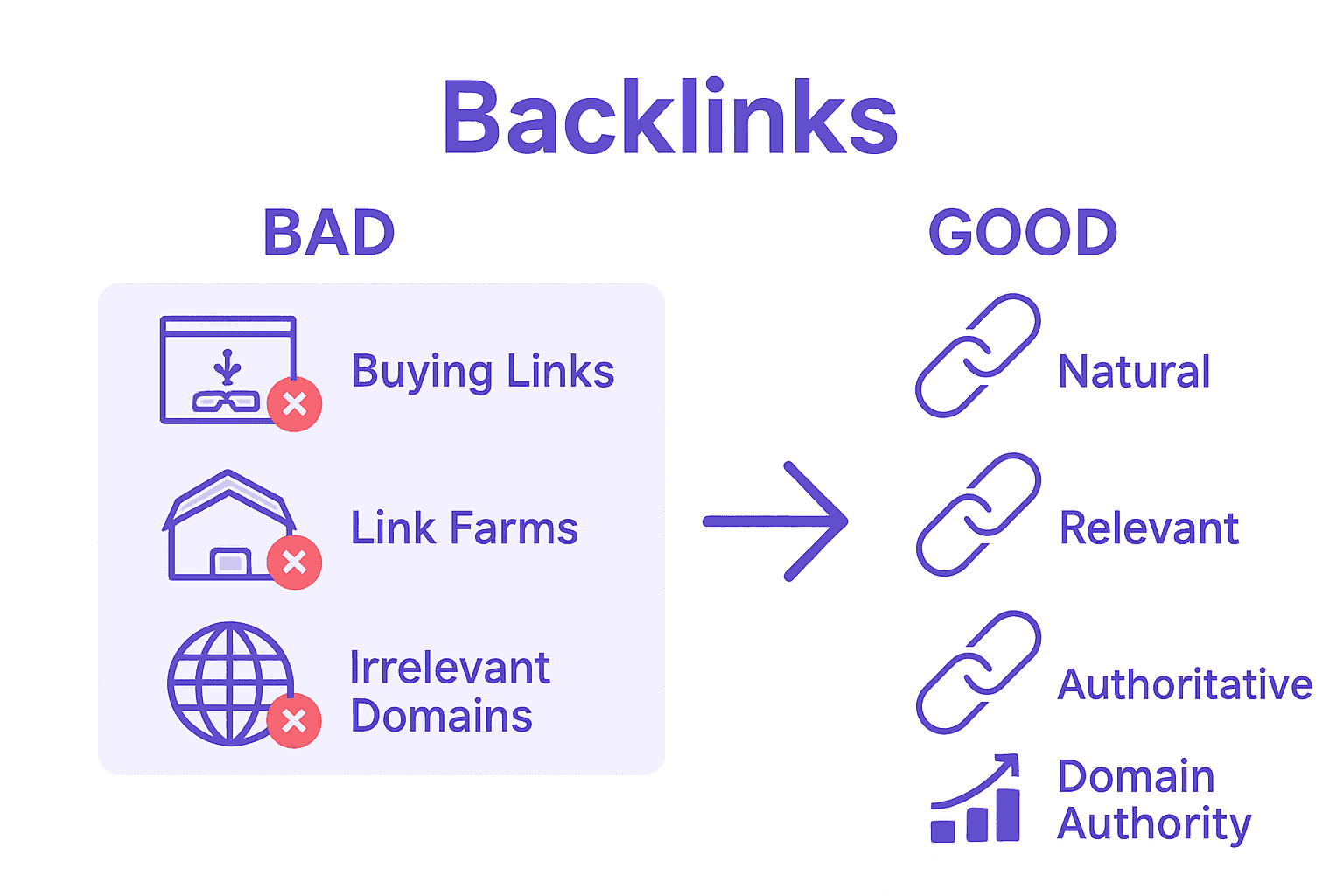
The most critical mistakes in backlink acquisition often stem from short-sighted tactics that prioritize quantity over quality. Marketers frequently fall into traps like purchasing bulk link packages, participating in link farms, or using automated link-building tools that generate low-quality, irrelevant connections. These approaches might seem tempting as quick solutions, but they represent significant risks to your long-term digital marketing strategy.
Key backlink building mistakes to avoid include:
- Buying Links: Purchasing backlinks from dubious sources
- Irrelevant Linking: Obtaining links from unrelated websites
- Over-Optimization: Using identical anchor text repeatedly
- Ignoring Link Relevance: Neglecting industry-specific connections
- Quantity Over Quality: Prioritizing link volume instead of authority
To mitigate these risks and build a robust backlink profile, backlink management platforms can help businesses strategically develop high-quality, organic link networks that genuinely enhance search engine performance. The ultimate goal is creating a natural, diverse link ecosystem that reflects your content's genuine value and expertise.
Automated and AI-Driven Link Building Strategies
The landscape of link building is rapidly transforming with advanced artificial intelligence technologies that promise more efficient and strategic backlink acquisition. According to research from arXiv, sophisticated approximation algorithms now enable strategic optimization of PageRank by precisely calculating and adding backlinks, revolutionizing traditional link-building approaches.
AI-driven link building strategies leverage machine learning algorithms to identify high-potential linking opportunities with unprecedented accuracy. arXiv research exploring selective linking strategies highlights how automated systems can analyze social platforms and web ecosystems to generate meaningful backlinks that significantly influence search rankings. These intelligent systems can process vast amounts of data, identifying contextually relevant websites and potential link partners faster and more effectively than manual methods.
Key components of AI-powered link building include:
- Semantic Content Analysis: Identifying topically relevant linking opportunities
- Competitive Backlink Mapping: Analyzing competitors' link profiles
- Domain Authority Prediction: Evaluating potential link sources
- Automated Outreach: Generating personalized connection requests
- Link Quality Scoring: Assessing backlink potential using advanced metrics
Businesses seeking to modernize their SEO approach can leverage SEO automation platforms to implement these cutting-edge strategies, transforming link building from a manual, time-consuming process into a data-driven, intelligent workflow that consistently delivers high-quality backlink opportunities.
Unlock the Power of Backlinks with AI-Driven SEO Solutions
Understanding the crucial role backlinks play in search engine rankings reveals the challenge many businesses face today: building a natural, authoritative link profile that Google trusts. The pain points are clear. You want to avoid common pitfalls like low-quality, irrelevant links and slow, manual strategies while striving for diverse, organic backlinks that boost your domain authority and increase your organic visibility. The article highlights key terms like "PageRank," "domain authority," and "backlink exchange networks," underscoring how complex this process can be without the right tools.
Take control of your backlink strategy with Babylovegrowth.ai, a cutting-edge platform that automates backlink building with AI precision. Whether you need to identify high-quality linking opportunities, conduct competitive backlink mapping, or manage an intelligent link outreach campaign, our platform streamlines each step while integrating seamlessly with your CMS. Experience the ease of growing your site’s credibility through a diverse and powerful backlink profile without the risks of unnatural links.
Ready to stop guessing and start ranking higher?
Discover how AI-powered backlink building can transform your SEO game today.
Explore our backlink exchange networks and SEO automation tools that put you ahead of your competition. Visit Babylovegrowth.ai now to launch your journey toward sustainable organic growth and improved search rankings.
Frequently Asked Questions
What are backlinks and why are they important for SEO?
Backlinks are hyperlinks from one website to another. They are important for SEO because they act as 'votes of confidence' for the content of the linked website, influencing how search engines rank that site based on its credibility and relevance.
How do backlinks influence search engine rankings?
Backlinks influence search engine rankings by serving as indicators of a website's credibility. The more high-quality backlinks a site has from reputable sources, the better its chances of ranking higher on search engine results pages through algorithms like PageRank.
What types of backlinks should I focus on building?
You should focus on building high-quality backlinks, such as editorial links from authoritative content sites, guest posting links, resource links from curated lists, and relationship-based links through industry partnerships. Natural, relevant links from reputable domains are the most beneficial.
What common mistakes should I avoid in backlink building?
Common mistakes in backlink building include purchasing links from unreliable sources, obtaining irrelevant links, over-optimizing anchor text, ignoring industry-specific connections, and prioritizing link quantity over quality. Avoiding these pitfalls will help maintain your site's credibility and SEO performance.
Recommended
- Backlink Building Software | Automate Link Acquisition at Scale
- BabyLoveGrowth | #1 Automated Organic Growth Platform for Google and ChatGPT
- SEO Link Building Platform | Build Quality Backlinks at Scale
- BabyLoveGrowth | #1 Automated Organic Growth Platform for Google and ChatGPT