Boost Online Sales: Proven Ecommerce Keyword Research Tips


TL;DR:
- Focus on transactional and commercial intent keywords to attract ready-to-buy shoppers.
- Use AI-powered tools to expand, cluster, and prioritize high-converting keywords efficiently.
- Continuously track, update, and refine your keyword strategy quarterly to stay competitive.
Most e-commerce stores are sitting on a traffic problem they don't fully see. They publish product pages, run ads, and wonder why organic sales stay flat. The real culprit is usually keyword research that's either too generic, outdated, or focused on volume instead of buyer intent. Getting this right changes everything: the right keywords bring shoppers who are ready to buy, not just browse. This article walks you through a field-tested, intent-focused approach to ecommerce keyword research, from building your initial strategy to tracking results and iterating for long-term growth, so you stop guessing and start ranking for phrases that actually convert.
Table of Contents
- Define your ecommerce keyword strategy
- Build a keyword list: Tools and methods that work
- Cluster and prioritize for conversions
- Track, refine, and repeat: Ongoing keyword success
- What most guides miss: The compounding impact of intent-focused iteration
- Fast-track your keyword wins with BabyloveGrowth.ai
- Frequently asked questions
Key Takeaways
| Point | Details |
|---|---|
| Prioritize search intent | Focusing on buyer intent leads to higher conversions and more relevant traffic for your store. |
| Use advanced tools | Leveraging AI tools makes finding and grouping profitable keywords faster and more effective. |
| Update regularly | Quarterly keyword updates ensure your SEO keeps pace with new trends and customer behaviors. |
| Track results | Monitoring rankings and sales for each keyword directly improves your SEO ROI. |
Define your ecommerce keyword strategy
Keyword research for e-commerce is not the same as research for a blog or a local business. You're targeting people at different stages of a purchase decision, and that means search intent is everything. Intent falls into three main types: informational (the user is learning), commercial (they're comparing options), and transactional (they're ready to buy). For an e-commerce store, your highest priority is transactional and commercial intent keywords. These are the phrases buyers type when they already know what they want.
Understanding the value of SEO for ecommerce means recognizing that ranking for "buy men's running shoes size 11" beats ranking for "types of running shoes" every single time, even if the volume is lower.
Here's a practical top-level framework for structuring your keyword targets:
- Category keywords: Broad terms covering product lines (e.g., "women's winter coats"). High volume, high competition.
- Product keywords: Specific terms tied to individual SKUs or models (e.g., "Sony WH-1000XM5 headphones"). Lower volume, very high conversion potential.
- Long-tail keywords: Detailed, specific phrases (e.g., "waterproof hiking boots for wide feet"). Lower competition, higher conversion rate.
- Comparison and review keywords: Phrases buyers use when deciding (e.g., "best wireless earbuds under $100"). Great for category and blog pages.
The keyword mix you choose also depends heavily on your niche. A clothing store should lean on style, fit, and occasion keywords. An electronics store needs brand, model, and spec-based terms. There's no universal list.
One thing that catches many store owners off guard: keyword relevancy changes faster than you'd expect. Quarterly keyword updates are not optional; they're the standard for stores that stay competitive. Consumer trends, seasonal demand, and new product releases all shift what buyers search for. Failing to refresh your keyword strategy means you're optimizing for how people searched six months ago, not today.

Pro Tip: Don't chase the highest search volume keyword in your niche. Instead, find the highest-converting keyword you can realistically rank for. A 500-search-per-month term that converts at 4% beats a 10,000-search term converting at 0.2% every time.
Build a keyword list: Tools and methods that work
With your strategy defined, it's time to gather the right keywords using proven research methods and tools.
There are four core methods that consistently produce strong results for e-commerce keyword discovery:
- Seed word expansion: Start with 3-5 core terms describing your product categories. Use tools to expand each seed into dozens of related phrases, variations, and questions.
- Competitor analysis: Identify which keywords your top 3 competitors rank for that you don't. These represent ranking gaps you can close.
- Question mining: Pull questions from tools like AnswerThePublic or Reddit threads related to your niche. These often reveal long-tail gems with strong informational or commercial intent.
- AI-powered clustering: Instead of manually sorting hundreds of keywords, use AI tools to group them by intent and topic automatically. This saves hours and often surfaces patterns you'd miss manually.
The right toolset makes a measurable difference. Here's a straightforward comparison:
| Tool | Free or Paid | Best For |
|---|---|---|
| Google Keyword Planner | Free | Volume estimates, seed expansion |
| Ahrefs | Paid | Competitor gap analysis, difficulty scores |
| SEMrush | Paid | Full-funnel research, position tracking |
| BabyloveGrowth.ai | Paid | AI-powered discovery, clustering, automation |
The case for intent-focused methods is not just theoretical. A hair extensions site gained 106k impressions in 60 days by using seed expansion in SEMrush combined with intent clustering and natural keyword density. That's a real-world benchmark for what a methodical, intent-driven approach can achieve within two months.
For a deeper look at how tools stack up in 2026, the AI SEO tools comparison breaks down the leading platforms in detail. And if you want to understand how AI fits into ecommerce specifically, AI in ecommerce SEO is worth reading before you commit to a toolset.
Pro Tip: Use AI-driven keyword discovery to cut your research time in half. AI clustering identifies intent patterns across large keyword sets in minutes, so you can focus on strategy instead of spreadsheet sorting.
Cluster and prioritize for conversions
Once you have a large pool of potential phrases, the next step is to organize and focus on those most likely to increase conversions.
Keyword clustering means grouping related terms by shared intent and topic. Instead of treating each keyword as a standalone target, you create content that naturally covers an entire cluster. This signals topical authority to search engines and improves your chances of ranking for multiple related terms with a single page.
Here's how different clusters break down in practice:
| Cluster Type | Example Keywords | Target Page | Conversion Potential |
|---|---|---|---|
| Transactional | "buy leather wallet men," "men's slim wallet free shipping" | Product/category page | Very High |
| Commercial | "best leather wallets 2026," "top wallets for men" | Blog/comparison page | High |
| Informational | "how to care for leather wallet" | Blog/guide page | Medium |
| Long-tail transactional | "slim RFID wallet under $40" | Product page | Very High |
Before you decide which clusters to prioritize, run through these questions:
- Does this keyword have clear buying intent, or is it mostly informational?
- Can you realistically rank in the top 10 given your current domain authority?
- Is there an existing page you can optimize, or do you need to create new content?
- How seasonal is this keyword? Is demand consistent year-round or spiked?
- Does ranking for this keyword align with your highest-margin products?
Quick-win keywords are clusters where search volume is moderate (500 to 5,000 monthly searches), difficulty is low to medium, and your current content is close to ranking already. The 106k impressions result came partly from identifying and attacking exactly these kinds of underserved clusters. Sorting keywords by difficulty and then filtering for commercial intent is one of the fastest ways to find them.
For a deeper workflow on this, AI-powered keyword clustering walks through the full process. Pair that with strong content creation for SEO growth to make sure each cluster lands on a page built to convert.
Track, refine, and repeat: Ongoing keyword success
After launching your content around key clusters, keeping the momentum means routinely measuring and improving your process.
Three analytics areas give you the clearest picture of keyword performance:
- Rankings: Are your target keywords moving up in search results over time?
- Organic traffic: Is more qualified traffic arriving on optimized pages?
- Conversions per keyword: Which specific terms are actually driving sales, not just clicks?
Here's a simple update cycle to run every quarter:
- Pull your keyword rankings from your SEO tool and identify which pages have dropped.
- Check Google Search Console for new queries your pages are appearing for but not ranking well.
- Audit your top pages for freshness: Are the titles, descriptions, and on-page content still aligned with current search intent?
- Add new keywords that have emerged from trend shifts, product launches, or competitor movement.
- Remove or deprioritize keywords that have dropped in relevance or conversion value.
- Publish updated or new content targeting the highest-priority gaps you've identified.
"Track rankings, traffic, and conversions per keyword, and refresh your list at least quarterly, because trends and AI are changing search behavior fast."
That last point about AI is increasingly important in 2026. Search behavior is shifting as buyers use AI-powered tools like ChatGPT and Perplexity to find products. Phrases that performed well in 2024 may no longer match how your buyers phrase questions today. AI content tools for growth can help you spot these shifts before they cost you rankings, and using AI for SEO audits can flag technical issues that hold your pages back from climbing even when keywords are solid.
The quarterly keyword refresh is not just best practice. It's the minimum standard for staying competitive as AI reshapes how search engines interpret and rank content.
What most guides miss: The compounding impact of intent-focused iteration
Here's something most keyword guides won't say directly: obsessing over search volume is one of the most common and costly mistakes e-commerce teams make. High-volume keywords look impressive in a spreadsheet, but they rarely reflect what buyers at different stages actually need right now.
The stores we see winning consistently are not the ones with the biggest keyword lists. They're the ones that revisit their content every quarter, update their intent signals, and double down on what their buyers are searching for today. It's less about finding the perfect list once and more about building a discipline of iteration.
The SEO for ecommerce growth argument is ultimately a compounding one. Each intent-aligned update adds ranking authority. Each new cluster you cover builds topical trust. The stores that treat keyword research as a one-time task plateau. The ones that treat it as an ongoing system keep growing long after their competitors stop showing up in search results.
Fast-track your keyword wins with BabyloveGrowth.ai
If manually running this entire process every quarter sounds like a lot, you're not wrong. That's exactly the problem BabyloveGrowth.ai was built to solve.
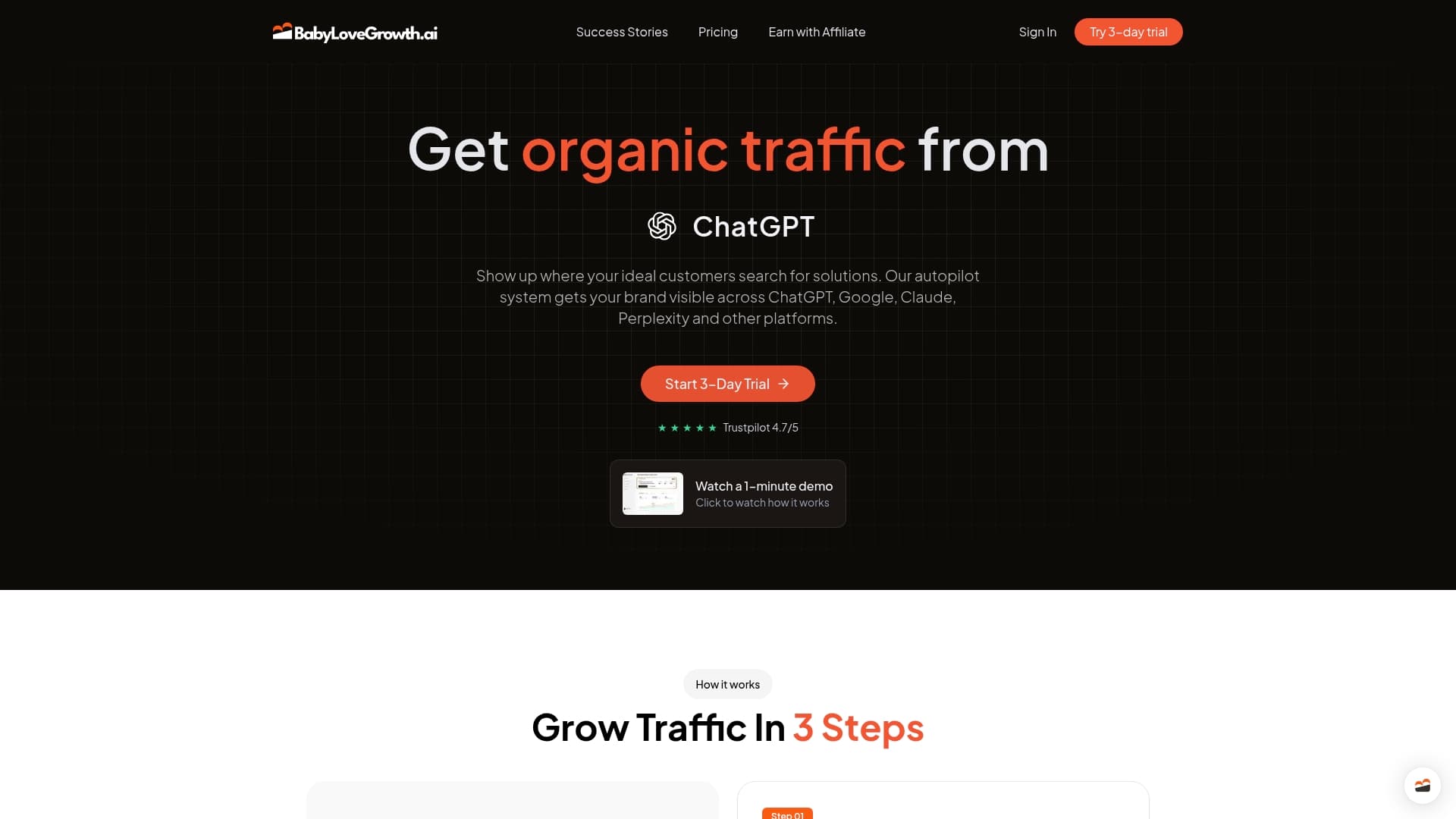
With the Keyword Discovery Platform, you get AI-powered tools that surface high-intent keywords your competitors haven't found yet. The Keyword Research Tool gives you volume, difficulty, and intent signals in one place, so prioritization takes minutes instead of days. And the Keyword Clustering Tool automatically groups your keywords by topic and funnel stage, ready to map to your content calendar. For e-commerce teams that want to move fast and stay ahead in 2026, this is how you do it without burning your team out.
Frequently asked questions
How often should I update my ecommerce keyword list?
You should refresh your keyword list at least quarterly to capture new trends and shifts in buyer behavior. AI and search trends are moving fast enough that a six-month-old list can already be misaligned with what buyers are searching for.
Which metrics matter most when tracking keyword performance for ecommerce stores?
Track rankings, organic sales, and conversions per keyword for the clearest picture of what's actually working. Traffic volume alone tells you very little without conversion data beside it.
What's the fastest way to find high-converting keywords for my store?
Expand seed keywords by intent and cluster them using AI tools. A hair extensions site reached 106k impressions in 60 days using exactly this approach in SEMrush, proving the method works at scale.
How does AI help with ecommerce keyword research in 2026?
AI speeds up discovery, intent clustering, and trend monitoring far faster than manual methods. Since AI is shifting search behavior continuously, having AI-powered tools in your stack means your keyword strategy adapts in near real time instead of lagging behind.