Benefits of AI-Driven Link Building for SEO in 2026


TL;DR:
- AI-driven link building automates backlink acquisition, increasing speed, personalization, and scale for SEO.
- It reduces manual effort, boosts response rates, and enhances long-term authority in AI search visibility.
AI-driven link building is the process of using artificial intelligence to automate and optimize backlink acquisition, producing faster, more personalized, and scalable SEO results. The benefits of AI-driven link building go far beyond speed. AI tools now handle prospecting, outreach drafting, and performance monitoring at a scale no manual team can match. Platforms like Babylovegrowth embed these capabilities directly into automated workflows, cutting the time per acquired link by 50–70% compared to manual methods. For digital marketers and business owners competing in 2026, that efficiency gap is the difference between ranking and being invisible.
1. How does AI improve link building efficiency?
AI reduces the most time-consuming parts of link building to a fraction of their original cost. Prospecting tasks that once took 2–3 hours now take 30 minutes. Outreach email drafting drops from 15 minutes per message to 2–3 minutes of human review. That compression lets a two-person team do the work of a ten-person department.
The efficiency gains show up across every stage of the workflow:
- Prospect discovery: AI crawls thousands of domains, filters by domain authority, topic relevance, and link gap data in minutes.
- Broken link detection: AI agents scan target sites for dead links and match them to your existing content automatically.
- Outreach drafting: AI generates personalized email drafts using input variables. A human reviews and sends.
- Link monitoring: AI tracks new and lost backlinks in real time, flagging changes that need attention.
Pro Tip: Never let AI send outreach without a human review step. AI drafts require a final check for natural tone and varied anchor text before hitting send.
The real payoff is not just speed. AI shifts human effort away from repetitive tasks and toward strategy. Your team stops spending Monday morning building prospect lists and starts spending it deciding which link opportunities actually move the needle.

2. What impact does AI-driven personalization have on outreach success?
Generic outreach fails because editors receive hundreds of identical pitches every week. AI-driven personalization solves that problem by building each email around specific, relevant data points tied to the recipient's site. The result is a 300%+ increase in editor response rates compared to standard spray-and-pray campaigns.
AI personalization works by pulling in signals that a human researcher would miss or skip under time pressure:
- Content gap matching: AI identifies exactly which topic on the prospect's site your content fills.
- Anchor text relevance: AI suggests anchor text that fits naturally into the prospect's existing copy.
- Timing signals: AI flags when a prospect has recently published on a related topic, making your pitch immediately relevant.
- Authority scoring: AI ranks prospects by the actual SEO value they would deliver, not just their domain rating.
The shift from generic to data-backed pitches also improves link quality. When editors accept links because the pitch was genuinely useful, those links come from contextually relevant pages. Contextually relevant backlinks carry more weight in Google's ranking signals than links placed on unrelated pages. Better personalization produces better links, not just more responses.
3. Why AI-driven link building matters for AI search visibility in 2026
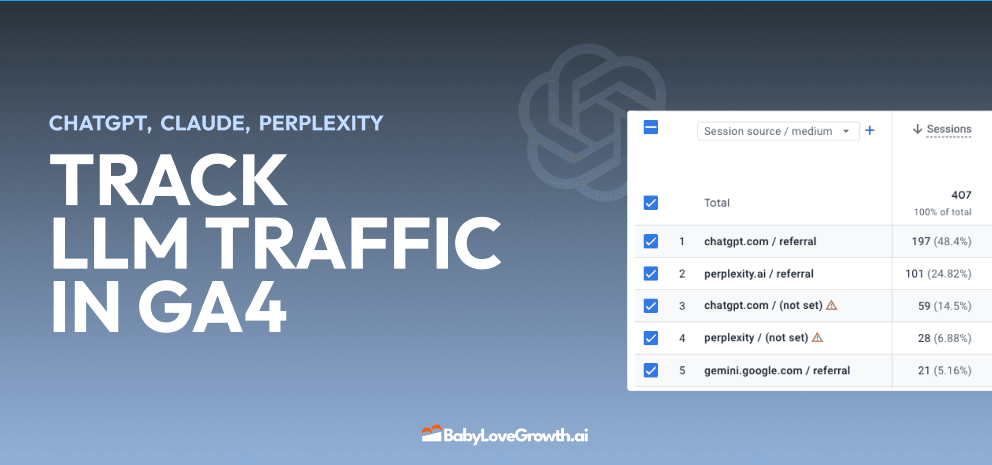
Backlinks no longer serve only Google. In 2026, they directly affect whether your brand appears in AI-generated answers from ChatGPT, Perplexity, and Claude. There is a 0.70 correlation between brand mentions on authoritative pages and visibility in AI Overviews. That figure comes from an analysis of 76.7 million AI Overviews. It means that getting your brand cited on credible third-party pages is now as important as ranking on page one.
The mechanism works like this:
- AI models train on and reference content from high-authority domains.
- Backlinks place your brand on those domains, creating brand mentions AI models can cite.
- 82% of AI-cited links come from earned media, not owned media. Consistent third-party mentions outperform raw backlink counts.
- Brands with broad mention ecosystems across credible sources get cited more often in AI-generated answers.
"Brands earning AI citations are those frequently mentioned across credible third-party sources rather than those with high raw backlink counts."
This reframes the entire goal of link building. You are not just chasing domain authority scores. You are building a citation network that AI models recognize as authoritative. Babylovegrowth addresses this directly through its backlinks network, which targets placements on pages that AI crawlers already prefer. Learning how to optimize content for AI search works hand in hand with this link-building approach.
4. How to integrate AI tools effectively into your link building workflow
AI works best as a force multiplier, not a replacement for human judgment. Experts consistently warn against automating strategy decisions or final brand voice. The goal is to automate the repetitive parts while keeping humans in control of quality and direction.
A practical AI-assisted workflow looks like this:
- Stage 1, Prospecting: Use AI to generate a filtered list of link targets based on topic relevance, authority, and traffic. Review the top 20% manually before outreach.
- Stage 2, Drafting: Feed AI a prospect profile and your content brief. Review the draft, adjust tone, and approve.
- Stage 3, Monitoring: Set AI alerts for new backlinks, lost links, and anchor text distribution. Act on alerts weekly, not daily.
- Stage 4, Technical audit: Confirm your site is accessible to AI crawlers. Ignoring robots.txt settings for GPTBot, ClaudeBot, and PerplexityBot makes every backlink you earn less effective.
Pro Tip: Run an AI crawlability audit before launching any link building campaign. A backlink pointing to a page blocked from AI bots delivers no AI search visibility benefit.
The table below maps each workflow stage to its primary AI function and the human role that must stay in place.
| Workflow stage | AI function | Human role |
|---|---|---|
| Prospect discovery | Filter and rank thousands of domains | Approve final target list |
| Outreach drafting | Generate personalized email drafts | Review tone, anchor text, and accuracy |
| Link monitoring | Track gains, losses, and anchor distribution | Prioritize responses and disavow decisions |
| Technical crawlability | Flag blocked bot access in robots.txt | Update allowlist and retest |
| Content for link earning | Draft supporting articles at 2–3x speed | Edit for quality and brand voice |
AI can multiply content production 2–3x by automating research and drafting. Excessive automation without editorial review, however, risks quality drops and potential penalties. The winning formula automates the monotonous parts and reserves human time for editing and strategy. Babylovegrowth's link building workflow guide covers how to set up this balance in practice.
5. How AI-driven SEO strategies build long-term authority
Short-term link building tactics produce short-term results. AI-driven SEO strategies build compounding authority because they operate continuously, not in campaign bursts. AI monitors your backlink profile daily, identifies decay before it hurts rankings, and flags new opportunities as they appear. Manual teams check these metrics monthly at best.
Foundational SEO fundamentals remain the base for long-term authority. Technical clarity, quality content, and consistent brand mentions across credible sources matter more than any single tactic. AI accelerates all three by removing the bottlenecks that slow human teams down. A site with clean technical signals, strong content, and a growing backlink profile from relevant sources compounds its authority over time in ways that paid traffic cannot replicate.The advantage of AI in backlinks is not just the links themselves. It is the consistency. AI does not take vacations, miss a broken link opportunity, or forget to follow up on a pending outreach. That consistency, applied over 12 months, produces a backlink profile that manual methods rarely achieve at the same quality level.
Key takeaways
AI-driven link building delivers compounding SEO gains by combining speed, personalization, and technical precision that manual methods cannot sustain at scale.
| Point | Details |
|---|---|
| Efficiency gains are measurable | AI cuts time per acquired link by 50–70%, freeing teams for higher-value strategy work. |
| Personalization drives response rates | Data-backed outreach increases editor response rates by over 300% compared to generic pitches. |
| AI search visibility requires brand mentions | A 0.70 correlation links brand mentions on authoritative pages to AI Overview appearances. |
| Human oversight is non-negotiable | AI drafts and prospect lists require human review to protect quality and brand voice. |
| Technical crawlability is a prerequisite | Blocking GPTBot or ClaudeBot in robots.txt undermines every backlink you earn. |
What I've learned about AI and link building after watching teams get it wrong
Most teams adopt AI link building tools and immediately try to automate everything. That instinct is understandable. The efficiency numbers are real and the time savings are significant. The problem is that full automation produces a backlink profile that looks uniform, reads as artificial, and eventually triggers manual review.
The teams I have seen succeed treat AI as a research and drafting engine, not a decision-maker. They use AI to surface 200 prospects and then spend real time on the top 20. They let AI draft the first version of an outreach email and then rewrite the opening line themselves. That combination produces results that neither pure manual nor pure automated approaches can match.
The 2026 shift toward AI search visibility adds another layer. Building links to rank on Google is no longer the only goal. You need your brand mentioned on the pages that ChatGPT and Perplexity trust. That requires a different kind of link target selection, one that prioritizes editorial credibility over raw domain authority scores. AI tools that understand this distinction are worth far more than tools that simply automate volume. The role of AI in content strategy is inseparable from this shift.
— MEET
Babylovegrowth automates the link building work that slows you down
Babylovegrowth is built for digital marketers and business owners who want backlink growth without the manual overhead.
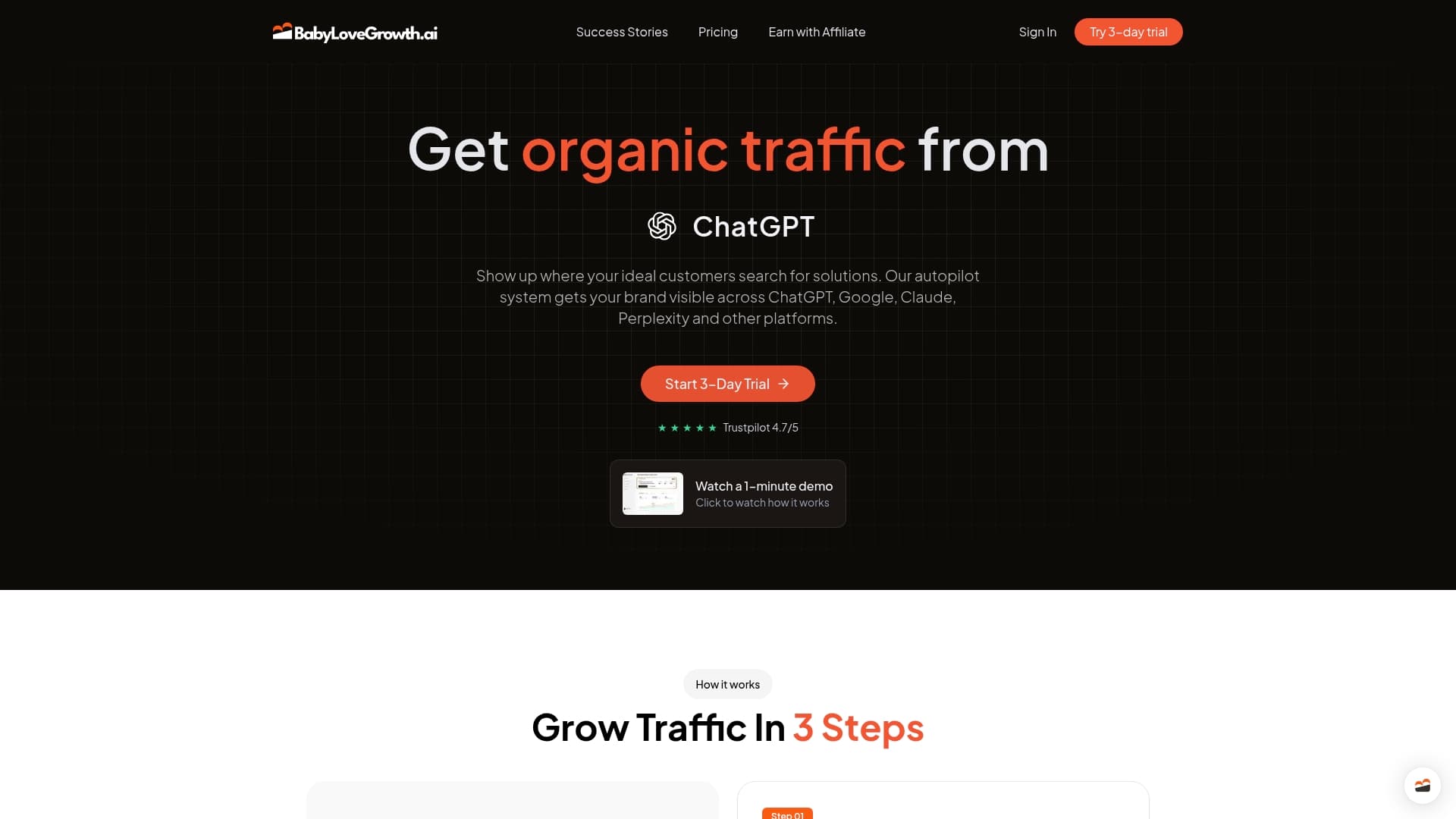
The platform's backlink building software automates prospect discovery, outreach, and link monitoring across a curated network of authoritative sites. It also includes an AI crawlability audit that checks whether GPTBot, ClaudeBot, and PerplexityBot can access your pages before you invest in any link campaign. Pair that with Babylovegrowth's keyword research tools and you have a full AI-driven SEO workflow running without a large team behind it.
FAQ
What are the main benefits of AI-driven link building?
AI-driven link building reduces time per acquired link by 50–70%, increases outreach response rates by over 300%, and enables consistent backlink monitoring that manual teams cannot sustain at scale.
How does AI improve SEO through link building?
AI improves SEO by automating prospect discovery, personalizing outreach at scale, and monitoring backlink health continuously. These capabilities produce higher-quality links faster than manual methods.
Does AI link building work for AI search engines like ChatGPT?
Yes. Backlinks place your brand on authoritative third-party pages, and there is a 0.70 correlation between brand mentions on those pages and visibility in AI Overviews from ChatGPT, Perplexity, and similar platforms.
What is the biggest risk of automated link building?
Over-automation without human review produces uniform, low-quality outreach that editors reject and search engines may penalize. Human oversight of AI drafts and prospect lists is required to protect quality.
Do I need technical SEO work alongside AI link building?
Yes. If your robots.txt blocks AI crawlers like GPTBot or ClaudeBot, backlinks pointing to those pages deliver no AI search visibility benefit. A crawlability audit should precede any link building campaign.