What is multichannel marketing: a 2026 guide for SMBs


Businesses that automate across multiple channels generate 80% more leads and see 77% higher conversion rates. Yet many small business owners confuse multichannel marketing with omnichannel marketing, missing opportunities to reach customers effectively. Multichannel marketing uses several platforms like email, social media, and SMS to connect with your audience, while omnichannel integrates these platforms for seamless experiences. This guide explains what multichannel marketing is, how it differs from omnichannel, and practical strategies SMBs can use to boost engagement and drive growth in 2026.
Table of Contents
- What Is Multichannel Marketing And How It Works
- Benefits And Impact Of Multichannel Marketing For Small Businesses
- Multichannel Vs. Omnichannel Marketing: Key Differences Explained
- How To Implement Effective Multichannel Marketing Strategies
- Explore BabyLoveGrowth Tools To Power Your Campaigns
- Frequently Asked Questions
Key takeaways
| Point | Details |
|---|---|
| Multichannel uses separate platforms | Marketing across email, social media, SMS, and websites without integration between channels |
| Automation drives results | Multichannel automation boosts leads by 80% and increases conversions by 77% |
| Omnichannel differs fundamentally | Omnichannel connects platforms for unified customer experiences with real-time data sharing |
| Personalization matters | Effective messaging aligns with user behavior and timing across each channel |
| Strategic balance wins | SMBs enhance engagement by choosing the right channels for their audience |
What is multichannel marketing and how it works
Multichannel marketing uses several platforms to reach customers, including email, SMS, social media, websites, push notifications, and mobile apps. Each channel operates independently, giving you multiple touchpoints to connect with your audience. You might send promotional emails, post updates on Instagram, and run SMS campaigns, all working separately to drive awareness and sales.
The key distinction lies in how channels relate to each other. Multichannel marketing refers to several platforms used independently, while omnichannel marketing connects these platforms in a customer-centric way. Think of multichannel as having separate conversations on different platforms. Omnichannel creates one continuous conversation that flows seamlessly across all touchpoints.
Many SMB owners struggle with this difference. Multichannel means your email team might not know what your social media team is doing. Customers receive messages on various platforms, but there's no integration or data sharing between channels. This approach still works because it expands your reach and meets customers where they spend time.
Omnichannel takes integration further. Omnichannel marketing uses multiple channels and connects them to deliver a smooth and unified experience. When a customer browses products on your website, then receives a personalized email about those exact products, that's omnichannel in action. The channels share data and context in real time.
Customers increasingly expect personalized, connected experiences. They want brands to remember their preferences across platforms. Small businesses benefit from understanding these differences because it helps avoid fragmenting communication. You can start with multichannel marketing to establish presence, then evolve toward omnichannel as you grow.
Key characteristics of multichannel marketing:
- Multiple separate platforms operating independently
- Broader reach across different customer touchpoints
- Less complex to implement than fully integrated systems
- Each channel has its own metrics and campaigns
- Messages may not reference activity on other channels
"The beauty of multichannel marketing is meeting customers on their preferred platforms without requiring sophisticated integration technology."
For SMBs just starting, multichannel marketing offers a practical entry point. You can test different platforms, learn what resonates with your audience, and scale gradually. Understanding how building cross channel strategies works helps you plan campaigns that complement each other even without full integration.
Benefits and impact of multichannel marketing for small businesses
The numbers tell a compelling story. Businesses automating across channels generate 80% more leads and achieve 77% higher conversion rates compared to single-channel approaches. These improvements stem from reaching customers multiple times through their preferred platforms, increasing both visibility and engagement opportunities.
Multichannel marketing spans numerous touchpoints, dramatically improving brand visibility. When customers see your message on email, then encounter your brand on social media, and later receive an SMS offer, recognition builds. Each interaction reinforces your presence and moves prospects closer to conversion. This repetition works because different channels catch people at different moments in their day.
The investment in multichannel strategies reflects broader market trends. The U.S. digital marketing market is valued at $460 billion, signaling massive business commitment to multi-platform strategies. Small businesses can compete by focusing resources on the channels that matter most to their specific audience rather than trying to dominate everywhere.
Core benefits for SMBs:
- Reach customers on their preferred communication channels
- Schedule optimized messaging based on platform-specific behaviors
- Increase touchpoints without proportional cost increases
- Test and learn which channels drive the best ROI
- Build brand recognition through consistent multi-platform presence
Multichannel marketing impact by the numbers:
- 80% increase in lead generation with automation
- 77% higher conversion rates across channels
- $460 billion digital marketing market size in the U.S.
- Multiple touchpoints increase purchase likelihood by 287%
Effective multichannel marketing nurtures customers through the entire journey from awareness to retention. A prospect might discover your brand on social media, research on your website, sign up via email, and convert through an SMS promotion. Each channel plays a specific role in moving them forward. Understanding multichannel SEO strategy guide 2026 helps you optimize organic visibility across these platforms.
The beauty of multichannel approaches is flexibility. You can start with two or three channels, measure results, then expand. Email and social media form a solid foundation for most SMBs. Adding SMS for time-sensitive offers or push notifications for app users comes later as you scale. The key is choosing channels where your audience actually spends time, not chasing every platform.
Automation amplifies these benefits significantly. Instead of manually posting to each platform, automation tools trigger messages based on customer actions. Someone abandons a cart, they get an email. They click that email, they see a retargeting ad. This orchestration happens automatically, saving time while improving relevance. Learning about marketing funnels lead gen SEO 2026 shows how channels work together in customer acquisition.

Multichannel vs. omnichannel marketing: key differences explained
The distinction between multichannel and omnichannel marketing shapes your entire strategy. Multichannel marketing means using multiple separate channels without integration between them. Your email campaigns run independently from social media, and SMS promotions don't connect to website activity. Each channel operates in its own silo with separate messaging and metrics.
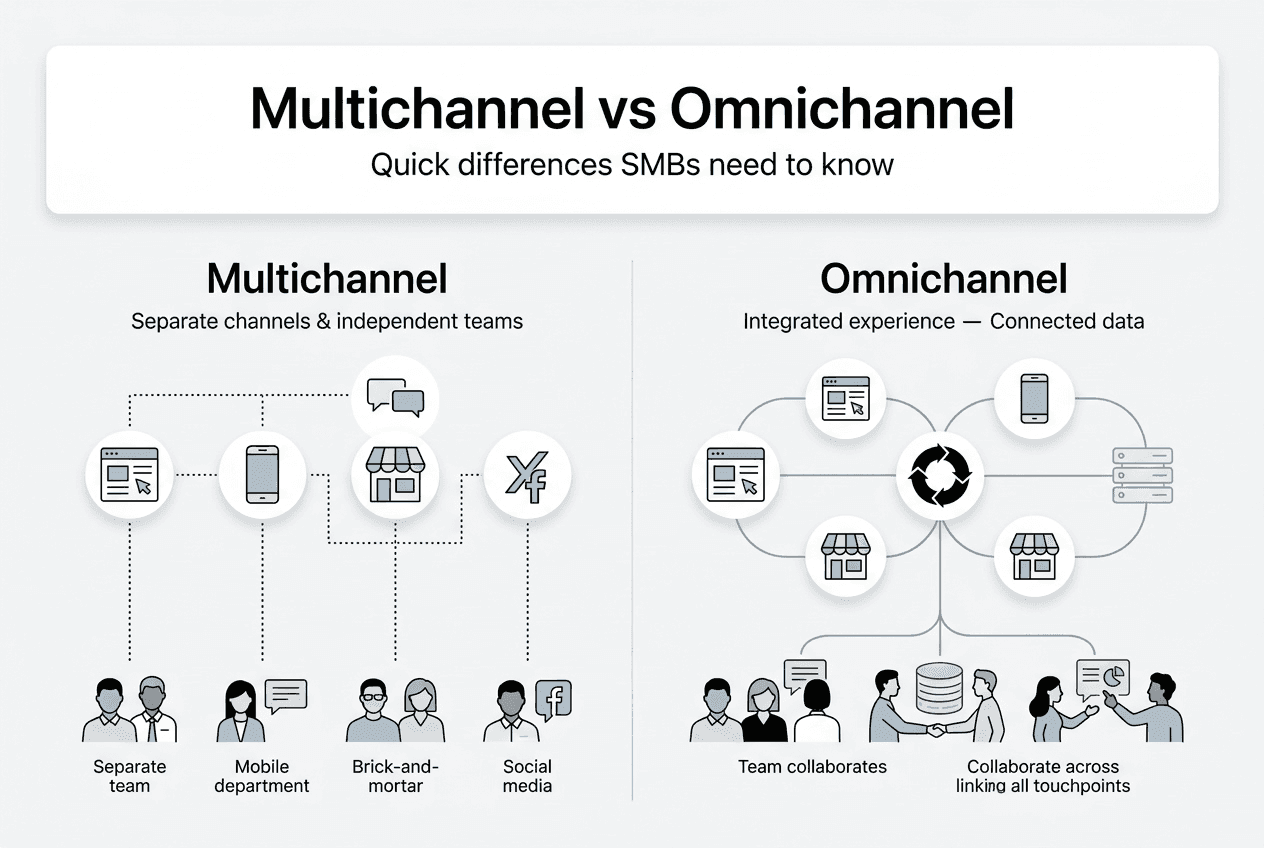
Omnichannel marketing integrates channels to provide seamless, connected experiences. Multichannel focuses on channel presence, while omnichannel integrates channels around a single customer journey, enabling consistent messaging and real-time context sharing. When someone browses products on mobile, then receives an email featuring those exact products with a personalized discount, that's omnichannel.
Multichannel vs. Omnichannel comparison:
| Aspect | Multichannel | Omnichannel |
|---|---|---|
| Integration | Channels operate separately | Channels share data and context |
| Customer journey | Multiple disconnected touchpoints | Single unified journey across platforms |
| Messaging | Independent campaigns per channel | Consistent, personalized messaging everywhere |
| Data flow | Siloed metrics and insights | Real-time data sharing across channels |
| Complexity | Easier to implement initially | Requires sophisticated technology and planning |
| Focus | Brand presence and reach | Customer experience and continuity |
For small businesses, multichannel serves as a strong stepping stone. You establish presence on multiple platforms, learn what works, and gather data. As you grow, you can add integration layers to move toward omnichannel. The important thing is not forcing omnichannel complexity before you're ready. Start where you are, expand strategically.
Pro Tip: SMBs should master multichannel marketing before investing in full omnichannel integration. Build strong individual channels first, then connect them as your technology and team capabilities grow.
Knowing this distinction helps optimize channel strategies and automation investments. If you're running separate campaigns without integration, focus on making each channel excellent rather than worrying about seamless connections. If you're ready for omnichannel, invest in platforms that enable data sharing and unified customer views. Understanding top marketing automation tools SEO 2026 helps you choose technology that matches your current stage and growth plans.
How to implement effective multichannel marketing strategies
Implementing multichannel marketing requires systematic planning and execution. Follow these steps to build campaigns that reach customers effectively across multiple platforms while maximizing engagement and ROI.
Step 1: Identify your target audience and preferred channels. Research where your customers spend time online. Survey existing customers, analyze website analytics, and study competitor presence. B2B audiences might favor LinkedIn and email, while B2C brands often succeed on Instagram and SMS. Don't assume, verify with data.
Step 2: Create tailored messaging for each platform. Email allows detailed explanations and storytelling. Social media demands visual, bite-sized content. SMS works best for urgent, concise offers. Adapt your core message to fit each channel's format and user expectations. The same promotion looks different across platforms.
Step 3: Use automation tools to schedule and trigger campaigns. Multichannel marketing automation streamlines engagement across multiple platforms, including email, SMS, social media, websites, push notifications, and mobile apps. Set up workflows that trigger messages based on customer actions, like abandoned carts or content downloads. Automation ensures timely, relevant communication without manual effort.
Step 4: Monitor performance and optimize based on data. Track open rates, click-through rates, conversions, and cost per acquisition for each channel. Identify which platforms drive the best results and double down on winners. Cut or revise underperforming channels. Regular analysis reveals patterns and opportunities you'd otherwise miss.
Step 5: Ensure messages complement each other rather than compete. Coordinate timing so customers aren't overwhelmed by simultaneous messages across channels. Plan campaigns where email introduces an offer, social media builds excitement, and SMS delivers the final push. Each channel plays a specific role in the customer journey.
Pro Tip: Focus on delivering the right message at the right time, triggered by user actions rather than arbitrary schedules. Behavioral triggers like browsing history, purchase patterns, and engagement levels create relevance that batch-and-blast campaigns can't match.
Best practices for multichannel success:
- Start with two or three channels you can execute well
- Maintain consistent branding across all platforms
- Test different message variations per channel
- Use analytics to understand cross-channel customer paths
- Invest in quality content that provides genuine value
- Personalize messaging based on customer data and behavior
Leverage content marketing to fuel your multichannel campaigns. Creating valuable content attracts customers organically and gives you material to share across platforms. A single blog post can become an email newsletter, social media posts, and SMS teasers. Learning content for lead generation helps you create assets that work across channels.
Compelling calls to action drive conversions across all channels. Whether it's an email button, social media swipe-up, or SMS link, your CTA needs clarity and urgency. Different channels allow different CTA styles, so adapt while maintaining consistent goals. Understanding creating compelling CTAs improves conversion rates on every platform.
Integration doesn't have to be perfect initially. Even basic coordination like avoiding message conflicts and maintaining brand consistency delivers value. As you grow comfortable managing multiple channels, you can add sophistication through automation, personalization, and data integration. The key is starting with solid fundamentals and improving systematically. Exploring building cross channel strategies provides frameworks for coordinating campaigns effectively.
Explore BabyLoveGrowth tools to power your campaigns
Executing multichannel marketing strategies becomes significantly easier with the right tools. BabyLoveGrowth offers solutions designed specifically to help SMBs automate content publishing across channels, driving organic traffic and conversions without overwhelming your team.
The organic traffic tool helps you discover SEO opportunities to attract customers across search engines and AI platforms. By identifying high-value keywords and content gaps, you can create material that reaches prospects on multiple channels. This foundation supports all your multichannel efforts by ensuring strong organic visibility.
Automating content distribution saves countless hours while maintaining consistency. Automated publishing enables you to schedule and deploy content across platforms from a single dashboard, ensuring your multichannel presence stays active without constant manual intervention. You focus on strategy and creation while automation handles distribution.
Building authority across channels requires strong backlink profiles. The SEO link building platform supports growing your backlink ecosystem, enhancing search rankings that drive traffic to all your channels. As your organic visibility improves, every channel benefits from increased brand recognition and trust.
Using these tools simplifies executing the multichannel strategies outlined earlier. You can implement automation, optimize for search, and scale your presence without hiring large teams or mastering complex technology. This makes multichannel marketing accessible for SMBs ready to compete effectively in 2026.
Frequently asked questions
What is the difference between multichannel and omnichannel marketing?
Multichannel marketing uses several separate platforms like email, social media, and SMS independently without integration between them. Omnichannel marketing connects these platforms to create seamless, personalized customer journeys where data and context flow across all touchpoints in real time. Smaller businesses often start with multichannel to establish presence, then advance to omnichannel as they grow and can invest in integration technology.
How can small businesses measure success with multichannel marketing?
Track leads generated and conversion rates per channel to identify which platforms deliver the best ROI. Monitor customer engagement metrics like email open rates, social media clicks, and website time on site to gauge interest and interaction. Use attribution models to assess how different channels influence sales throughout the customer journey. Analyze automation efficiency and cost per acquisition to optimize spending and improve campaign performance over time.
Which marketing channels are most effective for multichannel campaigns?
Email marketing consistently delivers high ROI with direct, personalized communication to engaged subscribers. SMS offers immediate, personal reach with open rates exceeding 90% for time-sensitive offers. Social media boosts brand awareness and engagement through visual content and community building. Website content and push notifications support long-term customer relationships and repeat engagement. Channel effectiveness depends heavily on your specific audience preferences, industry, and product type, so test and measure results for your business.
How does marketing automation improve multichannel campaigns?
Automation triggers messages based on customer actions like browsing behavior, purchases, or email clicks, ensuring timely, relevant communication. It eliminates manual scheduling and posting across platforms, saving significant time while maintaining consistent presence. Automated workflows nurture leads through the entire customer journey without requiring constant oversight. Businesses using multichannel automation see 80% more leads and 77% higher conversions compared to manual approaches, making it essential for scaling efficiently.
Can multichannel marketing work for businesses with small budgets?
Absolutely. Start with two or three channels where your audience is most active rather than trying to dominate every platform. Focus on organic reach through content marketing, SEO, and community engagement before investing heavily in paid advertising. Use free or low-cost automation tools to maximize efficiency and reduce manual labor. Test campaigns on a small scale, measure results carefully, and invest more in channels that prove effective for your specific business and audience.