The power of storytelling: boost brand engagement in 2026


Storytelling activates multiple brain regions and triggers oxytocin release, creating empathy and trust far beyond what facts alone can achieve. This neurological response transforms how customers perceive and remember your brand. While data-driven marketing provides valuable insights, stories create emotional connections that drive loyalty and conversions. Business owners and marketers who master storytelling techniques gain a powerful advantage in crowded markets. This article reveals the science behind storytelling's impact, proven frameworks for crafting authentic brand narratives, and ethical considerations that protect long-term trust while maximizing engagement and customer relationships.
Table of Contents
- Why Storytelling Activates The Brain And Drives Customer Trust
- How Storytelling Improves Memory And Brand Recall
- Crafting Authentic Brand Stories With The Brand Narrative Arc Framework
- Ethical Storytelling: Balancing Impact And Authenticity
- Elevate Your Brand Storytelling With BabyLoveGrowth
- Frequently Asked Questions
Key takeaways
| Point | Details |
|---|---|
| Stories trigger empathy | Narratives activate more brain regions than facts, releasing oxytocin that builds trust and emotional connection with audiences. |
| Memory retention increases | People remember facts wrapped in stories 22 times better than standalone statistics or data points. |
| Authentic narratives win | Genuine customer journeys and transparent storytelling outperform feature-focused marketing in building credibility. |
| Frameworks enable consistency | Structured approaches like the Brand Narrative Arc help create repeatable, compelling stories across channels. |
| Ethics matter long-term | Respecting audience wellbeing and avoiding exploitation maintains trust and strengthens brand equity over time. |
Why storytelling activates the brain and drives customer trust
Your brain responds differently to stories than to raw data. When you hear a compelling narrative, multiple regions light up simultaneously, processing language, sensory details, emotions, and social cues. Facts alone engage primarily language processing areas. This widespread activation creates richer mental experiences that feel more real and memorable.
The neurochemical response matters even more. Stories activate more brain regions than facts alone, releasing oxytocin that enhances empathy and trust. This hormone plays a crucial role in social bonding and relationship building. When customers experience oxytocin release while engaging with your brand story, they form deeper emotional connections that translate to loyalty.
Character-driven narratives trigger oxytocin production with a 47% increase compared to abstract data presentations. This explains why customer testimonials featuring real people overcoming specific challenges outperform generic benefit lists. The human element activates empathy circuits that make your message personally relevant.Consider how trust develops through repeated storytelling. Each narrative interaction reinforces neural pathways associated with your brand. Over time, these strengthened connections create automatic positive associations. When decision time arrives, customers feel drawn to brands they trust on an emotional level, even if competitors offer similar features or lower prices.
Key neurological benefits of storytelling include:
- Simultaneous activation of language, sensory, and emotional brain regions
- Oxytocin release that builds empathy and social bonding
- Mirror neuron engagement that creates shared experiences
- Reduced skepticism through emotional connection
- Stronger memory encoding through multi-sensory processing
"Stories don't just inform the mind; they transform how the brain processes and prioritizes information, creating lasting impressions that facts alone cannot achieve."
The storytelling impact on engagement extends beyond initial contact. Customers who connect emotionally become advocates, sharing your narrative within their networks. This organic amplification multiplies your reach without additional ad spend. The trust foundation built through authentic storytelling supports long-term customer relationships that withstand competitive pressure and market changes.
How storytelling improves memory and brand recall
Information wrapped in narrative structure sticks in memory far longer than isolated facts. Humans are 22 times more likely to remember a fact wrapped in a story compared to standalone data. This dramatic difference stems from how our brains evolved to process and store information through narrative frameworks.

Statistics vanish from memory within hours unless connected to meaningful context. Studies show that 63% remembered stories over only 5% who recalled statistics presented in isolation. Your marketing messages compete for attention in oversaturated environments. Stories provide the contextual hooks that help information survive the forgetting curve.
The long-term impact proves even more valuable. Research indicates 74% of consumers recall specific brand stories years after exposure. This extended recall amplifies return on investment as your narrative continues working long after initial campaigns end. Memorable stories become mental shortcuts that influence purchase decisions across multiple buying cycles.
Memory formation through storytelling works differently than rote memorization:
- Emotional peaks create stronger neural encoding
- Sensory details activate multiple memory pathways
- Personal relevance increases rehearsal and retention
- Narrative structure provides retrieval cues
- Character identification deepens processing
Brand differentiation depends heavily on memorability. In crowded markets where products offer similar features, the story customers remember determines which brand they choose. Generic benefit claims blur together, but distinctive narratives create unique mental positions that competitors cannot easily replicate.
| Memory Type | Retention Rate | Marketing Impact |
|---|---|---|
| Isolated statistics | 5% after 72 hours | Minimal brand recall |
| Feature lists | 12% after 72 hours | Weak differentiation |
| Story-wrapped facts | 63% after 72 hours | Strong brand association |
| Character-driven narratives | 74% long-term | Lasting competitive advantage |
Pro Tip: Structure your brand story with a clear beginning, challenge, and resolution to maximize memory encoding. Include specific sensory details and emotional moments that create mental images customers can visualize and recall later.
The content storytelling for business approach transforms how you communicate value. Instead of listing features, you demonstrate impact through customer journeys. This shift from telling to showing creates experiential understanding that persists in memory. When prospects later evaluate options, your story resurfaces as a familiar, trusted reference point that guides their decision toward your solution.
Crafting authentic brand stories with the Brand Narrative Arc Framework
Creating compelling stories consistently requires structure. The Brand Narrative Arc Framework connects emotionally and logically with audiences across channels by adapting classic storytelling principles for marketing contexts. This proven approach ensures your narratives maintain coherence whether delivered through social media, email campaigns, or sales presentations.
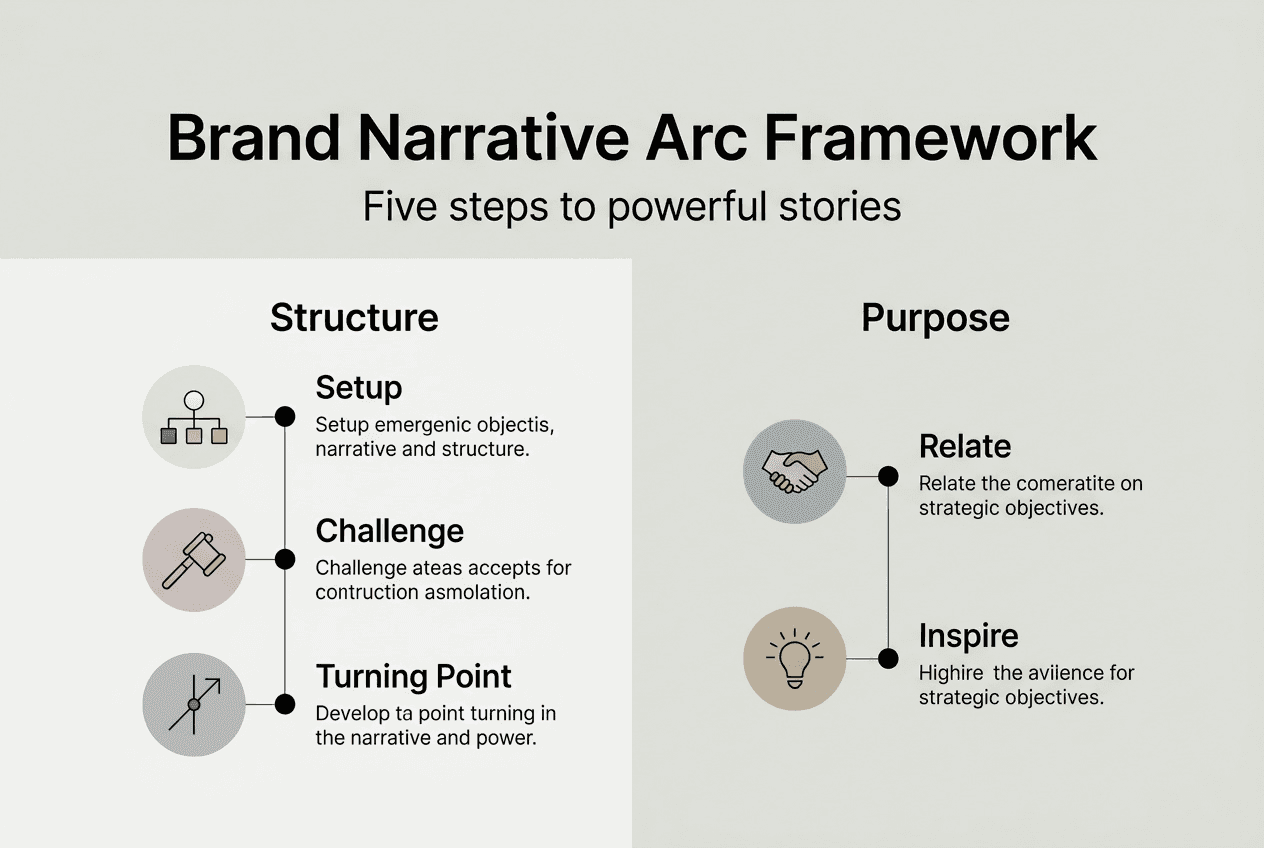
The framework centers on five core elements that mirror how humans naturally process stories. Setup introduces your customer's world and establishes stakes. Rising tension presents the challenge or pain point they face. Climax reveals the turning point where your solution enters. Falling action demonstrates implementation and results. Resolution shows the transformed state and ongoing benefits.
Consultants and marketers use it to create compelling, repeatable narratives for campaigns and storytelling. The systematic approach prevents common pitfalls like burying the problem, rushing to solutions, or neglecting emotional payoff. Each element serves a specific psychological purpose in building engagement and persuasion.
Human-centric focus separates effective brand stories from product-centric pitches. Your customer, not your company, plays the hero role. Your brand serves as the guide who provides tools and wisdom. This positioning aligns with how audiences naturally engage with narratives. People remember stories about people, not about products.
| Framework Element | Purpose | Marketing Application |
|---|---|---|
| Setup | Establish relatable context | Show customer's initial state and goals |
| Rising Tension | Create urgency | Highlight pain points and obstacles |
| Climax | Introduce solution | Present your offering as turning point |
| Falling Action | Demonstrate transformation | Share implementation process and wins |
| Resolution | Reinforce value | Show sustained benefits and growth |
Pro Tip: Map your existing customer testimonials to the Brand Narrative Arc structure. Identify which elements you're missing and gather stories that fill those gaps for a complete narrative library.
The framework drives consistent messaging across multiple marketing channels by providing a shared story structure. Your social posts, blog content, email sequences, and sales decks all reinforce the same narrative beats. This repetition strengthens memory encoding and brand recognition. Customers encounter variations of your core story that build cumulative impact over time.
Shifting from feature-based marketing to storytelling-driven education requires rethinking content strategy. Instead of listing specifications, you demonstrate how those features solve real problems within customer contexts. The effective brand strategy with AI combines narrative frameworks with data-driven optimization to scale authentic storytelling across growing content needs.
Evidence-backed narratives balance emotional resonance with logical credibility. Include specific metrics, timeframes, and outcomes within your story structure. Quantifiable results satisfy analytical buyers while the narrative wrapper maintains engagement. This combination addresses both emotional and rational decision-making processes that influence purchase behavior.
Ethical storytelling: balancing impact and authenticity
Powerful storytelling techniques carry responsibility. Using personal pain or trauma to hook audiences can be unethical if it prioritizes conversion over audience wellbeing. Exploiting vulnerability for marketing gain damages trust and brand reputation when audiences recognize manipulation. The short-term engagement boost never justifies long-term credibility loss.
Authentic testimonials require showing the complete customer journey, not just cherry-picked highlights. Vague testimonials without showing the customer journey lack credibility and fail to build genuine trust. Modern audiences possess sophisticated detection systems for inflated claims and manufactured narratives. They research extensively and compare experiences across multiple sources before committing.
Transparency strengthens rather than weakens compelling stories. Acknowledging challenges, limitations, or learning curves demonstrates honesty that resonates with experienced buyers. Perfect success stories trigger skepticism while balanced narratives that include obstacles overcome create believable, relatable content. You build authority by showing realistic paths to results.
Ethical boundaries protect both your audience and your brand:
- Avoid sensationalizing personal struggles purely for emotional manipulation
- Verify all testimonials and case study claims with documented evidence
- Respect privacy by obtaining explicit permission before sharing customer stories
- Present realistic timeframes and effort requirements for achieving results
- Acknowledge when solutions may not fit certain situations or needs
Pro Tip: Create an ethical review checklist for all customer stories before publication. Ask whether the narrative respects dignity, provides genuine value, and represents truthfully without exaggeration or omission of important context.
Long-term brand equity depends on maintaining audience trust through consistent ethical practices. Each story you share either deposits into or withdraws from your credibility account. Audiences forgive occasional missteps but not systematic manipulation or dishonesty. The foster brand loyalty ethically approach prioritizes sustainable relationships over short-term conversion optimization.
Balancing emotional impact with respect for audience wellbeing requires thoughtful content development. You can create powerful, memorable stories without exploiting trauma or manufacturing false urgency. Focus on genuine transformation, meaningful outcomes, and authentic human experiences. These elements provide sufficient emotional resonance without crossing ethical lines.
Authenticity serves as your competitive advantage in markets saturated with polished but hollow marketing messages. Customers crave real stories from real people who faced real challenges. When you deliver that authenticity consistently, you build communities of loyal advocates who amplify your message organically. This earned trust proves far more valuable than any manufactured narrative could achieve.
Elevate your brand storytelling with BabyLoveGrowth
Crafting compelling stories represents only half the challenge. You also need those narratives to reach and engage your target audience at scale. Even the most powerful brand story fails if it remains invisible in search results or buried beneath competitor content.
BabyLoveGrowth transforms how you amplify authentic storytelling through AI-powered SEO automation platform tools that optimize narrative visibility without sacrificing quality or authenticity. Our system analyzes your brand stories and identifies strategic opportunities to expand reach through targeted content and backlink building software that establishes authority. The autopilot backlink exchange ecosystem connects your narratives with relevant audiences actively seeking solutions you provide. We help you maintain the human connection that makes storytelling effective while leveraging technology to scale impact sustainably across channels and markets.
Frequently asked questions
What is the main benefit of storytelling in marketing?
Storytelling creates emotional engagement that facts alone cannot achieve, triggering oxytocin release that builds trust and empathy with your audience. This neurological response makes your message 22 times more memorable than isolated statistics. Stories differentiate your brand beyond features and prices by creating unique mental associations customers recall during purchase decisions. The emotional connections formed through authentic narratives drive higher conversion rates and long-term customer loyalty that withstands competitive pressure.
How does the Brand Narrative Arc Framework help marketers?
The Brand Narrative Arc Framework provides structured story beats that simplify narrative creation while ensuring emotional and logical coherence. It adapts classic storytelling principles specifically for marketing contexts, giving you a repeatable process for developing compelling customer stories. The framework ensures consistency across all marketing channels, from social media to sales presentations, by establishing shared narrative elements. It focuses on real customer stakes and brand solutions positioned within relatable human contexts, making your marketing more engaging and persuasive.
Can storytelling really increase customer trust and sales?
Yes, storytelling demonstrably increases both trust and sales through measurable neurological and behavioral responses. Stories trigger oxytocin production that builds empathy and social bonding, creating the foundation for customer relationships. Authentic storytelling drives better brand attitudes, with 74% of consumers recalling specific brand narratives years after exposure. This extended memory creates ongoing influence across multiple purchase cycles. Businesses using story-driven approaches consistently report higher engagement rates, improved conversion metrics, and stronger customer lifetime value compared to feature-focused marketing.
What are some ethical pitfalls to avoid in storytelling?
Avoid manipulating personal pain or trauma purely to drive conversions, as this exploitation damages long-term trust and brand reputation. Use genuine testimonials that show complete customer journeys rather than cherry-picked highlights that create unrealistic expectations. Maintain transparency about challenges, timeframes, and effort required to achieve results rather than presenting perfect success stories that trigger skepticism. Verify all claims with documented evidence and obtain explicit permission before sharing customer stories. Respect audience wellbeing by prioritizing authentic value over emotional manipulation in every narrative you create.