Keyword Research Checklist: Boost SEO Results in 2026


TL;DR:
- Successful keyword research requires a clear process aligned with specific SEO goals and target audience.
- Using AI tools streamlines keyword discovery, clustering, and prioritization, saving time and improving results.
- Ongoing evaluation and adaptation are essential for maintaining SEO effectiveness and capitalizing on new opportunities.
Keyword research sits at the center of every successful SEO strategy, yet most marketers stall before they even start. The problem isn't a lack of tools or data. It's the absence of a clear, repeatable process. When you're staring at thousands of keyword suggestions with no framework to sort them, you end up either chasing high-volume vanity terms or burying yourself in spreadsheets that never translate into content. This article gives you a proven, step-by-step keyword research checklist built specifically for digital marketing managers and small business owners who want results, not more complexity.
Table of Contents
- Define your SEO objectives and target audience
- Generate a comprehensive keyword list
- Evaluate and prioritize keywords for SEO value
- Group, map, and implement your focused keywords
- The hidden pitfalls in most keyword research checklists
- Streamline your keyword research with AI-powered tools
- Frequently asked questions
Key Takeaways
| Point | Details |
|---|---|
| Start with goals | Clarifying your SEO objectives and audience focus makes keyword research dramatically more effective. |
| Use diverse sources | Blending AI tools with competitor insights yields a comprehensive keyword list. |
| Prioritize for impact | Rank keywords based on search volume, competition, and strategic fit for best SEO results. |
| Cluster and map | Organizing keywords by search intent boosts content planning and overall site authority. |
| Revisit regularly | Keep your keyword strategy effective by updating research with trends and search changes. |
Define your SEO objectives and target audience
Before you type a single keyword into any tool, you need to know what success looks like for your business. Are you trying to generate leads, drive e-commerce sales, build brand awareness, or rank for local searches? Each goal pulls you toward a completely different set of keywords. Skipping this step is the single fastest way to waste weeks of effort on content that attracts the wrong visitors.
Effective keyword research starts with a clear understanding of your goals and audience as the foundation. Without that anchor, every keyword decision becomes a guess.Your target audience shapes your keyword choices just as much as your goals do. A small business owner selling accounting software to freelancers needs completely different keywords than one selling to enterprise finance teams, even if the core product is similar. Build a simple persona that captures your ideal customer's job title, biggest frustrations, and the exact language they use when searching for solutions.
Here's a quick checklist to complete before you touch any keyword tool:
- Write down your top 3 SEO goals with measurable outcomes
- Identify 2 to 3 audience personas with specific pain points
- List the topics your business is authoritative on
- Review your content marketing checklist to align keyword themes with existing content gaps
- Note which stage of the buyer journey you're targeting (awareness, consideration, decision)
Pro Tip: Map your audience's top 5 pain points directly to keyword themes. If your customers constantly complain about slow invoicing, that pain point becomes a keyword cluster around "invoicing software for freelancers" or "how to speed up client payments."
Generate a comprehensive keyword list
With your goals and audience locked in, you're ready to cast a wide net. The goal at this stage isn't quality, it's volume. You want as many relevant keyword candidates as possible before you start cutting.

Start with seed keywords, which are the broad terms that describe your core business topics. If you run a project management tool, your seeds might be "task management," "team collaboration," and "project tracking." From those seeds, you expand outward using multiple data sources.
AI-powered keyword discovery tools uncover hidden opportunities that traditional brainstorming and manual competitor analysis miss entirely. Blending both approaches gives you the widest possible starting pool.Here's a step-by-step process for building your keyword list:
- Brainstorm 10 to 15 seed keywords from your core business topics
- Run each seed through at least two keyword research tools
- Analyze the top 5 competitors in your niche and extract their ranking keywords
- Pull search suggestions from Google autocomplete and "People Also Ask" boxes
- Review customer support tickets and sales call transcripts for real search language
- Explore advanced keyword research tactics to find semantic and related terms
| Keyword source | Output type | Best for |
|---|---|---|
| Google autocomplete | Long-tail suggestions | Intent-rich queries |
| Competitor analysis | Ranking keyword gaps | Quick wins |
| AI discovery tools | Semantic clusters | Hidden opportunities |
| Customer interviews | Natural language terms | Conversion-focused content |
| Reddit and forums | Question-based queries | FAQ and blog content |
Pro Tip: Don't skip long-tail keywords with low search volume. A term that gets 200 searches per month but perfectly matches buyer intent will outperform a 10,000-search vanity term every time.
Evaluate and prioritize keywords for SEO value
A raw list of 500 keywords is useless without a system to score and rank them. This is where most marketers either get overwhelmed or default to chasing the highest search volume, which is usually a mistake.
Effective keyword selection depends on balancing search volume, competition, and relevance. Targeting relevant keywords can boost SEO impact by up to 73%, which means prioritization isn't optional.Here are the core metrics you need to evaluate for every keyword:
- Search volume: Monthly searches give you a sense of potential traffic
- Keyword difficulty: How hard it is to rank based on current competition
- Search intent: Is the user looking to buy, learn, or compare?
- Cost per click (CPC): High CPC often signals strong commercial intent
- Relevance score: Does this keyword directly connect to your product or service?
- Current ranking position: Are you already ranking anywhere for this term?
"The keywords that convert aren't always the ones with the biggest search numbers. They're the ones where your content is the most credible answer to a specific question." This is the insight that separates experienced SEOs from beginners.
| Keyword | Monthly volume | Difficulty | Intent | Priority |
|---|---|---|---|---|
| project management software | 40,000 | High | Commercial | Low |
| best project tool for remote teams | 1,200 | Medium | Transactional | High |
| how to manage remote projects | 3,500 | Low | Informational | Medium |
| free task tracker for small teams | 800 | Low | Transactional | High |
Review your SEO tools for agencies to find platforms that automate this scoring process and reduce manual work significantly.
Group, map, and implement your focused keywords
Now comes the step that turns a prioritized list into an actual content strategy. Keyword grouping, often called clustering, organizes your keywords by shared topic or search intent so each piece of content targets a logical set of related terms.
Mapping keywords to content ensures all relevant search intents are covered without creating duplicate or cannibalized pages. Without this step, you risk publishing five articles that compete with each other for the same query.Here's how to move from list to execution:
- Group keywords by topic theme (not just by product category)
- Assign a primary keyword and 2 to 4 supporting keywords to each content piece
- Match each cluster to a specific page type (blog post, landing page, product page)
- Build your content calendar around cluster priority and seasonal trends
- Add keywords to page titles, meta descriptions, headers, and body content naturally
- Set up rank tracking so you can measure performance for each cluster
Common implementation mistakes to avoid:
- Stuffing multiple unrelated keywords into one article
- Ignoring internal linking between cluster pages
- Publishing content without updating the meta title and description
- Forgetting to optimize existing pages before creating new ones
- Skipping image alt text and structured data opportunities
Pro Tip: Revisit your keyword clusters every 60 to 90 days. Search trends shift, competitors publish new content, and your own rankings change. A cluster that was too competitive six months ago might be winnable today.
The hidden pitfalls in most keyword research checklists
Here's something most keyword guides won't tell you: checklists can create a false sense of completion. You tick every box, generate your clusters, map your content, and then... nothing changes for months. The checklist becomes a ritual instead of a results engine.
The marketers who consistently win at SEO don't just follow steps. They treat keyword research as an ongoing conversation with their audience. They notice when a piece of content starts ranking for a term they didn't target and ask why. They watch competitor pages climb the rankings and reverse-engineer the strategy.
Another overlooked pitfall is treating keyword research as a one-time event. Advanced keyword research isn't a quarterly task you schedule and forget. It's a continuous feedback loop between your content performance data and your next content decision.
The best keyword researchers we've seen combine checklist discipline with creative curiosity. They use the checklist to stay organized, but they're always asking: what are we missing? What search behavior just changed? What question is our audience asking that no one in our niche has answered yet? That mindset is what separates a good SEO strategy from a great one.
Streamline your keyword research with AI-powered tools
Working through a keyword research checklist manually takes hours. Babylovegrowth.ai automates the most time-consuming steps so you can move from strategy to execution faster.
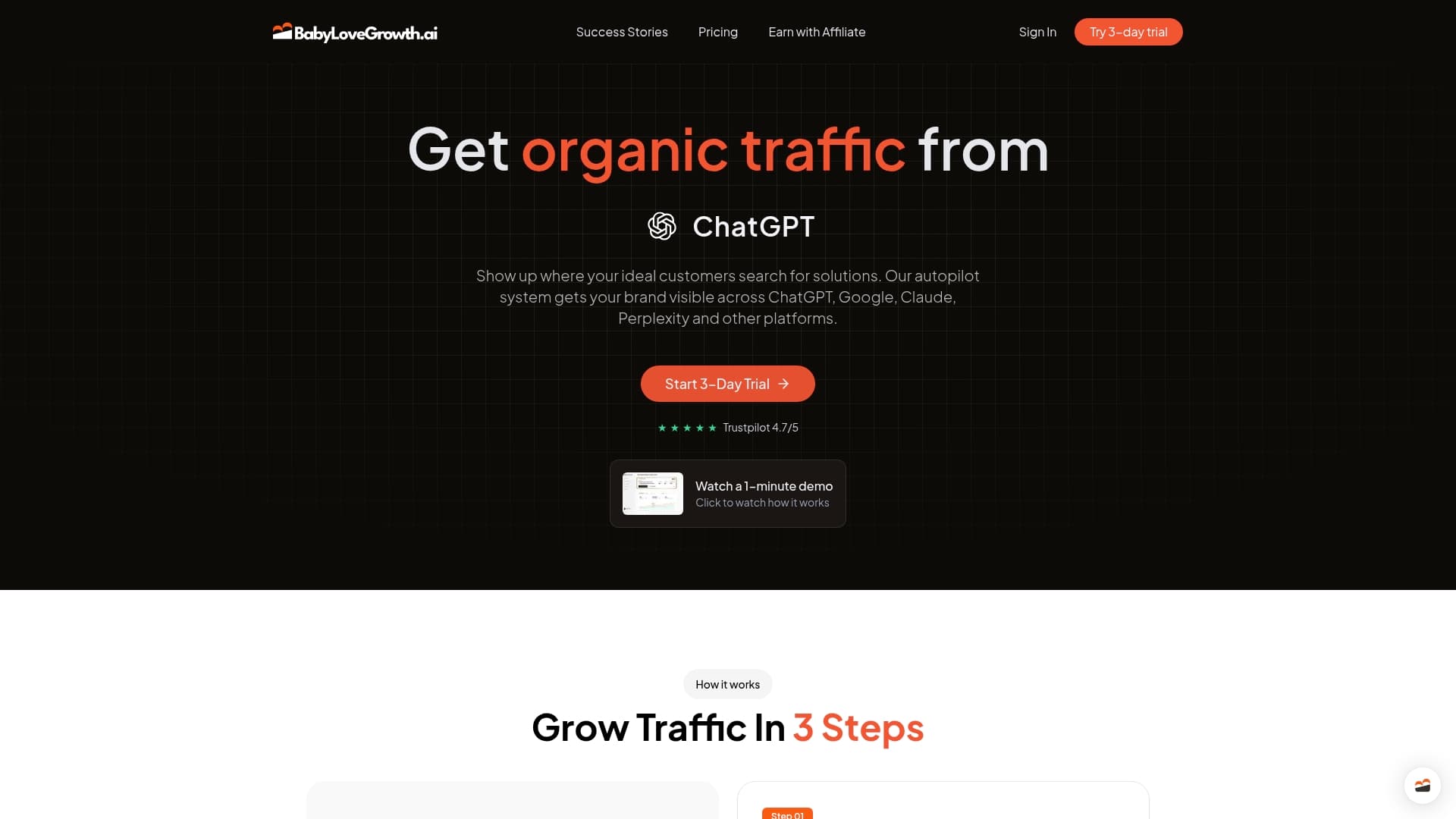
The platform's AI keyword research tool handles seed expansion, competitor gap analysis, and intent scoring in minutes. The keyword discovery platform surfaces hidden opportunities your competitors haven't found yet, and the keyword clustering tool automatically groups your keywords by topic and intent, ready to map directly to your content plan. If you're serious about scaling organic traffic without scaling your workload, these tools turn a five-hour manual process into a 20-minute workflow.
Frequently asked questions
What are the most important steps in a keyword research checklist?
The most important steps are defining your SEO goals, generating keyword ideas, evaluating keyword value, and mapping keywords to strategic content. A step-by-step approach is foundational for effective keyword research that actually drives rankings.
How often should keyword research be updated?
You should refresh your keyword research at least quarterly to reflect changing trends, competition, and search intent. Continuous updates ensure your content stays relevant and competitive as search behavior evolves.
Which keyword research tools offer the best value?
AI-powered discovery tools and clustering platforms offer the most value for comprehensive, scalable research. AI tools uncover keyword opportunities that traditional methods miss, especially for long-tail and semantic variations.
Why is keyword clustering important in SEO?
Keyword clustering helps organize keywords by intent, allowing for more effective content mapping and higher topic authority. It also prevents keyword cannibalization, where multiple pages compete for the same search query.
What are common mistakes to avoid in keyword research?
Avoid ignoring search intent, focusing only on high-volume terms, or skipping ongoing keyword updates. These mistakes lead to content that attracts traffic but fails to convert or rank sustainably over time.