Boost your SEO with effective headlines in 2026


Most business owners think headlines are just window dressing for their content, but that's a costly mistake. Your headline is the single most critical element determining whether your carefully crafted article gets clicked or ignored in search results. In 2026, with search engines prioritizing user intent and engagement signals more than ever, mastering headline creation isn't optional anymore. This guide reveals exactly how to craft headlines that capture attention, satisfy search algorithms, and drive measurable organic traffic to your business. You'll discover proven strategies, testing frameworks, and automation tools that transform your content visibility.
Table of Contents
- Why Headlines Matter For Seo And User Engagement
- Key Elements Of An Effective Headline
- Testing And Refining Headlines For Optimal Results
- Tools And Strategies For Scaling Headline Optimization
- Elevate Your Content Strategy With Babylovegrowth Tools
- Frequently Asked Questions About The Importance Of Headlines
Key takeaways
| Point | Details |
|---|---|
| Headlines drive SEO success | Your headline directly impacts click-through rates and search rankings through engagement signals |
| Structure matters most | Strategic keyword placement and emotional triggers create headlines that convert browsers into readers |
| Testing reveals winners | A/B testing headlines uncovers what your specific audience responds to, eliminating guesswork |
| Avoid common mistakes | Clickbait and keyword stuffing damage trust and reduce your content's discoverability |
| Automation scales results | Modern tools help you optimize and test headlines across all content without manual effort |
Why headlines matter for SEO and user engagement
Your headline serves as the gateway between your content and potential readers browsing search results. When someone searches for information, they scan dozens of headlines in seconds, making snap decisions about which links deserve their attention. Search engines track these decisions closely, using click-through rate as a powerful ranking signal that tells them which results truly satisfy user intent.
Effective headlines significantly increase organic click-through rates, creating a virtuous cycle where more clicks lead to better rankings, which generate even more visibility. Google's algorithms analyze how well your headline matches the searcher's query, looking for relevant keywords and semantic connections that indicate your content will answer their question. When users click through and stay on your page, it confirms your headline's promise was accurate.The business impact extends far beyond vanity metrics. Higher click-through rates mean more qualified traffic viewing your products, services, and calls to action without increasing your content production costs. Bounce rates drop significantly when headlines accurately preview content value, because readers find exactly what they expected and engage deeper with your material.
Consider these critical headline functions:
- First impression creation in crowded search results
- Trust building through accurate content preview
- Keyword relevance signaling to search algorithms
- User intent matching that improves engagement
- Brand voice establishment that differentiates your content
"The headline determines whether the audience will read the rest of your content. If the headline doesn't grab attention and spark interest, your message dies before it reaches anyone."
Your headline competes against dozens of alternatives for every search query. Missing this opportunity means your content remains invisible regardless of its quality. Smart businesses recognize headlines as their highest-leverage SEO element, deserving careful optimization and continuous refinement based on performance data.
Key elements of an effective headline
Crafting headlines that perform requires understanding the specific components that trigger both human psychology and search algorithm preferences. Keyword placement near the front and emotional triggers boost headline effectiveness by immediately signaling relevance while creating curiosity that compels clicks. You need to balance multiple objectives simultaneously: satisfying search engines, attracting human attention, and accurately representing your content's value.
Start with strategic keyword integration that places your target phrase within the first three to five words whenever natural. Search engines weight early words more heavily, and users scanning results notice keywords that match their query immediately. This doesn't mean forcing awkward phrasing, but rather structuring your headline so the most important terms appear prominently without sacrificing readability.

Emotional resonance separates forgettable headlines from magnetic ones. Words that trigger curiosity, urgency, or specific benefits create psychological hooks that make clicking feel necessary rather than optional. Numbers work exceptionally well because they promise concrete, organized information that's easy to consume and remember.
These elements combine to create compelling headlines:
- Clear value proposition stating exactly what readers gain
- Specific numbers that quantify benefits or organize information
- Power words triggering emotional responses like curiosity or urgency
- Brevity that respects attention spans while delivering complete ideas
- Authenticity that builds trust by avoiding exaggeration
- Keyword integration supporting both keyword optimization techniques and readability
Pro Tip: Test headline variations with different emotional angles to discover which psychological triggers resonate most with your specific audience, then systematize those patterns across your content.
The balance between informativeness and intrigue determines whether your headline converts browsers into readers. Too much mystery creates skepticism about clickbait, while excessive detail removes any reason to click through. Your headline should answer the question "What will I learn?" while leaving the "How exactly?" for the article itself, creating a knowledge gap that only reading can fill.
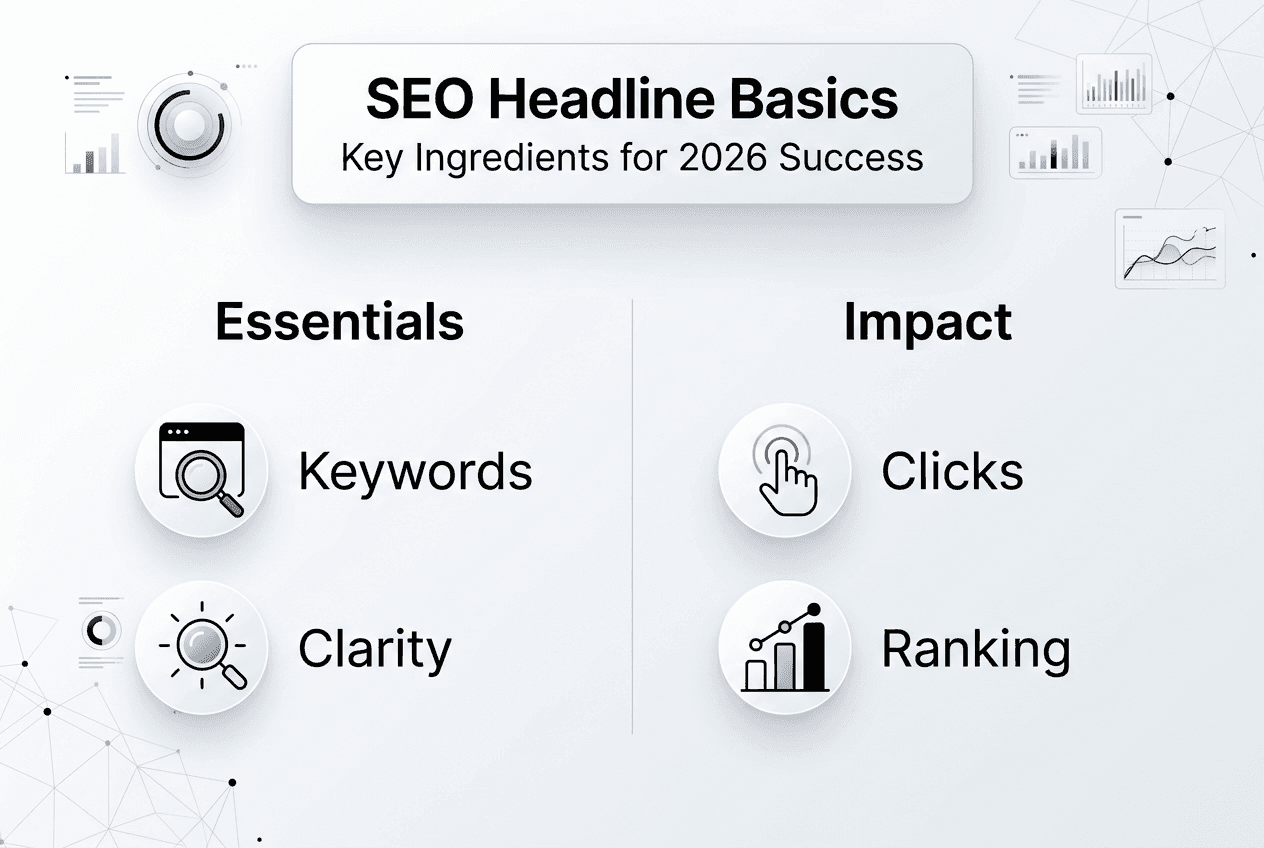
Avoid the temptation to manipulate clicks through misleading promises or sensationalized claims. Search engines increasingly penalize content where headlines don't match body text, and users who feel deceived bounce immediately, sending negative engagement signals that harm your rankings. Sustainable SEO success comes from headlines that accurately preview genuine value, building trust that keeps readers returning.
Testing and refining headlines for optimal results
Even experienced marketers can't predict which headlines will perform best without data. Your intuition about what sounds good often conflicts with what actually drives clicks and engagement from your target audience. A/B testing headlines reveals what resonates best, improving CTR and engagement by replacing assumptions with quantitative evidence about reader preferences and behavior patterns.
Systematic testing starts with creating meaningful variations that isolate specific variables. You might test different emotional angles, number formats, keyword positions, or value propositions while keeping other elements constant. This scientific approach reveals which specific changes drive performance improvements rather than just confirming that some headlines work better than others.
Follow this proven testing framework:
- Create three to five headline variants for each piece of content
- Ensure each variant tests a specific hypothesis about what drives clicks
- Run tests long enough to gather statistically significant data
- Analyze performance across multiple metrics, not just click-through rate
- Document winning patterns to inform future headline creation
- Implement winners and archive losers for continuous learning
Performance metrics extend beyond simple click counts. Bounce rate reveals whether your headline accurately previewed content value or misled readers into clicking. Time on page indicates engagement depth, showing whether the headline attracted your ideal audience or just random browsers. Conversion rates demonstrate whether headline-driven traffic actually accomplishes your business objectives.
Pro Tip: Track headline performance by content type and topic category to identify patterns specific to different audience segments and search intents, enabling more targeted optimization.
Your testing program should evolve as you gather insights. Early tests might compare radically different approaches to identify broad preferences, while later refinements optimize specific word choices or number formats within proven frameworks. This iterative improvement compounds over time, with each test building on previous learnings to drive incremental gains.
"Data-driven headline optimization removes guesswork from content strategy, replacing subjective preferences with objective evidence about what actually drives business results."
Avoid the common mistake of testing too many variables simultaneously, which makes it impossible to identify which specific changes caused performance differences. Similarly, don't end tests prematurely based on early trends that might not represent true audience preferences. Statistical significance requires adequate sample sizes and time periods that account for traffic fluctuations and external factors affecting user behavior.
Tools and strategies for scaling headline optimization
Managing headline optimization manually becomes impossible as your content volume grows beyond a handful of articles per month. Modern tools automate testing, analysis, and refinement processes that would otherwise consume hours of manual work for each piece of content. Automated publishing and headline optimization tools save time and improve consistency across your entire content operation while maintaining quality standards.
The right technology stack transforms headline optimization from an occasional experiment into a systematic process embedded in your content workflow. These platforms integrate with your publishing system, analytics tools, and SEO software to create seamless optimization loops that continuously improve performance without manual intervention.
| Tool Category | Key Features | Best For | Integration Level |
|---|---|---|---|
| Headline Analyzers | Scoring algorithms, keyword density, emotional impact assessment | Quick feedback during writing | Standalone or plugin |
| A/B Testing Platforms | Automated variant rotation, statistical analysis, winner selection | Systematic performance optimization | Deep CMS integration |
| SEO Suites | Keyword research, SERP preview, competitor analysis | Strategic planning and research | Moderate integration |
| Content Automation | Scheduling, multi-channel publishing, performance tracking | Scaling content operations | Full workflow integration |
Selecting tools requires matching capabilities to your specific business context and content volume. Small businesses publishing weekly might need only basic analyzers and manual testing, while enterprises producing daily content across multiple channels require sophisticated automation with robust analytics. Consider these selection criteria:
- Compatibility with your existing content management and analytics systems
- Learning curve and training requirements for your team
- Pricing structure that aligns with your content volume and budget
- Reporting capabilities that surface actionable insights
- Support quality and documentation thoroughness
Pro Tip: Start with your automated publishing platform as the foundation, then layer specialized headline tools that integrate seamlessly rather than creating disconnected point solutions.
Integration between headline optimization and broader SEO strategy multiplies effectiveness. When your headline tools connect with keyword research, backlink analysis, and traffic monitoring, you gain holistic insights about how headlines contribute to overall organic growth. This connected approach reveals opportunities to align headline optimization with optimizing headlines for SEO strategies that consider the complete user journey from search to conversion.
Best practices for tool implementation emphasize gradual adoption and team training. Roll out new capabilities incrementally, ensuring your content creators understand both the technical operation and strategic reasoning behind headline optimization. Document your processes, create templates for common scenarios, and establish quality standards that balance automation efficiency with human creativity and brand voice consistency.
Elevate your content strategy with BabyLoveGrowth tools
Transforming headline insights into consistent organic traffic growth requires integrated tools that work together seamlessly. BabyLoveGrowth combines automated publishing platform capabilities with sophisticated SEO optimization to streamline your entire content operation. Schedule optimized articles across all channels while the system handles headline testing, performance tracking, and continuous refinement based on real engagement data.
Their SEO link building platform amplifies your headline optimization efforts by securing quality backlinks that boost domain authority and search visibility. Combined with the organic traffic tool providing actionable insights about what's working, you get a complete system for sustainable growth. Stop juggling disconnected tools and start scaling your content strategy with automation that actually delivers measurable business results.
Frequently asked questions about the importance of headlines
What is the ideal length for an SEO-friendly headline?
Headlines should stay between 50 and 60 characters to display fully in search results without truncation. This length allows you to include your target keyword, create emotional impact, and clearly communicate value while fitting within Google's display limits. Longer headlines get cut off with ellipses, reducing click-through rates because users can't see your complete message.
How often should I update headlines for existing content?
Review and refresh headlines quarterly for high-traffic content and annually for evergreen articles. Update immediately when search trends shift, keywords change in popularity, or performance metrics decline significantly. Testing new headlines on existing content often produces quick wins because you're optimizing proven material that already ranks, making it easier to measure the specific impact of headline changes.
Can emotional headlines negatively affect SEO?
Emotional headlines help SEO when they accurately represent content and drive genuine engagement, but misleading emotional manipulation hurts rankings. Search engines penalize content where headlines promise value the article doesn't deliver, causing high bounce rates and low time on page. Use emotional triggers to highlight real benefits and create authentic curiosity, not to trick users into clicking through false promises.
What tools can help test headline performance efficiently?
A/B testing platforms integrated with your content management system automate headline experiments and statistical analysis. Google Search Console reveals which headlines drive impressions and clicks in organic search, while analytics tools track engagement metrics like bounce rate and time on page. Specialized headline analyzers score emotional impact and keyword optimization before publishing, helping you refine options before testing begins.