Why Optimize for ChatGPT: Boosting Brand Visibility


Every agency faces the challenge of keeping up as search platforms evolve faster than client expectations. The rise of conversational AI tools like ChatGPT means traditional SEO tactics alone no longer guarantee visibility or authority. Distinct factors like domain authority and content quality remain paramount for earning citations in AI-generated answers, yet optimizing for ChatGPT demands new approaches in structure and relevance. This guide equips you to transform client strategies by mastering techniques that position brands as trusted sources in ChatGPT responses.
Table of Contents
- ChatGPT Optimization Defined and Debunked
- Key Ranking Factors For ChatGPT Visibility
- How AI Search Differs From Traditional SEO
- Brand Benefits From ChatGPT Optimization Efforts
- Pitfalls And Mistakes In ChatGPT SEO Strategies
Key Takeaways
| Point | Details |
|---|---|
| Understanding ChatGPT Optimization | It involves structuring content and technical aspects to improve visibility in AI responses, distinct from traditional SEO methods. |
| Content Quality is Crucial | Focus on comprehensive, authoritative content that answers user intent and showcases expertise instead of keyword stuffing. |
| Ongoing Maintenance is Necessary | Regularly update content to keep it fresh, ensuring it remains relevant and frequently cited by AI models. |
| Differentiate Optimization Strategies | Implement dual strategies that cater to both Google SEO and ChatGPT visibility for optimal results. |
ChatGPT Optimization Defined and Debunked
ChatGPT optimization has become a catchall term in digital marketing agencies, but most professionals are still operating with incomplete understanding of what it actually involves. Let's cut through the noise. ChatGPT optimization means structuring your content, metadata, and technical setup so that your brand's information surfaces prominently when users query ChatGPT and similar AI models. Unlike traditional SEO that optimizes for Google's crawler, ChatGPT optimization targets how large language models retrieve, evaluate, and present information to end users. This distinction matters because AI models operate differently than search engines. They don't follow links the same way. They don't weight keywords identically. They prioritize source credibility, content depth, and semantic relevance in ways that require fundamentally different strategic approaches from your SEO clients.
The research clarifies that conversational AI tools rely on training data and natural language processing to understand queries and generate responses, which means your optimization strategy must account for how these models actually work. The common misconception is that ChatGPT optimization is simply about keyword stuffing or replicating traditional SEO tactics. Wrong. A conversational AI system designed to generate human-like text weights authority, contextual relevance, and comprehensive information differently than a search algorithm. Your content needs to demonstrate expertise, address questions comprehensively, cite credible sources, and provide actionable insights that an AI model would confidently surface to users. It's less about manipulating rankings and more about becoming the trusted information source that AI systems naturally reference.
Here's what separates effective ChatGPT optimization from the hype. You're not trying to trick an algorithm. You're creating content that AI models genuinely recognize as authoritative and useful. This means publishing original research, building topical authority across clusters of related content, securing quality backlinks from established sources, and maintaining technical infrastructure that search engines and AI crawlers can easily index. The brands winning right now are those treating AI optimization as content quality first, technical optimization second. Your clients who invest in genuinely helpful, comprehensive content with proper source attribution will see their brands cited more frequently in AI-generated responses. That's the real competitive advantage.
Pro tip: Start auditing your client content for AI discoverability by checking which articles currently appear in ChatGPT responses to industry-specific queries, then reverse engineer why those pieces are being cited while your content isn't.
Key Ranking Factors for ChatGPT Visibility
ChatGPT doesn't rank content the way Google does, and that's the critical realization your clients need to understand. Research analyzing over 129,000 domains reveals that domain authority and content quality remain paramount for visibility in AI responses. But here's where it diverges from traditional SEO. While backlinks and trust scores still matter, ChatGPT weighs them differently. The model prioritizes whether your content actually answers the user's question comprehensively and whether trusted sources recognize your domain as authoritative. Traffic patterns shift in importance too—especially homepage visits and overall site traffic, which signal to the AI that your brand maintains an active, engaged audience. Content freshness becomes another distinct factor. Recent updates and newly published material get cited more frequently in ChatGPT responses, which means your clients need to treat content updates as ongoing maintenance, not one-time projects.
Beyond those technical signals, ChatGPT evaluates content through a lens that traditional SEO specialists often miss. Natural language aligned with user intent, clear structure, and factual accuracy determine how the model interprets and surfaces your information. This means formatting matters differently. Bullet points, proper headings, and logical information architecture help ChatGPT understand your content's context and retrieve specific answers from it. Schema markup like FAQ structured data provides explicit signals about your content's organization, making it easier for the AI to cite specific sections. But the most overlooked factor is conversational context. ChatGPT doesn't just match keywords to queries. It understands what the user actually wants to know, and your content needs to address that intent directly, not hide the answer behind marketing language or clickbait headlines.
The ranking factors that separate winning domains from invisible ones share a common thread: trustworthiness and comprehensive answers. Your clients should focus on building topical authority within their niche by creating interconnected content clusters that thoroughly explore related concepts. Original research, case studies, and data-driven insights get cited more frequently because ChatGPT recognizes them as authoritative sources. Authoritative domain signals matter too, but not just raw backlink count. The quality and relevance of linking domains influence how ChatGPT weights your content. Finally, comprehensive answers that actually satisfy user intent outperform thin content every time. If a query requires a detailed explanation, ChatGPT will prefer 2000 words of useful information over 500 words of fluffy content.
Pro tip: Audit your client's top 10 competitive domains by querying ChatGPT with their target keywords and recording which sources appear in responses, then analyze the structure, freshness, and topic coverage of those winning pieces to reverse engineer what ChatGPT actually rewards.
How AI Search Differs From Traditional SEO
Your clients have likely built their entire SEO strategy around Google's ranking algorithm. That foundation becomes obsolete when ChatGPT enters the picture. The fundamental difference isn't subtle. Traditional SEO optimizes for ranked lists where your website appears in position three or position ten based on algorithmic scoring. AI search engines work completely differently. They synthesize information from multiple sources and present a single, citation-backed answer to the user. Your content doesn't get ranked anymore. Instead, it gets cited or ignored entirely. This shift changes everything about optimization strategy.

The optimization techniques shift dramatically too. Machine interpretability of content matters more than keyword targeting. Your clients need to structure information in ways that make it obvious to large language models what claims they're making and where those claims come from. Earned media becomes dominant. Getting your client mentioned in industry publications, news outlets, and respected third-party websites signals authority to ChatGPT far more than internal links ever could. Language-specific strategies matter differently too. ChatGPT understands semantic context and nuance in ways Google traditionally hasn't, which means your clients can rank for conversational variations of keywords that traditional SEO would struggle with. But it also means vague, marketing-speak language gets filtered out. ChatGPT wants clear, factual, answerable content.
Here's what this means operationally for your agency. Your clients need dual optimization strategies now. They still need Google SEO because Google represents massive traffic volume. But ChatGPT optimization requires building authority through earned media, creating defensible expertise through original research, and structuring content for machine interpretability. The role of AI in search rankings continues to expand as more AI-powered platforms emerge. Your competitive advantage comes from agencies that understand both systems and can build integrated strategies that serve both Google and ChatGPT simultaneously.
Here's how optimizing for ChatGPT differs from traditional SEO approaches:
| Aspect | Traditional SEO | ChatGPT Optimization |
|---|---|---|
| Target System | Google's crawler | Large language models |
| Ranking Outcome | Ranked list positions | Citation in answers |
| Content Focus | Keyword placement | Authority and completeness |
| Link Strategy | Backlink count | Quality earned mentions |
| Update Priority | Occasional refresh | Continuous updates favored |
Pro tip: Map your client's top 20 keywords and note which sources ChatGPT cites for answers, then identify which of those citing sources your client could realistically get mentioned in through PR, guest articles, or industry partnerships instead of purely organic content optimization.
Brand Benefits From ChatGPT Optimization Efforts
Your clients ask the obvious question: why invest time and resources in ChatGPT optimization when Google still drives the majority of search traffic? The answer lies in timing and competitive positioning. Optimization for ChatGPT enhances brand visibility by increasing authoritative citations within AI responses, which directly boosts credibility and consumer trust during critical decision moments. When a prospect asks ChatGPT about solutions in your client's industry, your client's brand either appears as a trusted source or it doesn't. That presence matters enormously because it shapes perception before the prospect even visits your client's website. The brands appearing in ChatGPT responses benefit from what researchers call the "authority halo effect"—consumers trust information more when it comes from sources that AI systems deem authoritative enough to cite.
The competitive advantage compounds for early adopters. Most brands haven't optimized for ChatGPT yet. Your clients who invest now will dominate AI-generated answers for the next three to five years, essentially creating a moat against competitors who wake up to this reality later. Early visibility in ChatGPT responses drives indirect traffic through multiple channels. Users see your client's brand cited, become curious, visit the website, and convert at rates that often exceed traditional organic search because they arrive with higher intent and pre-existing confidence in the brand. The traffic doesn't appear in analytics labeled as "ChatGPT traffic" the way Google traffic does, which causes many brands to underestimate the impact. But tracking branded search increases, direct traffic surges, and demo request upticks shows the real effect. Your clients' sales teams report fielding more qualified inquiries. Their marketing teams notice improved brand recall in customer interviews. These benefits compound as more AI platforms emerge and ChatGPT's integration into Microsoft products expands reach further.
There's also the brand durability angle. Traditional SEO rankings fluctuate based on algorithm updates and competitive activity. A brand cited by ChatGPT as an authoritative source gains more stability because that authority derives from the internet's collective assessment of the brand, not algorithmic preferences that shift quarterly. Once your client's brand establishes itself as authoritative enough for AI systems to cite, that positioning becomes self-reinforcing. More citations lead to more earned media mentions, which further validate authority, which leads to more AI citations. Your clients also benefit from improved brand positioning. Being cited by ChatGPT positions brands differently than being ranked number one on Google. It positions them as thought leaders and industry authorities that machines recognize as trustworthy. This positioning flows into sales conversations, partnership negotiations, and customer perception.
Pro tip: Calculate the lifetime value difference between a customer acquired through Google search versus one who first encountered your client's brand through ChatGPT by tracking initial touchpoint and conversion patterns, since AI-discovered customers often show higher intent and longer engagement cycles.
Pitfalls and Mistakes in ChatGPT SEO Strategies
Most agencies approaching ChatGPT optimization make the same critical error: they treat it like traditional SEO with a fresh coat of paint. This mindset creates expensive failures. The first major pitfall is assuming that keyword optimization translates directly to ChatGPT visibility. It doesn't. Your clients who stuff content with target keywords hoping ChatGPT will cite them end up invisible because the AI model recognizes artificial language patterns and deprioritizes them. ChatGPT values natural, conversational writing that directly addresses user intent. When your clients optimize for ChatGPT before Google, they actually risk losing Google visibility because the content becomes too conversational and lacks the keyword structure Google's crawler needs. The solution isn't choosing one over the other. Your clients need balanced optimization that serves both systems simultaneously, which requires fundamentally different content architecture than pure Google SEO.
Another dangerous mistake is over-reliance on AI to generate content without rigorous fact-checking, which propagates errors and destroys credibility with ChatGPT. Your clients who use ChatGPT to draft blog posts without verifying claims are building a house of cards. ChatGPT can confidently generate plausible-sounding information that's completely false. When those errors get cited in ChatGPT responses and traced back to your client's website, the brand's authority collapses. ChatGPT's training data includes misinformation, and the model can reproduce it convincingly. Your editorial process must include fact-checking every claim, verifying statistics, and confirming citations before publishing. This adds time to content production, but it's non-negotiable. Brands that skip this step gain short-term speed at the cost of long-term credibility.
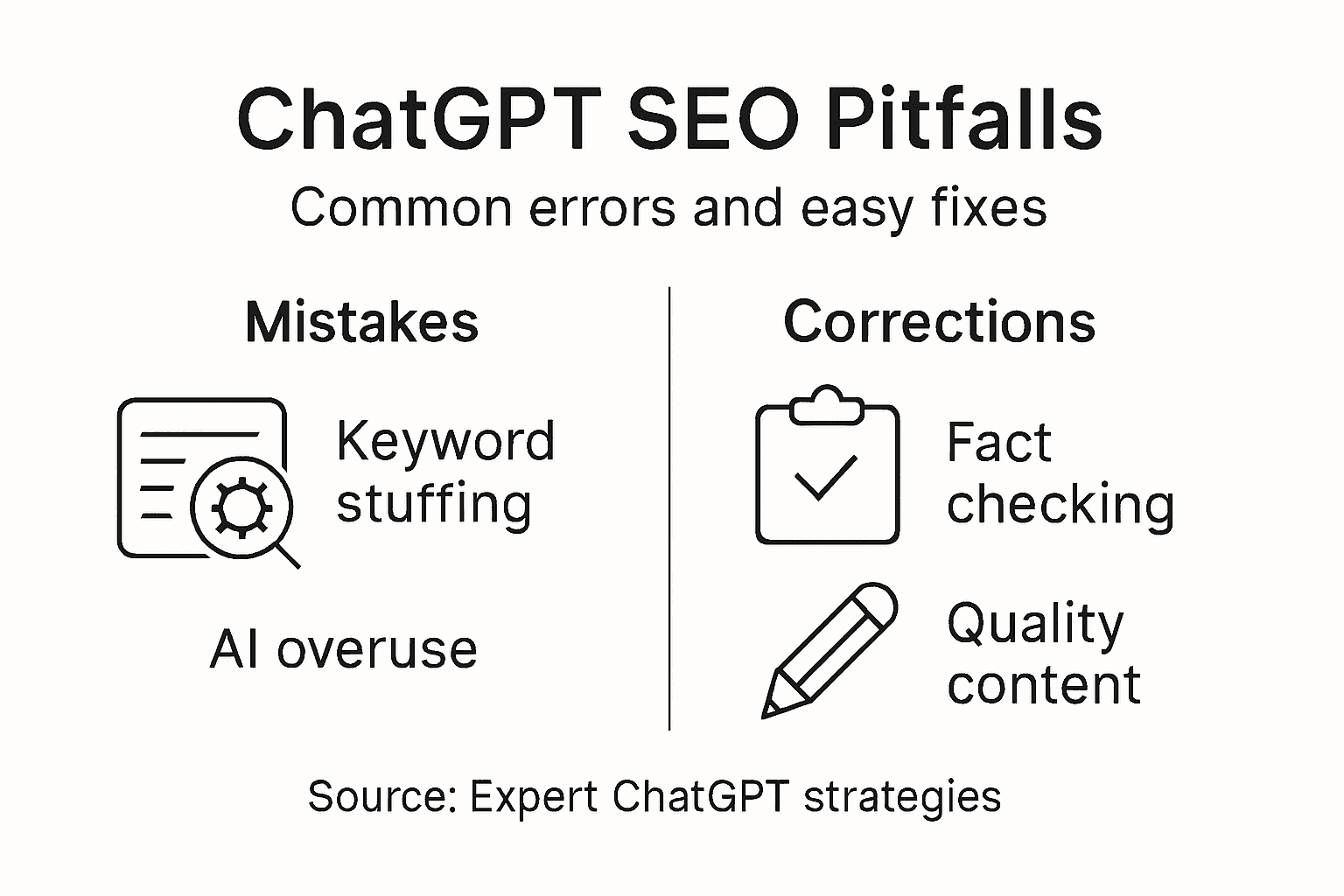
The third pitfall is ignoring content quality and structure entirely. Some agencies attempt payment for inclusion or fake rankings tactics, which backfire spectacularly when AI systems detect them. ChatGPT values real content value, freshness, and ethical practices over manipulative strategies. Your clients who attempt to game the system through paid placements or artificial ranking schemes face detection and de-prioritization. The AI platforms are specifically designed to identify trustworthy sources, and manipulation tactics are obvious to these systems. Your clients also commonly ignore structural elements that help ChatGPT interpret their content. Clear headings, logical information hierarchy, proper formatting, and explicit statements of expertise all signal to ChatGPT that the content is well-organized and authoritative. Content without structure looks like rambling even if the information is accurate. Your clients need to treat content structure as seriously as content quality. Finally, many agencies fail to maintain content freshness. Outdated information gets cited less frequently by ChatGPT because the model recognizes when claims or data points are stale. Your clients need ongoing content maintenance schedules, not just initial publication.
Below is a summary of typical mistakes and the correct strategic response for ChatGPT optimization:
| Common Mistake | Consequence | Correct Approach |
|---|---|---|
| Keyword stuffing | AI deprioritizes content | Use natural, clear language |
| Overusing AI-generated text | Misinformation risk | Rigorously fact-check all outputs |
| Ignoring content structure | Poor AI comprehension | Use logical headings, explicit claims |
| Neglecting content freshness | Fewer citations over time | Schedule ongoing content reviews |
Pro tip: Audit your client's content for factual errors by cross-referencing all claims with primary sources and current data, then implement a quarterly review cycle specifically for content that appears in ChatGPT responses to catch and correct inaccuracies before they damage credibility.
Unlock Your Brand's Full Potential with AI-Driven ChatGPT Optimization
The article highlights a critical challenge many brands face today: how to become authoritative sources cited by AI systems like ChatGPT instead of just ranking on traditional search engines. This requires a focus on comprehensive, trustworthy, and well-structured content that resonates with large language models. Your goal is to build lasting brand authority, improve content freshness, and secure high-quality mentions that boost visibility within AI-generated responses. These are complex needs that call for a strategic, AI-powered approach rather than old-school SEO tactics.
At Babylovegrowth.ai, we understand these challenges deeply. Our platform specializes in enhancing organic traffic and search presence across both Google and AI-driven search engines like ChatGPT. Featuring automated tools for content planning, structured data markup, backlink building, and technical site audits we help your brand achieve the comprehensive content authority that ChatGPT values. Explore how our automated content publishing and backlink network empower your efforts to win AI citations and dramatically improve brand trust.

Are you ready to transform your brand into a trusted AI-referenced authority now The time to act is critical as early adopters gain a competitive edge that will last years Join Babylovegrowth.ai today to start crafting precise, authoritative content that attracts AI citations, increases organic traffic, and secures your place at the forefront of AI-powered search.
Frequently Asked Questions
What is ChatGPT optimization?
ChatGPT optimization involves structuring your content, metadata, and technical setup to ensure your brand's information surfaces prominently in AI responses. Unlike traditional SEO, it targets the way language models retrieve and present information.
How does ChatGPT optimization differ from traditional SEO?
Traditional SEO aims to rank content on a list based on algorithms, while ChatGPT optimization focuses on being cited in AI-generated answers by improving content authority, completeness, and user intent fulfillment.
Why is building topical authority important for ChatGPT optimization?
Building topical authority helps your content become a trusted source in its niche. This is crucial because ChatGPT favors content that demonstrates expertise and offers comprehensive answers to user queries, leading to more citations.
What are common pitfalls in ChatGPT optimization strategies?
Common pitfalls include keyword stuffing, over-reliance on AI-generated content without fact-checking, ignoring content structure, and neglecting content freshness. Avoiding these mistakes is vital for maintaining brand credibility and visibility in AI responses.
Recommended
Smart SEO,
Faster Growth!
Most Read Articles
Generative Engine Optimization (GEO)
Learn how Generative Engine Optimization (GEO) helps your content rank in AI search engines like ChatGPT and Google AI. This comprehensive guide explains the differences between SEO and GEO, why it matters for your business, and practical steps to implement GEO strategies for better visibility in AI-generated responses.
DylenJan 18, 2025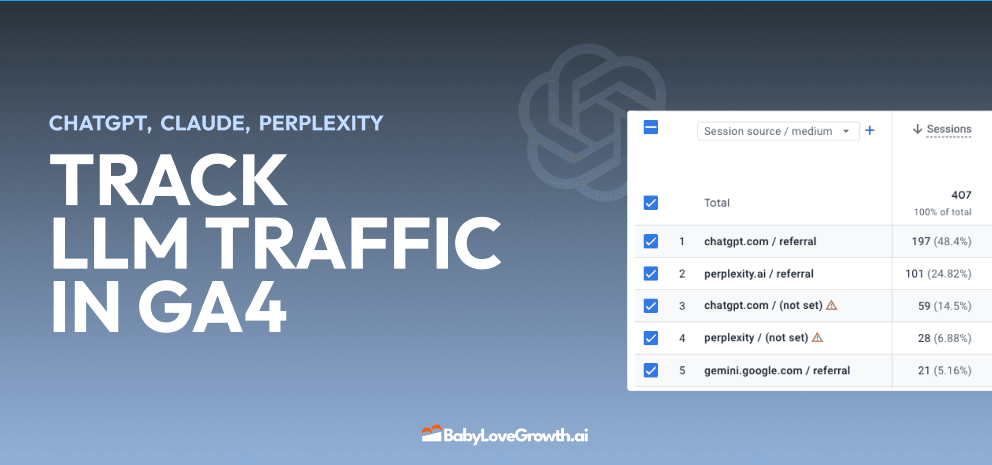
Track LLM Traffic in Google Analytics 4 (GA4)
Learn how to track and analyze traffic from AI sources like ChatGPT, Claude, Perplexity, and Google Gemini in Google Analytics 4. This step-by-step guide shows you how to set up custom filters to monitor AI-driven traffic and make data-driven decisions for your content strategy.
DylenMar 18, 2025
How to Humanize AI Text with Instructions
Learn practical techniques to make AI-generated content sound more natural and human. This guide covers active voice, direct addressing, concise writing, and other proven strategies to transform robotic text into engaging content.
DylenApril 7, 2025
Open AI Revenue and Statistics (2024)
Comprehensive analysis of OpenAI financial performance, user engagement, and market position in 2023. Discover key statistics including $20B valuation, $1B projected revenue, and 100M+ monthly active users.
DylenOctober 03, 2025