Why long-tail keywords drive more leads and growth


TL;DR:
- Long-tail keywords convert 2.5 to 3 times better than broad, short-tail terms.
- They face less competition and help small businesses rank faster for niche queries.
- Consistently targeting specific phrases builds qualified traffic and long-term SEO growth.
Most businesses fixate on high-volume keywords, spending months trying to crack the top ten results for terms like "marketing software" or "running shoes." Here's the problem: those terms attract everyone, which means they convert almost no one. Long-tail keywords, by contrast, convert 2.5x to 3x better than short, generic search terms. That gap is not a rounding error — it's the difference between traffic that browses and traffic that buys. This article walks you through what long-tail keywords are, how they compare to short-tail strategies, their competitive advantages, and how to find and use them to build a consistent pipeline of qualified leads.
Table of Contents
- What are long-tail keywords and why do they matter?
- Key advantages of targeting long-tail keywords
- Comparing long-tail and short-tail keyword strategies
- How to find and use long-tail keywords in your SEO strategy
- Our take: Why long-tail keywords are your SEO secret weapon
- Unlock long-tail keyword growth with the right tools
- Frequently asked questions
Key Takeaways
| Point | Details |
|---|---|
| Higher conversions | Long-tail keywords deliver 2.5x to 3x higher conversion rates than broad keywords. |
| Lower competition | Targeting long-tail terms lets businesses rank faster and more easily in organic search results. |
| Greater lead quality | Visitors from long-tail searches are more likely to convert into leads or customers because they have high intent. |
| Easy discovery | AI-powered tools simplify finding and implementing long-tail keywords for any SEO strategy. |
What are long-tail keywords and why do they matter?
A long-tail keyword is a search phrase, usually three words or more, that targets a specific topic, question, or need. Instead of "running shoes," a long-tail version would be "best running shoes for flat feet women." Instead of "CRM software," think "CRM software for freelance consultants under $50 a month." The phrase is longer, narrower, and far more revealing about what the searcher actually wants.
The term "long-tail" comes from statistical distribution. Picture a graph showing keyword search volume. A handful of broad, generic terms sit at the tall left side of the curve, pulling in millions of searches a month. Then the curve drops and stretches far to the right, where thousands of specific phrases each attract a small number of searches. That long right tail, taken together, actually accounts for a significant share of total search traffic. Many estimates place it at more than 70% of all search queries.
Short-tail vs. long-tail keywords at a glance:
| Factor | Short-tail keywords | Long-tail keywords |
|---|---|---|
| Word count | 1 to 2 words | 3 or more words |
| Monthly search volume | Very high | Low to moderate |
| Competition level | Extremely high | Low to moderate |
| Searcher intent clarity | Vague | Specific and clear |
| Conversion potential | Low | High (2.5x to 3x) |
| Time to rank | Often 12 months or more | Weeks to a few months |
The table above makes the tradeoff visible. Short-tail terms attract eyeballs, but the intent behind them is murky. Someone typing "CRM" could be a student writing a paper, a job seeker checking career options, or a business owner ready to buy. A long-tail phrase like "CRM software for small law firms" filters out every irrelevant visitor and surfaces exactly the buyer you want.
Unique traits that make long-tail keywords work for SEO:
- Lower competition: Fewer websites target these phrases, making it realistic to rank without a massive domain authority
- Higher purchase intent: Specific phrases signal a searcher who has already done their research
- Better content alignment: Specific phrases map naturally to specific blog posts, landing pages, or product descriptions
- Voice search compatibility: Voice queries are conversational and long, so long-tail keywords align perfectly with them
- Faster ranking timelines: You can build long-term SEO growth faster when you're not fighting Fortune 500 companies for every ranking
The conversion rate difference matters most here. When someone searches a specific phrase, they have already narrowed their choice. They know what they want. Your job is simply to show up with the answer. That is why long-tail keyword conversion rates run so much higher than broad terms.
Key advantages of targeting long-tail keywords
Knowing that long-tail keywords exist is one thing. Understanding why they move the needle for your business is another. Let's walk through the most important competitive and business advantages that come with this approach.
Lower competition means faster wins. Broad terms like "project management" are contested by enterprise software companies with decades of domain history and enormous link budgets. You are not going to outrank them quickly. A phrase like "project management tool for architecture firms" shrinks the competitive pool to a handful of players, many of which have not even written a dedicated page on the topic. That is a door you can actually walk through.

Intent translates directly to lead quality. Not all traffic is equal. A visitor arriving from a specific query has self-selected as someone who needs precisely what you offer. Compare that to the broad searcher who may be months away from any decision. When your pipeline fills with intent-rich visitors, your sales team spends less time qualifying and more time closing.
The compound effect is real. One long-tail keyword might bring in 40 visitors a month. That sounds modest. But if you publish 50 well-targeted pieces of content each hitting a different long-tail phrase, you're looking at 2,000 monthly visitors, all of them highly qualified. This is why keyword discovery methods focused on specificity tend to outperform spray-and-pray approaches to content.
Benefits of long-tail keyword targeting for business growth:
- Drives qualified, intent-rich traffic that converts at higher rates
- Reduces wasted ad spend and organic content efforts on irrelevant visitors
- Builds topical authority in specific niches, reinforcing ranking signals
- Generates content ideas that are easy to plan and execute
- Creates compounding results over time as more pages rank simultaneously
- Fits naturally into voice search and AI-powered search engines
Pro Tip: Before you start hunting for keywords, map out your unique value proposition and the specific problems your product solves. Then build your long-tail keyword list around those exact pain points. A phrase like "automated SEO for SaaS marketing teams" is infinitely more valuable to a focused business than a generic phrase that attracts everyone and converts no one.
"Focusing on long-tail keywords is not a shortcut — it's a smarter allocation of resources. The businesses that dominate niche searches are the ones that understand their customers well enough to speak their language precisely."
When you combine high specificity with consistent publishing, you start targeting relevant keywords that compound month over month. The ROI of this approach grows over time, unlike paid ads that stop the moment you cut the budget.
Comparing long-tail and short-tail keyword strategies
Understanding the pros of long-tail targeting, it's important to see how they measure up against short-tail strategies. Neither approach is universally wrong. The question is which one fits your current situation and goals.
Side-by-side strategy comparison:
| Dimension | Short-tail strategy | Long-tail strategy |
|---|---|---|
| Ranking difficulty | Very high | Low to moderate |
| Time to see results | 12 to 24 months | 1 to 6 months |
| Traffic volume per keyword | High | Low to moderate |
| Conversion rate | Low (1% to 2%) | High (up to 3x better) |
| Content complexity | Broad overview pages | Specific, problem-solving content |
| Best for | Large brands with authority | Small to mid-size businesses |
| Resource requirement | Large budget and team | Manageable with automation |
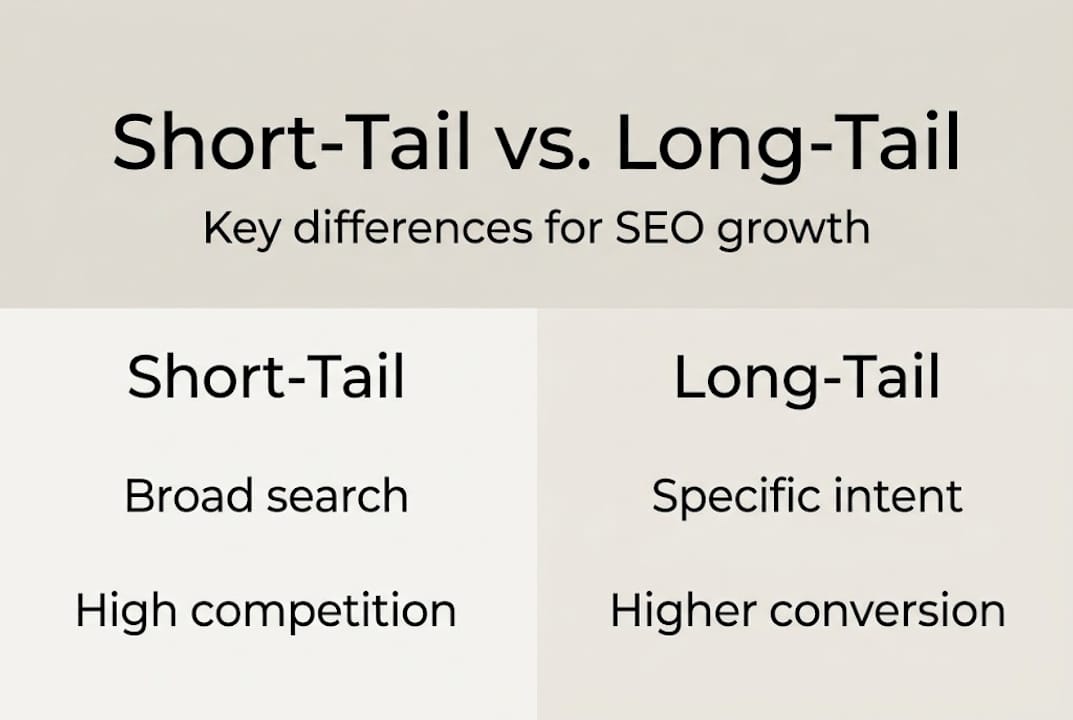
Short-tail strategies work when you already have strong domain authority, a big content team, and a long time horizon. If you are Nike, ranking for "running shoes" makes sense. For most businesses, that route burns resources and delivers thin results for years.
Here's a ranked order for building a keyword strategy that actually scales:
- Start with long-tail keywords that match your highest-value customer problems
- Research monthly search volume to confirm there's at least some demand (even 50 to 100 searches a month is worth it)
- Check keyword difficulty scores using tools like Ahrefs or Semrush and prioritize any term with a score under 30
- Publish targeted content for each phrase with clear intent matching
- Track rankings monthly and adjust content based on what's gaining traction
- Gradually expand into slightly broader terms as your domain authority grows
The advanced keyword research tactics that top-performing teams use almost always start at the specific end of the keyword spectrum and move outward. This lets you build momentum, prove ROI early, and earn the authority you need to compete for broader terms later.
Mixing both strategies does make sense eventually. A mature content program might allocate 70% of effort to long-tail content and 30% to building authority around medium-tail phrases. But for most businesses reading this article today, the smarter investment is overwhelmingly in the long-tail direction. Long-tail conversion rates alone justify the focus.
How to find and use long-tail keywords in your SEO strategy
You've seen why and when to use long-tail keywords — now let's go hands-on with proven methods to find and incorporate them into your content and SEO plan.
Step-by-step process for finding long-tail keywords:
- Start with seed keywords. List five to ten broad terms that describe your core offerings. These become the starting point for generating specific variations.
- Use keyword research tools. Plug your seed terms into tools that surface related phrases, questions, and variations with low competition scores.
- Mine "People also ask" and autocomplete. Google's search interface itself reveals what real users are asking. Search your seed term and collect every autocomplete suggestion and "People also ask" question.
- Analyze competitor content gaps. Use a tool like Ahrefs or Semrush to identify phrases your competitors rank for but your site does not. Gaps often hide high-value long-tail opportunities.
- Review your own site search data. If your website has a search bar, the queries users type in are gold. They reveal what your audience wants in their own language.
- Filter by intent. Prioritize phrases with clear commercial or informational intent that aligns with your funnel stage. "Best," "how to," "for," and "vs." are strong intent signals.
Popular keyword tools and how they surface long-tail opportunities:
| Tool | Long-tail strength | Key feature |
|---|---|---|
| Google Keyword Planner | Moderate | Free, shows search volume ranges |
| Ahrefs | Strong | Keyword difficulty scores and SERP analysis |
| Semrush | Strong | Question-based keyword filtering |
| AnswerThePublic | Excellent for questions | Visualizes question-based searches |
| Google Search Console | Strong for owned data | Shows queries already driving impressions |
| Ubersuggest | Moderate | Affordable entry-level option |
Once you have your list, the step-by-step keyword research process shifts into content creation mode. Each long-tail phrase should map to a specific piece of content — a blog post, a landing page, a FAQ, or a product description. Write content that directly answers the query behind the phrase rather than stuffing the phrase into generic text.
Tips for optimizing content with long-tail phrases:
- Place the phrase in your H1 heading, first paragraph, one subheading, and the meta description
- Write at a depth that matches the searcher's intent, usually 800 to 1,500 words for informational queries
- Use semantically related terms throughout the content to reinforce topical relevance
- Link internally to related pages that address adjacent questions
- Update content every six to twelve months to keep it fresh and ranking
Following a solid keyword research checklist helps you avoid the common trap of targeting phrases once and forgetting about them. Search trends shift. New questions emerge. Competitors publish new content. The businesses that consistently update and expand their long-tail libraries are the ones that sustain and grow their organic traffic year over year.
Pro Tip: Set a monthly calendar reminder to review your Google Search Console data. Look for queries where your pages are getting impressions but not clicks. Those are often long-tail phrases that need slightly better title tags or meta descriptions to break through. The data is already there — you just need to act on it.
The fact that long-tail keywords convert at 2.5x to 3x higher rates than broad terms makes every hour you invest in discovery and optimization worth more than time spent chasing generic rankings.
Our take: Why long-tail keywords are your SEO secret weapon
Most businesses still chase volume. They want the keyword with 50,000 monthly searches, and they'll spend 18 months and a significant content budget trying to crack the top ten for it. We've seen this play out repeatedly. The result is usually the same: moderate rankings, thin traffic, and frustrated leadership asking why SEO isn't delivering leads.
The counterintuitive truth is that specificity is leverage. A business that owns 200 long-tail rankings for phrases its ideal customers actually search is in a far stronger position than one chasing five broad terms. The visitors are more qualified. The content is easier to write and rank. The conversion rates are measurably higher.
Market leaders in competitive niches often do this quietly. They don't announce their content strategy. They just publish consistently, own their niche, and let sustained SEO growth compound over time. Meanwhile, their competitors keep swinging at the same impossible keywords.
The real mistake isn't ignoring SEO. It's optimizing for the wrong signal. Volume feels like success. Conversion is actual success. Your SEO strategy should be built around the second one.
Unlock long-tail keyword growth with the right tools
Building a long-tail keyword strategy sounds straightforward in theory, but consistent execution at scale requires the right infrastructure. Manually researching hundreds of phrases, planning content, tracking rankings, and updating pages each month is a full-time job.

Babylovegrowth.ai was built precisely for this challenge. The platform's AI-powered keyword discovery engine surfaces high-converting long-tail opportunities your competitors haven't found yet, then automatically maps them to 30-day content plans. From publishing to internal linking and structured data, every step is automated. If you're ready to stop guessing and start ranking with precision, explore the AI keyword research tools that make long-tail strategy scalable, measurable, and profitable.
Frequently asked questions
What are examples of long-tail keywords?
Long-tail keywords are specific, multi-word phrases like "best running shoes for flat feet women" or "CRM software for freelance consultants" that target intent-rich, lower-competition searches with clear buyer signals.
How do long-tail keywords improve conversion rates?
Because long-tail keywords attract users with focused intent, they convert 2.5x to 3x better than broad terms, meaning your traffic is more likely to take action rather than just browse.
Are long-tail keywords easier to rank for than short-tail?
Yes, long-tail keywords face significantly less competition, which means smaller websites and newer domains can realistically reach page one in weeks rather than years.
Can targeting long-tail keywords work for small websites?
Absolutely — small websites benefit the most from this approach because they can rank for specific, intent-rich phrases without needing the massive domain authority required to compete for short-tail terms.
Recommended
Smart SEO,
Faster Growth!
Most Read Articles
Generative Engine Optimization (GEO)
Learn how Generative Engine Optimization (GEO) helps your content rank in AI search engines like ChatGPT and Google AI. This comprehensive guide explains the differences between SEO and GEO, why it matters for your business, and practical steps to implement GEO strategies for better visibility in AI-generated responses.
DylenJan 18, 2025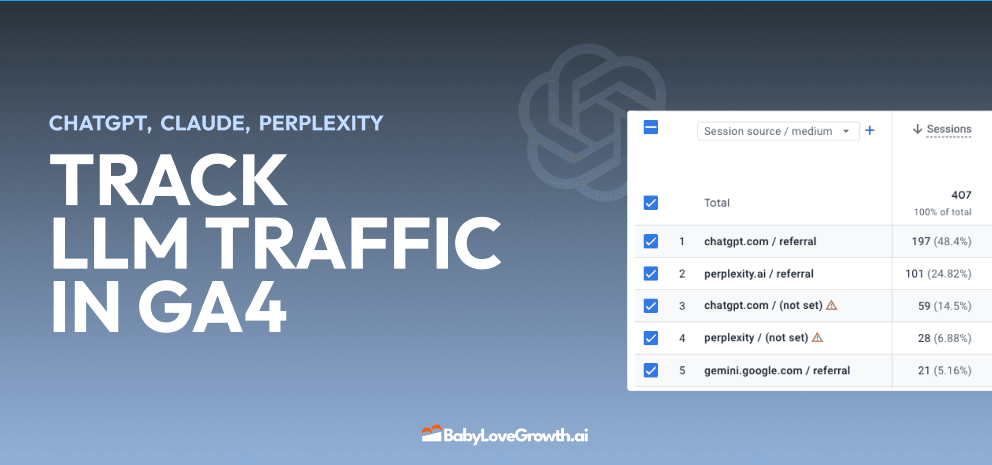
Track LLM Traffic in Google Analytics 4 (GA4)
Learn how to track and analyze traffic from AI sources like ChatGPT, Claude, Perplexity, and Google Gemini in Google Analytics 4. This step-by-step guide shows you how to set up custom filters to monitor AI-driven traffic and make data-driven decisions for your content strategy.
DylenMar 18, 2025
How to Humanize AI Text with Instructions
Learn practical techniques to make AI-generated content sound more natural and human. This guide covers active voice, direct addressing, concise writing, and other proven strategies to transform robotic text into engaging content.
DylenApril 7, 2025
Moz DA vs Ahrefs DR: Which Metric Should You Actually Use?
Moz Domain Authority and Ahrefs Domain Rating look similar but measure very different things. Learn what each score actually tells you, when to use each one, and what to track instead for real SEO results in 2026.
DylenApr 23, 2026
Open AI Revenue and Statistics (2024)
Comprehensive analysis of OpenAI financial performance, user engagement, and market position in 2023. Discover key statistics including $20B valuation, $1B projected revenue, and 100M+ monthly active users.
DylenOctober 03, 2025
"Search Google or Type a URL": What It Means & What to Do
Learn what "Search Google or type a URL" actually means, how your browser decides whether to search or navigate, and what to do if your address bar starts behaving unexpectedly. Includes browser settings guides for Chrome, Firefox, Edge, and Safari.
DylenApr 21, 2026