What Is On-Page SEO and Why It Matters Today


Managing organic growth for an eCommerce brand means juggling countless product pages while chasing visibility across Google, Bing, and even rising AI engines like ChatGPT. The challenge is clear: only a well-optimized page earns real traffic and conversions. Focusing on on-page SEO foundations such as title tags, meta descriptions, structured headings, and keyword placement empowers you to control what signals search engines and users receive. This guide details actionable principles and automation tips to sharpen your results at scale.
Table of Contents
- Defining On-Page SEO And Core Principles
- Essential Elements For Effective Optimization
- Advanced Techniques For AI Search Engines
- Automation Tools And Process Improvements
- Major Pitfalls And How To Avoid Them
Key Takeaways
| Point | Details |
|---|---|
| On-Page SEO Importance | Proper on-page SEO techniques significantly enhance visibility and rankings, directly impacting sales for eCommerce brands. |
| Core Elements | Focus on title tags, meta descriptions, content quality, and internal linking to create a solid on-page SEO foundation. |
| Generative Engine Optimization (GEO) | Adapt content strategy to integrate into AI-driven searches by emphasizing machine scannability and topical depth. |
| Automation Benefits | Use automation tools to streamline keyword optimization, audits, and performance tracking, allowing for more effective scaling of SEO efforts. |
Defining On-Page SEO and Core Principles
On-page SEO refers to the optimization techniques you apply directly to your website's pages to improve visibility and rankings in search engine results. Unlike off-page strategies that focus on external signals like backlinks, on-page SEO involves everything within your control on the actual page itself. For eCommerce brands managing hundreds or thousands of product pages, getting this right at scale becomes the difference between organic traffic that drives consistent sales and pages that never surface in search results.
The core elements that form the foundation of on-page SEO include title tags, meta descriptions, headings, keyword placement, image alt text, internal linking structure, and overall content quality. Title tags and meta descriptions serve as your first impression to search engines and potential customers—they tell Google what your page is about while also convincing people in search results to click through. Your heading hierarchy (H1, H2, H3) organizes content logically for both readers and algorithms, making it clear what each section addresses. Content quality remains non-negotiable; search engines increasingly reward pages that directly answer user questions with specific, actionable information rather than thin, generic content that could apply to any competitor.
What makes on-page SEO particularly valuable today is how it aligns with how search engines actually work. Modern algorithms don't just scan keywords anymore—they understand user intent, analyze whether your content truly solves the problem someone searched for, and assess whether your page provides better value than competing pages. This means your title tag needs to match search intent, your content needs to comprehensively address what users are actually looking for, and your page structure needs to guide readers (and crawlers) through the information logically. The technical foundation matters equally; URLs should be clean and descriptive, pages need proper structured data markup for rich snippets, and internal links should guide visitors toward your most important conversions. When you combine these elements strategically, your pages become more discoverable, more trustworthy to search engines, and more useful to the people actually reading them.
Pro tip: Use your eCommerce product pages as on-page SEO testing grounds—focus your initial efforts on optimizing 10-15 high-traffic product pages with aligned keywords, then document what works before scaling the framework across your entire catalog.
Essential Elements for Effective Optimization
Effective on-page SEO isn't about perfecting a single element—it's about orchestrating multiple components that work together to make your pages discoverable, relevant, and valuable. For eCommerce brands competing in crowded product categories, understanding which elements matter most and how they interact can dramatically shift your organic performance. The foundation rests on four critical pillars: keyword alignment, content quality, technical structure, and user experience.
Keyword optimization starts before you write a single word. You need to research what your target audience actually searches for, then strategically place those keywords in positions where search engines expect them. Your primary keyword belongs in your title tag, ideally near the beginning, and naturally woven into your opening paragraph. Secondary keywords should appear in subheadings and throughout the body without forcing awkward phrasing. Meta descriptions, while not a direct ranking factor, must entice clicks by clearly stating what someone will find on your page. URL structure matters equally—clean, descriptive URLs like "babylovegrowth.ai/how-to-optimize-product-pages" tell both users and crawlers exactly what the page contains, whereas "babylovegrowth.ai/page-123" wastes an optimization opportunity. Beyond keywords, matching search intent means understanding whether someone searching for your keyword wants to learn, compare, buy, or troubleshoot—then delivering exactly that.
Content architecture shapes how search engines understand your page and how visitors navigate it. Your H1 heading should match your primary keyword and clearly state the page's main topic—use only one H1 per page, and make it count. H2 and H3 subheadings break your content into logical sections that both readers and crawlers can follow effortlessly. Image optimization deserves more attention than most brands give it. Every product image, diagram, or illustration needs descriptive alt text that includes relevant keywords naturally—this helps visually impaired users, improves image search visibility, and provides crawlers with context. Internal linking acts as your roadmap, guiding visitors deeper into your product catalog or resource sections while spreading link equity across your highest-priority pages. External links to authoritative sources build credibility and signal to search engines that you've done your research.

Technical elements complete the picture. Maintaining content consistency across pages and implementing structured data markup (schema) helps search engines understand your product information, prices, and reviews at a glance. Page speed, mobile responsiveness, and proper canonical tags prevent duplicate content issues and ensure a seamless experience across devices. When these elements align—when your keywords match user intent, your content thoroughly addresses the topic, your structure guides visitors logically, and your technical foundation is clean—your pages earn visibility naturally.
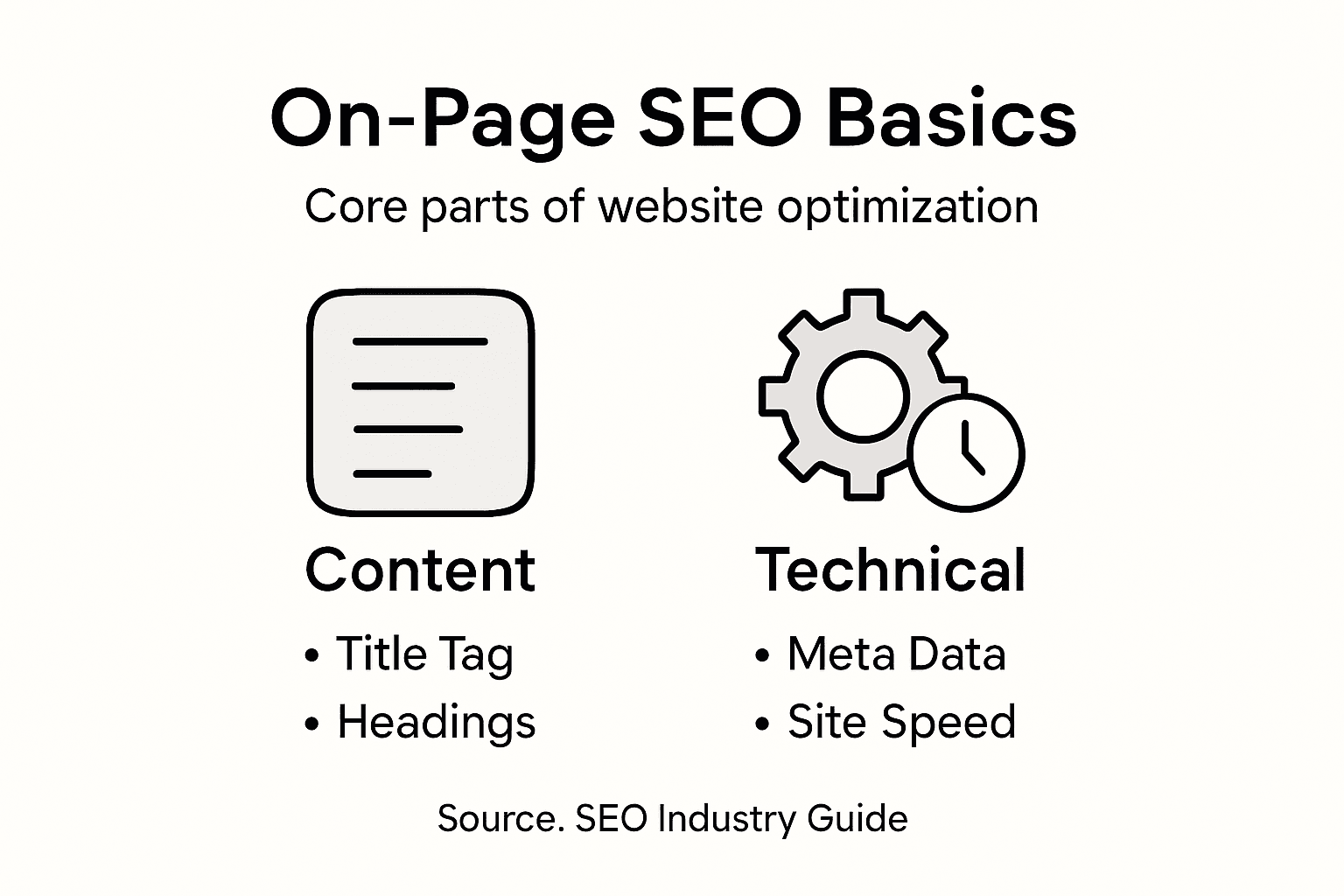
Pro tip: Audit your top-performing product pages to reverse-engineer what's working, then apply that same structure and keyword strategy to your underperforming pages rather than starting from scratch on each new page.
Here's a summary of the core pillars of effective on-page SEO and their specific business impacts:
| Pillar | Description | Business Impact |
|---|---|---|
| Keyword Alignment | Match content to user search intent | Higher rankings, targeted traffic |
| Content Quality | Provide unique, in-depth answers | Increased trust, better conversion |
| Technical Structure | Optimize metadata, schema, speed | Improved crawlability, rich results |
| User Experience | Fast, mobile-friendly, easy to read | More engagement, lower bounce rate |
Advanced Techniques for AI Search Engines
The rise of AI-powered search engines like ChatGPT, Claude, and Perplexity represents a fundamental shift in how people find information online. These tools don't rank pages the way Google does. Instead, they synthesize answers from multiple sources, which means your on-page SEO strategy needs to evolve alongside this technology. While traditional on-page SEO optimizes for ranking position, Generative Engine Optimization (GEO) optimizes for being cited, quoted, and integrated into AI-generated responses. For eCommerce brands, this means competing not just for search visibility but for authoritative inclusion in AI summaries that drive traffic and credibility.
Generative Engine Optimization focuses on three core principles that differ markedly from traditional SEO. First, content must be engineered for machine scannability—AI language models need clear, well-structured information they can parse and cite accurately. This means using structured data markup more aggressively than before, organizing information hierarchically so models can extract specific claims, and ensuring factual accuracy because AI systems will amplify errors across thousands of users. Second, you need to build authoritative earned media presence. When AI models cite your brand as a source, it carries weight. Publish comprehensive, original research. Get mentioned in industry publications. Create content that competitors want to reference. Third, adopt semantic depth that AI models crave. Instead of optimizing single keywords, think topical authority. AI systems understand relationships between concepts, so create content clusters where your main articles link to supporting pieces that explore related angles, definitions, and use cases. A product page about "waterproof hiking boots" should connect to pages about "hiking in wet weather," "boot care and maintenance," and "comparison with waterproof shoes"—giving the AI model a fuller picture.The technical execution differs from traditional on-page SEO in meaningful ways. Factual accuracy and topical depth become non-negotiable because AI systems retrieve and synthesize your exact content. Vague claims or thin coverage won't cut it anymore. Your headers and subheaders should match the questions AI models anticipate users asking. Use numbered lists, comparison tables, and clear definitions throughout. Include citations and data sources within your content so AI models can trace claims back to credible origins. FAQ sections work better than ever because they provide direct question-answer pairs that generative models naturally extract. Internal linking becomes even more critical—create semantic pathways that help AI understand how your content pieces relate to each other. Finally, optimize your meta descriptions and schema markup aggressively. These structured signals help retrieval-augmented generation systems pull your content into responses more reliably than unstructured text alone.
Pro tip: Start by identifying the top questions AI chatbots currently answer about your product category, then audit whether your content comprehensively covers those topics with citations and data that models will want to include in their responses.
Compare traditional on-page SEO with Generative Engine Optimization (GEO) for the AI era:
| Focus Area | Traditional On-Page SEO | Generative Engine Optimization (GEO) |
|---|---|---|
| Ranking Goal | SERP position | AI chatbot inclusion & citation |
| Content Style | Keyword-rich, structured | Fact-based, scannable, cited |
| Technical Emphasis | Meta tags, schema, page speed | Structured data, topical depth |
| Measurement | Clicks & rankings | Mentions in AI-generated responses |
Automation Tools and Process Improvements
Manually optimizing hundreds or thousands of pages is simply not realistic at scale. This is where automation becomes your competitive advantage. Mid-sized eCommerce brands often find themselves in a bind: they understand what on-page SEO requires, but they lack the resources to implement it consistently across their entire catalog. This gap between knowledge and execution is exactly where automation tools step in. Rather than having your team manually audit each page, optimize metadata, research keywords, and track performance, automation handles the repetitive work while your team focuses on strategy and content quality. The result is faster implementation, fewer human errors, and the ability to scale SEO improvements across your entire website.
Automation handles four critical SEO functions that directly impact on-page optimization. First, keyword analysis and metadata optimization can be automated to scan your existing pages, identify keyword gaps, and suggest title tag and meta description improvements based on search volume and competitor analysis. Tools can batch-process hundreds of pages in hours rather than days. Second, site audits that would take weeks to complete manually now run continuously, flagging issues like missing alt text, broken internal links, duplicate content, and schema markup problems. You get alerts in real time instead of discovering problems months later. Third, performance tracking becomes systematic. Automation monitors your keyword rankings, tracks organic traffic changes, and correlates them with the optimizations you've implemented, giving you clear data on what's actually working. Fourth, content gap analysis identifies which topics your competitors rank for but you don't, allowing your content team to prioritize creation efforts strategically.
The practical workflow looks like this: Set up your automation tool to scan your website on a regular schedule (weekly or monthly). The tool generates a prioritized list of on-page improvements, organized by potential impact. Your team reviews these recommendations, makes decisions about which to implement, and the tool applies changes across affected pages automatically. For instance, if your tool identifies that 234 product pages are missing keyword-rich H2 subheadings, it can suggest optimal subheading structures and implement them in bulk rather than requiring manual edits on each page. Automating these repetitive tasks reduces human error, accelerates optimization cycles, and enables continuous improvement without overwhelming your team. The key is choosing tools that integrate with your content management system, provide clear reporting, and allow human oversight before changes go live.
Pro tip: Start automation with your lowest-performing pages rather than your entire website—this lets you test the tool's recommendations on pages with less traffic risk before scaling to high-performing product pages.
Major Pitfalls and How to Avoid Them
Getting on-page SEO right is challenging enough without accidentally sabotaging your own efforts. Most mid-sized eCommerce brands make the same mistakes repeatedly, often without realizing the damage until rankings plummet or traffic stalls. The good news is that these pitfalls are predictable and avoidable once you know what to watch for. Understanding what goes wrong allows you to build processes that prevent errors before they impact your search visibility.
The most visible mistake is keyword stuffing, where brands cram keywords into title tags, meta descriptions, and content in ways that read unnaturally and feel spammy to both readers and search engines. You might think mentioning your target keyword five times in a 300-word product description helps ranking, but it actually signals low-quality content and can trigger algorithmic penalties. Similarly, poor content quality remains rampant. Thin, generic product descriptions that could apply to any competitor's item don't provide value to readers or signal topical authority to search engines. Another critical error involves ignoring mobile optimization entirely. Your pages might look perfect on desktop, but if they load slowly on mobile, have text that's too small, or require excessive scrolling to find information, you lose both users and ranking potential. Slow page load times compound this problem, causing visitors to abandon pages before they even finish loading. Finally, neglecting metadata—skipping alt text on images, writing generic meta descriptions, or leaving schema markup off product pages—means search engines have less information to understand and rank your content.
Beyond technical mistakes, ethical pitfalls matter increasingly. Confirmation bias in SEO practices can lead you to assume your existing approach is working when data suggests otherwise, or to implement tactics that technically work short-term but damage long-term credibility. Publishing misinformation or unsubstantiated claims to game rankings destroys trust when users and search engines eventually catch on. Instead, focus on content that genuinely answers user questions with accuracy and depth. Use structured markup correctly to help search engines understand your content, not to manipulate how it appears in results. Stay current with algorithm updates by following official search engine guidance rather than chasing shortcuts. Test changes on lower-traffic pages first before scaling to your revenue-driving product pages.
Pro tip: Create an on-page SEO checklist specific to your eCommerce category and run it through five random product pages monthly to catch emerging issues before they spread across your entire catalog.
Unlock the Power of On-Page SEO with AI-Driven Automation
Struggling to keep up with the complex demands of modern on-page SEO? The challenge of optimizing hundreds of product pages while aligning keyword placement, structured data, and user experience is overwhelming. You want your pages to not only rank higher but also earn AI chatbot citations and engage real customers. That means mastering core elements like keyword alignment, technical structure, and content quality while avoiding common pitfalls like keyword stuffing or slow page speed.

At Babylovegrowth.ai, we understand these pain points and have designed an all-in-one SaaS platform that automates your entire on-page SEO workflow. From AI-powered keyword discovery to automatic structured data markup and internal link building, our tools help you scale optimization across your catalog without sacrificing quality. Don't let manual processes hold your brand back. Experience why mid-sized eCommerce brands trust Babylovegrowth.ai to elevate their organic visibility on Google and AI-driven search engines like ChatGPT and Claude. Start optimizing your product pages intelligently today and see measurable growth in traffic and conversions.
Explore how our automated SEO and content planning solutions simplify your strategy and help you win both traditional search and the new AI-powered generation. Take control of your on-page SEO with Babylovegrowth.ai now.
Frequently Asked Questions
What is on-page SEO?
On-page SEO refers to the optimization techniques applied directly to a website's pages to enhance visibility and rankings in search engine results. It includes elements like title tags, meta descriptions, content quality, and internal linking that are within your control on the actual page.
Why is keyword optimization important for on-page SEO?
Keyword optimization is crucial because it ensures that your content matches what users are searching for. Strategically placing keywords in your title tags, headings, and content helps search engines understand your page's relevance, ultimately driving more targeted traffic to your site.
How does content quality impact on-page SEO?
Content quality directly affects your site's rankings and user engagement. High-quality, unique content that provides in-depth answers to user questions builds authority and trust, leading to higher rankings and better conversion rates compared to generic or thin content.
What role does technical structure play in on-page SEO?
Technical structure, including things like clean URLs, proper metadata, and mobile responsiveness, helps search engines crawl and index your site effectively. A well-structured page also enhances user experience, reducing bounce rates and increasing engagement, which positively influences your search rankings.
Recommended
Smart SEO,
Faster Growth!
Most Read Articles
Generative Engine Optimization (GEO)
Learn how Generative Engine Optimization (GEO) helps your content rank in AI search engines like ChatGPT and Google AI. This comprehensive guide explains the differences between SEO and GEO, why it matters for your business, and practical steps to implement GEO strategies for better visibility in AI-generated responses.
DylenJan 18, 2025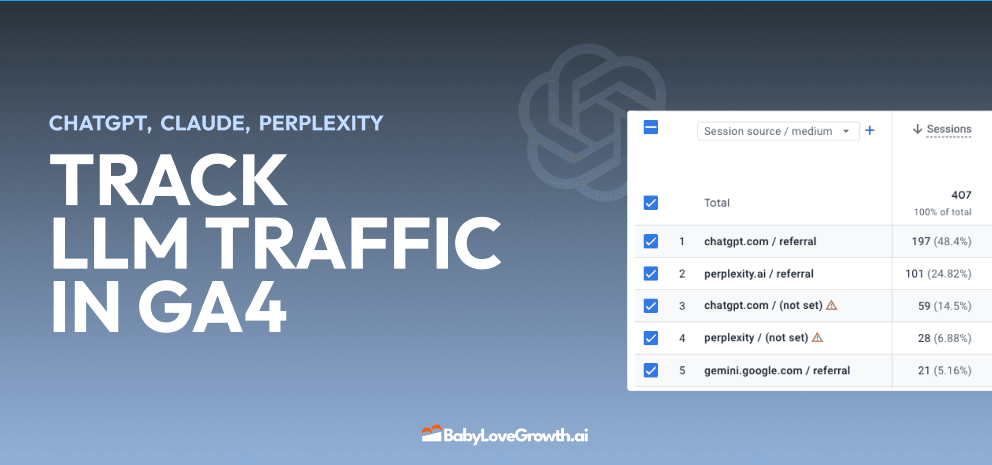
Track LLM Traffic in Google Analytics 4 (GA4)
Learn how to track and analyze traffic from AI sources like ChatGPT, Claude, Perplexity, and Google Gemini in Google Analytics 4. This step-by-step guide shows you how to set up custom filters to monitor AI-driven traffic and make data-driven decisions for your content strategy.
DylenMar 18, 2025
How to Humanize AI Text with Instructions
Learn practical techniques to make AI-generated content sound more natural and human. This guide covers active voice, direct addressing, concise writing, and other proven strategies to transform robotic text into engaging content.
DylenApril 7, 2025
Open AI Revenue and Statistics (2024)
Comprehensive analysis of OpenAI financial performance, user engagement, and market position in 2023. Discover key statistics including $20B valuation, $1B projected revenue, and 100M+ monthly active users.
DylenOctober 03, 2025