What Is AI-Generated Content and Its SEO Impact


Nearly half of American digital marketers believe AI-generated content always matches human quality, yet research shows most systems fall short without careful oversight. For mid-sized e-commerce brands, understanding the real power and limitations of AI-driven content creation is vital to avoid missed SEO opportunities and compliance mistakes. This guide clears up common myths, explains core content types, and helps digital marketers worldwide achieve authentic results while staying ahead in organic search.
Table of Contents
- Defining AI-Generated Content And Misconceptions
- Major Types Of AI-Generated Content Explained
- How AI-Generated Content Is Produced
- SEO Applications For E-Commerce Brands
- Legal Challenges And Compliance Risks
- Ethical Risks, Quality, And Common Mistakes
Key Takeaways
| Point | Details |
|---|---|
| Understanding AI-Generated Content | AI-generated content is not uniform; it comprises various types, including fully AI-generated, AI-assisted, and hybrid, with differing levels of human involvement. |
| SEO Applications in E-Commerce | E-commerce brands can utilize AI for optimizing product descriptions, generating content, and enhancing metadata, improving their search visibility and performance. |
| Legal and Ethical Considerations | Organizations must navigate complex legal challenges related to copyright, data privacy, and transparency, while proactively addressing ethical risks such as bias and misinformation. |
| Quality Control Recommendations | Establishing a robust process for human review and verification is crucial in maintaining content integrity and avoiding common pitfalls associated with AI-generated outputs. |
Defining AI-Generated Content and Misconceptions
AI-generated content represents text, images, or multimedia produced by artificial intelligence systems using advanced machine learning algorithms. These systems analyze vast datasets and generate original content that mimics human writing styles and patterns, often without direct human intervention.
Contrary to popular belief, AI-generated content is not a monolithic concept but a complex technological process with nuanced implications. Academic research on generative AI perspectives reveals significant misconceptions about its capabilities and limitations. Researchers have found that many individuals overestimate AI's ability to produce consistently high-quality, contextually accurate content across different domains.
The landscape of AI content generation includes several key types:
- Fully AI-generated content: Completely machine-produced without human editing
- AI-assisted content: Human-guided content with AI providing initial drafts or suggestions
- Hybrid content: Substantial human refinement and strategic input alongside AI generation
Understanding these distinctions is crucial for digital marketers seeking to leverage AI tools effectively while maintaining content quality and authenticity. User perspectives on AI content credibility indicate persistent challenges in reliably identifying and trusting AI-generated outputs.
To clarify the differences between types of AI-generated content, here's a side-by-side comparison of their features and business impact:
| Type of Content | Human Involvement | Quality Control | Business Impact |
|---|---|---|---|
| Fully AI-Generated | No direct intervention | Limited to automated checks | Scales quickly, risk of errors |
| AI-Assisted | Editing and guidance | Human reviews applied | Balances speed with improved accuracy |
| Hybrid | Strategic human input | Extensive editorial oversight | Highest credibility, slower output |
Pro Tip: Verify AI-generated content rigorously by cross-referencing information, checking factual accuracy, and applying human editorial oversight to ensure quality and reliability.
Major Types of AI-Generated Content Explained
Artificial intelligence has revolutionized content creation by generating multiple distinct content types across various digital platforms. Comparative research on AI-generated content reveals that generative AI can now produce sophisticated outputs spanning text, images, video, and multimedia formats with remarkable complexity and nuance.
The primary categories of AI-generated content include:
- Textual Content: Blog posts, articles, product descriptions, social media posts, and marketing copy generated through natural language processing algorithms
- Visual Content: Images, graphics, illustrations, and design elements created by generative image AI models
- Multimedia Content: Video scripts, voiceovers, podcast transcripts, and interactive media synthesized through advanced machine learning techniques

Digital marketers and content creators must understand these nuanced content types to leverage AI tools effectively. The AI content tools landscape continues to evolve, offering increasingly specialized solutions for different content generation needs.
Pro Tip: Experiment with multiple AI content generation tools across different categories, systematically comparing their outputs to identify the most reliable and high-quality solutions for your specific content requirements.
How AI-Generated Content Is Produced
The production of AI-generated content involves sophisticated computational processes that transform complex machine learning algorithms into coherent, contextually relevant outputs. Procedural content generation techniques reveal a multistep workflow that begins with extensive data collection, preprocessing, and advanced model training.
The core production process typically involves several critical stages:
- Data Collection: Gathering massive datasets from diverse sources to train AI models
- Model Training: Utilizing machine learning algorithms to develop sophisticated language and generation capabilities
- Output Generation: Employing neural networks to synthesize original content based on learned patterns
- Refinement: Implementing quality control mechanisms to improve content accuracy and coherence
Content creators can leverage AI-driven content strategies to understand how these complex technological systems transform raw data into meaningful, contextually appropriate content across various platforms and formats.
Pro Tip: Develop a comprehensive understanding of your AI content generation tool's underlying methodology to optimize input parameters and maximize output quality and relevance.
SEO Applications for E-Commerce Brands
E-commerce brands are increasingly leveraging AI-driven SEO strategies to enhance online visibility and competitive positioning. Empirical research on AI-generated SEO content demonstrates significant performance improvements in search engine rankings and content efficiency for online retail platforms.
Key SEO applications for e-commerce brands include:
- Product Page Optimization: Generating keyword-rich, contextually relevant product descriptions
- Content Generation: Creating blog posts and category page content that improve organic search visibility
- Metadata Enhancement: Automatically generating meta titles, descriptions, and structured data
- Keyword Research: Identifying and integrating high-performing search terms into website content
E-commerce platforms can strategically implement SEO automation for various platforms to streamline their digital marketing efforts, improving search rankings and organic traffic potential.
Pro Tip: Implement a continuous testing and refinement approach with AI-generated SEO content, regularly comparing AI outputs against human-created content to identify and maximize performance optimization opportunities.
Legal Challenges and Compliance Risks
The rapid evolution of AI-generated content has triggered complex legal challenges that demand sophisticated regulatory frameworks. Comprehensive legal regulation research reveals a multifaceted landscape of potential legal risks spanning copyright, intellectual property, and data protection domains.
Key legal challenges for organizations using AI-generated content include:
- Copyright Ownership: Determining intellectual property rights for machine-generated materials
- Data Privacy: Ensuring compliance with global data protection regulations
- Transparency Requirements: Disclosing AI content generation methodologies
- Potential Liability: Managing legal responsibilities for AI-generated outputs
Companies can mitigate risks by developing robust compliance strategies for AI content that prioritize transparency, accountability, and ethical content generation practices.
Pro Tip: Develop a comprehensive internal policy documenting AI content generation processes, including clear guidelines for attribution, review, and potential human modification to minimize legal exposure.
Ethical Risks, Quality, and Common Mistakes
AI-generated content introduces complex ethical challenges that demand careful navigation and systematic quality control. Comprehensive ethical risk analysis reveals multiple potential pitfalls that organizations must proactively address to maintain content integrity and professional standards.
Common ethical risks and quality challenges include:
- Bias Propagation: Unintentionally replicating or amplifying existing algorithmic biases
- Misinformation Generation: Producing factually inaccurate or contextually inappropriate content
- Attribution Ambiguity: Unclear sourcing and potential intellectual property concerns
- Authenticity Erosion: Diminishing perceived credibility through overreliance on AI tools
Content creators can develop more responsible AI usage by implementing comprehensive content humanization strategies that prioritize transparency, accuracy, and ethical content generation.
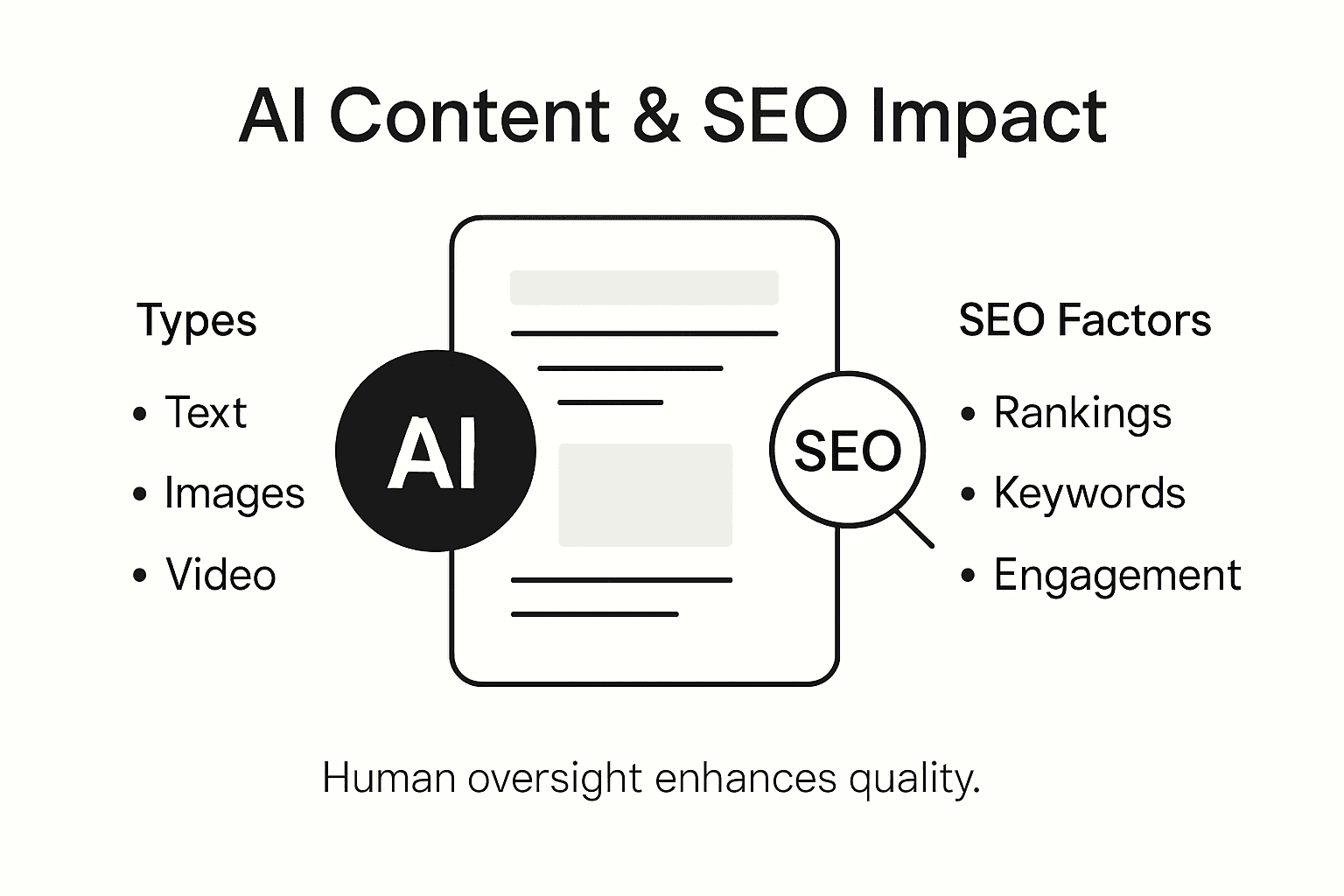
For a practical overview, here are major legal and ethical risk areas organizations must proactively address with AI-generated content:
| Risk Area | Typical Challenge | Mitigation Strategy |
|---|---|---|
| Copyright Issues | Ownership uncertainty | Clear attribution policies |
| Data Privacy | Regulatory compliance | Regular privacy audits |
| Bias Propagation | Algorithmic unfairness | Diverse data sourcing |
| Misinformation | Accuracy concerns | Mandatory human review |
Pro Tip: Establish a mandatory multi-stage review process that includes human fact-checking, contextual verification, and ethical screening for all AI-generated content before publication.
Unlock the Full Potential of AI-Generated Content for Your SEO Success
The article "What Is AI-Generated Content and Its SEO Impact" highlights key challenges businesses face when trying to balance AI efficiency with quality and legal compliance. If you want to overcome difficulties such as ensuring content accuracy, maintaining SEO effectiveness, and managing ethical risks, you need a powerful and reliable solution. Concepts like AI-assisted content, keyword-rich product descriptions, and continuous SEO optimization are essential for boosting your brand's online visibility.
Babylovegrowth.ai offers a comprehensive platform that addresses these challenges head-on. With features like daily SEO articles, 30-day content plans, automatic structured data markup, and backlink building, our tools help you generate high-quality, scalable AI-enhanced content that drives organic traffic while safeguarding your brand reputation. Experience seamless integration of AI and SEO strategies tailored precisely for your business needs at Babylovegrowth.ai.
Take control of your SEO and AI content strategy today.

Ready to rise above the competition and unlock long-term growth? Visit Babylovegrowth.ai now to explore how our automated keyword discovery, publishing workflows, and SEO audits can transform your digital presence. Don’t let AI content challenges hold you back — empower your marketing with the smartest AI-powered SEO platform available.
Frequently Asked Questions
What is AI-generated content?
AI-generated content refers to text, images, or multimedia produced by artificial intelligence systems using advanced algorithms. It mimics human writing styles and can be created without direct human intervention.
How does AI-generated content impact SEO for e-commerce brands?
AI-generated content enhances SEO for e-commerce brands by improving search engine rankings through optimized product descriptions, blog posts, and metadata, ultimately driving more organic traffic to their websites.
What are the different types of AI-generated content?
There are primarily three types of AI-generated content: fully AI-generated content, AI-assisted content (where humans guide AI), and hybrid content, which involves substantial human refinement alongside AI generation.
What are the legal challenges associated with AI-generated content?
Legal challenges include copyright ownership for machine-generated materials, compliance with data privacy regulations, transparency about AI methodologies, and managing potential liability for AI-generated outputs.
Recommended
Smart SEO,
Faster Growth!
Most Read Articles
Generative Engine Optimization (GEO)
Learn how Generative Engine Optimization (GEO) helps your content rank in AI search engines like ChatGPT and Google AI. This comprehensive guide explains the differences between SEO and GEO, why it matters for your business, and practical steps to implement GEO strategies for better visibility in AI-generated responses.
DylenJan 18, 2025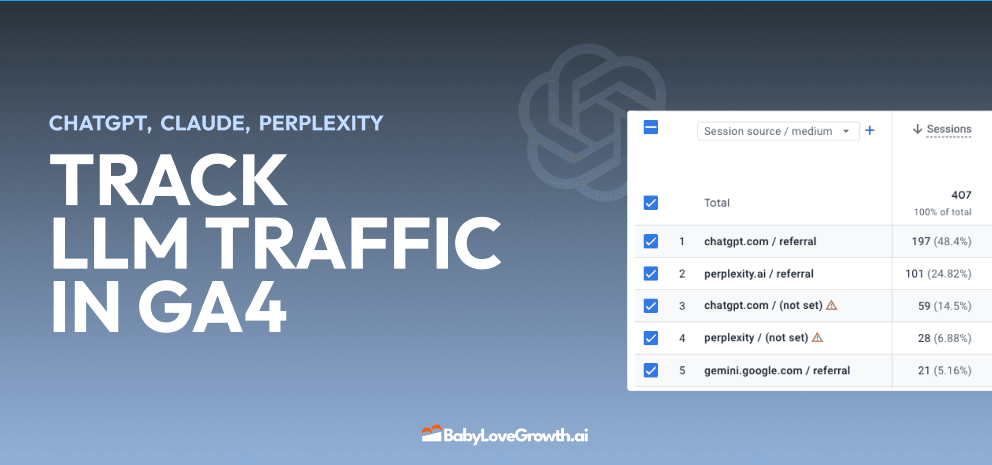
Track LLM Traffic in Google Analytics 4 (GA4)
Learn how to track and analyze traffic from AI sources like ChatGPT, Claude, Perplexity, and Google Gemini in Google Analytics 4. This step-by-step guide shows you how to set up custom filters to monitor AI-driven traffic and make data-driven decisions for your content strategy.
DylenMar 18, 2025
How to Humanize AI Text with Instructions
Learn practical techniques to make AI-generated content sound more natural and human. This guide covers active voice, direct addressing, concise writing, and other proven strategies to transform robotic text into engaging content.
DylenApril 7, 2025
Open AI Revenue and Statistics (2024)
Comprehensive analysis of OpenAI financial performance, user engagement, and market position in 2023. Discover key statistics including $20B valuation, $1B projected revenue, and 100M+ monthly active users.
DylenOctober 03, 2025