What Is a Value Proposition: Powering SEO Success


Most American e-commerce businesses face intense global competition and shifting consumer demands online. Understanding how to define and communicate a clear value proposition helps digital marketing managers cut through the noise and attract loyal customers. This guide shows how crafting compelling messages, grounded in authentic customer insights, can make the difference between blending in and standing out. Discover actionable strategies for building value propositions that truly set your business apart.
Table of Contents
- Defining Value Proposition for Digital Marketers
- Types of Value Propositions in E-Commerce
- Essential Elements and How They Work
- Crafting an Effective Value Proposition Step by Step
- Common Mistakes and How to Avoid Them
Key Takeaways
| Point | Details |
|---|---|
| Understanding Value Proposition | A value proposition distinguishes a business by articulating unique benefits that effectively address customer needs. |
| Types of Value Propositions | E-commerce strategies require a blend of customer-centric, functional, emotional, and actor value propositions to resonate with diverse audiences. |
| Essential Elements | Successful value propositions integrate strategic alignment, customer insights, and competitive differentiation to create impactful messaging. |
| Avoiding Common Mistakes | Marketers should prioritize customer research, avoid generalizations, and ensure clear differentiation to create compelling value propositions. |
Defining Value Proposition for Digital Marketers
In the rapidly evolving landscape of digital marketing, a value proposition represents the strategic cornerstone that distinguishes a business from its competitors. As digital transformation reshapes organizational strategies, understanding this concept becomes critical for marketers seeking meaningful audience engagement.
At its core, a value proposition articulates the unique combination of products, services, and benefits that solve specific customer problems more effectively than alternative solutions. Digital marketers must craft this proposition by deeply understanding customer needs, identifying precise pain points, and communicating how their offering delivers exceptional, measurable value. This involves synthesizing complex insights about target audience motivations, market dynamics, and competitive landscapes into a clear, compelling narrative.

Effective value propositions transcend traditional marketing messaging. Research demonstrates how microfirms interpret these propositions as organizational alignment mechanisms, connecting internal teams and external stakeholders through a unified strategic vision. Successful digital marketers recognize that a robust value proposition is not a static statement but a dynamic framework that evolves alongside customer expectations and technological capabilities.
Pro Tip: Develop your value proposition by conducting comprehensive customer interviews and analyzing competitive landscape to uncover unique differentiators that genuinely resonate with your target audience.
Types of Value Propositions in E-Commerce
E-commerce value propositions represent complex strategic frameworks that go far beyond simple product descriptions. Digital transaction platforms reveal multiple distinct value proposition types, each serving unique organizational and customer needs in the digital marketplace.
Typically, e-commerce value propositions can be categorized into several critical types:
- Customer-Centric Value Proposition: Focuses directly on solving specific customer problems, highlighting unique benefits and emotional connections
- Actor Value Proposition (AVP): Emphasizes the multifaceted interactions between different stakeholders in digital platforms
- Functional Value Proposition: Concentrates on practical, tangible benefits and performance metrics
- Emotional Value Proposition: Targets psychological and experiential aspects of customer engagement
The most effective value propositions integrate multiple dimensions, creating a holistic narrative that resonates across different customer segments and platform interactions. This means moving beyond traditional linear marketing approaches and developing sophisticated, multilayered communication strategies that reflect the complexity of digital consumer experiences.
Pro Tip: Regularly audit and refine your e-commerce value proposition by conducting detailed customer research, tracking engagement metrics, and remaining adaptable to emerging market trends.
Here is a comparison of different types of value propositions and how they impact e-commerce strategy:
| Type of Value Proposition | Primary Focus | Typical Benefit | Strategic Importance |
|---|---|---|---|
| Customer-Centric | Solving user needs | Personalization and trust | Drives loyalty and repeat purchase |
| Actor Value Proposition | Stakeholder relationships | Platform synergy | Enables ecosystem growth |
| Functional | Performance metrics | Efficiency and reliability | Enhances operational effectiveness |
| Emotional | User experience | Connection and satisfaction | Fosters strong brand affinity |
Essential Elements and How They Work
A comprehensive framework for value proposition development reveals that successful strategies require a sophisticated integration of multiple critical elements. These foundational components work synergistically to create a powerful, resonant message that connects directly with target audiences and differentiates businesses in competitive markets.The essential elements of a robust value proposition typically include:
- Strategic Alignment: Ensuring the proposition matches overall business goals and market positioning
- Customer Insight: Deep understanding of target audience needs, pain points, and motivations
- Competitive Differentiation: Clearly articulating unique advantages over alternative solutions
- Measurable Value: Quantifiable benefits that demonstrate tangible outcomes for customers
- Emotional Resonance: Connecting beyond rational arguments to create meaningful engagement
The most effective value propositions transform from static statements into living frameworks that guide organizational strategy. They provide a north star for product development, marketing communication, and customer experience design, creating a holistic approach that aligns internal capabilities with external market demands.
Pro Tip: Create a cross-functional team that regularly reviews and updates your value proposition, ensuring alignment between marketing insights, product development, and customer feedback.
Crafting an Effective Value Proposition Step by Step
Harvard Business School's comprehensive approach to value proposition development reveals a strategic methodology that transforms complex market insights into compelling business narratives. The process demands meticulous attention to customer needs, competitive landscapes, and unique organizational strengths.Here's a systematic approach to crafting an effective value proposition:
-
Market Research and Customer Insights
- Conduct deep demographic and psychographic analysis
- Identify specific customer pain points
- Map current market solutions and their limitations
-
Competitive Differentiation
- Analyze competitor positioning
- Identify unique capabilities and advantages
- Develop clear, distinctive messaging
-
Value Articulation
- Translate research insights into clear benefits
- Create concise, powerful statements
- Emphasize quantifiable and emotional value

Digital marketers must approach value proposition creation as an iterative process, constantly testing, measuring, and adapting their messaging. This requires cross-functional collaboration, data-driven insights, and a commitment to understanding the nuanced needs of target audiences.
Pro Tip: Develop multiple value proposition drafts and conduct A/B testing to identify the most resonant messaging with your target audience.
The table below summarizes key steps in crafting an effective value proposition and their business outcomes:
| Step | Key Action | Expected Outcome |
|---|---|---|
| Market Research | Analyze market and customers | Reveal unmet needs |
| Competitive Differentiation | Map unique strengths | Stand out from competitors |
| Value Articulation | Communicate clear benefits | Improve engagement and clarity |
| Ongoing Refinement | Test and iterate messaging | Adaptation to market changes |
Common Mistakes and How to Avoid Them
Strategic research reveals critical pitfalls in value proposition development that can derail even the most promising business strategies. Understanding these common mistakes becomes crucial for digital marketers seeking to create compelling and effective value propositions.The most frequent mistakes in value proposition design include:
-
Overgeneralized Customer Segments
- Treating all customers as a homogeneous group
- Failing to recognize unique needs and preferences
- Neglecting nuanced demographic and psychographic differences
-
Assumption-Based Messaging
- Relying on internal perceptions instead of customer insights
- Skipping rigorous market research
- Creating hypothetical value statements without empirical validation
-
Lack of Competitive Differentiation
- Using generic language that could apply to any competitor
- Overlooking unique organizational strengths
- Failing to articulate distinct value beyond surface-level features
Digital marketers must adopt a systematic approach that prioritizes deep customer understanding, empirical research, and continuous iteration. This means moving beyond intuitive assumptions and developing value propositions grounded in real-world insights, measurable outcomes, and genuine customer needs.
Pro Tip: Conduct quarterly value proposition audits, gathering direct customer feedback and analyzing competitive landscape shifts to ensure ongoing relevance and effectiveness.
Unlock Your Unique Value With AI-Powered SEO Solutions
Struggling to craft an effective value proposition that truly reflects your business's unique strengths and connects emotionally with your audience The article highlights how important deep customer insight and continuous refinement are to stand out in competitive markets. It also emphasizes the need for measurable value and clear communication — challenges many digital marketers face when trying to rank higher on Google and ChatGPT.
At Babylovegrowth.ai, we understand these pain points and offer a smart way to power your SEO success with AI-driven content and backlink strategies. Our platform simplifies the complex process of building a persuasive, data-backed value proposition by delivering automated, high-quality articles tailored to your audience's needs and optimized for search engines. With a 30-day personalized content plan and a dynamic backlinks exchange ecosystem, you gain continuous support for refining your messaging and growing organic traffic effectively.
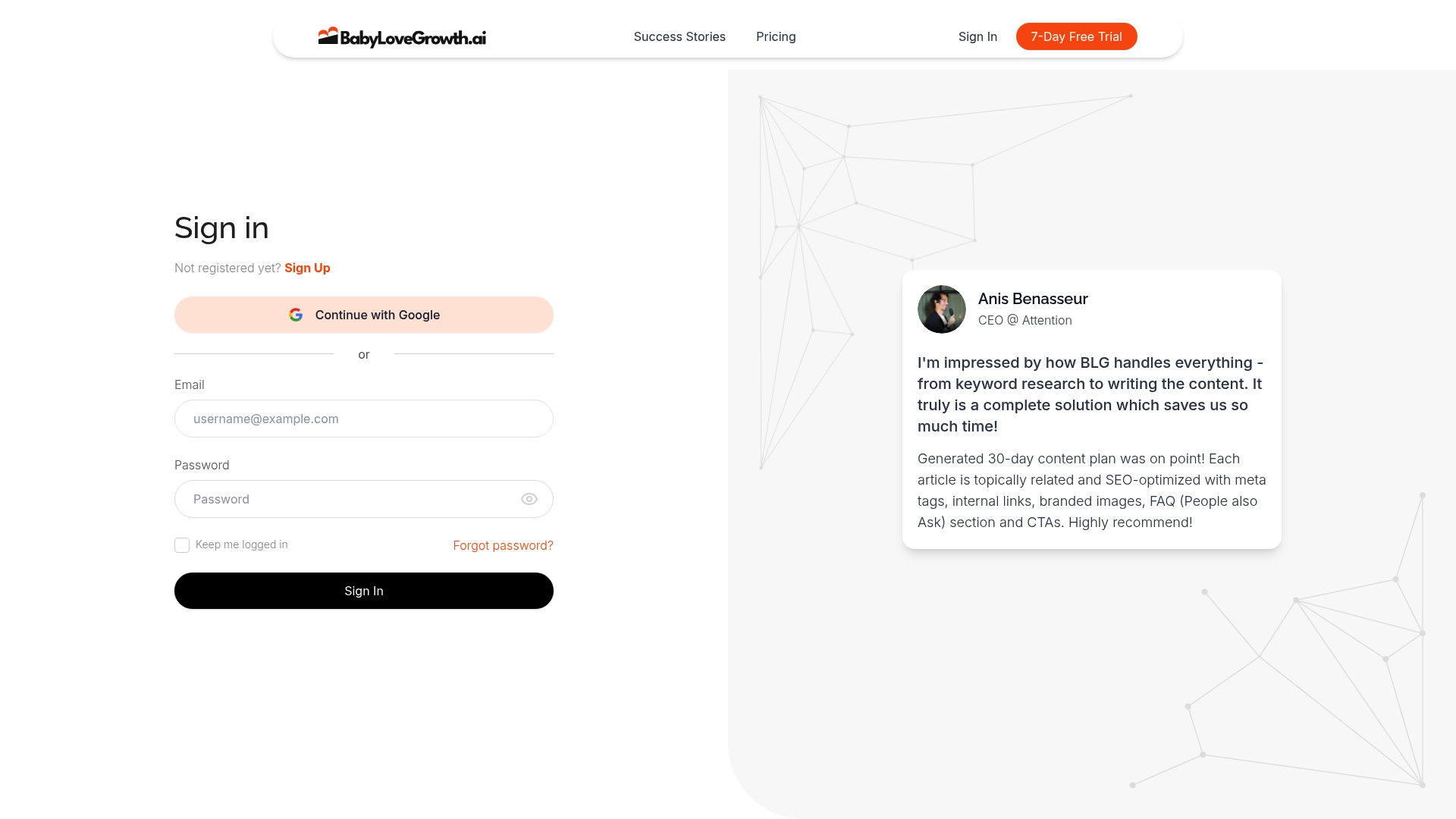
Ready to transform your value proposition into an SEO powerhouse Take the first step with Babylovegrowth.ai to experience rank-high services on autopilot Invest in a strategy that evolves alongside your customers and market trends Don't miss your chance to grow smarter and faster in today’s digital landscape. Start your free trial now and see how AI-driven SEO can change your business.
Frequently Asked Questions
What is a value proposition in digital marketing?
A value proposition in digital marketing is a clear statement that outlines the unique benefits and solutions a business offers to its customers, distinguishing it from competitors.
Why is a strong value proposition essential for e-commerce?
A strong value proposition in e-commerce is essential because it helps to define how a business meets customer needs, fosters loyalty, and drives repeat purchases by clearly communicating unique advantages and tangible benefits.
How can I evaluate the effectiveness of my value proposition?
You can evaluate the effectiveness of your value proposition by gathering customer feedback, analyzing engagement metrics, and conducting A/B testing to see how different messages resonate with your audience.
What common mistakes should I avoid when creating a value proposition?
Common mistakes to avoid include overgeneralizing customer segments, basing messages on assumptions rather than insights, and failing to clearly differentiate your offering from competitors.
Recommended
Smart SEO,
Faster Growth!
Most Read Articles

Check Keyword Rankings Free with Google API (2026)
A practical guide to checking your keyword rankings for free using the Google Search Console API.
DylenApril 28, 2026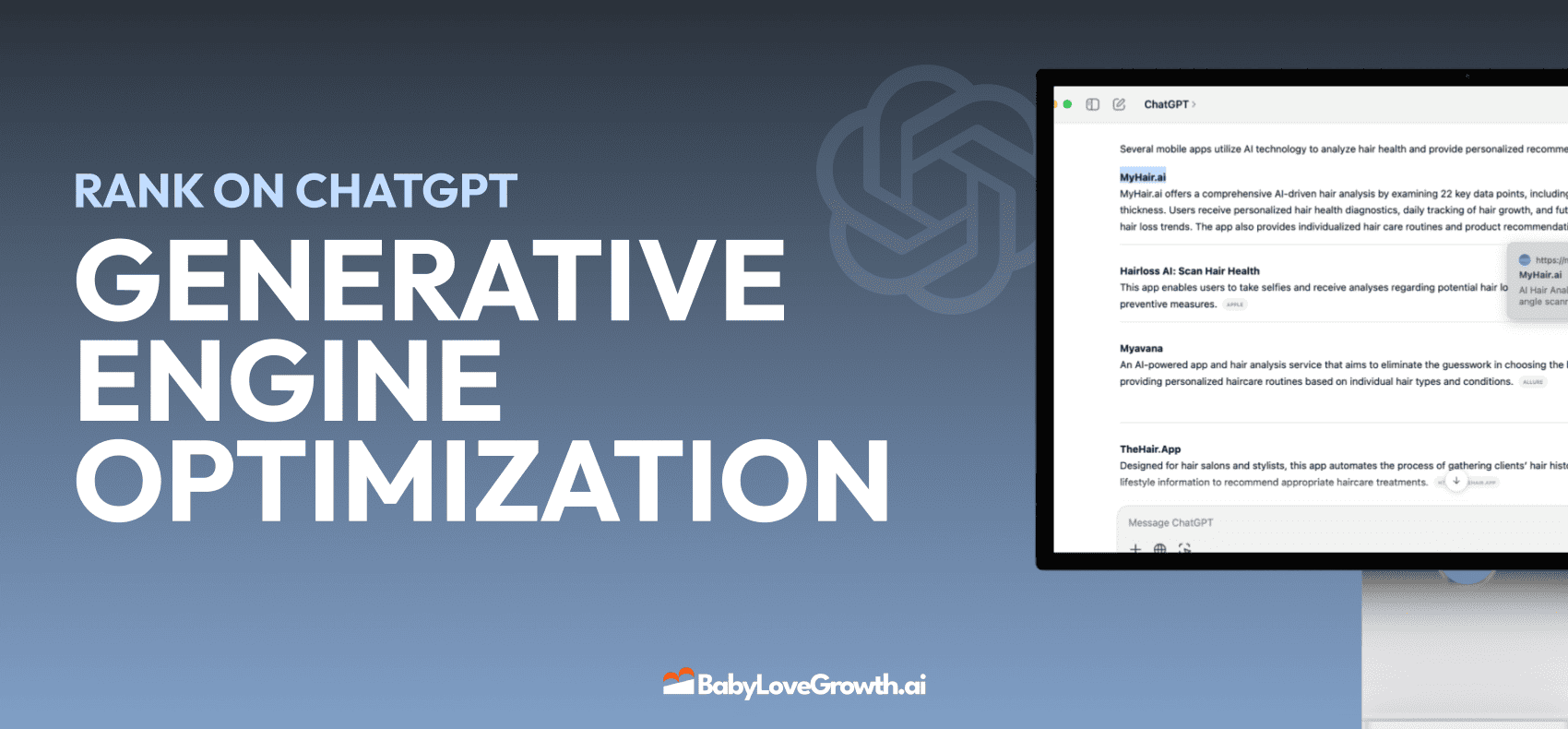
Generative Engine Optimization (GEO)
Learn how Generative Engine Optimization (GEO) helps your content rank in AI search engines like ChatGPT and Google AI. This comprehensive guide explains the differences between SEO and GEO, why it matters for your business, and practical steps to implement GEO strategies for better visibility in AI-generated responses.
DylenJan 18, 2025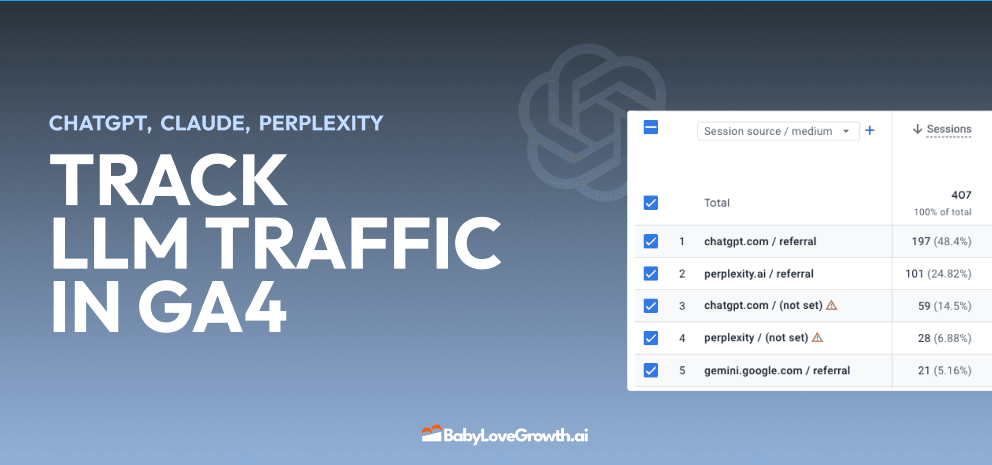
Track LLM Traffic in Google Analytics 4 (GA4)
Learn how to track and analyze traffic from AI sources like ChatGPT, Claude, Perplexity, and Google Gemini in Google Analytics 4. This step-by-step guide shows you how to set up custom filters to monitor AI-driven traffic and make data-driven decisions for your content strategy.
DylenMar 18, 2025
How to Humanize AI Text with Instructions
Learn practical techniques to make AI-generated content sound more natural and human. This guide covers active voice, direct addressing, concise writing, and other proven strategies to transform robotic text into engaging content.
DylenApril 7, 2025
Moz DA vs Ahrefs DR: Which Metric Should You Actually Use?
Moz Domain Authority and Ahrefs Domain Rating look similar but measure very different things. Learn what each score actually tells you, when to use each one, and what to track instead for real SEO results in 2026.
DylenApr 23, 2026
Open AI Revenue and Statistics (2024)
Comprehensive analysis of OpenAI financial performance, user engagement, and market position in 2023. Discover key statistics including $20B valuation, $1B projected revenue, and 100M+ monthly active users.
DylenOctober 03, 2025
"Search Google or Type a URL": What It Means & What to Do
Learn what "Search Google or type a URL" actually means, how your browser decides whether to search or navigate, and what to do if your address bar starts behaving unexpectedly. Includes browser settings guides for Chrome, Firefox, Edge, and Safari.
DylenApr 21, 2026