User Experience in SEO: Driving Organic Growth Success


Every SEO professional knows that ranking high now depends on more than technical tweaks or quick keyword wins. Modern search engines emphasize user experience factors like usability, emotional engagement, and accessibility, making them central to organic growth. When digital strategies prioritize how users interact, navigate, and connect with online content, algorithms reward those sites with enhanced rankings. This guide explores how mastering real user experience and AI-powered tools leads to lasting search success and stronger client results.
Table of Contents
- Defining User Experience For SEO Ranking
- Key UX Elements Impacting Search Success
- Behavioral Metrics And Engagement Signals
- Integrating AI And Machine Learning In SEO
- Common UX Mistakes Hindering SEO Results
Key Takeaways
| Point | Details |
|---|---|
| User Experience Drives SEO | Superior user experience factors, such as usability and accessibility, are crucial for enhancing SEO rankings. Websites that prioritize UX tend to rank higher in search results. |
| Focus on Engagement Metrics | Monitoring user engagement signals like time on page and interaction frequency is essential for understanding content performance and improving SEO. Higher engagement can lead to better search rankings. |
| AI Integration is Key | Leveraging AI and machine learning for personalized, adaptive content strategies can significantly improve visibility and user interaction. AI-driven insights can help prioritize what content to optimize. |
| Avoid Common UX Mistakes | Recognizing and addressing common user experience pitfalls, like cluttered layouts and slow load times, is vital for maintaining search engine credibility and performance. Regular audits can help identify these issues. |
Defining User Experience for SEO Ranking
User Experience (UX) represents a comprehensive approach to understanding how users interact with digital systems, extending far beyond simple website navigation. Multifaceted interaction frameworks demonstrate that UX encompasses cognitive, emotional, and functional dimensions of human-system engagement.
At its core, UX in SEO focuses on creating seamless, intuitive digital experiences that meet users' precise needs and expectations. The goal is not just attracting visitors but ensuring they find genuine value through meaningful interactions. This approach requires understanding how users perceive, navigate, and derive satisfaction from online content.
Seven critical factors define exceptional user experience for SEO ranking:
- Usefulness: Content must provide clear, actionable information
- Usability: Websites should be easy to navigate and understand
- Findability: Content must be discoverable through intuitive pathways
- Credibility: Information needs to be trustworthy and authoritative
- Desirability: Design and presentation should engage users emotionally
- Accessibility: Experiences must be inclusive for all user types
- Value: Content should deliver tangible benefits to the audience
Search engine algorithms increasingly prioritize these user experience elements. Websites that deliver comprehensive, user-centric experiences are more likely to achieve higher rankings. This means going beyond keyword optimization and focusing on creating genuinely helpful digital environments.
Here's a summary of how user experience factors influence SEO ranking:
| UX Factor | Impact on SEO Ranking | Typical Improvement Strategies |
|---|---|---|
| Usefulness | Increases visitor satisfaction | Create actionable, relevant content |
| Usability | Lowers bounce rates and boosts traffic | Simplify navigation and interface |
| Credibility | Enhances website authority | Use verified sources and professional design |
| Desirability | Promotes repeat visits and shares | Employ appealing visuals and engaging layout |
| Accessibility | Expands audience and improves signals | Optimize for all abilities and devices |
| Value | Drives conversions and engagement | Focus on user benefits and problem solving |
Pro tip: Conduct regular user experience audits to identify and eliminate potential friction points in your website's design and content structure.
Key UX Elements Impacting Search Success
User Experience (UX) represents a sophisticated framework for understanding how digital interactions influence search engine performance. Complex design methodologies reveal that successful SEO goes far beyond traditional keyword optimization, focusing instead on creating holistic, user-centered digital experiences.
The core UX elements that significantly impact search success can be categorized into several critical dimensions. These include technical performance, content quality, user engagement, and intuitive design. Each element plays a crucial role in determining how search engines evaluate and rank web content, with a primary focus on meeting user needs and expectations.
Key UX factors driving search engine success include:
- Interaction Design: Creating seamless, intuitive navigation paths
- Information Architecture: Structuring content for maximum discoverability
- Content Relevance: Delivering precise, actionable information
- Page Load Speed: Ensuring rapid, responsive user experiences
- Mobile Optimization: Adapting designs for multiple device types
- Accessibility: Making content available to all user groups
- Engagement Metrics: Tracking user behavior and interaction signals
Search algorithms now prioritize websites that demonstrate exceptional user-centric design. This means going beyond traditional SEO tactics and focusing on creating genuine value for users. Websites that successfully integrate these UX elements are more likely to achieve higher rankings and sustained organic traffic.
Pro tip: Implement regular user experience audits to identify and eliminate potential barriers in your website's design and content structure.
Behavioral Metrics and Engagement Signals
Understanding user interaction requires deep analysis of complex behavioral measurement techniques that go beyond traditional analytics. Modern SEO professionals must interpret nuanced engagement signals that reveal how users truly interact with digital content, moving past simplistic pageview metrics to more sophisticated interaction tracking.
Engagement signals represent the intricate ways users communicate their content preferences through digital behaviors. These signals include sophisticated metrics like time spent on page, scroll depth, interaction frequency, click patterns, and content consumption rates. Each interaction provides valuable insights into user experience and content relevance, helping search engines determine the genuine value of web pages.
Key behavioral metrics that impact search ranking include:
- Time on Page: Duration of user engagement
- Scroll Depth: How much content users actually consume
- Interaction Frequency: Number of clicks and interactions
- Bounce Rate: Percentage of users leaving immediately
- Return Visits: Frequency of repeat user engagement
- Social Sharing: Content distribution and perceived value
- Click-through Rates: User interest and content relevance
Search algorithms now utilize these sophisticated engagement signals to understand content quality more comprehensively. Websites demonstrating high-quality user interactions are rewarded with improved search rankings, emphasizing the critical relationship between user experience and organic search performance.
Pro tip: Implement advanced analytics tools that track granular user interactions to develop a more nuanced understanding of content performance.
Integrating AI and Machine Learning in SEO
The landscape of search engine optimization is rapidly transforming through advanced AI integration techniques, moving beyond traditional keyword strategies toward intelligent, adaptive optimization approaches. Modern SEO professionals now leverage artificial intelligence to analyze complex data patterns, predict user intent, and dynamically adjust content strategies in real-time.
Artificial intelligence fundamentally reshapes how search engines understand and rank digital content. Machine learning algorithms can now interpret contextual nuances, semantic relationships, and user engagement signals with unprecedented depth and accuracy. This technological evolution means SEO is no longer about manipulating keywords, but creating genuinely valuable, intelligently structured content that meets precise user needs.
Key AI-driven SEO capabilities include:
- Semantic Content Analysis: Understanding contextual meaning beyond literal keywords
- Predictive Performance Modeling: Forecasting content effectiveness before publication
- Automated Content Optimization: Real-time suggestions for improving relevance
- User Intent Mapping: Identifying precise search motivations
- Personalization Algorithms: Tailoring content to specific user segments
- Competitive Content Intelligence: Analyzing top-performing competitor strategies
- Dynamic Ranking Signal Processing: Adapting to evolving search algorithm changes
Search algorithms increasingly rely on machine learning to deliver more sophisticated, contextually aware search results. Websites that embrace AI-powered optimization techniques can significantly enhance their organic visibility and user engagement, creating a more intelligent approach to digital content strategy.
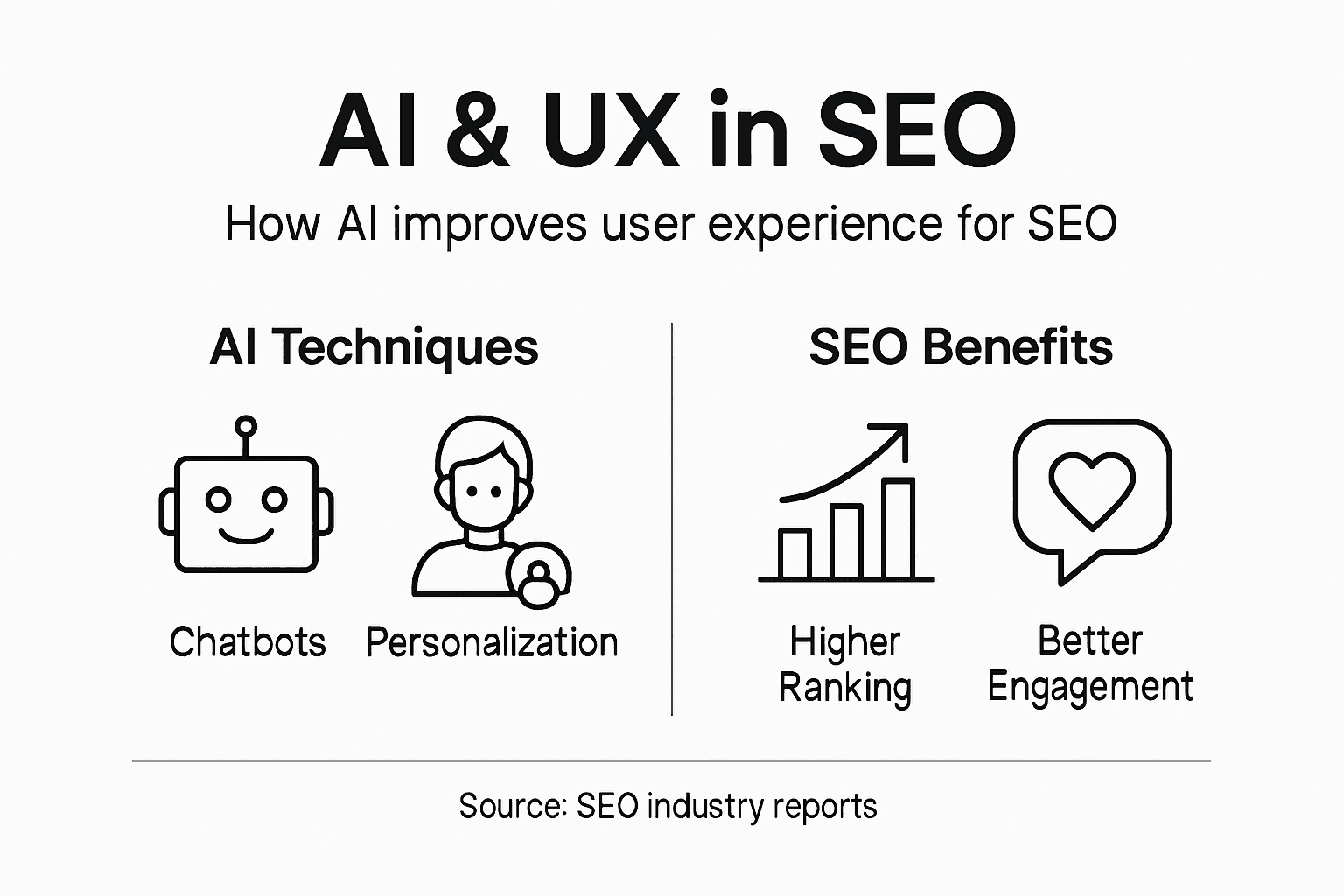
Below is a comparison of traditional SEO tactics versus AI-powered optimization approaches:
| Approach | Data Processing | Adaptability | Benefits for Ranking |
|---|---|---|---|
| Traditional SEO | Manual, rule-based | Low | Limited ranking improvement |
| AI-Powered Optimization | Automated, predictive | High | Greater ranking and engagement |
Pro tip: Invest in AI-powered SEO tools that provide granular insights into content performance and user interaction patterns.
Common UX Mistakes Hindering SEO Results
User experience failures can dramatically undermine search engine performance, with critical design mistakes creating substantial barriers to organic visibility. Digital platforms frequently compromise their search rankings by neglecting fundamental user interaction principles, resulting in decreased engagement and diminished search engine credibility.

Complex navigation structures, slow-loading pages, and inconsistent design elements represent significant obstacles that frustrate users and signal poor quality to search algorithms. When websites fail to prioritize intuitive interactions, they inadvertently communicate digital incompetence, causing users to abandon content quickly and triggering negative ranking signals that harm organic search performance.
Most common UX mistakes that damage SEO results include:
- Cluttered Page Layouts: Overwhelming users with excessive information
- Inconsistent Navigation: Creating confusing user pathways
- Non-Responsive Design: Failing to adapt across different devices
- Slow Page Load Times: Increasing bounce rates and user frustration
- Complex Forms: Discouraging user interactions and conversions
- Poor Mobile Experience: Neglecting smartphone user requirements
- Unclear Call-to-Action Buttons: Reducing user engagement
Search engine algorithms now extensively analyze user interaction signals, transforming user experience from a design consideration into a critical ranking factor. Websites that consistently deliver smooth, intuitive digital experiences are rewarded with higher visibility and increased organic traffic.
Pro tip: Conduct quarterly comprehensive UX audits to systematically identify and eliminate potential interaction barriers.
Unlock True SEO Growth by Enhancing User Experience
The article highlights how critical user experience factors like usability, accessibility, and engagement signals directly influence your search engine rankings. Many brands struggle with slow page speeds, confusing navigation, and low-quality content that drives users away and hurts SEO performance. If you want to transform these challenges into opportunities for organic growth you need a solution that combines advanced AI-driven SEO techniques with a deep understanding of user behavior.

At Babylovegrowth.ai, we offer an all-in-one SaaS platform designed to optimize your website's user experience while boosting your visibility on Google and AI-powered search engines like ChatGPT. Our automated tools handle keyword discovery, technical audits, structured data markup, and backlink strategies that ensure your content is not only findable but also valuable and engaging to your audience. Don’t let poor UX hold back your SEO potential. Take control of your organic growth today by visiting Babylovegrowth.ai and see how our AI-powered platform can elevate your content strategy and user engagement.
Experience the power of scalable automation, data-driven insights, and precision content planning perfected for SEO success. Visit Babylovegrowth.ai now to start improving your user experience and watch your rankings climb.
Frequently Asked Questions
How does user experience impact SEO ranking?
User experience directly influences SEO ranking as search engines favor websites that provide seamless, intuitive interactions that meet user needs. Factors like usability, credibility, and accessibility contribute to better search performance.
What are the key elements of user experience in SEO?
Key elements include interaction design, information architecture, content relevance, page load speed, mobile optimization, accessibility, and user engagement metrics. Each element is crucial for enhancing search rankings by aligning with user expectations.
How can I improve my website's user experience for better SEO?
To improve user experience, focus on creating useful and actionable content, ensuring easy navigation, optimizing load speeds, and making your site accessible on multiple devices. Conduct regular user experience audits to identify areas for enhancement.
What common mistakes can hurt user experience and SEO results?
Common mistakes include cluttered page layouts, inconsistent navigation, slow load times, and poor mobile experiences. These issues can frustrate users and lead to decreased engagement, which negatively impacts SEO performance.
Recommended
Smart SEO,
Faster Growth!
Most Read Articles
Generative Engine Optimization (GEO)
Learn how Generative Engine Optimization (GEO) helps your content rank in AI search engines like ChatGPT and Google AI. This comprehensive guide explains the differences between SEO and GEO, why it matters for your business, and practical steps to implement GEO strategies for better visibility in AI-generated responses.
DylenJan 18, 2025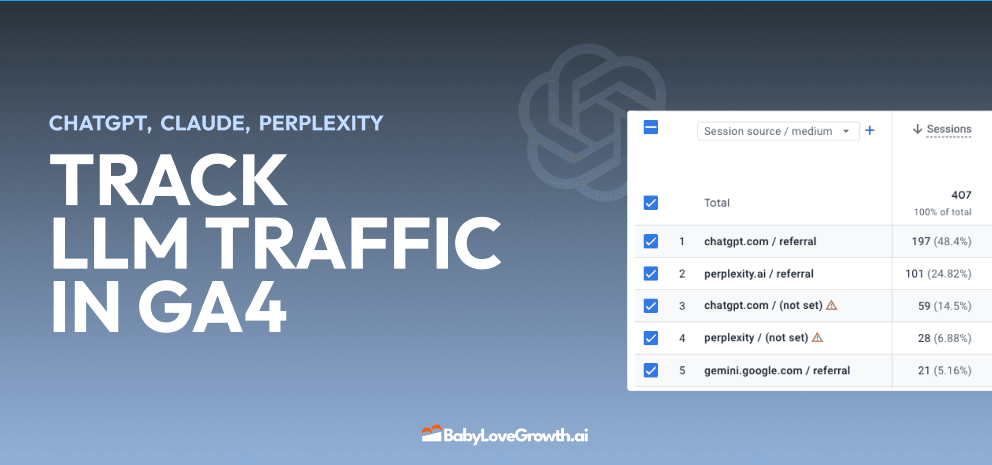
Track LLM Traffic in Google Analytics 4 (GA4)
Learn how to track and analyze traffic from AI sources like ChatGPT, Claude, Perplexity, and Google Gemini in Google Analytics 4. This step-by-step guide shows you how to set up custom filters to monitor AI-driven traffic and make data-driven decisions for your content strategy.
DylenMar 18, 2025
How to Humanize AI Text with Instructions
Learn practical techniques to make AI-generated content sound more natural and human. This guide covers active voice, direct addressing, concise writing, and other proven strategies to transform robotic text into engaging content.
DylenApril 7, 2025
Open AI Revenue and Statistics (2024)
Comprehensive analysis of OpenAI financial performance, user engagement, and market position in 2023. Discover key statistics including $20B valuation, $1B projected revenue, and 100M+ monthly active users.
DylenOctober 03, 2025