Why updating website content boosts SEO by 72%


Your website content is not a static asset you publish once and forget. Businesses that treat it that way are quietly losing ground to competitors who refresh their pages regularly. The evidence is hard to ignore: AI-driven content updates have delivered a documented 72% boost in organic traffic for teams that commit to systematic refreshes. This article breaks down why content updates are non-negotiable for SEO, how AI makes the process faster and smarter, and what a practical update framework looks like for your site.
Table of Contents
- Understanding the importance of content updates
- How AI improves website content updating
- Best practices for ongoing website content refreshes
- Measuring and maximizing the ROI of content updates
- Empower your SEO with advanced AI tools
- Frequently asked questions
Key Takeaways
| Point | Details |
|---|---|
| Regular updates fuel SEO | Consistently updated website content leads to higher search engine rankings and more organic traffic. |
| AI tools boost efficiency | Using AI for website content updates saves time and uncovers hidden keyword opportunities to drive growth. |
| Measure impact for ROI | Tracking traffic, rankings, and engagement after updates ensures your SEO efforts deliver concrete results. |
| Apply best practices | Following a structured update process avoids common pitfalls and builds sustainable SEO success. |
Understanding the importance of content updates
Search engines are not looking for the oldest or most authoritative page. They are looking for the most relevant and current one. Google's algorithms consistently reward pages that signal freshness, especially in fast-moving industries where user intent shifts quickly. If your content was written two years ago and hasn't been touched since, it is almost certainly missing keywords, questions, and topics that your audience is searching for right now.
User behavior reinforces this point. When visitors land on a page with outdated statistics, old product references, or stale advice, they leave fast. High bounce rates send a negative signal to search engines, which then deprioritize your page in rankings. Regular updates keep users engaged longer, which improves dwell time and signals quality.
Understanding AI's role in content strategy helps clarify why manual audits alone can't keep pace. Content becomes outdated for several reasons:
- Search trends shift: New queries emerge as industries evolve and user language changes.
- Industry standards change: Regulations, best practices, and benchmarks get updated regularly.
- Competitors publish better content: A rival's new, thorough article can outrank yours overnight.
- Internal linking opportunities grow: As your site expands, older pages miss links to newer, relevant content.
"Identifying content gaps with AI tools led to a 72% traffic boost, demonstrating that systematic refreshes are one of the highest-ROI activities in SEO."
The good news is that AI content optimization has made it far easier to spot exactly which pages need attention and what changes will move the needle. Pair that with a solid content automation SEO guide and you have a repeatable system rather than a one-off project.
How AI improves website content updating
Manual content audits are slow, inconsistent, and easy to deprioritize when your team is busy. AI changes that equation entirely. Tools like Ahrefs AI Content Helper and Semrush ContentShake automate gap detection and idea generation, cutting the research phase from hours to minutes.

Here is a direct comparison of manual versus AI-driven content updating:
| Factor | Manual updating | AI-driven updating |
|---|---|---|
| Time per page audit | 2 to 4 hours | 10 to 20 minutes |
| Keyword gap coverage | Partial, based on analyst skill | Comprehensive, data-driven |
| Topic ideation | Limited to team knowledge | Pulls from live search data |
| Consistency | Varies by team capacity | Automated and scalable |
| Traffic impact | Moderate, slow | Faster, measurable gains |
AI tools analyze your existing content against top-ranking competitors, identify missing subtopics, flag outdated statistics, and suggest new internal linking opportunities. This is not just about speed. It is about coverage. A human analyst might catch 60% of the gaps on a page. An AI tool catches closer to 95%.
Pro Tip: Start with your top 20 traffic-driving pages. Run them through an AI content gap tool first. These pages already have authority, so updating them delivers faster ranking improvements than starting from scratch with new content.
Building an AI-powered content workflow can cut your total research time by up to 60%. That freed-up time goes back into creating new content or improving your distribution strategy. For teams exploring AI-driven content creation, the combination of gap analysis and automated drafting creates a compounding advantage over time. You can also review examples of AI content tools to find the right fit for your specific workflow and budget.
Best practices for ongoing website content refreshes
Knowing that content updates matter is one thing. Having a system that makes them happen consistently is another. Here is a numbered framework you can implement starting this week:
- Audit your content inventory: Use Google Search Console to identify pages with declining impressions or click-through rates over the past 90 days.
- Prioritize by traffic potential: Focus on pages ranking in positions 5 to 20. These are close to page one and respond fastest to updates.
- Run an AI gap analysis: Feed each priority page into an AI tool to identify missing keywords, questions, and subtopics.
- Update content systematically: Add new sections, refresh statistics, update internal links, and improve meta descriptions.
- Republish with a new date: Signal freshness to search engines by updating the published date after meaningful changes.
- Monitor for 30 to 60 days: Track ranking changes and traffic shifts before moving to the next batch.
Pro Tip: Do not update every page at once. Batching updates in groups of 5 to 10 pages lets you isolate what is working and avoid confusing your analytics data.
Here is a simple prioritization matrix to guide your decisions:
| Page type | Update priority | Expected impact |
|---|---|---|
| Ranking positions 5 to 20 | High | Fast ranking gains |
| High-traffic, low-conversion | High | Revenue improvement |
| Outdated statistics or dates | Medium | Trust and engagement |
| Low-traffic, low-ranking | Low | Long-term compounding |
Routine AI-driven updates systematically deliver traffic increases and improved keyword rankings when applied consistently. Explore marketing automation tools for SEO to automate the monitoring step, and use AI content planning tools to build a rolling 30-day update calendar that keeps your team on track without manual scheduling.
Measuring and maximizing the ROI of content updates
Updating content without measuring results is like running ads without checking conversions. You need clear metrics to know what is working and where to double down.
Track these key performance indicators after every content update cycle:
- Organic traffic: Compare 30-day and 90-day traffic to the updated page versus the same period before the update.
- Keyword rankings: Monitor position changes for the primary and secondary keywords targeted in the update.
- Click-through rate (CTR): An improved meta description or title tag should lift CTR within weeks.
- Average time on page: Longer dwell time signals that the updated content is more engaging and relevant.
- Conversion rate: For commercial pages, track whether updated content drives more leads or sales.
- Backlink acquisition: Fresh, updated content earns more links over time as it becomes the most current resource on a topic.
The numbers back this up. A 72% traffic boost was documented after systematic AI-driven content updates, proving that this is not a marginal improvement strategy. It is a major growth lever.
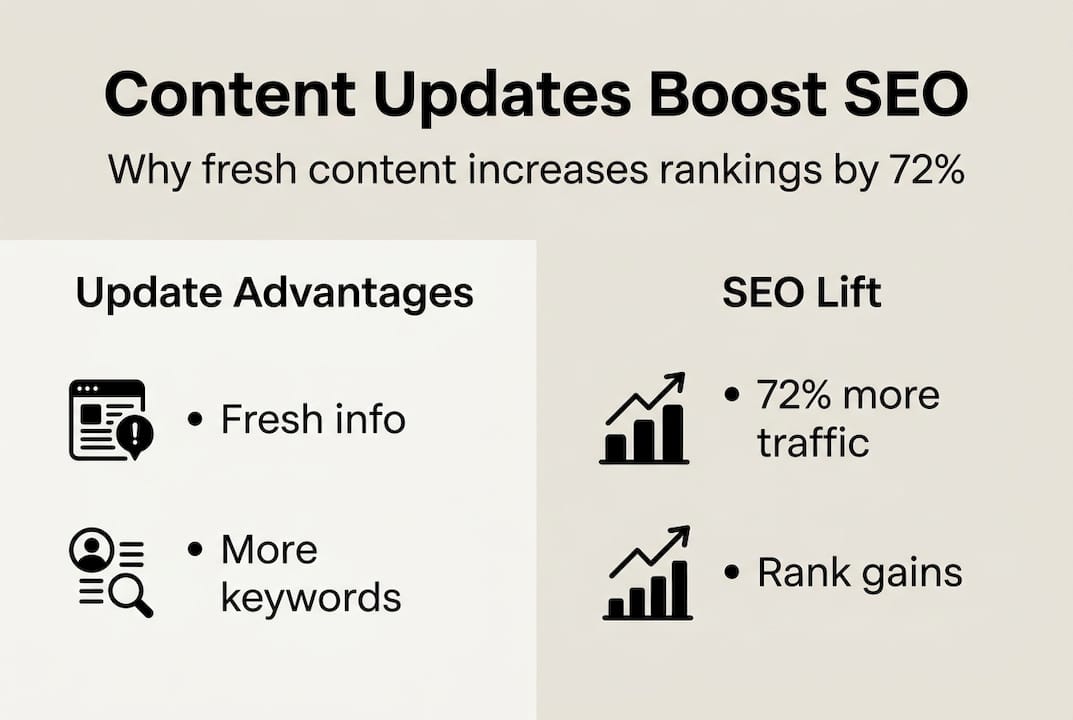
To maximize ROI, cross-reference your update results with data from the best AI SEO tools available in 2026. Understanding how AI in marketing strategies integrates with your broader funnel helps you connect content performance to actual revenue, not just traffic numbers. The goal is not just more visitors. It is more of the right visitors converting at a higher rate.
Empower your SEO with advanced AI tools
If you are serious about turning content updates into a consistent growth engine, you need tools built specifically for this job. Babylovegrowth.ai gives you everything in one place: automated keyword discovery, content gap analysis, and full technical SEO auditing without the manual overhead.

Start by running your site through the AI SEO audit tool to get an instant snapshot of where your content is losing ground. Then use the keyword gap analysis tool to find the exact terms your competitors rank for that you are missing. The keyword discovery platform rounds out the workflow by surfacing high-value opportunities you can act on immediately. These tools work together to make your content update process faster, smarter, and more impactful at scale.
Frequently asked questions
How often should website content be updated for SEO?
Website content should be refreshed at least quarterly, but monthly AI-driven updates can drive faster results and maintain SEO relevance in competitive niches.
Which AI tool is best for updating website content?
Popular choices include Ahrefs AI Content Helper and Semrush ContentShake. Both excel at identifying gaps and generating targeted ideas for website content updates.
How do I measure the success of my content updates?
Track organic traffic, keyword rankings, and user engagement metrics after each update cycle. These three signals together give you a clear picture of SEO impact.
Are manual content updates less effective than AI-driven updates?
Manual updates can improve SEO, but AI-driven strategies deliver faster results and more comprehensive keyword gap coverage than any human audit can match.
What are the risks of neglecting website content updates?
Outdated content leads to dropped rankings, missed traffic opportunities, and lower user engagement. Sites that fail to refresh content risk losing organic traffic gains to competitors who update consistently.
Recommended
Smart SEO,
Faster Growth!
Most Read Articles
Generative Engine Optimization (GEO)
Learn how Generative Engine Optimization (GEO) helps your content rank in AI search engines like ChatGPT and Google AI. This comprehensive guide explains the differences between SEO and GEO, why it matters for your business, and practical steps to implement GEO strategies for better visibility in AI-generated responses.
DylenJan 18, 2025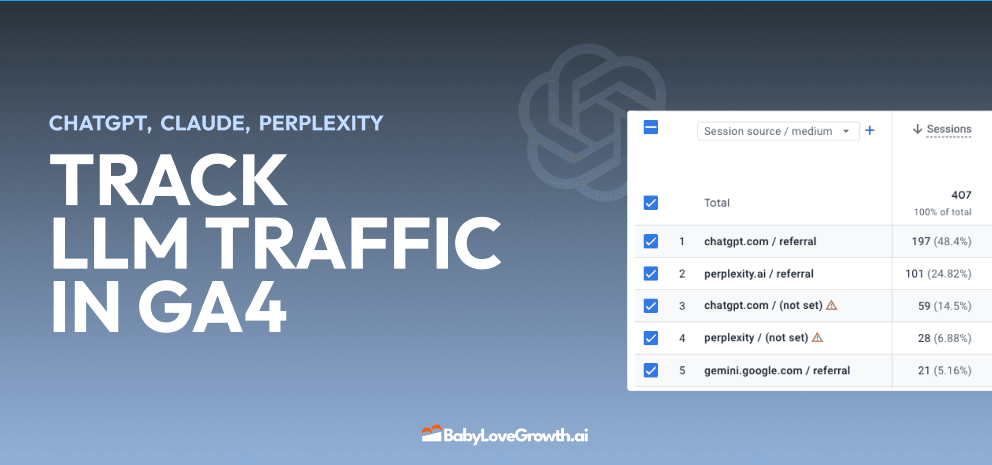
Track LLM Traffic in Google Analytics 4 (GA4)
Learn how to track and analyze traffic from AI sources like ChatGPT, Claude, Perplexity, and Google Gemini in Google Analytics 4. This step-by-step guide shows you how to set up custom filters to monitor AI-driven traffic and make data-driven decisions for your content strategy.
DylenMar 18, 2025
How to Humanize AI Text with Instructions
Learn practical techniques to make AI-generated content sound more natural and human. This guide covers active voice, direct addressing, concise writing, and other proven strategies to transform robotic text into engaging content.
DylenApril 7, 2025
Open AI Revenue and Statistics (2024)
Comprehensive analysis of OpenAI financial performance, user engagement, and market position in 2023. Discover key statistics including $20B valuation, $1B projected revenue, and 100M+ monthly active users.
DylenOctober 03, 2025