Social proof strategies to boost engagement: 270% more


Social proof can boost conversions by up to 270% when a business collects five or more reviews, yet most companies still treat it as an afterthought. You spend real money driving traffic to your site, but visitors leave without converting because they don't trust what they see. The gap between potential and reality comes down to one thing: credibility signals. This guide walks you through the psychology, the tools, the AI-driven strategies, and the measurement frameworks you need to turn social proof into a genuine engine for online visibility and customer engagement.
Table of Contents
- Understanding social proof: Why it works (and matters)
- Essential tools and formats for social proof
- AI-driven strategies: Innovating social proof for modern business
- Common mistakes, troubleshooting, and pro tips
- Measuring and verifying results
- Take your social proof to the next level with AI-automated tools
- Frequently asked questions
Key Takeaways
| Point | Details |
|---|---|
| Social proof drives conversions | Strategic use of social proof can boost conversion rates by up to 270%. |
| Authenticity and placement matter | Genuine content and smart placement near CTAs maximize impact while avoiding trust erosion. |
| AI amplifies results | Leveraging AI-driven tools personalizes, automates, and optimizes social proof for engagement and ROI. |
| Measure and refine | Monitoring metrics like conversion rate and RPV ensures effective and evolving social proof strategies. |
Understanding social proof: Why it works (and matters)
Social proof works because humans are wired to look at what others do when they're uncertain. That's not a weakness; it's a survival mechanism that marketers can use ethically and effectively. When a first-time visitor lands on your product page, they don't know you. Reviews, testimonials, and user-generated content (UGC) act as shortcuts that answer the question: "Can I trust this?"
The numbers back this up hard. 93% of consumers are influenced by online reviews, and 92% hesitate to buy without them. That's not a marginal effect. That's the difference between a thriving business and a struggling one.
Here's what drives the psychology:
- FOMO (fear of missing out): Seeing others buy or rave about a product creates urgency.
- Uncertainty reduction: Reviews and ratings give buyers a mental shortcut when they can't physically inspect a product.
- Authority transfer: A logo bar showing recognizable brand partners instantly elevates your credibility.
- Herd behavior: High review counts signal popularity, which signals safety.
But there's a real risk here. Overreliance or poor implementation reduces effectiveness, and trust in reviews is declining because of fake or manipulated content. Consumers are getting smarter. A wall of five-star reviews with no detail reads as suspicious, not reassuring.
"Context and storytelling are rising in importance. A single detailed, specific review outperforms ten generic five-star ratings every time."
This means your social proof strategy needs to prioritize authenticity and narrative. Helping customers tell real stories about real outcomes is far more powerful than collecting checkbox reviews. You can boost e-commerce sales with reviews when those reviews are specific, contextual, and verifiable. And when you connect them to your online reviews for SEO strategy, you get a compounding effect on both trust and search visibility.
Essential tools and formats for social proof
Knowing the psychology is step one. Step two is picking the right formats and placing them where they actually move the needle. Not all social proof is equal, and placement matters as much as content.
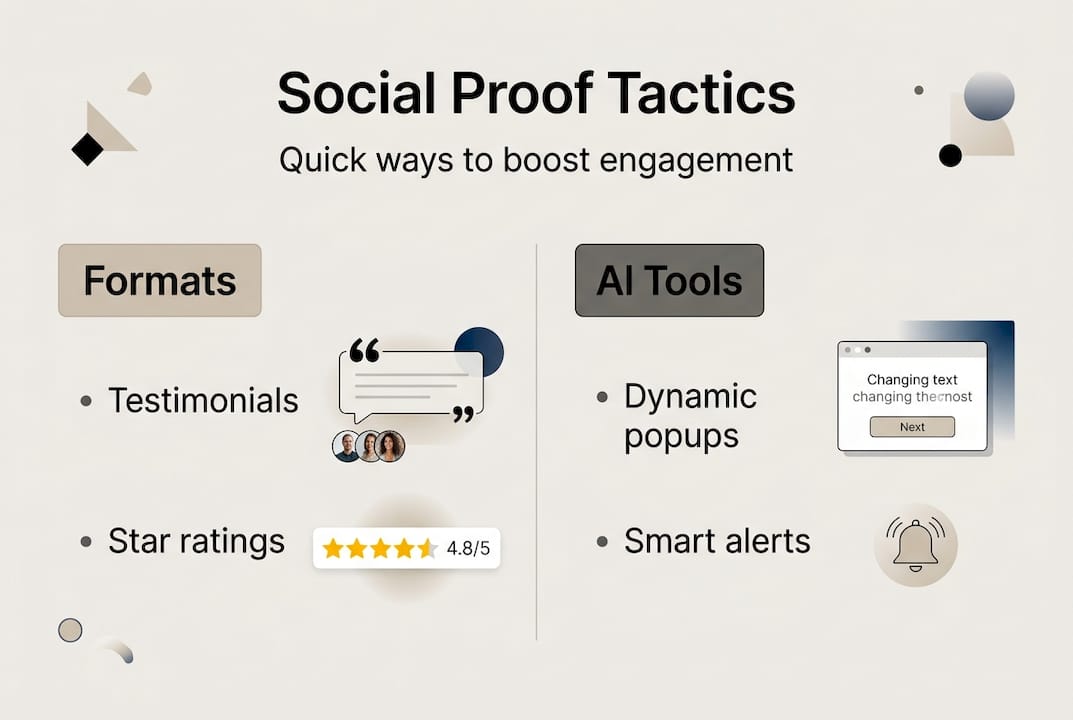
Key methodologies include live notifications, testimonials and case studies, UGC feeds, logo bars, star ratings, and strategic placement near calls to action or product pages. Here's a quick breakdown of what works where:
| Format | Best placement | Primary benefit |
|---|---|---|
| Star ratings | Product pages, search snippets | Instant credibility signal |
| Video testimonials | Landing pages, homepage | Emotional connection, trust |
| UGC photo feeds | Product pages, social ads | Authenticity, relatability |
| Live sales popups | Checkout, pricing pages | Urgency, FOMO |
| Logo bars | Homepage, about page | Authority transfer |
| Case studies | Sales pages, email sequences | Deep trust, ROI proof |
A few formats deserve special attention:
- Video testimonials are the most persuasive format because they're hard to fake and carry emotional weight.
- Live sales popups ("Sarah from Austin just purchased this") create real-time urgency but must be used sparingly to avoid feeling manipulative.
- UGC feeds pull real customer photos and posts, which feel more authentic than polished brand photography.
Pro Tip: Place your strongest testimonial or star rating directly above or below your primary call-to-action button. Conversion research consistently shows that proximity to the decision point amplifies the trust signal's impact.
The social media's SEO impact is also worth noting here. UGC shared on social platforms creates backlink opportunities and brand mentions that feed directly into your search rankings. Pair that with shareable content tips and you build a flywheel where social proof generates more social proof.
AI-driven strategies: Innovating social proof for modern business
This is where things get genuinely exciting. AI doesn't just help you collect more reviews faster. It changes what's possible in terms of personalization, optimization, and scale.
AI can dynamically optimize messaging, aggregate testimonials at scale, and create hybrid human-AI content that weaves social proof elements into every touchpoint. Here's what that looks like in practice:- AI-powered aggregation: Tools scan review platforms, social mentions, and support tickets to surface the most relevant testimonials for each page or audience segment automatically.
- Personalized popups: Instead of showing every visitor the same notification, AI serves popups based on browsing behavior, location, or purchase history.
- Dynamic content placement: AI tests which social proof format converts best for each traffic source and adjusts placements in real time.
- Hybrid storytelling: AI drafts testimonial summaries or case study outlines that human editors refine, cutting production time while maintaining authenticity.
- Sentiment analysis: AI flags negative or lukewarm reviews before they go live, giving you time to respond or resolve issues proactively.
The results are measurable. RPV improved by 17% in one AI-driven case study, and dynamic popups can increase conversions by up to 32%. Those aren't rounding errors. That's real revenue impact from smarter placement and personalization.
| AI strategy | Metric improved | Typical lift |
|---|---|---|
| Dynamic popup personalization | Conversion rate | Up to 32% |
| AI testimonial aggregation | Time on page | 15-20% |
| Hybrid human-AI case studies | Lead quality | Significant |
| Sentiment-based review filtering | Trust score | Measurable |
Pro Tip: Start with one AI-driven tactic, such as personalized popups, and measure its impact for 30 days before layering in additional strategies. Stacking too many changes at once makes it impossible to know what's actually working.
For businesses building long-term brand equity, AI content for brand loyalty is a natural extension of this approach. And if you want to connect social proof to broader search visibility, enhancing visibility with AI SEO shows how these strategies compound over time. Startups in particular can benefit from understanding why third-party reviews matter as an early credibility builder.
Common mistakes, troubleshooting, and pro tips
Even with the best tools and intentions, social proof can backfire. Here's what to watch for and how to fix it.
Authenticity is essential: fake or manipulated proof erodes trust, negative proof backfires, and the optimal star rating range is 4.0 to 4.7. A perfect 5.0 actually reduces trust because it looks curated.Common mistakes to avoid:
- Fake badges and pay-to-play awards: Displaying industry badges that were purchased rather than earned destroys credibility when savvy buyers investigate.
- Ignoring negative reviews: Responding to criticism publicly shows confidence and care. Hiding it signals insecurity.
- Outdated testimonials: A glowing review from 2019 feels irrelevant in 2026. Keep your proof current.
- Overloading pages: Too many testimonials, popups, and counters create noise and decision fatigue.
- Misplaced elements: A case study buried in your footer won't convert anyone. Placement is strategy.
- Cultural insensitivity: Social proof that resonates in one market can feel tone-deaf in another. Localize your proof when targeting diverse audiences.
"The most dangerous social proof mistake isn't having none. It's having proof that feels manufactured. Buyers can smell inauthenticity from a mile away."
Pro Tip: Run A/B tests on testimonial placement every quarter. Move your best review above the fold on your highest-traffic landing page and measure the conversion rate change over 30 days. The data will tell you exactly where trust signals belong.
For a deeper look at how AI-driven SEO user experience connects to trust signals and page performance, that resource covers the technical side of making social proof work harder for your rankings.
Measuring and verifying results
Implementing social proof without measuring it is like running ads without tracking clicks. You need clear metrics to know what's working and where to optimize.
Video testimonials boost conversions by 80%, and UGC increases conversions by up to 166%. Those benchmarks give you a baseline to compare your own results against.
Here's a simple measurement framework:
- Conversion rate: Track the percentage of visitors who complete a desired action before and after adding social proof elements to a page.
- Revenue per visitor (RPV): This metric captures both conversion rate and average order value, giving you a fuller picture of impact.
- Engagement rate: Monitor time on page, scroll depth, and click-through rates on pages with social proof versus those without.
- A/B test results: Run controlled experiments where one version of a page has social proof and another doesn't. Let the data decide.
- Review velocity: Track how quickly new reviews are coming in. A slowdown signals you need to re-engage your customer base.
Set a 30-day review cycle. Pull your metrics, compare them to your baseline, and make one targeted adjustment. Continuous improvement beats one-time optimization every time. For businesses focused on long-term growth, pairing this with [organic reach strategies](https://babylovegrowth.ai/blog/how-to-maximize-organic reach) creates a compounding effect where social proof feeds both conversions and search visibility simultaneously.
Take your social proof to the next level with AI-automated tools
Everything covered in this guide, from aggregating testimonials to personalizing popups to measuring RPV, becomes dramatically easier when you have the right automation behind it. Manual social proof management doesn't scale, and it leaves too much revenue on the table.
Babylovegrowth.ai is built for exactly this challenge. The platform's SEO automation tools help you create and distribute AI-optimized content that naturally incorporates social proof signals, boosting both trust and search rankings at the same time. The organic traffic solution connects your review strategy to a broader content engine that compounds over time. And the backlink exchange platform amplifies your credibility signals across the web, turning your social proof into a visibility multiplier. If you're ready to stop managing social proof manually and start scaling it intelligently, this is where to start.
Frequently asked questions
What is social proof?
Social proof is the psychological phenomenon where people copy the actions of others to determine correct behavior, especially when uncertain. It boosts conversions and builds trust in online buying situations where buyers can't physically evaluate a product.
How can AI enhance social proof for my business?
AI personalizes social proof content, automates review and testimonial aggregation, and optimizes placements for higher engagement and conversions. Dynamic AI messaging and hybrid content strategies drive measurable improvements in conversion rates and revenue per visitor.
What types of social proof provide the best results?
Reviews, video testimonials, and user-generated content typically drive the highest conversion and engagement rates. Video testimonials boost conversions by 80% and UGC increases conversions by up to 166%, making them the highest-ROI formats available.
How can I avoid mistakes when implementing social proof?
Maintain authenticity, avoid fake badges, and optimize placement and star ratings to maximize trust and effectiveness. Authenticity is essential because fake proof erodes trust, and the optimal star rating range is 4.0 to 4.7 for maximum credibility.
Recommended
Smart SEO,
Faster Growth!
Most Read Articles
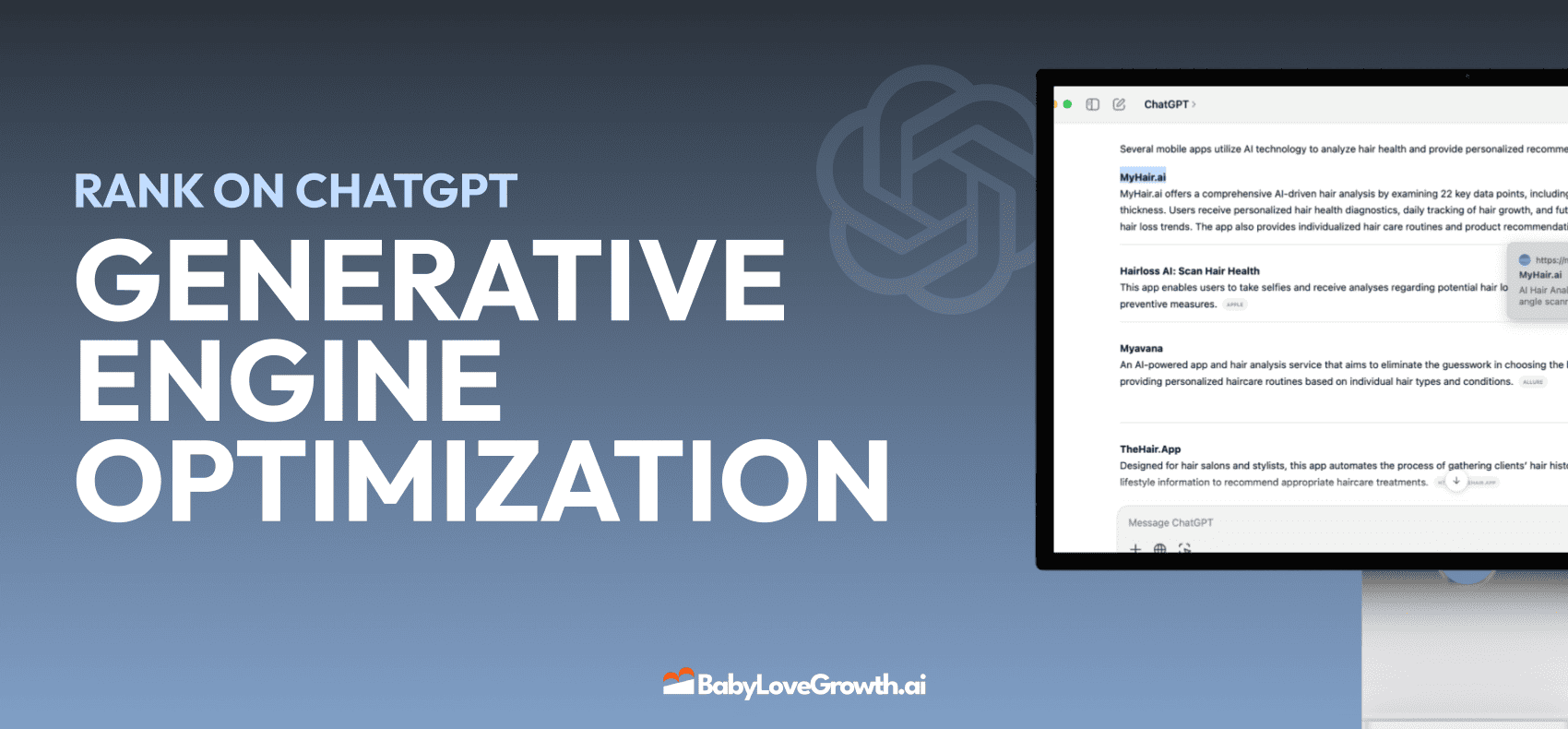
Generative Engine Optimization (GEO)
Learn how Generative Engine Optimization (GEO) helps your content rank in AI search engines like ChatGPT and Google AI. This comprehensive guide explains the differences between SEO and GEO, why it matters for your business, and practical steps to implement GEO strategies for better visibility in AI-generated responses.
DylenJan 18, 2025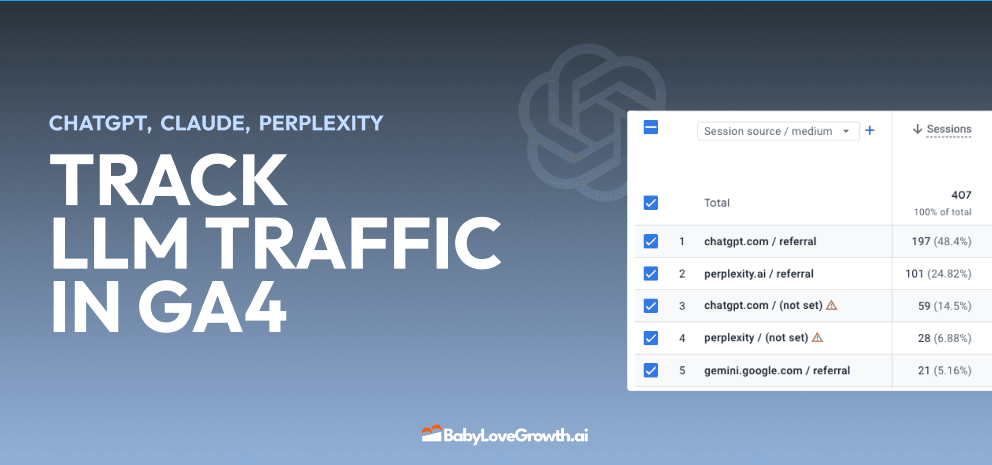
Track LLM Traffic in Google Analytics 4 (GA4)
Learn how to track and analyze traffic from AI sources like ChatGPT, Claude, Perplexity, and Google Gemini in Google Analytics 4. This step-by-step guide shows you how to set up custom filters to monitor AI-driven traffic and make data-driven decisions for your content strategy.
DylenMar 18, 2025
How to Humanize AI Text with Instructions
Learn practical techniques to make AI-generated content sound more natural and human. This guide covers active voice, direct addressing, concise writing, and other proven strategies to transform robotic text into engaging content.
DylenApril 7, 2025
Open AI Revenue and Statistics (2024)
Comprehensive analysis of OpenAI financial performance, user engagement, and market position in 2023. Discover key statistics including $20B valuation, $1B projected revenue, and 100M+ monthly active users.
DylenOctober 03, 2025