SEO Reporting in 2025: Simple Steps for Better Results


Tracking your website’s search performance can feel overwhelming, but SEO reporting in 2025 is more crucial than ever with businesses now relying on organic traffic as a top performance indicator. Here’s the plot twist. Most teams drown in endless data and miss what really matters for growth. The secret is not collecting more numbers but turning stats into valuable action steps that actually push your business forward.
Table of Contents
- What Is SEO Reporting And Why It Matters
- Essential Metrics To Track For SEO Success
- How To Build An Effective SEO Report
- Tips To Improve SEO Reporting For Your Team
Quick Summary
| Takeaway | Explanation |
|---|---|
| SEO Reporting Transforms Data into Insights | SEO reporting effectively converts raw digital data into strategic insights, aiding businesses in understanding their digital footprint and performance metrics such as organic traffic and keyword rankings. |
| Focus on Essential Metrics | Key metrics to track for SEO success include organic traffic, conversion rates, and backlink quality, enabling organizations to make informed decisions that enhance online visibility. |
| Set Clear Reporting Objectives | Establishing precise objectives tailored to business goals and stakeholder needs is crucial for crafting impactful SEO reports that provide actionable intelligence. |
| Utilize Advanced Analytics Tools | Leveraging comprehensive analytics tools like Google Analytics is recommended for thorough performance monitoring and deeper insights into user behavior and website effectiveness. |
| Commit to Continuous Learning | Ongoing education and adaptation within teams are vital for staying current with evolving SEO trends and refining reporting processes for long-term success. |
What Is SEO Reporting and Why It Matters
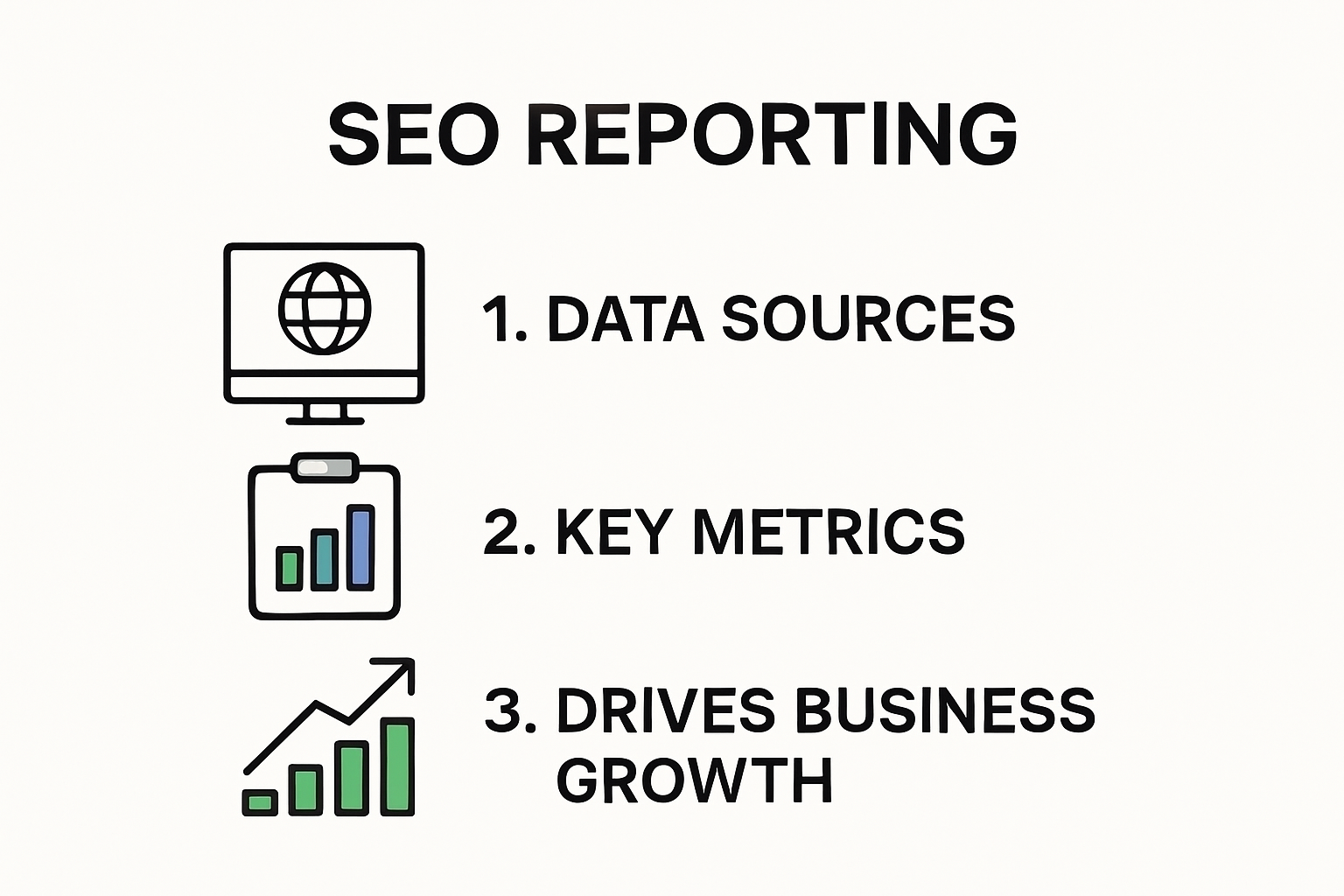
SEO reporting transforms raw digital data into strategic insights that power business growth. At its core, SEO reporting tracks how websites perform in search engine results, providing a comprehensive view of online visibility and performance.
Understanding the Fundamental Purpose
Search engine optimization reporting goes beyond simple number tracking. Research from Softforge reveals that effective SEO reporting helps businesses understand their digital footprint by monitoring critical metrics such as organic traffic, keyword rankings, and user engagement.
Businesses need SEO reporting to:
- Measure Performance: Track how well content and web pages rank in search results
- Identify Opportunities: Discover potential improvements in content and website structure
- Demonstrate ROI: Show the tangible impact of digital marketing efforts
Key Components of Effective SEO Reporting
Successful SEO reporting integrates multiple data points to create a holistic view of digital performance. This means looking beyond surface-level metrics and diving deep into analytics that reveal true website health.
Typical SEO reports include:
- Organic search traffic volume
- Keyword ranking positions
- Click-through rates
- Conversion rates from organic search
- Backlink quality and quantity
The Strategic Value of Regular Reporting
Regular SEO reporting is not just about collecting data. It is about transforming information into actionable strategies. Consistent monitoring allows businesses to adapt quickly to changing search engine algorithms and user behaviors.
For digital marketers and business owners, SEO reporting serves as a strategic compass. It highlights what works, what needs improvement, and provides clear direction for future content and optimization efforts. Without these insights, businesses risk operating in the dark, missing critical opportunities to enhance their online visibility.
By embracing thorough and consistent SEO reporting, organizations can turn raw data into a powerful tool for digital growth and competitive advantage.
Essential Metrics to Track for SEO Success
Understanding and monitoring the right SEO metrics is crucial for digital success. While data can be overwhelming, strategic tracking enables businesses to make informed decisions and optimize their online performance.
To help distinguish the different types of metrics to track, here's a table summarizing the key categories and their representative metrics discussed in this section:
| Metric Category | Key Metrics | Purpose |
|---|---|---|
| Organic Performance Indicators | Visitor Volume, Traffic Sources, User Behavior | Measure website reach & engagement |
| Conversion & Engagement Metrics | Click-Through Rate, Conversion Rate, Engagement Duration | Assess content effectiveness & interactions |
| Authority & Credibility Signals | Total Referring Domains, Backlink Quality, Link Diversity | Evaluate site’s reputation & trust |
Organic Performance Indicators
Forbes research highlights three fundamental metrics that provide deep insights into website performance. Organic traffic represents the primary indicator of SEO effectiveness, measuring visitors arriving through unpaid search results.Key organic performance metrics include:
- Visitor Volume: Total number of users reaching your website through search engines
- Traffic Sources: Understanding which search engines and keywords drive visitors
- User Behavior: Analyzing how visitors interact with your content
Comprehensive tracking goes beyond simple visitor counts. Digital marketers must examine engagement patterns, time spent on page, and bounce rates to gain a holistic view of organic performance.
Conversion and Engagement Metrics
SEMrush experts emphasize that successful SEO is not just about attracting traffic but converting that traffic into meaningful interactions. Click-through rate (CTR) emerges as a critical metric, measuring the percentage of users who click on your search result.Crucial conversion metrics to monitor:
- Click-Through Rate: Percentage of users clicking your search result
- Conversion Rate: Number of visitors completing desired actions
- Engagement Duration: Average time users spend on your website
These metrics reveal how effectively your content matches user intent and drives business objectives.

Authority and Credibility Signals
Backlink profiles serve as powerful indicators of website authority. Moz research suggests that quality backlinks remain a significant ranking factor for search engines.
Important backlink metrics include:
- Total Referring Domains: Number of unique websites linking to your content
- Backlink Quality: Domain authority of linking websites
- Link Diversity: Variety of sources linking to your website
By systematically tracking these metrics, businesses can develop data-driven SEO strategies that adapt to evolving digital landscapes. The goal is not just collecting data but transforming insights into actionable improvements that drive sustainable online growth.
How to Build an Effective SEO Report
Building an effective SEO report transforms raw data into strategic insights that drive meaningful business decisions. The right approach turns complex analytics into a clear roadmap for digital growth.
To clarify the process of building effective SEO reports, the following table outlines the key steps and considerations highlighted in this section:
| Step | Key Actions/Considerations | Outcome |
|---|---|---|
| Define Reporting Objectives | Align with business goals, stakeholder needs, benchmarks | Focused framework |
| Select Metrics & Visualization | Choose relevant data, use comparative analysis & visuals | Enhanced understanding |
| Craft Actionable Recommendations | Analyze trends, suggest improvements, guide resource focus | Strategic implementation |
Defining Clear Reporting Objectives
Victorious SEO experts emphasize the critical importance of setting precise objectives before constructing any SEO report. Successful reporting begins with understanding what matters most to your organization.Key considerations for establishing reporting objectives:
- Business Goals: Align SEO metrics with broader organizational targets
- Stakeholder Needs: Understand what information different team members require
- Performance Benchmarks: Establish baseline metrics for tracking progress
By defining clear objectives, you create a focused reporting framework that delivers actionable intelligence rather than overwhelming data dumps.
Selecting Meaningful Metrics and Visualization
Speedy Brand research suggests that effective reporting goes beyond presenting numbers. The key is providing context and creating visual narratives that communicate performance transparently.Essential elements of compelling SEO reporting include:
- Comparative Analysis: Compare current performance against previous periods
- Competitor Benchmarking: Highlight how your digital performance stacks up
- Data Visualization: Use charts and graphs to make complex data digestible
Crafting Actionable Recommendations
An exceptional SEO report does more than showcase metrics. It provides clear, strategic recommendations that guide future actions. This transforms reporting from a passive documentation exercise into an active planning tool.
Recommendation frameworks should include:
- Performance Insights: Detailed explanations of current data trends
- Potential Improvements: Specific suggestions for enhancing SEO strategies
- Resource Allocation: Guidance on where to focus optimization efforts
Effective SEO reporting bridges the gap between data collection and strategic implementation. By presenting information clearly, contextualizing performance, and offering forward-looking recommendations, businesses can turn analytics into a powerful driver of digital success.
Remember that great SEO reporting is an ongoing process of refinement. Each report should build upon previous insights, creating a cumulative understanding of your digital performance landscape.
Tips to Improve SEO Reporting for Your Team
SEO reporting is a collaborative effort that requires strategic alignment, continuous learning, and effective communication across your digital team. Transforming raw data into meaningful insights demands a proactive and systematic approach.
Establish Clear Communication Protocols
University of Exeter digital experts emphasize the importance of creating standardized reporting frameworks that enable seamless information sharing. Effective communication ensures every team member understands SEO performance metrics and their implications.Key communication strategies include:
- Regular Team Meetings: Schedule consistent SEO performance review sessions
- Standardized Reporting Templates: Create uniform documentation formats
- Role-Based Metric Interpretation: Tailor insights for different team functions
By establishing clear protocols, teams can transform SEO reporting from a fragmented process into a cohesive strategic tool.
Leverage Advanced Analytics Tools
Government digital guidance recommends utilizing comprehensive analytics platforms to monitor performance comprehensively. Tools like Google Analytics and Google Search Console provide deep insights into user behavior and website performance.Advanced analytics implementation strategies:
- Integrated Dashboard Creation: Combine multiple data sources
- Custom Event Tracking: Monitor specific user interactions
- Segmentation Analysis: Break down performance by user demographics
Continuous Learning and Adaptation
Successful SEO reporting is not a static process but a dynamic, evolving approach. Teams must commit to ongoing education and remain adaptable to changing digital landscapes.
Continuous improvement strategies:
- Regular Training Sessions: Keep team skills updated
- Industry Conference Participation: Stay informed about emerging trends
- Cross-Functional Skill Development: Encourage knowledge sharing
The most effective SEO reporting teams view their work as an ongoing journey of discovery. They remain curious, open to new methodologies, and committed to refining their approach continuously.
By implementing these strategies, organizations can create SEO reporting processes that are not just informative but truly transformative. The goal is to move beyond mere data collection toward generating actionable insights that drive meaningful digital growth.
Frequently Asked Questions
What is SEO reporting and why is it important?
SEO reporting is the process of tracking and analyzing data regarding a website's performance in search engine results. It's important because it helps businesses measure their online visibility, identify areas for improvement, and demonstrate the return on investment (ROI) of their digital marketing efforts.
What key metrics should I track for effective SEO reporting?
Essential metrics to track include organic traffic, conversion rates, click-through rates (CTR), and backlink quality. These metrics give insights into user engagement, website authority, and the effectiveness of your content strategy.
How do I create an effective SEO report?
To create an effective SEO report, start by defining clear reporting objectives that align with business goals. Select meaningful metrics to analyze and use data visualization tools to present the information clearly. Finally, craft actionable recommendations based on data insights to guide future strategies.
What tools are best for SEO reporting in 2025?
Comprehensive analytics tools like Google Analytics and Google Search Console are highly recommended for SEO reporting. These tools provide valuable insights into user behavior, website performance, and allow for advanced tracking of specific metrics tailored to your needs.
Unlock Effortless SEO Reporting Success with Smart Content Automation
Are you tired of drowning in endless SEO data but struggling to turn it into real business growth? The article highlights how traditional SEO reporting often becomes overwhelming, focusing on generic traffic numbers and rankings. Many teams miss out on action-ready insights, finding it difficult to create consistent reports that convert data into business wins. You are not alone if your team feels stuck measuring endless metrics and still wondering how to drive meaningful results.
Here is where BabyLoveGrowth.ai changes your game. Our platform automates the most exhausting parts of SEO reporting by providing a personalized business analysis, creating a custom 30-day content plan, and generating SEO-optimized articles automatically. With our AI-driven system, you experience:
- Full analysis of your competition and digital footprint
- Easy-to-follow plans that turn results into clear action steps
- Efficient content creation so you can stay focused on growth
Do not let another month go by collecting data without seeing progress. Try BabyLoveGrowth.ai today and see how automated, actionable SEO can elevate your reports and your results. Ready to make your next report stand out? Visit our Homepage now to start your journey toward effortless online growth.
Recommended
- SEO Trends for 2024: Key Shifts Every Marketer Should Know
- The Importance of Organic Traffic for Business Growth in 2025
- Blogging Tips for 2025: Proven Strategies for Growth
- SEO Strategies for Bloggers: Proven Tactics for 2025 Success
- Converting Website Traffic: Proven Strategies for 2025
- SEO Importance for Businesses in 2025: Key Benefits and Strategies
- Unlock the Full Potential of SEO with AI
- Winning B2B Marketing Strategies for 2025 Growth
Smart SEO,
Faster Growth!
Most Read Articles
Generative Engine Optimization (GEO)
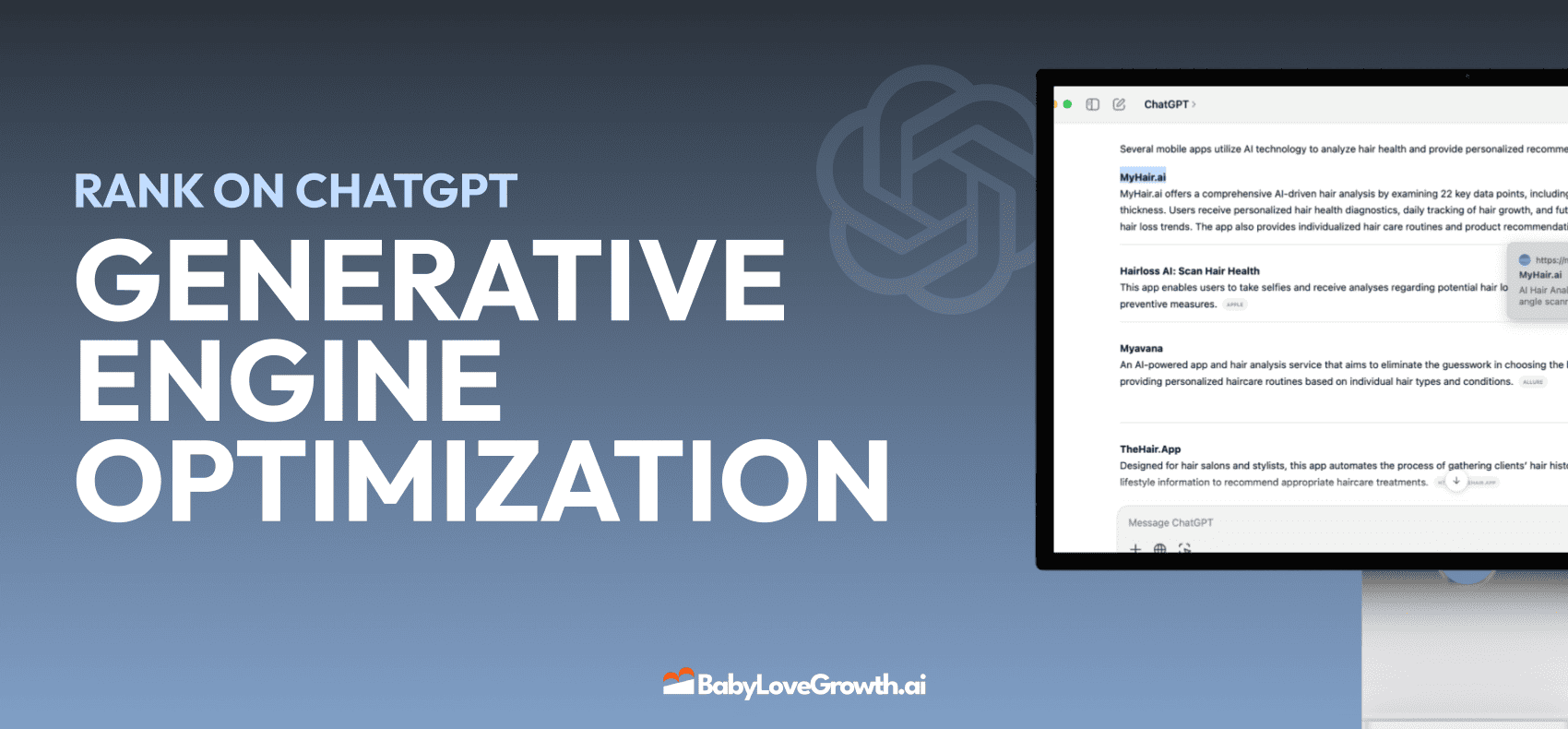
Learn how Generative Engine Optimization (GEO) helps your content rank in AI search engines like ChatGPT and Google AI. This comprehensive guide explains the differences between SEO and GEO, why it matters for your business, and practical steps to implement GEO strategies for better visibility in AI-generated responses.
DylenJan 18, 2025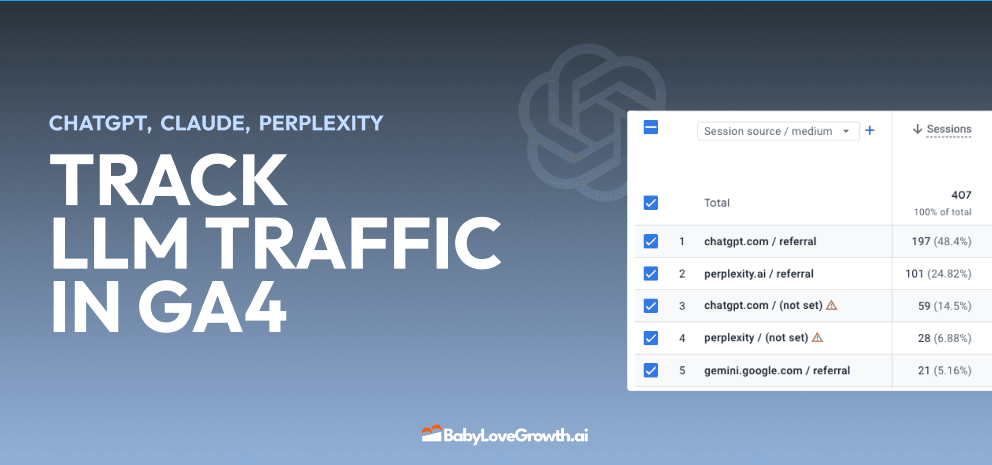
Track LLM Traffic in Google Analytics 4 (GA4)
Learn how to track and analyze traffic from AI sources like ChatGPT, Claude, Perplexity, and Google Gemini in Google Analytics 4. This step-by-step guide shows you how to set up custom filters to monitor AI-driven traffic and make data-driven decisions for your content strategy.
DylenMar 18, 2025
How to Humanize AI Text with Instructions
Learn practical techniques to make AI-generated content sound more natural and human. This guide covers active voice, direct addressing, concise writing, and other proven strategies to transform robotic text into engaging content.
DylenApril 7, 2025
Open AI Revenue and Statistics (2024)
Comprehensive analysis of OpenAI financial performance, user engagement, and market position in 2023. Discover key statistics including $20B valuation, $1B projected revenue, and 100M+ monthly active users.
DylenOctober 03, 2025