SEO Ranking Factors Explained: Winning in the AI Era


Most American brands now compete in a digital world where search ranking rules shift faster than ever. With over 200 confirmed ranking factors influencing organic visibility, SEO professionals face new challenges keeping pace with artificial intelligence and sophisticated evaluation signals. Highly technical performance, quality content, and truly authoritative backlinks drive strategic advantage. This guide reveals what actually matters in SEO ranking today and how experts can adapt to smarter, AI-powered search engines.
Table of Contents
- What Are SEO Ranking Factors Today?
- How AI and Generative Search Engines Evaluate Sites
- On-Page, Off-Page, and Technical Ranking Signals
- Key Shifts for 2026: Authority, E-E-A-T, and User Intent
- Common SEO Myths and Mistakes to Avoid
Key Takeaways
| Point | Details |
|---|---|
| Comprehensive SEO Understanding | Modern SEO relies on various ranking factors beyond keywords, including technical elements, content quality, and backlinks. |
| Importance of E-E-A-T | The Experience, Expertise, Authoritativeness, and Trustworthiness framework is crucial for content ranking in today's search engines. |
| AI-Driven Evaluation | Artificial intelligence enhances content assessments, requiring optimization for contextual relevance and user intent. |
| Avoiding Common Misconceptions | Strategies like keyword stuffing or black hat techniques can lead to penalties; focus on genuine, high-quality content instead. |
What Are SEO Ranking Factors Today?
Search engine optimization now requires understanding multiple interconnected ranking criteria. Modern algorithms assess websites through complex computational processes that consider far more than traditional keyword matching. Search engines evaluate digital content using advanced signals across technical, content, and popularity dimensions.
The primary ranking factors today encompass several critical categories. Technical SEO elements include website speed, mobile responsiveness, secure connections (HTTPS), structured data markup, and crawlability. Content quality remains paramount, demanding original, comprehensive material that directly addresses user search intent. User engagement metrics like click-through rates, time on page, and bounce rates also significantly influence ranking potential.
Backlinks continue representing a crucial ranking signal, with search engines interpreting high-quality external references as indicators of website authority. Modern algorithms prioritize contextual, relevant links from reputable domains rather than raw link quantity. Machine learning and artificial intelligence now enable more nuanced assessment of link quality, making strategic link acquisition increasingly sophisticated.
Pro tip: Regularly audit your website's technical SEO performance using comprehensive diagnostic tools that analyze speed, mobile compatibility, and indexing challenges.
How AI and Generative Search Engines Evaluate Sites
Modern search engines now leverage sophisticated artificial intelligence to assess website content with unprecedented complexity. Generative AI models analyze digital content through advanced computational techniques that go beyond traditional keyword matching, utilizing machine learning algorithms to understand contextual relevance and user intent.

These AI-powered evaluation systems employ complex techniques like semantic embedding and probabilistic modeling to rank websites. They create intricate representations of content by analyzing linguistic patterns, topical depth, user interaction signals, and cross-referential data points. The assessment involves multiple layers of analysis, including content originality, information comprehensiveness, user engagement metrics, and the overall semantic coherence of digital assets.
Artificial intelligence transforms traditional ranking methodologies by introducing more nuanced evaluation criteria. Machine learning algorithms now simulate reasoning processes, connecting disparate information fragments and assessing content quality through multidimensional perspectives. Advanced AI tools simulate comprehensive research evaluation by processing vast amounts of data, enabling search engines to understand content context with remarkable precision and generate more intelligent, contextually relevant search results.
Pro tip: Optimize your content for AI-driven search by focusing on comprehensive, semantically rich information that demonstrates genuine expertise and addresses multiple user intent angles.
This table compares traditional SEO ranking methods to modern AI-driven techniques:
| Evaluation Aspect | Traditional Methods | AI-Driven Techniques |
|---|---|---|
| Keyword Matching | Exact phrase matching | Contextual and semantic analysis |
| Link Assessment | Quantity of backlinks | Quality and relevance of links |
| Content Quality | Surface-level checks | Nuanced, intent-based evaluation |
| User Signals | Basic engagement metrics | Sophisticated intent analysis |
On-Page, Off-Page, and Technical Ranking Signals
Search engine optimization encompasses three critical dimensions of ranking signals that collectively determine a website's search performance. On-page SEO focuses on internal website optimization through strategic content creation, keyword placement, and user experience enhancements that directly impact search visibility and relevance.
Off-page ranking signals represent external factors that validate a website's authority and credibility. These include high-quality backlinks from reputable domains, social media mentions, brand citations, and influencer endorsements. The quality and relevance of these external signals demonstrate to search engines that the content provides genuine value and is trusted by other online entities. Backlink profiles play a crucial role in establishing domain authority, with search engines interpreting each quality link as a potential endorsement of the website's expertise.
Technical SEO serves as the foundational infrastructure that enables search engines to effectively crawl, index, and understand website content. This dimension includes critical elements like site speed, mobile responsiveness, secure connections (HTTPS), structured data markup, XML sitemaps, and efficient website architecture. Technical optimization ensures smooth search engine interaction by addressing backend performance metrics that directly influence crawlability and indexing potential.
Pro tip: Develop a holistic SEO strategy that balances on-page content quality, off-page authority building, and robust technical infrastructure to create a comprehensive approach to search engine optimization.
Here’s a summary of the three categories of SEO ranking signals and their business impact:
| SEO Signal Type | Main Focus | Example Elements | Business Impact |
|---|---|---|---|
| On-Page | Content optimization | Headlines, keywords | Boosts relevance and engagement |
| Off-Page | Authority and reputation | Backlinks, social shares | Increases domain credibility |
| Technical | Site performance | Speed, mobile, HTTPS | Improves crawlability and access |
Key Shifts for 2026: Authority, E-E-A-T, and User Intent
Understanding user intent and search authority becomes increasingly sophisticated as search algorithms evolve toward more nuanced content evaluation. The emerging landscape demands a multidimensional approach that goes beyond traditional keyword optimization, focusing instead on demonstrating genuine expertise, authentic experience, and contextual relevance.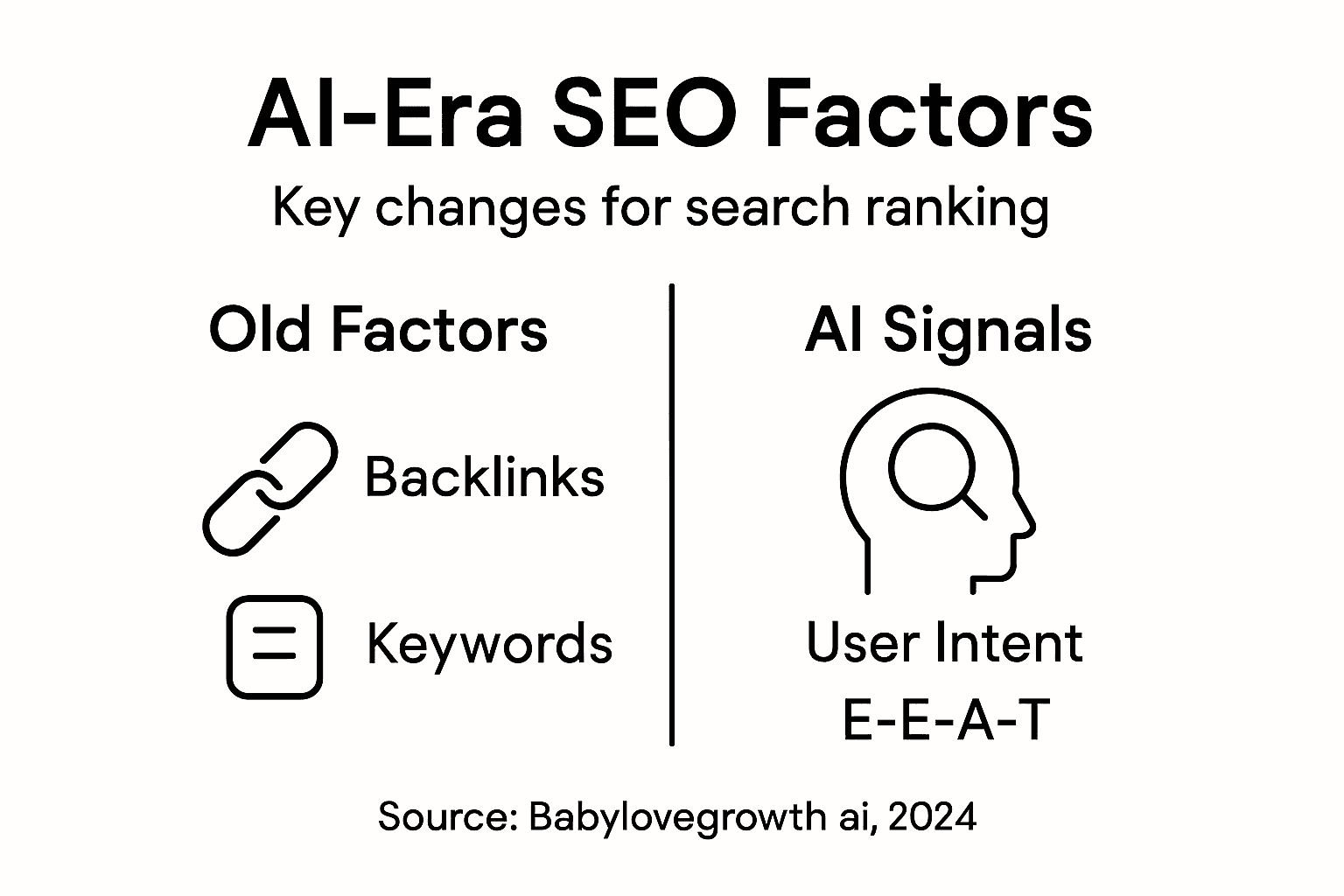
The Experience, Expertise, Authoritativeness, and Trustworthiness (E-E-A-T) framework will become more critical in determining content ranking. Search engines are developing increasingly complex methods to assess content quality, moving beyond surface-level signals to deeply analyze the substantive value and credibility of digital information. This means content creators must provide demonstrable proof of their knowledge, showcase real-world experience, and create comprehensive resources that genuinely solve user problems.
User intent analysis represents the most significant transformation in SEO strategies. Modern search platforms are shifting from keyword matching to understanding the underlying motivations and contextual needs behind search queries. Artificial intelligence now enables more sophisticated interpretation of user goals, requiring content creators to develop highly targeted, intent-driven content that addresses specific user challenges with precision and depth.
Pro tip: Develop content that demonstrates clear expertise by combining authoritative research, personal experience, and comprehensive problem-solving approaches that directly address nuanced user intentions.
Common SEO Myths and Mistakes to Avoid
SEO strategies often fall victim to widespread misconceptions that can severely undermine digital marketing efforts. Many professionals mistakenly believe that quick technical fixes or superficial optimization techniques will magically transform their search rankings, when in reality, sustainable success requires a comprehensive, nuanced approach.
One of the most persistent myths is the idea that keyword stuffing or manipulative tactics can trick search engines into higher rankings. Modern AI-powered algorithms are sophisticated enough to detect and penalize such practices, instead prioritizing high-quality, contextually relevant content that genuinely serves user needs. Black hat SEO techniques like hidden text, cloaking, or excessive exact-match keyword repetition not only fail to improve rankings but can result in significant search engine penalties that damage website credibility.
Another critical misunderstanding involves the relationship between paid advertising and organic search performance. Contrary to popular belief, search engine optimization strategies are fundamentally distinct from paid marketing channels. Organic rankings are determined by complex algorithmic assessments of content quality, technical performance, and user engagement, not by advertising spend. Website owners must invest in creating comprehensive, authoritative content, improving site speed, ensuring mobile responsiveness, and building genuine domain authority.
Pro tip: Focus on creating high-quality, user-centric content that provides genuine value, and prioritize long-term strategic improvements over short-term optimization tricks.
Master SEO Ranking Factors with AI-Driven Strategies
Understanding the complex landscape of modern SEO ranking factors including E-E-A-T, user intent, and AI-powered content evaluation can be overwhelming. The challenge is creating high-quality, semantically rich content while optimizing technical SEO and building authoritative backlinks all at once. The article highlighted how AI now demands a nuanced, multi-dimensional approach beyond traditional keyword stuffing or quick fixes to truly win in rankings. If you want to overcome these hurdles and unlock sustainable organic growth you need a solution that automates and simplifies this complexity.
Explore how Babylovegrowth.ai empowers brands with AI-powered SEO automation tools that cover everything from keyword discovery and daily SEO articles to backlink building and technical audits. This all-in-one platform helps you execute a comprehensive SEO strategy that aligns with modern algorithm expectations. Take control of your search visibility and outrank competitors on Google and AI-powered search engines like ChatGPT by using Babylovegrowth.ai. Start scaling your organic growth today with intelligent, expert-driven SEO solutions designed to deliver lasting results.
Frequently Asked Questions
What are the most important SEO ranking factors in the AI era?
The most important SEO ranking factors today include technical SEO elements like website speed, mobile responsiveness, and secure connections (HTTPS), as well as content quality, user engagement metrics, and backlinks from reputable sources.
How does artificial intelligence change SEO strategies?
Artificial intelligence changes SEO strategies by enabling search engines to assess content using advanced methods like contextual and semantic analysis, focusing on user intent rather than just keyword matching.
What does E-E-A-T mean in SEO?
E-E-A-T stands for Experience, Expertise, Authoritativeness, and Trustworthiness. It is a framework that helps search engines evaluate content quality based on demonstrable knowledge and real-world experience.
What are common SEO myths that I should avoid?
Common SEO myths include believing that keyword stuffing can improve rankings or that paid ads directly influence organic search results. Sustainable SEO success relies on quality, user-centric content and comprehensive optimization strategies.