Why Invest in SEO Automation for Agency Growth


Manual SEO tasks can slow down growth for any agency trying to stay competitive in fast-changing digital markets. For agency owners aiming to maximize AI-driven organic traffic, automating repetitive processes is more than a time-saver—it is a strategic shift. By embracing SEO automation, agencies gain powerful tools for efficient keyword research, real-time performance monitoring, and advanced content optimization. This guide breaks down how automation empowers your team to scale results, maintain high standards, and adapt quickly as search engines become smarter.
Table of Contents
- Defining SEO Automation and Its Purpose
- Types of SEO Automation Tools and Workflows
- How Automation Enhances AI Search Visibility
- Scaling Content Creation and Backlink Building
- Comparing Manual vs Automated SEO Strategies
- Risks, Costs, and Common Pitfalls for Agencies
Key Takeaways
| Point | Details |
|---|---|
| SEO Automation Enhances Efficiency | Utilizing automated tools reduces manual effort, allowing agencies to focus on strategic planning and scaling growth. |
| Types of SEO Automation Tools | Understanding the various tool categories—On-Page, Off-Page, Technical, and Local—can optimize specific areas of your strategy. |
| AI's Role in Search Visibility | AI-powered automation significantly improves content structuring and machine readability, aligning better with search engine algorithms. |
| Balancing Automation and Human Oversight | A hybrid approach combining automated tools with human expertise ensures quality and efficiency in SEO execution. |
Defining SEO Automation and Its Purpose
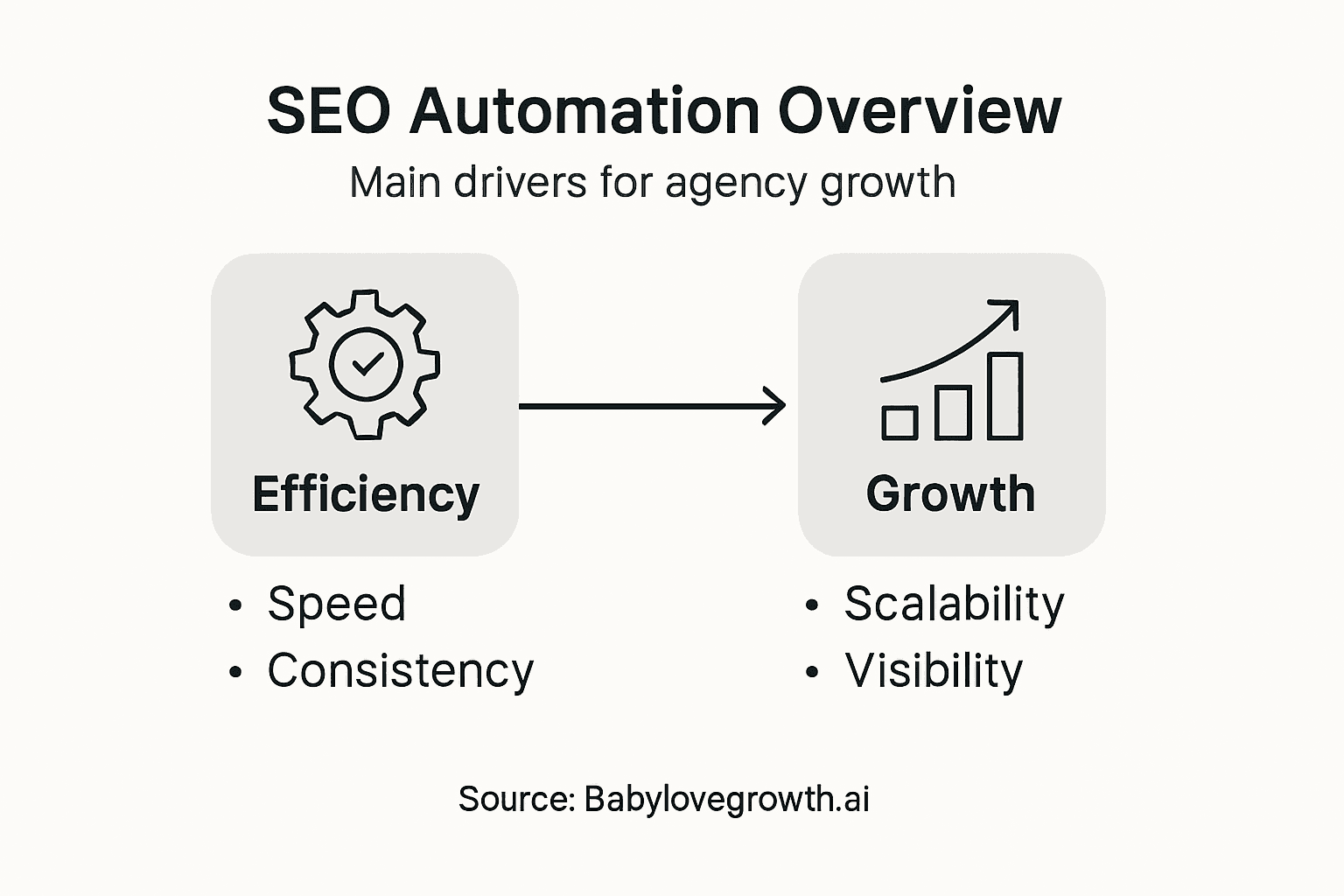
SEO automation represents a strategic approach to streamlining digital marketing workflows by using advanced software tools to manage repetitive search engine optimization tasks. At its core, SEO automation transforms manual, time-consuming processes into efficient, data-driven systems that help agencies scale their organic growth strategies.
The fundamental purpose of SEO automation aligns with enhancing website visibility through systematic content optimization. By leveraging intelligent software solutions, digital marketing agencies can dramatically reduce manual effort while maintaining high-quality optimization standards. This approach enables marketers to focus on strategic planning rather than getting bogged down in repetitive technical tasks.
Key components of SEO automation typically include:
- Automatic keyword research and tracking
- Site performance auditing
- Competitor analysis
- Content optimization recommendations
- Real-time ranking monitoring
- Automated reporting and insights generation
Modern SEO automation tools transform complex optimization processes by integrating artificial intelligence and machine learning technologies. These advanced systems can analyze massive datasets, predict ranking trends, and provide actionable recommendations faster than manual human analysis. Search engine indexing processes become more transparent and manageable through intelligent automation strategies.
Pro tip: Start small by automating one repetitive SEO task at a time, allowing your team to gradually adapt to new workflow technologies and measure incremental efficiency gains.
Types of SEO Automation Tools and Workflows
SEO automation tools have revolutionized digital marketing by providing sophisticated solutions for managing complex optimization strategies. Web automation technologies enable marketing agencies to transform time-consuming manual processes into efficient, data-driven workflows that dramatically improve search engine performance.
Modern SEO automation solutions can be categorized into four primary types, each addressing specific optimization needs:
- On-Page SEO Tools
- Content optimization
- Metadata management
- Keyword density analysis
- Off-Page SEO Tools
- Backlink tracking
- Competitor link analysis
- Domain authority monitoring
- Technical SEO Tools
- Site crawling and indexing
- Performance auditing
- Broken link detection
- Local SEO Tools
- Geotargeted optimization
- Google My Business management
- Local citation tracking
These automation tools leverage advanced algorithms and machine learning to analyze complex SEO parameters, providing marketers with actionable insights that would be impossible to generate manually. By integrating intelligent software solutions, agencies can simultaneously monitor multiple optimization dimensions, predict ranking trends, and implement strategic improvements across entire digital portfolios.
Here's a summary comparing the main SEO automation tool types and their benefits:
| Tool Type | Primary Focus | Business Benefit |
|---|---|---|
| On-Page SEO | Content and metadata | Improves site relevance |
| Off-Page SEO | Link building and authority | Boosts domain credibility |
| Technical SEO | Site performance and errors | Enhances site health |
| Local SEO | Location-based optimization | Increases local visibility |
Pro tip: Prioritize tools that offer comprehensive integration capabilities, allowing seamless data exchange between different SEO automation platforms and your existing marketing technology stack.
How Automation Enhances AI Search Visibility
AI search visibility has become a critical metric for digital marketing success, transforming how agencies approach content optimization. Generative Engine Optimization represents a groundbreaking approach that enables marketers to strategically engineer content for machine intelligence and search algorithms.
The core mechanisms of AI search visibility enhancement through automation include several key strategies:
- Content Structuring
- Semantic keyword optimization
- Contextual relevance mapping
- Natural language processing alignment
- Authority Building
- Credible source citation
- Expert-level content generation
- Comprehensive topic coverage
- Machine Readability
- Clean, structured data formats
- Schema markup implementation
- Predictable content architecture
- Dynamic Optimization
- Real-time content adaptation
- Algorithmic performance tracking
- Continuous learning mechanisms

Pro tip: Develop a continuous learning workflow that regularly analyzes AI search performance metrics, allowing your content strategy to evolve dynamically with emerging machine learning trends.
Scaling Content Creation and Backlink Building
Content scaling represents a transformative strategy for digital marketing agencies seeking exponential growth. AI scaling frameworks have revolutionized how organizations approach content production, enabling unprecedented efficiency and strategic content generation.
Successful content and backlink scaling involves multiple sophisticated approaches:
- Automated Content Generation
- AI-driven topic research
- Contextual content templating
- Multi-format content adaptation
- Smart Content Distribution
- Targeted platform selection
- Audience segmentation
- Personalized content routing
- Strategic Backlink Acquisition
- Automated outreach protocols
- Quality link verification
- Relationship management systems
- Performance Tracking
- Real-time ranking analysis
- Competitive landscape monitoring
- Continuous optimization algorithms
Pro tip: Develop a comprehensive content matrix that maps automated production workflows with targeted distribution channels, ensuring consistent quality and strategic alignment.
Comparing Manual vs Automated SEO Strategies
SEO strategy evolution demands a critical understanding of the fundamental differences between manual and automated approaches. Traditional search optimization methods rely heavily on human intervention, creating significant limitations in scalability and responsiveness to dynamic digital landscapes.
Key comparative dimensions between manual and automated SEO strategies include:
- Resource Allocation
- Manual: Labor-intensive, time-consuming
- Automated: Efficient, scalable
- Data Processing
- Manual: Limited analytical depth
- Automated: Comprehensive, real-time insights
- Adaptation Speed
- Manual: Slow algorithm response
- Automated: Rapid algorithmic adjustments
- Cost Efficiency
- Manual: High human capital investment
- Automated: Reduced operational expenses
- Precision
- Manual: Subjective, inconsistent
- Automated: Data-driven, consistent
Compare manual and automated SEO strategies on key operational factors:
| Factor | Manual SEO Approach | Automated SEO Approach |
|---|---|---|
| Scalability | Difficult, adds workload | Easy, supports rapid growth |
| Data Accuracy | Prone to human error | High, uses real-time data |
| Implementation | Requires manual setup | Streamlined, software driven |
| Response Speed | Slow adaptations | Quick, dynamic adjustments |
Pro tip: Implement a hybrid approach that combines automated tools with strategic human oversight to maximize SEO performance and maintain quality control.
Risks, Costs, and Common Pitfalls for Agencies
SEO automation risks demand careful strategic planning and comprehensive understanding of potential challenges. Ethical implementation challenges represent a critical consideration for agencies investing in automated optimization technologies, requiring nuanced approaches to tool selection and deployment.
Key risks and potential pitfalls in SEO automation include:
- Technical Risks
- Algorithm penalty vulnerabilities
- Unintended content manipulation
- Over-optimization triggers
- Financial Considerations
- High initial software investment
- Ongoing training expenses
- Potential ROI uncertainty
- Operational Challenges
- Reduced content authenticity
- Limited contextual understanding
- Potential quality degradation
- Compliance Concerns
- Search engine guideline violations
- Potential ranking reputation damage
- Inconsistent performance tracking
Search engine optimization guidelines emphasize the importance of maintaining human oversight in automated processes. Successful agencies balance technological efficiency with strategic human intervention, ensuring that automation enhances rather than replaces intelligent marketing approaches.
Pro tip: Implement a quarterly automated tool audit process that critically evaluates performance, compliance, and alignment with evolving search engine standards.
Accelerate Your Agency Growth With Intelligent SEO Automation
The article highlights the challenges faced by digital marketing agencies when managing repetitive and time-consuming SEO tasks while striving to maintain high-quality standards. If you are looking to overcome issues like inefficient content scaling, backlink building, or sluggish adaptation to AI-driven search trends, you need solutions designed to streamline workflows and boost your organic visibility rapidly. Concepts like AI search visibility, automated content creation, and real-time ranking monitoring are essential in staying competitive in today’s fast-evolving landscape.
Babylovegrowth.ai offers a powerful platform tailored to these exact needs. Our advanced SEO automation tools help you generate AI-optimized content daily, build authoritative backlinks, and track your performance across AI-powered search engines like ChatGPT and Google. By integrating automated publishing and intelligent SEO strategies, you can free your team from manual processes and focus on strategic growth. Discover how our platform transforms complex SEO challenges into scalable, data-driven opportunities for your agency.
Ready to take your agency’s SEO strategy to the next level? Explore how Babylovegrowth.ai empowers businesses with automated SEO and AI-focused content plans. Embrace innovation now to outrank competitors and maximize your brand’s AI search visibility. Visit https://babylovegrowth.ai and start scaling your organic growth today.
Frequently Asked Questions
What is SEO automation?
SEO automation is a strategic approach that uses advanced software tools to manage repetitive SEO tasks, transforming manual processes into efficient, data-driven systems to enhance website visibility.
How do automation tools improve SEO efficiency?
Automation tools improve SEO efficiency by streamlining tasks such as keyword research, site performance auditing, content optimization, and real-time ranking monitoring, allowing agencies to focus on strategic planning instead of repetitive tasks.
What are the different types of SEO automation tools available?
There are four primary types of SEO automation tools: On-Page SEO Tools, Off-Page SEO Tools, Technical SEO Tools, and Local SEO Tools, each addressing specific optimization needs like content management, backlink tracking, site performance, and location-based optimization.
What risks are associated with SEO automation?
Risks of SEO automation include potential algorithm penalty vulnerabilities, high initial software investments, reduced content authenticity, and compliance concerns with search engine guidelines, making it essential for agencies to maintain human oversight.
Recommended
Smart SEO,
Faster Growth!
Most Read Articles
Generative Engine Optimization (GEO)
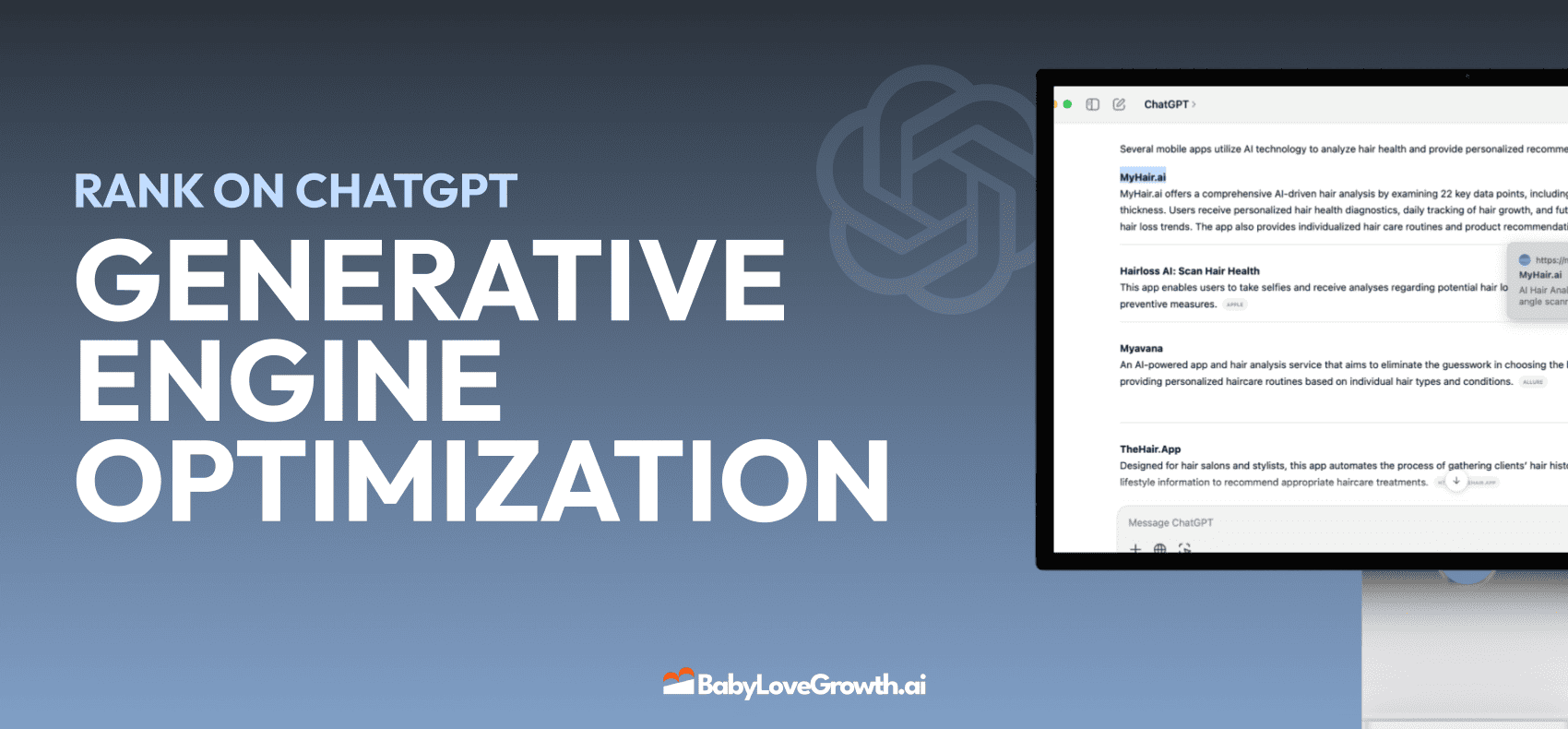
Learn how Generative Engine Optimization (GEO) helps your content rank in AI search engines like ChatGPT and Google AI. This comprehensive guide explains the differences between SEO and GEO, why it matters for your business, and practical steps to implement GEO strategies for better visibility in AI-generated responses.
DylenJan 18, 2025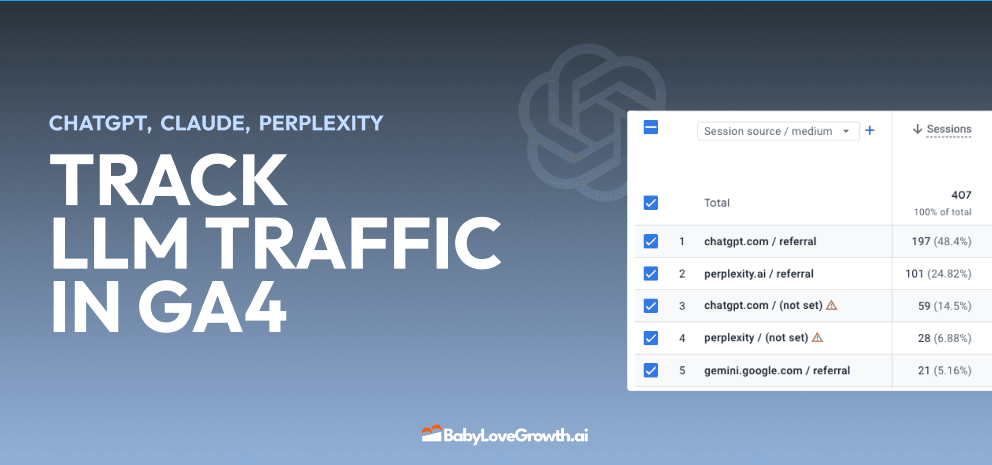
Track LLM Traffic in Google Analytics 4 (GA4)
Learn how to track and analyze traffic from AI sources like ChatGPT, Claude, Perplexity, and Google Gemini in Google Analytics 4. This step-by-step guide shows you how to set up custom filters to monitor AI-driven traffic and make data-driven decisions for your content strategy.
DylenMar 18, 2025
How to Humanize AI Text with Instructions
Learn practical techniques to make AI-generated content sound more natural and human. This guide covers active voice, direct addressing, concise writing, and other proven strategies to transform robotic text into engaging content.
DylenApril 7, 2025
Open AI Revenue and Statistics (2024)
Comprehensive analysis of OpenAI financial performance, user engagement, and market position in 2023. Discover key statistics including $20B valuation, $1B projected revenue, and 100M+ monthly active users.
DylenOctober 03, 2025