Role of AI in SEO Audits: Enhancing Accuracy and Speed


Most American SEO professionals now rely on AI-driven tools to audit and enhance website performance with speed and accuracy. As digital marketing agencies worldwide face growing pressure to deliver measurable results, intelligent automation is changing how teams identify and address optimization issues. This article breaks down the core concepts of AI-powered SEO audits, helping you make informed choices that drive stronger visibility for your clients in a highly competitive space.
Table of Contents
- Defining AI-Powered SEO Audits And Key Concepts
- Core Types Of AI Tools In SEO Auditing
- How AI Transforms The SEO Audit Process
- Real-World Use Cases And Implementation Strategies
- Common Mistakes And Limitations In AI SEO Auditing
Key Takeaways
| Point | Details |
|---|---|
| AI-Revolutionized Audits | AI-powered SEO audits offer advanced insights through machine learning, significantly surpassing traditional manual methods. |
| Core Tool Types | Major categories of AI tools include technical crawlers, content analysis engines, semantic keyword platforms, and predictive analyzers, each targeting specific optimization aspects. |
| Implementation Strategies | Implementing AI tools requires a strategic approach that blends technology with human oversight to enhance existing capabilities without replacing expertise. |
| Aware of Limitations | It's crucial to remain aware of AI's limitations, including algorithmic bias and contextual misunderstandings, ensuring strategies benefit from human interpretation. |
Defining AI-Powered SEO Audits and Key Concepts
AI-powered SEO audits represent a transformative approach to website optimization, leveraging advanced machine learning algorithms to analyze and enhance digital performance more comprehensively than traditional manual methods. These sophisticated tools go beyond basic website scans, utilizing intelligent pattern recognition and predictive analytics to identify complex optimization opportunities across technical, content, and strategic SEO dimensions.
At their core, AI-powered SEO audits integrate multiple data analysis techniques to provide unprecedented insights. Machine learning models can rapidly process massive datasets, examining website elements like page structure, content quality, keyword relevance, technical performance, and competitive positioning. By analyzing SEO strategies through advanced AI frameworks, these tools can detect nuanced improvement opportunities that human analysts might overlook.
The key components of AI-driven SEO auditing typically include automated technical analysis, content optimization recommendations, semantic keyword exploration, and competitive benchmarking. Unlike traditional audits that provide static reports, AI systems continuously learn and adapt, offering dynamic insights that evolve with changing search engine algorithms and digital marketing trends. This adaptive intelligence allows marketers to stay ahead of optimization challenges and implement data-driven strategies with remarkable precision.
Pro tip: When selecting an AI-powered SEO audit tool, prioritize platforms that offer real-time learning capabilities and provide actionable recommendations beyond simple diagnostic reports.
Core Types of AI Tools in SEO Auditing
AI-powered SEO tools have revolutionized digital marketing strategies by offering sophisticated capabilities across multiple audit domains. These intelligent systems can be categorized into distinct functional types, each addressing specific aspects of website optimization and performance analysis. Advanced SEO professionals leverage multiple AI tool categories to create comprehensive optimization strategies.
The primary categories of AI tools in SEO auditing include technical crawlers, content analysis engines, semantic keyword research platforms, and predictive performance analyzers. Technical crawlers use machine learning algorithms to automatically detect website structural issues, broken links, loading speed problems, and potential indexing barriers. Content analysis engines evaluate text quality, readability, keyword density, and semantic relevance, providing nuanced recommendations that go beyond traditional keyword matching.
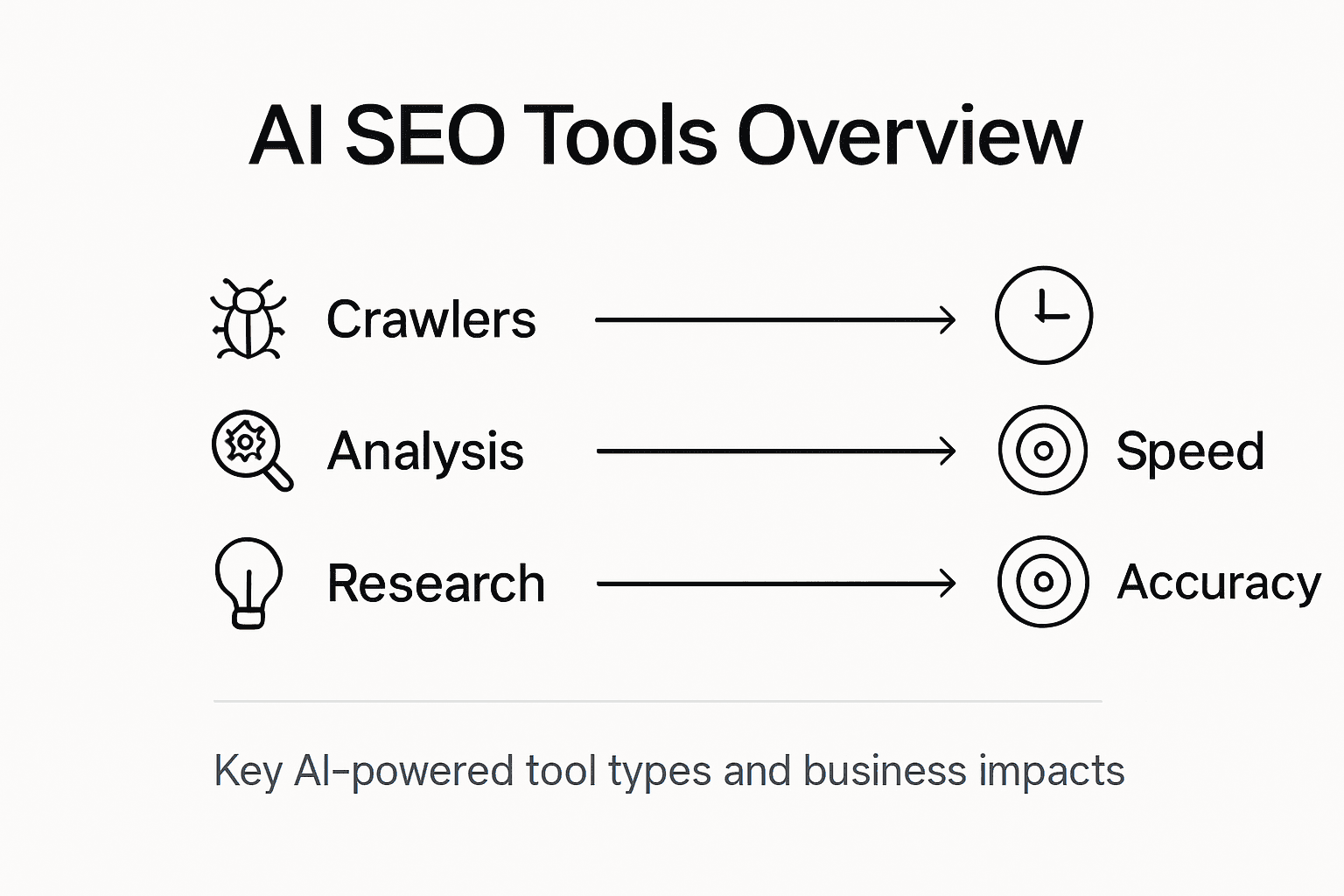
Semantic keyword research platforms represent another critical AI tool category, utilizing natural language processing to understand search intent and contextual relationships between terms. These advanced systems can identify emerging keyword trends, predict user search behaviors, and suggest content optimization strategies that align with sophisticated search engine algorithms. Predictive performance analyzers complete the toolkit, using complex machine learning models to forecast potential ranking changes, competitive positioning, and potential optimization impact before implementation.
Pro tip: When selecting AI SEO tools, prioritize platforms offering integrated capabilities across multiple analysis categories to ensure comprehensive website optimization.
Here’s a quick overview of core AI-powered SEO tool types and their business benefits:
| Tool Type | Main Function | Business Impact |
|---|---|---|
| Technical Crawler | Detects site structure and issues | Enhances site health and indexing |
| Content Analysis Engine | Evaluates text and semantic quality | Improves user engagement and rankings |
| Semantic Keyword Platform | Finds intent-based keyword trends | Aligns content with searcher behavior |
| Predictive Analyzer | Forecasts SEO and ranking changes | Informs proactive strategy decisions |
How AI Transforms the SEO Audit Process
AI has fundamentally reimagined the traditional SEO audit process, shifting from manual, time-consuming analysis to intelligent, automated optimization strategies. AI-driven search technologies are revolutionizing online visibility approaches, enabling marketers to conduct deeper, more nuanced website evaluations with unprecedented speed and precision. The transformation goes beyond simple automation, introducing sophisticated machine learning algorithms that can understand contextual complexities and predict performance outcomes.

The most significant changes in SEO auditing driven by AI include real-time performance analysis, predictive error detection, and dynamic recommendation generation. Traditional audits required hours of manual review, with experts meticulously examining website elements. AI-powered systems now instantly scan entire website architectures, identifying technical issues, content gaps, and optimization opportunities in minutes. These intelligent systems can detect subtle patterns humans might miss, such as emerging keyword trends, semantic content relationships, and potential ranking barriers.
Moreover, AI transforms SEO audits by introducing adaptive learning mechanisms that continuously refine analysis strategies. Unlike static audit tools, these advanced systems learn from each scan, developing increasingly sophisticated understanding of search engine algorithms and website performance metrics. They can generate comprehensive recommendations that are not just reactive but proactively anticipate potential future optimization needs, giving marketers a significant competitive advantage in rapidly evolving digital landscapes.
Pro tip: Integrate AI-powered SEO audit tools that offer machine learning capabilities and provide actionable, context-aware recommendations to maximize your optimization strategies.
Compare how AI-powered SEO audits differ from traditional approaches at a glance:
| Aspect | Traditional SEO Audits | AI-Powered SEO Audits |
|---|---|---|
| Data Processing | Manual, slower | Automated, rapid |
| Insight Depth | Basic, static | Advanced, adaptive |
| Recommendation Type | Generic, one-time | Actionable, ongoing |
| Adaptability | Limited, infrequent | Dynamic, evolves with trends |
Real-World Use Cases and Implementation Strategies
Implementing AI-powered SEO audits requires a strategic approach that balances technological capabilities with nuanced human oversight. Successful SEO professionals develop comprehensive implementation strategies that integrate AI tools seamlessly into existing workflows while maintaining critical human decision-making capabilities. This approach involves carefully selecting AI technologies that complement existing team skills and organizational objectives.
Practical implementation typically involves a phased approach across multiple organizational domains. For technical teams, this means integrating AI audit tools that can automatically detect website structural issues, analyze performance metrics, and generate actionable recommendations. Marketing departments can leverage these tools for advanced competitive analysis, identifying content gaps, and developing data-driven content strategies. Importantly, AI implementation is not about replacing human expertise but augmenting existing capabilities with intelligent, rapid-processing technologies that provide deeper insights and more nuanced performance evaluations.
The most effective AI SEO audit strategies focus on creating adaptable, iterative processes that continuously learn and improve. Organizations should establish clear performance benchmarks, integrate AI recommendations with strategic planning, and develop mechanisms for ongoing tool evaluation and refinement. This might involve creating cross-functional teams that can interpret AI-generated insights, validate recommendations, and translate technical findings into actionable marketing and development strategies that drive meaningful business outcomes.
Pro tip: Create a structured evaluation framework that allows your team to systematically assess and integrate AI-generated SEO recommendations while maintaining strategic human oversight.
Common Mistakes and Limitations in AI SEO Auditing
Despite the transformative potential of AI in SEO auditing, professionals must remain critically aware of the technology's inherent limitations and potential pitfalls. AI-driven search strategies require nuanced understanding and strategic implementation to avoid common misconceptions about automated optimization. The most significant challenges emerge from over-reliance on algorithmic insights without human contextual interpretation.
Key limitations in AI SEO auditing include algorithmic bias, contextual misunderstandings, and inability to fully comprehend complex semantic nuances. Machine learning models can generate statistically probable recommendations, but they frequently struggle with understanding unique brand voices, cultural subtleties, and industry-specific communication strategies. These AI systems may produce technically accurate but generically bland content suggestions that lack the creative spark and strategic depth human experts bring to optimization efforts.
Moreover, AI tools often struggle with interpreting rapidly changing search engine algorithms, emerging digital marketing trends, and context-dependent ranking factors. While machine learning models can process massive datasets quickly, they may miss critical qualitative elements that require sophisticated human judgment. Overreliance on AI-generated metrics can lead to strategic myopia, where marketers focus on quantitative performance indicators at the expense of genuine user experience and meaningful content quality.
Pro tip: Maintain a balanced approach by using AI SEO audit tools as intelligent assistants rather than absolute authorities, always filtering recommendations through human strategic expertise.
Unlock Faster and Smarter SEO Audits with AI
The article highlights the challenge of conducting accurate and timely SEO audits without getting overwhelmed by manual data processing and static recommendations. If you struggle with keeping up to date on search engine changes or miss hidden optimization opportunities, you are not alone. Concepts like real-time performance analysis, dynamic recommendation generation, and predictive error detection are essential to stay ahead in SEO today. Harnessing AI-powered tools that adapt and learn with your website's needs can transform how you approach SEO audits.
At Babylovegrowth.ai, we offer a comprehensive SaaS platform designed to solve these very challenges. Our automated SEO and content strategies deliver continuous keyword discovery, technical website auditing, and actionable insights tailored to your brand’s unique voice and goals. Experience how intelligent tools can streamline your workflow, improve site health, and boost rankings on Google and AI-driven search engines like ChatGPT. Explore our AI-driven SEO auditing capabilities and see how easy it is to combine automated precision with strategic human insight.
Ready to revolutionize your SEO audit process and capture organic growth faster?

Discover your website’s true potential with AI-powered SEO audits at Babylovegrowth.ai. Start optimizing smarter today.
Frequently Asked Questions
What are AI-powered SEO audits?
AI-powered SEO audits leverage advanced machine learning algorithms to analyze websites comprehensively. They identify complex optimization opportunities across technical, content, and strategic SEO dimensions, providing insights that traditional audits might miss.
How do AI tools enhance the accuracy of SEO audits?
AI tools enhance accuracy by utilizing intelligent pattern recognition and predictive analytics, allowing for a more nuanced evaluation of site performance and optimization opportunities compared to manual methods.
What are the key components of AI-driven SEO auditing?
The key components typically include automated technical analysis, content optimization recommendations, semantic keyword exploration, and competitive benchmarking—all of which offer dynamic insights and adapt to changing algorithms.
What are common mistakes to avoid when using AI in SEO audits?
Common mistakes include over-reliance on algorithmic insights without human contextual interpretation, which can lead to overlooking qualitative elements essential for effective optimization and user experience.
Recommended
Smart SEO,
Faster Growth!
Most Read Articles
Generative Engine Optimization (GEO)
Learn how Generative Engine Optimization (GEO) helps your content rank in AI search engines like ChatGPT and Google AI. This comprehensive guide explains the differences between SEO and GEO, why it matters for your business, and practical steps to implement GEO strategies for better visibility in AI-generated responses.
DylenJan 18, 2025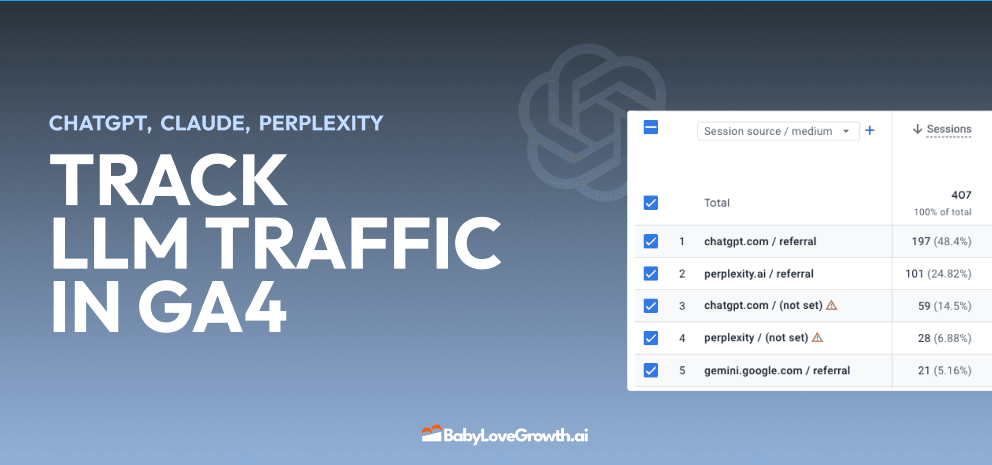
Track LLM Traffic in Google Analytics 4 (GA4)
Learn how to track and analyze traffic from AI sources like ChatGPT, Claude, Perplexity, and Google Gemini in Google Analytics 4. This step-by-step guide shows you how to set up custom filters to monitor AI-driven traffic and make data-driven decisions for your content strategy.
DylenMar 18, 2025
How to Humanize AI Text with Instructions
Learn practical techniques to make AI-generated content sound more natural and human. This guide covers active voice, direct addressing, concise writing, and other proven strategies to transform robotic text into engaging content.
DylenApril 7, 2025
Open AI Revenue and Statistics (2024)
Comprehensive analysis of OpenAI financial performance, user engagement, and market position in 2023. Discover key statistics including $20B valuation, $1B projected revenue, and 100M+ monthly active users.
DylenOctober 03, 2025