Optimize product pages for higher sales and SEO in 2026


TL;DR:
- Display customer reviews above the fold to significantly boost conversions.
- Optimizing page load speed and mobile features improves SEO and user experience.
- Authentic trust signals and schema markup drive higher click-through rates and conversions.
Why do some product pages convert two or three times better than competitors selling the exact same product? The answer almost always comes down to a handful of deliberate, measurable decisions made during page setup. Products with 5+ reviews convert 270% better than those with none, yet most stores still bury reviews below the fold or skip them entirely. This guide walks e-commerce managers and digital marketers through every stage of product page optimization, from understanding the core elements that drive performance, to gathering the right assets, executing a proven checklist, and fixing the mistakes that quietly drain revenue.
Table of Contents
- Understand the essentials: What makes a product page succeed?
- Essential preparations: Gather assets and set benchmarks
- Execute the optimization: Step-by-step checklist
- Spot and fix common mistakes: Troubleshooting for better results
- Our perspective: What actually unlocks product page growth (and what doesn't)
- Take the next step: Automate your product page optimization
- Frequently asked questions
Key Takeaways
| Point | Details |
|---|---|
| Reviews drive sales | Displaying 5 or more authentic reviews above the fold can boost conversion by up to 270%. |
| Structured data matters | Product schema markup unlocks rich search snippets and can increase click-through rates by 20-30%. |
| Mobile experience is critical | Focus on mobile-friendly layouts, sticky CTAs, and fast loading for the majority of buyers. |
| A/B testing is essential | Consistently experiment with CTAs, images, and urgency tactics for the best performance. |
| Trust over hype | Authentic trust signals outperform fake urgency and contribute to long-term sales growth. |
Understand the essentials: What makes a product page succeed?
A product detail page (PDP) is where buying decisions happen. Every element on it either builds confidence or creates friction. The stores that consistently outperform their competitors design these pages to serve two audiences at once: search engines and real shoppers.
The core ingredients of a high-performing PDP are not complicated, but they must all work together:
- High-definition images showing multiple angles, lifestyle context, and zoom capability
- Compelling, unique copy that addresses the shopper's specific problem, not just product specs
- Visible customer reviews placed above the fold, not buried at the bottom
- A strong, clear call-to-action (CTA) that stands out visually and uses action-oriented language
- Trust badges including secure payment icons, return policy summaries, and certifications
- Structured data markup so search engines can display rich snippets in results
Mobile performance is no longer optional. Over 70% of traffic is mobile, and trust signals fail at a higher rate on mobile PDPs than on homepages. That means a page that looks polished on desktop can quietly bleed conversions on the device most of your shoppers are actually using.
Core Web Vitals, especially Largest Contentful Paint (LCP) and Cumulative Layout Shift (CLS), directly affect both rankings and user experience. Google uses these signals as ranking factors, so a slow or visually unstable page hurts you twice: once in search and again at checkout.
| Element | Impact on conversion | Impact on SEO |
|---|---|---|
| Customer reviews (5+) | Very high | Moderate (fresh content) |
| Product schema markup | Moderate | Very high (rich snippets) |
| Mobile-optimized CTA | High | Indirect (engagement signals) |
| Page load speed (LCP <2.5s) | High | Very high (Core Web Vitals) |
| Trust badges | Moderate | Low (direct) |
Understanding reviews' impact on sales is critical before you touch anything else on the page. Reviews are not just social proof. They generate fresh, keyword-rich content that search engines index and reward. Pair that with a solid understanding of SEO for ecommerce conversion and you have a foundation that compounds over time.
The easiest win most stores overlook is trust signal placement. Moving reviews and trust badges above the fold, before the price, can lift conversion without changing a single word of copy.
Essential preparations: Gather assets and set benchmarks
Smart teams do not start optimizing until they know exactly what they are working with. Jumping into changes without a baseline is like adjusting a recipe without tasting it first.
Before touching a single page, gather these assets:
- HD product images (minimum 1000x1000 pixels, multiple angles, lifestyle shots)
- Unique product descriptions written for your specific customer, not copied from a manufacturer
- Existing customer reviews imported or solicited via post-purchase email sequences
- Structured data files or a plugin that generates JSON-LD schema automatically
- Fast, reliable hosting with a content delivery network (CDN) in place
- Analytics access to Google Search Console, Google Analytics 4, and your platform's conversion data
Once assets are confirmed, measure your current state. You cannot improve what you do not measure.
| Metric | Typical range | Top performer target |
|---|---|---|
| PDP conversion rate | 1.5% to 3% | 4% to 8% |
| LCP (Largest Contentful Paint) | 3 to 5 seconds | Under 2.5 seconds |
| Review count per product | 0 to 3 | 5 or more |
| Mobile page speed score | 40 to 65 | 80 or above |
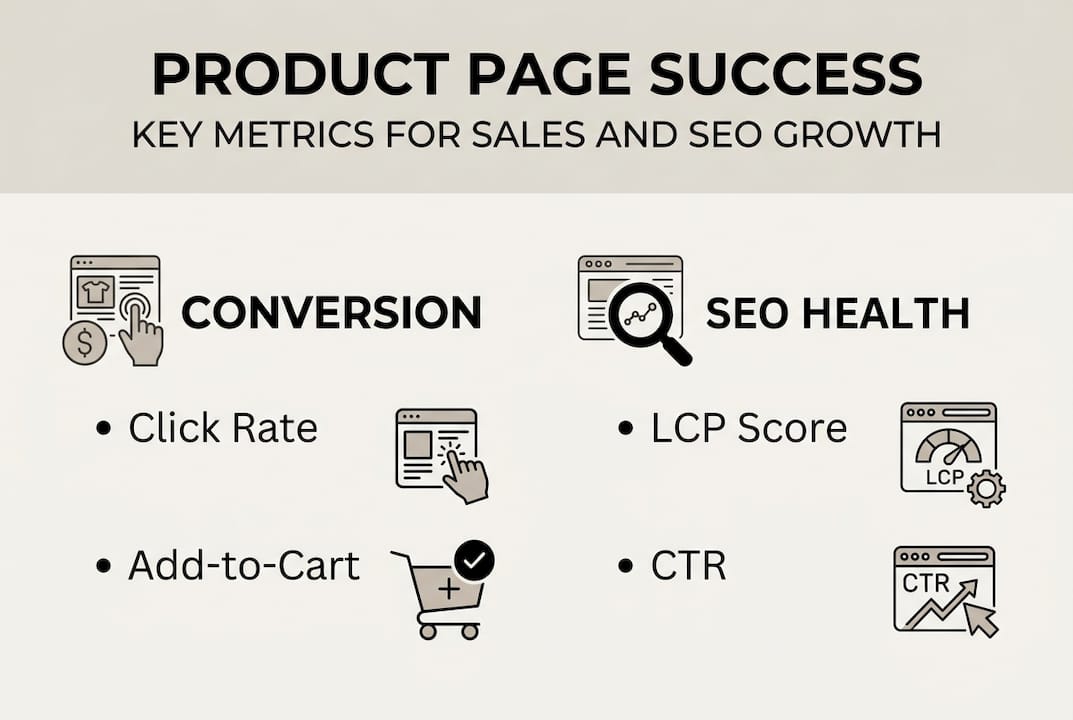
For measurement tools, use Google Search Console for impressions and CTR data, PageSpeed Insights for Core Web Vitals, and your platform's built-in A/B testing or a tool like VWO or Optimizely for conversion experiments. Solid technical SEO for ecommerce practices also surface crawl errors and indexation gaps that silently suppress your rankings before you even start optimizing content.
Do not overlook boosting site speed as a pre-optimization step. A beautiful, well-reviewed product page that loads in six seconds will still underperform a mediocre page that loads in two.
Pro Tip: Document every baseline metric in a shared spreadsheet before you make any changes. This gives you a clean before-and-after comparison for every A/B test and makes it easy to prove ROI to stakeholders.
Execute the optimization: Step-by-step checklist
With assets prepped and benchmarks recorded, it is time to move through the actual optimization work. Follow this checklist in order, since each step builds on the last.
- Move reviews above the fold. Display aggregate star ratings and a review count directly below the product title. Do not make shoppers scroll to find social proof.
- Implement Product schema markup. Properly configured schema can deliver a 20 to 30% CTR boost by surfacing price, availability, and ratings directly in search results. Use structured data for rich results to understand which schema types apply to your catalog.
- Optimize images for speed and quality. Compress files using WebP format, add descriptive alt text with natural keyword usage, and enable lazy loading for images below the fold.
- Make mobile tap targets finger-friendly. Buttons should be at least 44x44 pixels. Small, crowded tap targets frustrate mobile shoppers and increase bounce rates.
- Add a sticky Add to Cart button on mobile. A sticky CTA lifted conversion by up to 32% in mobile-first tests. This single change often delivers the fastest measurable lift.
- Write longer, benefit-focused descriptions for high-consideration products. Address objections, explain use cases, and include natural keyword variations without stuffing.
- Add trust badges near the CTA. Secure checkout icons, money-back guarantees, and free return labels reduce purchase anxiety at the exact moment shoppers are deciding.
- Use genuine scarcity signals. Real low-stock alerts ("Only 4 left") outperform fabricated countdown timers in both trust and conversion.
For JSON-LD schema setup, use Google's Structured Data Markup Helper to generate the correct syntax, then validate it in the Rich Results Test before publishing.
Pro Tip: Prioritize A/B testing in this order: hero image, CTA button text and color, review placement, urgency signals. These four elements account for the majority of conversion variance across most product categories.
Also revisit crafting high-converting CTAs before finalizing button copy. "Add to Cart" works, but "Get Yours Today" or "Shop Now" can outperform it depending on product category and audience.
Spot and fix common mistakes: Troubleshooting for better results
Once changes are live, the work is not over. Common mistakes can quietly reverse your gains if you do not monitor for them.

| Mistake | Why it hurts | Quick fix |
|---|---|---|
| Missing or hidden reviews | Kills trust and conversion | Move ratings above the fold immediately |
| Slow image loading | Raises bounce rate, hurts LCP | Convert to WebP, enable lazy load |
| Small mobile tap targets | Frustrates users, raises exits | Set buttons to minimum 44px height |
| Fake urgency countdowns | Destroys shopper trust | Replace with real inventory signals |
| Duplicate product descriptions | Suppresses organic rankings | Rewrite with unique, benefit-led copy |
| Missing schema markup | No rich snippets in search | Implement and validate JSON-LD |
After rolling out fixes, verify performance with these steps:
- Run the Google Rich Results Test on every updated PDP to confirm schema is valid
- Check Core Web Vitals in Google Search Console's Page Experience report
- Perform a manual mobile check on at least three different device sizes
- Confirm trust elements are visible without scrolling on both desktop and mobile
- Review your best SEO tools for ecommerce stack to automate ongoing monitoring
Genuine scarcity is worth emphasizing separately. Real low-stock messages tied to actual inventory data consistently outperform fake countdown timers in long-term trust metrics and repeat purchase rates.
Never use fake urgency tactics. Shoppers recognize them, and once trust is broken on a product page, it rarely recovers. Authentic scarcity tied to real inventory is both more ethical and more effective.
Our perspective: What actually unlocks product page growth (and what doesn't)
Most optimization guides hand you a checklist and call it done. But not all tactics deliver equal returns, and some widely recommended approaches actively hurt stores that copy them without context.
Copying big-box retailer page layouts is the most common mistake we see. Amazon and Walmart can afford to overwhelm shoppers with options because their brand trust does the heavy lifting. Smaller stores that replicate that density without the brand equity just create confusion.
What actually moves the needle? Authentic reviews placed prominently, longer descriptions for complex or expensive products, and sticky mobile CTAs. These three changes, done well, outperform any amount of visual polish or promotional banner rotation.
The uncomfortable truth is that most stores underinvest in trust and overinvest in design. A plain page with 40 genuine reviews and a fast load time will beat a visually stunning page with two reviews and a three-second LCP almost every time. Explore advanced ecommerce SEO lessons to see how technical credibility compounds these gains over time. Substance beats slickness. Always.
Take the next step: Automate your product page optimization
Armed with a proven framework, the next challenge is keeping pace with a growing catalog. Manual optimization does not scale, and the stores that pull ahead in 2026 are the ones using automation to maintain quality across hundreds or thousands of PDPs.

Babylovegrowth.ai is built for exactly this stage. The platform's keyword discovery platform surfaces high-intent search terms your product pages are missing, while the AI keyword research tool maps those terms to content gaps across your entire catalog. Automatic structured data markup, daily SEO content, and technical auditing mean your product pages stay optimized as your store grows, without requiring a full-time SEO team to manage it.
Frequently asked questions
What is the most important element to optimize on a product page?
Prominently display 5+ customer reviews and aggregate ratings above the fold. Products with 5+ reviews convert 270% better than those with none, making review placement the single highest-impact change most stores can make.
How do rich snippets impact product page performance?
Rich snippets from Product schema markup can increase CTR by 20 to 30% by displaying price, availability, and ratings directly in search results, driving more qualified clicks before shoppers even reach your page.
Why is mobile-first design critical for product pages?
Since 73% of traffic is mobile, features like sticky CTAs and fast load times are not optional extras. They are the baseline for competitive conversion rates and strong SEO rankings in 2026.
How often should I A/B test product page changes?
Test CTAs, images, and review placement regularly, especially after significant traffic shifts or design updates. A/B testing these priorities consistently surfaces the highest conversion lifts with the least risk.
What's the average product page conversion rate?
Typical product detail page conversion rates range from 1.5% to 3%, while the best-optimized stores reach 4% to 8% by combining strong trust signals, fast load times, and well-placed reviews.
Recommended
Smart SEO,
Faster Growth!
Most Read Articles
Generative Engine Optimization (GEO)
Learn how Generative Engine Optimization (GEO) helps your content rank in AI search engines like ChatGPT and Google AI. This comprehensive guide explains the differences between SEO and GEO, why it matters for your business, and practical steps to implement GEO strategies for better visibility in AI-generated responses.
DylenJan 18, 2025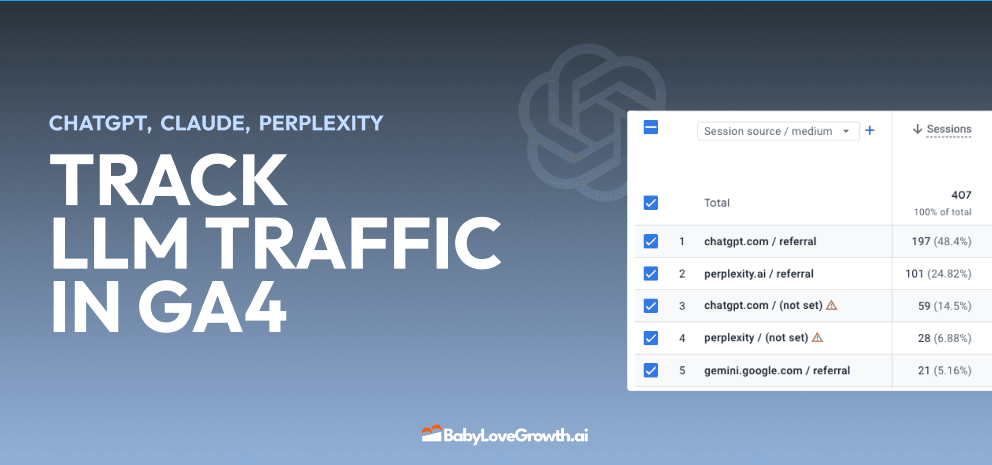
Track LLM Traffic in Google Analytics 4 (GA4)
Learn how to track and analyze traffic from AI sources like ChatGPT, Claude, Perplexity, and Google Gemini in Google Analytics 4. This step-by-step guide shows you how to set up custom filters to monitor AI-driven traffic and make data-driven decisions for your content strategy.
DylenMar 18, 2025
How to Humanize AI Text with Instructions
Learn practical techniques to make AI-generated content sound more natural and human. This guide covers active voice, direct addressing, concise writing, and other proven strategies to transform robotic text into engaging content.
DylenApril 7, 2025
Open AI Revenue and Statistics (2024)
Comprehensive analysis of OpenAI financial performance, user engagement, and market position in 2023. Discover key statistics including $20B valuation, $1B projected revenue, and 100M+ monthly active users.
DylenOctober 03, 2025