Master step-by-step keyword research to drive SEO success


TL;DR:
- 96% of pages fail to get traffic due to poor keyword research and intent misalignment.
- Effective SEO relies on continuous, data-driven keyword research aligned with audience intent.
- Using tools and platforms streamline keyword discovery, prioritization, and content mapping for better results.
Organic traffic is the backbone of sustainable SEO, yet 96% of pages earn zero traffic because marketers chase the wrong keywords or skip research entirely. That gap between effort and results is almost always a keyword problem. If you are pouring time into content that never ranks, the issue is not your writing. It is your research. This guide walks you through a proven, step-by-step process for finding, evaluating, and acting on keywords that actually move the needle. You will come away with a practical system for keyword research that scales with your goals and adapts to algorithm shifts.
Table of Contents
- Why keyword research matters more than ever
- Step 1: Lay the groundwork with seed keyword brainstorming
- Step 2: Expand keyword lists with tools and data
- Step 3: Analyze, prioritize, and organize your keywords
- Step 4: Map, implement, and track your keywords for SEO success
- The truth most guides miss about keyword research
- Take your keyword research further with BabyLoveGrowth
- Frequently asked questions
Key Takeaways
| Point | Details |
|---|---|
| Seed keywords are crucial | Your research should always start with well-chosen seed keywords relevant to your offering. |
| Expand and prioritize smartly | Use dedicated tools and data to grow your list, then rank by opportunity, intent, and practicality. |
| Focus on long-tail wins | Long-tail keywords deliver more traffic and conversions with less competition than head terms. |
| Track and iterate | Continuous tracking and refinement ensure your keywords perform and adapt to changing SEO landscapes. |
Why keyword research matters more than ever
Search engines have grown dramatically more sophisticated, but the fundamental reality has not changed: content that does not align with what people are searching for simply will not rank. This is not a minor inconvenience. It is the central problem of modern SEO.
Consider the numbers. Position 1 CTR reaches 27-31.7%, and organic search accounts for 53% of all site visits. That means the top result on Google captures nearly a third of all available clicks. Getting there requires far more than good writing. It demands precise, intent-driven keyword targeting from the very start. And 65% of experts rank keyword research as the single most critical SEO task, above technical optimization, link building, and content quality.
Why does keyword research carry such weight? Because every other SEO effort depends on it. Internal linking, content structure, on-page optimization, and even backlink strategy all flow downstream from keyword decisions. Choosing the wrong keywords means every subsequent effort is misdirected.
Here is what most teams get wrong:
- Targeting keywords based on gut instinct rather than data
- Ignoring search intent and optimizing purely for volume
- Skipping competitive analysis before committing to a keyword
- Failing to align keywords with the buyer journey stage
- Treating keyword research as a one-time task rather than an ongoing process
"Keyword research is not just about finding popular terms. It is about understanding the language your audience uses and the problems they are trying to solve at every stage of their journey."
Pro Tip: Before creating a single piece of content, invest at least 2-3 hours in keyword research. Understanding why keyword research is essential will sharpen your strategy and prevent wasted content investment.
The ROI case is straightforward. Teams that prioritize research before production consistently produce content that ranks faster, converts better, and requires fewer revisions. Keyword research is not a preliminary step. It is the foundation everything else is built on.
Step 1: Lay the groundwork with seed keyword brainstorming
Seed keywords are your starting point. They are broad, foundational terms that describe what your business does, what your customers need, or what problems your product solves. Getting these right sets the trajectory for every keyword you will discover afterward.

The best source for seed keywords is not a tool. It is your existing knowledge. Seed keywords come from niche analysis, customer queries, and existing data you already have access to. Start by writing down every term a potential customer might type when looking for what you offer. Think like a buyer, not a marketer.
Here are the most productive sources for seed keyword discovery:
- Google Search Console: Find the queries already sending traffic to your site, even in small volumes
- Customer FAQs: Every question your support team answers is a keyword opportunity
- Product and service categories: The labels you use to organize your offerings are natural seeds
- Competitor page titles: Scan what your competitors target to identify gaps you can own
- Sales team insights: Your sales reps hear objections and questions daily that translate directly into search queries
- Forum and community conversations: Reddit threads and industry forums reveal the raw language real users apply
"The most overlooked keyword source is your own customer service team. They are sitting on a goldmine of real-world search intent data."
Pro Tip: Explore top discovery methods that go beyond the standard tools. Combining human intelligence with platform data consistently surfaces keyword opportunities that automated tools miss.
The goal at this stage is breadth, not precision. Write down 20-50 seed terms without worrying about volume or competition. Starting broad gives you more material to work with when you move into tool-based expansion. Avoid being so generic that the terms lose relevance, but do not filter aggressively yet. That comes next.
Step 2: Expand keyword lists with tools and data
Seed keywords are just the raw material. The real work begins when you feed those seeds into keyword research tools to surface hundreds or thousands of related terms, variations, and hidden opportunities.
Tools like Semrush's Keyword Magic Tool, Ahrefs' Keywords Explorer, and autocomplete dramatically increase your keyword pool by generating related terms, questions, and long-tail variations your manual brainstorm would never catch. Here is a practical expansion workflow:
- Enter each seed keyword into your primary tool and export the full results
- Filter by search volume, keyword difficulty, and relevance to your offer
- Mine Google's autocomplete and People Also Ask (PAA) boxes for question-based keywords
- Pull competitor URLs into a keyword gap tool to find terms they rank for that you do not
- Group outputs by theme to prepare for clustering later
Here is a quick comparison of tool options to help you choose based on your context:
| Tool | Ease of use | Best for |
|---|---|---|
| Google Keyword Planner | High | Budget planning, basic volume data |
| Semrush Keyword Magic | Medium | Large-scale expansion, competitive research |
| Ahrefs Keywords Explorer | Medium | Difficulty scoring, click-through data |
| Ubersuggest | High | Beginners, quick ideation |
| Google Search Console | High | Existing site data, low-hanging fruit |
People Also Ask boxes are underutilized by most SEOs. Each PAA question represents a real user query that Google considers relevant to your seed term. Capturing these positions builds topical authority and often earns featured snippet placement.
Pro Tip: Do not overlook long-tail keywords when expanding your list. For ecommerce keyword research, long-tail terms with purchase intent frequently outperform high-volume head terms on conversion rate. Use a dedicated keyword research tool to automate this expansion efficiently.
Step 3: Analyze, prioritize, and organize your keywords
Expanding your keyword list creates volume. Now you need to create value by filtering and organizing that list into actionable priorities.
Long-tail keywords with more than three words make up over 70% of all search traffic, yet most have low individual search volume. This is the paradox of keyword research: the terms with the most traffic are often the hardest to rank for, while the terms that actually convert get ignored because they look small on paper.
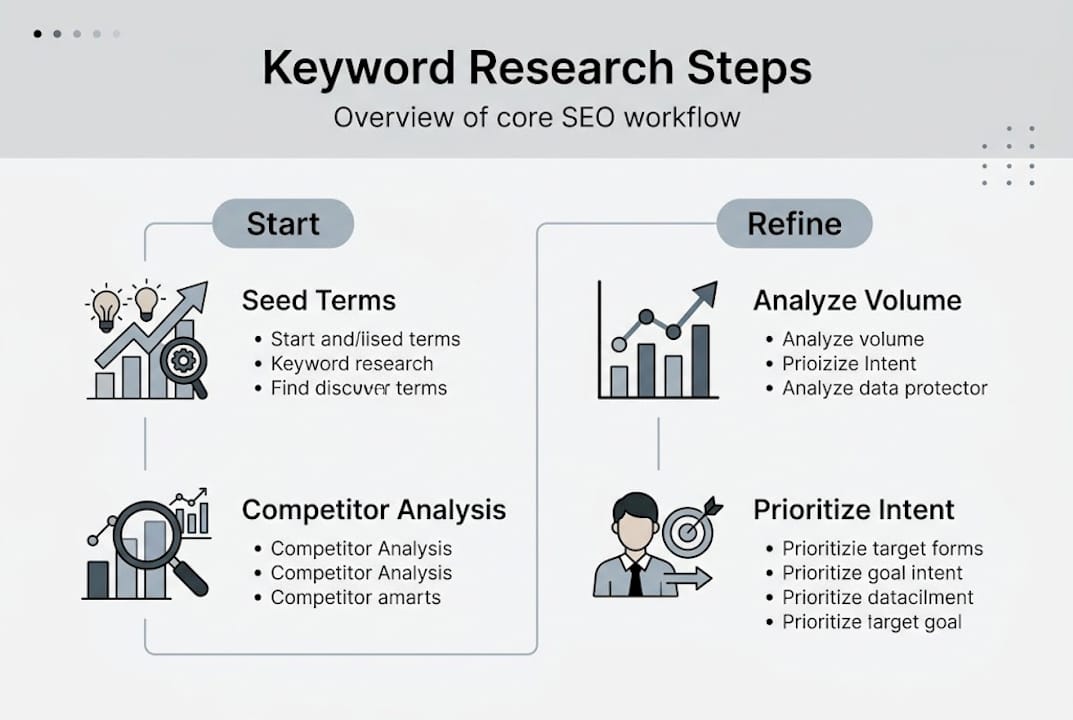
For most sites, especially those without established domain authority, targeting KD below 30 is the smartest move. Notably, 91% of all keywords carry a KD below 20, which means there is an enormous landscape of genuinely winnable terms that the majority of competitors skip.
Follow this assessment workflow:
- Filter by KD: Remove anything above your competitive threshold for now
- Check volume: Confirm the keyword has enough search demand to be worth targeting
- Identify search intent: Is it informational, navigational, commercial, or transactional?
- Evaluate opportunity: Look at the current ranking pages. Are they weak? Can you outperform them?
- Cluster by topic: Group related keywords that should live on the same page or content cluster
Here is an example of how keyword metrics guide prioritization:
| Keyword | Volume | KD | Intent | Priority |
|---|---|---|---|---|
| keyword research guide | 2,900 | 52 | Informational | Medium |
| keyword research for beginners | 880 | 28 | Informational | High |
| best keyword research tool | 4,400 | 61 | Commercial | Low |
| long-tail keyword strategy | 390 | 18 | Informational | High |
Pro Tip: Intent match beats volume every time. A 200-search-per-month keyword that perfectly matches a buyer's decision stage will outperform a 10,000-volume keyword that attracts casual browsers. Use keyword clustering best practices to organize your priorities and run a keyword gap analysis to find terms competitors own that you do not. Learning to target relevant keywords by intent is what separates average SEOs from high-performers.
Step 4: Map, implement, and track your keywords for SEO success
Research without implementation is just a spreadsheet. The final stage is where keyword strategy becomes measurable SEO performance.
A complete keyword process ends with mapping your clusters to specific pages and setting up ongoing rank tracking. Here is how to execute this phase:
- Assign clusters to pages: Each content cluster should map to one primary URL and support several related keywords
- Optimize on-page elements: Title tag, H1, meta description, subheadings, and first 100 words should include your primary keyword naturally
- Build internal links: Connect related pages using anchor text that reflects your keyword clusters
- Create content gaps: Identify clusters without supporting content and schedule their production
- Set up tracking: Use tools like Google Search Console, Semrush, or Ahrefs to monitor ranking positions weekly
Common implementation mistakes to avoid:
- Keyword stuffing: modern algorithms penalize unnatural keyword density
- Cannibalization: multiple pages targeting the same keyword split your ranking power
- Ignoring meta descriptions: they do not directly affect rankings but impact click-through rate significantly
- Publishing without internal links: orphaned pages rank poorly regardless of content quality
- Skipping rank tracking: you cannot optimize what you do not measure
Pro Tip: Use a keyword research checklist to standardize your process across every content piece. Consistent execution compounds over time. Also, learning to monitor SEO performance with automated tools means you catch ranking drops and opportunities before they become costly problems.
The truth most guides miss about keyword research
Here is what most keyword research content will not tell you: the process is not really about keywords. It is about understanding people. Every search query is a question someone is asking, a problem they are trying to solve, or a decision they are moving toward. The keyword is just the signal.
Most SEOs get this backwards. They see 96% of pages earning zero traffic and conclude they need to target higher-volume terms. The opposite is usually true. Those pages fail because they chased volume while ignoring intent. A page targeting a 100-search-per-month keyword with precise intent alignment will consistently outperform a page chasing a 10,000-volume term it was never built to satisfy.
The teams that win at keyword research over time are not the ones with the biggest tool budgets or the most elaborate spreadsheets. They are the ones who iterate constantly. They publish, observe, adjust, and republish. Understanding essential keyword research as an ongoing cycle rather than a launch checklist is what separates sustainable organic growth from short-lived traffic spikes.
Pro Tip: Success in keyword research compounds when you treat every published piece as a data point. Review performance monthly, update underperforming content, and let real-world results guide your next research cycle.
Take your keyword research further with BabyLoveGrowth
Applying a rigorous keyword research process manually is powerful, but scaling it is where most teams hit a wall. BabyLoveGrowth.ai is built specifically to remove that bottleneck.

The platform's keyword discovery platform automates the most time-consuming research steps, surfacing high-opportunity keywords aligned to your niche and audience intent. From there, the keyword research tool helps you analyze and prioritize at scale without manual spreadsheet work. And the keyword clustering tool organizes your opportunities into content-ready topic maps, so your team always knows what to build next. If you are serious about sustained organic growth, BabyLoveGrowth.ai turns keyword research from a bottleneck into a competitive advantage.
Frequently asked questions
What is the best way to find seed keywords?
Start with your niche, customer data and FAQs, and site analytics to collect terms that directly reflect your audience's real needs and language.
How do I measure keyword difficulty and opportunity?
Use keyword tools to check search volume and KD scores. For most sites, target KD below 30 since 91% of all keywords fall under KD 20, giving you a wide range of achievable targets.
Why should I target long-tail keywords?
Long-tail keywords deliver over 70% of search traffic, face less competition from established domains, and typically convert at a higher rate because they match specific buyer intent.
How often should I update my keyword research?
Review and refresh your keyword strategy every 3-6 months. Search landscapes shift with algorithm updates and audience behavior, so regular revisits keep your content strategy aligned with current demand.
What if my keywords are not driving results?
Re-examine intent alignment first. Poor results often signal a mismatch between what the keyword promises and what your page delivers. Update content and targeting based on fresh data and competitor analysis.
Recommended
Smart SEO,
Faster Growth!
Most Read Articles
Generative Engine Optimization (GEO)
Learn how Generative Engine Optimization (GEO) helps your content rank in AI search engines like ChatGPT and Google AI. This comprehensive guide explains the differences between SEO and GEO, why it matters for your business, and practical steps to implement GEO strategies for better visibility in AI-generated responses.
DylenJan 18, 2025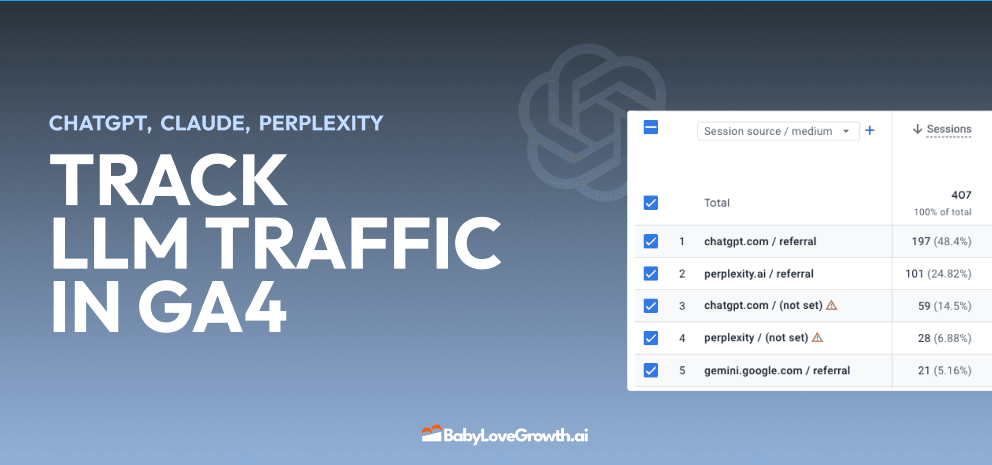
Track LLM Traffic in Google Analytics 4 (GA4)
Learn how to track and analyze traffic from AI sources like ChatGPT, Claude, Perplexity, and Google Gemini in Google Analytics 4. This step-by-step guide shows you how to set up custom filters to monitor AI-driven traffic and make data-driven decisions for your content strategy.
DylenMar 18, 2025
How to Humanize AI Text with Instructions
Learn practical techniques to make AI-generated content sound more natural and human. This guide covers active voice, direct addressing, concise writing, and other proven strategies to transform robotic text into engaging content.
DylenApril 7, 2025
Open AI Revenue and Statistics (2024)
Comprehensive analysis of OpenAI financial performance, user engagement, and market position in 2023. Discover key statistics including $20B valuation, $1B projected revenue, and 100M+ monthly active users.
DylenOctober 03, 2025