Internal linking: the secret lever for website authority


TL;DR:
- Internal links control site architecture, crawlability, and authority flow, impacting rankings significantly.
- A strategic internal linking structure boosts page authority, redistributes link equity, and surface orphan pages.
- Avoid common mistakes like over-optimization, broken links, and orphan pages for maximum SEO benefit.
Backlinks get all the glory in SEO conversations, but internal links are quietly doing some of the heaviest lifting on your site. Most SEO professionals spend months chasing external links while leaving a powerful, fully controllable ranking lever untouched. Internal linking shapes how search engines crawl your site, how authority flows between pages, and how users navigate your content. Get it right and you can revive underperforming pages, surface buried content, and strengthen your domain's overall structure without waiting on anyone else. This article covers exactly what internal linking is, why it moves rankings, how to build a smart strategy, and the mistakes you need to stop making today.
Table of Contents
- What is internal linking and why does it matter?
- The SEO impact: How internal links boost rankings and authority
- Best practices: Building an effective internal linking strategy
- Common internal linking mistakes (and how to fix them)
- Why internal linking is the secret SEO lever most overlook
- Next steps: Boost your site authority with advanced tools
- Frequently asked questions
Key Takeaways
| Point | Details |
|---|---|
| Internal links build authority | Strategically placed internal links distribute SEO value and improve rankings across your website. |
| User experience drives SEO | Internal links guide visitors to important pages, keeping them engaged and raising conversion rates. |
| Best practices prevent pitfalls | Following proven linking strategies and avoiding common mistakes maximizes SEO impact. |
| Both links matter | A balance of internal links and external backlinks delivers the best organic growth and authority. |
What is internal linking and why does it matter?
An internal link is any hyperlink that points from one page on your website to another page on the same domain. Simple concept, massive impact. These links form the connective tissue of your site, telling both users and search engines how your content relates to itself.
There are four main types of internal links you'll encounter on any well-structured site. Navigation links appear in your main menu and guide users to top-level pages. Contextual links sit inside body content and connect related topics naturally. Footer links point to important utility pages like contact, privacy, and sitemap. Sidebar links highlight related posts or featured content alongside the main reading area. Each type serves a distinct purpose, and a strong site uses all four intentionally.
Why does this matter so much? Because internal links connect your website's pages to distribute link equity and guide both users and search engines. When a crawler lands on your homepage, it follows internal links to discover every other page on your site. Without those links, pages become invisible to search engines, no matter how good the content is.
"A site's internal link structure is one of the most direct signals you can send to search engines about which pages matter most and how they relate to each other." This is why internal linking strategies should be treated as a core SEO discipline, not an afterthought.
Here's what a solid internal linking structure delivers immediately:
- Distributed link equity: Authority flows from high-ranking pages to pages that need a boost.
- Improved crawlability: Search engines can discover and index more of your content faster.
- Surfaced orphan pages: Pages with zero inbound internal links get found and ranked.
- Better user navigation: Visitors stay longer and explore more when relevant links guide them.
- Stronger information architecture: Your site's topical clusters become clear to both users and crawlers.
For a deeper look at how link structure ties into enhancing user experience, the relationship between navigation and engagement is worth understanding fully. Moz's internal linking guide also provides solid foundational context on how these links function within a broader SEO system.
The SEO impact: How internal links boost rankings and authority
Now that you know what internal linking is, it's time to see exactly how it moves the SEO needle.
Google uses internal links to discover new content and understand page relationships. That's not a minor function. It means the way you link internally directly shapes which pages Google considers important and how it interprets your site's topical authority.

PageRank, Google's original algorithm for measuring page importance, flows through links. Every time a strong page links to a weaker one, it passes a portion of its authority along. Internal links work the same way as backlinks in this regard, except you control every single one. You don't need to wait for a third-party site to link to your product page. You can link to it from your most authoritative blog post today.
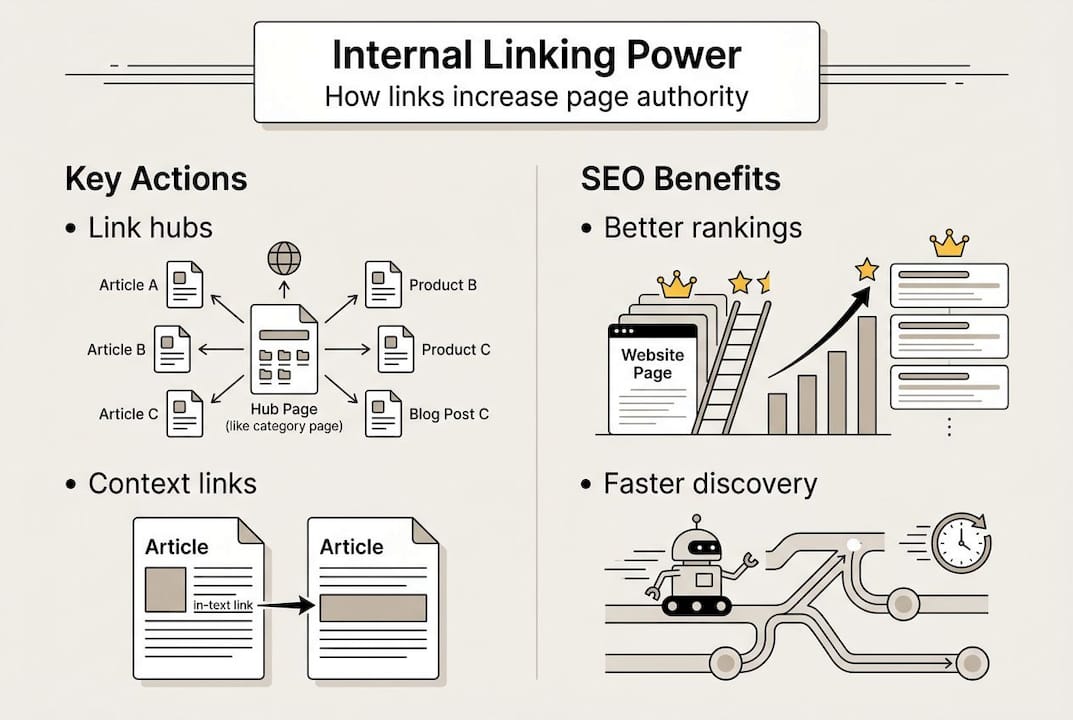
Stat callout: According to Ahrefs' research on internal links for SEO, pages that receive more internal links consistently rank higher than comparable pages with fewer internal links, all else being equal. This effect is measurable and repeatable across industries.
Here's how internal links compare to external backlinks when you're thinking about SEO strategy:
| Factor | Internal links | External backlinks |
|---|---|---|
| Control | Full control | Dependent on others |
| Speed of implementation | Immediate | Weeks to months |
| Authority passed | Yes, PageRank flows | Yes, stronger per link |
| Cost | Free | Often costly or time-intensive |
| Risk of penalty | Low if done correctly | Higher with low-quality links |
| Impact on crawlability | Direct and immediate | Indirect |
The steps internal links take to boost a page's ranking chances follow a clear sequence:
- A high-authority page on your site links to a target page using relevant anchor text.
- Crawlers follow the link and discover or re-crawl the target page.
- PageRank flows from the source page to the target, increasing its authority score.
- Google reassesses the target page's relevance based on the anchor text used.
- The target page's position in search results improves over time as authority accumulates.
For SEO professionals who also manage backlink analysis for SEO, understanding that internal and external links work together is critical. Internal links amplify the value of every backlink you earn by distributing that authority across your site. For more on how link building and authority interact, the relationship is more synergistic than most realize.
Best practices: Building an effective internal linking strategy
Understanding the benefits sets the stage for practical execution. Here's how to build the right internal link structure.
Start with a content audit. You need to know what pages exist, which ones have authority, and which ones are orphaned or underperforming. Tools like Screaming Frog or your platform's site audit feature will map your current link structure and flag gaps immediately. Once you have that map, you can identify which high-authority pages should be linking to which underperforming ones.
Anchor text matters more than most people give it credit for. Use descriptive, keyword-relevant phrases that tell both users and crawlers what the destination page is about. Avoid vague anchors like "click here" or "read more." A well-planned internal link structure can boost underperforming pages and help users navigate more intuitively, but only if the anchor text is specific and contextual.
Dos and don'ts for internal linking:
- Do link from high-traffic, high-authority pages to pages you want to rank.
- Do use descriptive anchor text that reflects the target page's topic.
- Do link contextually within body content, not just in navigation.
- Don't stuff every paragraph with internal links. It dilutes value and annoys readers.
- Don't use the same anchor text for links pointing to different pages.
- Don't ignore orphan pages. Every page on your site should have at least one internal link pointing to it.
Here's how to think about link strategy by page type:
| Page type | Role | Ideal link strategy |
|---|---|---|
| Pillar page | Topical authority hub | Receives links from all supporting pages; links to subtopics |
| Supporting page | Covers subtopics in depth | Links back to pillar; links to related supporting pages |
| Orphan page | No inbound internal links | Needs links from relevant pillar or supporting pages immediately |
For inspiration on how content structure supports linking, content marketing examples show how well-organized content naturally creates linking opportunities. You can also find advanced internal linking tips for more tactical execution. SearchEngineLand's breakdown of internal linking techniques is also worth bookmarking.
Pro Tip: Use your site's internal search data to find what users are looking for but not finding. Those search queries are a direct signal for where you need better internal links pointing to relevant content.
Common internal linking mistakes (and how to fix them)
Even the best strategies can fall victim to traps. Here are the costly errors most SEOs miss.
The most common internal linking mistakes follow predictable patterns, and each one has a clear fix:
- Over-optimizing anchor text. Using the same exact-match keyword anchor on every internal link pointing to a page looks manipulative. Fix: vary your anchor text naturally while keeping it descriptive.
- Ignoring contextual placement. Links buried in footers or sidebars carry less weight than links placed naturally within body content. Fix: prioritize in-content links over navigational ones for SEO value.
- Leaving broken internal links. A broken link wastes crawl budget and frustrates users. Fix: run monthly crawls and fix or redirect broken links immediately.
- Orphaning pages. Publishing new content without linking to it from existing pages means it may never get indexed. Fix: every time you publish, update at least two existing pages to link to the new one.
- Linking only from low-authority pages. If your highest-authority pages never link internally, you're leaving PageRank trapped at the top. Fix: audit your top 10 pages by authority and add relevant internal links from each.
Overusing exact-match anchors and linking excessively from every page can dilute SEO value. This is one of the most common traps SEO professionals fall into when they first start taking internal linking seriously. The fix is intentionality: every link should serve a clear purpose for either the user or the crawler, ideally both.
For reference on what internal linking errors look like in practice, reviewing your own site's link map against these five patterns will surface issues fast. Search Engine Journal's guide on internal linking mistakes also covers edge cases worth knowing. Looking at productive content linking examples can help you visualize what good looks like.
Pro Tip: Schedule a quarterly internal link review as a standing calendar item. Treat it like a technical audit. New content, updated pages, and shifted priorities all change your optimal link structure over time.
Why internal linking is the secret SEO lever most overlook
Here's an uncomfortable truth: most SEO advice is obsessed with backlinks because they're harder to get, which makes them feel more valuable. But that scarcity bias causes professionals to underinvest in a lever they already own completely.
Internal linking is the one SEO variable you control entirely. No outreach emails, no waiting, no budget for link placements. You can restructure your entire site's authority flow in a single afternoon if you know what you're doing. We've seen sites recover from ranking drops almost immediately after a focused internal link audit, without a single new backlink acquired.
The real insight is this: backlinks bring authority into your site, but internal links determine where that authority goes. A site with 500 strong backlinks but poor internal linking is leaving most of that authority trapped on a handful of pages. A site with 100 backlinks and excellent internal linking can distribute that value across hundreds of pages effectively.
For SEO professionals serious about internal linking expertise, this reframe changes how you prioritize your time. And if you want to understand the full picture of how the role of backlinks fits alongside internal linking, the two strategies are far more powerful together than either is alone.
Next steps: Boost your site authority with advanced tools
Internal linking strategy is only as good as the data behind it. Knowing which pages need links, which anchors to use, and where authority gaps exist requires systematic auditing that manual reviews simply can't scale.

Babylovegrowth.ai gives SEO professionals the tools to automate and scale exactly this kind of work. From AI keyword discovery that surfaces the right anchor text opportunities, to a full link building platform that handles both internal and external strategies, the platform is built for teams that want measurable results without the manual grind. You can also use the backlink acquisition software to pair your internal linking improvements with a steady flow of new external authority.
Frequently asked questions
How many internal links should a page have for SEO?
Most SEO experts recommend including between 3 and 5 relevant internal links per page, though longer content can naturally support more. The key is that contextual internal links should always serve the reader's navigation, not just SEO mechanics.
Do internal links pass PageRank in 2026?
Yes, internal links still pass authority and help Google understand page importance as of 2026. Internal links signal importance to search engines, making them a critical part of any modern SEO strategy.
Can too many internal links hurt SEO?
Excessive internal linking or over-optimized anchor text can dilute SEO value and confuse crawlers. Over-optimization of internal links reduces the clarity of your site's topical signals and can trigger algorithmic scrutiny.
Is internal linking more important than external backlinks?
Both are essential and work best together. Internal linking is fully controllable and critical for on-site authority distribution, while internal links and backlinks together create a complete authority ecosystem for long-term rankings.
Recommended
Smart SEO,
Faster Growth!
Most Read Articles
Generative Engine Optimization (GEO)
Learn how Generative Engine Optimization (GEO) helps your content rank in AI search engines like ChatGPT and Google AI. This comprehensive guide explains the differences between SEO and GEO, why it matters for your business, and practical steps to implement GEO strategies for better visibility in AI-generated responses.
DylenJan 18, 2025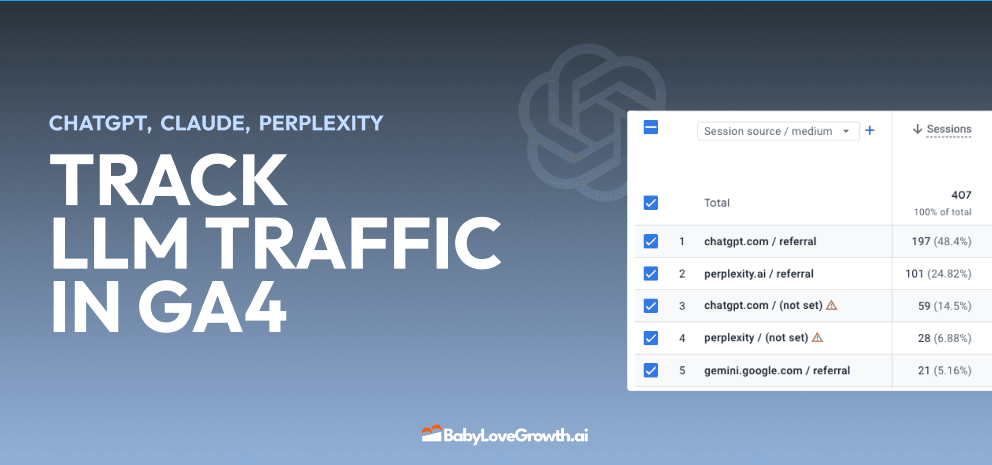
Track LLM Traffic in Google Analytics 4 (GA4)
Learn how to track and analyze traffic from AI sources like ChatGPT, Claude, Perplexity, and Google Gemini in Google Analytics 4. This step-by-step guide shows you how to set up custom filters to monitor AI-driven traffic and make data-driven decisions for your content strategy.
DylenMar 18, 2025
How to Humanize AI Text with Instructions
Learn practical techniques to make AI-generated content sound more natural and human. This guide covers active voice, direct addressing, concise writing, and other proven strategies to transform robotic text into engaging content.
DylenApril 7, 2025
Open AI Revenue and Statistics (2024)
Comprehensive analysis of OpenAI financial performance, user engagement, and market position in 2023. Discover key statistics including $20B valuation, $1B projected revenue, and 100M+ monthly active users.
DylenOctober 03, 2025