Influencer marketing unveiled: boost brand visibility & ROI

TL;DR:
- Influencer marketing generates an ROI of $5 to $6 per dollar spent, with some campaigns reaching 480%.
- Nano and micro influencers often outperform macro influencers in engagement and conversions due to higher authenticity.
- Careful vetting, authenticity, and strategic content alignment are crucial to mitigate risks and ensure campaign success.
Influencer marketing is generating an average of $5 to $6 for every dollar spent, with some campaigns reaching 480% ROI. Yet most business owners either underestimate it or misuse it entirely. The global influencer marketing industry is valued at $33 billion in 2025, and it is accelerating fast. If you are a marketer or brand owner trying to cut through the noise, this guide gives you the real mechanics, the right frameworks, and practical strategies to turn influencer partnerships into measurable growth. No fluff, no recycled advice.
Table of Contents
- Defining influencer marketing and how it works
- Influencer tiers and choosing the right fit
- Influencer marketing strategies for engagement and ROI
- Risks, pitfalls, and how to ensure authenticity
- The influencer marketing truth most guides miss
- Ready to elevate your growth with smart marketing tools?
- Frequently asked questions
Key Takeaways
| Point | Details |
|---|---|
| Influencer marketing fundamentals | Partnerships with trusted social voices can boost brand engagement and credibility. |
| Tier choice matters | Selecting the right influencer size drives ROI and aligns campaigns with brand goals. |
| Long-term strategies win | Nurturing ongoing relationships outperforms one-off posts for sustainable growth. |
| Mitigate risks early | Checking authenticity and monitoring campaigns protect your brand from common pitfalls. |
Defining influencer marketing and how it works
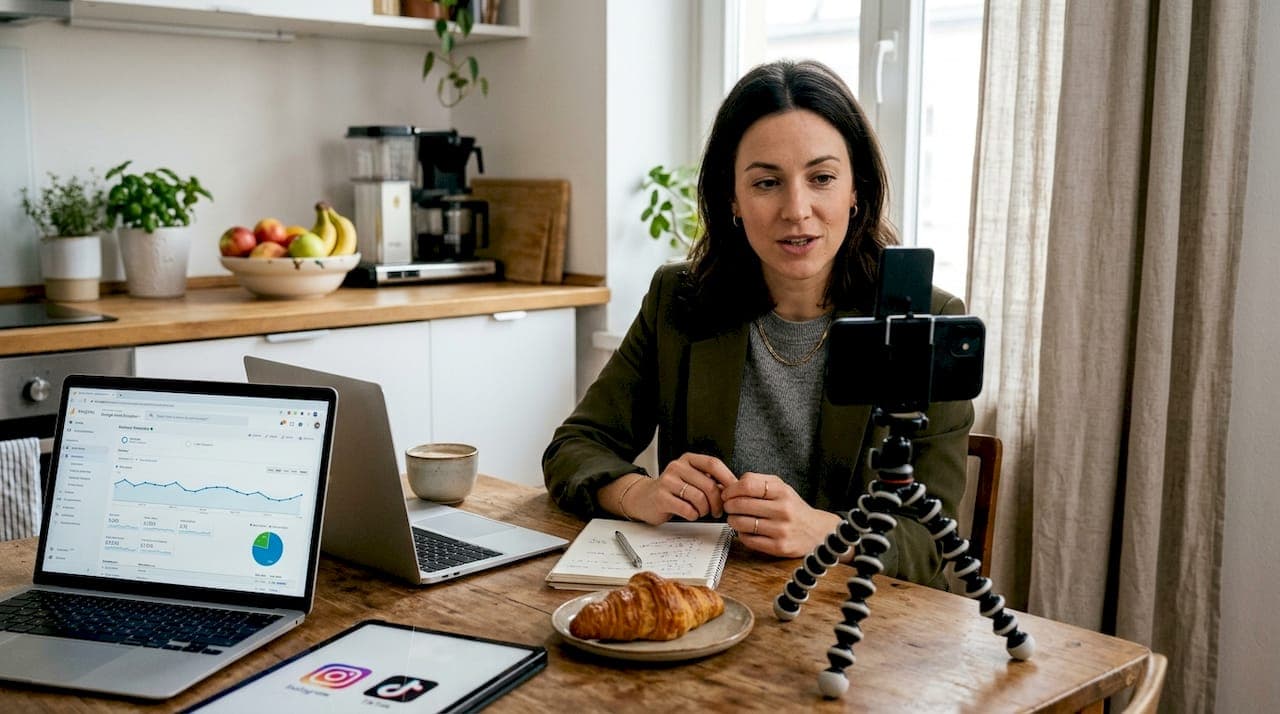
Influencer marketing is the practice of partnering with individuals who have built credibility and loyal audiences on social media platforms. These individuals, known as influencers or key opinion leaders, promote your brand, product, or service to their followers in a way that feels native and trustworthy. It is not advertising in the traditional sense. It is more like a trusted friend making a recommendation.
The model has shifted dramatically over the past decade. Early influencer campaigns leaned on celebrities with massive reach but minimal personal connection to their audiences. Today, the most effective campaigns leverage influencers for growth through relatability, niche authority, and genuine community engagement. A fitness coach with 15,000 followers who posts daily workout videos has far more influence over supplement purchases than a celebrity with 5 million passive followers.
Here is how the mechanism actually works:
- Discovery: Brands identify influencers whose audience demographics match their target customer profile.
- Vetting: Engagement rates, authenticity scores, and past brand partnerships are reviewed.
- Campaign alignment: Content briefs, messaging guidelines, and goals are agreed upon.
- Execution: The influencer creates and publishes content, whether a review, unboxing, tutorial, or story.
- Measurement: Brands track clicks, conversions, reach, and engagement to assess performance.
Collaboration types vary widely. Sponsored posts are the most common, but brands also run product reviews, content co-creation projects, affiliate deals, and long-term ambassador programs. Each format serves a different stage of the customer journey.
"Influencer marketing is not about buying attention. It is about borrowing trust from someone who has already earned it."
Influencer tiers are defined by follower count and engagement level. Influencer types in 2026 break down as: Nano influencers (1K to 10K followers, highest authenticity), Micro influencers (10K to 100K, strong engagement), and Macro or Mega influencers (100K and above, broad reach). Understanding these tiers is the foundation for building a smart campaign. Pairing this with AI-driven brand building helps you scale your strategy without losing consistency.
Influencer tiers and choosing the right fit
Not all influencers are created equal, and picking the wrong tier can drain your budget without moving the needle. The key is matching your campaign goal to the right type of creator.
Here is a side-by-side breakdown:
| Tier | Followers | Avg. Engagement | Best For | Relative Cost |
|---|---|---|---|---|
| Nano | 1K to 10K | 5 to 10% | Community trust, local campaigns | Very low |
| Micro | 10K to 100K | 3 to 6% | Niche targeting, product launches | Low to moderate |
| Macro | 100K to 1M | 1 to 3% | Brand awareness, scale | High |
| Mega | 1M+ | Under 1% | Mass reach, brand recognition | Very high |
Nano and micro influencers consistently outperform macros in ROI, with studies showing 3 to 15 times higher conversion rates. Why? Their audiences are smaller but tightly knit. Followers actually read their captions, respond to their stories, and act on their recommendations.
Pro Tip: If you are launching a new product with a limited budget, start with five to ten nano influencers in your niche rather than one macro deal. You will get more authentic content, better engagement, and lower risk if one partnership underperforms.
For brands with broader awareness goals, macro and mega influencers still have a role. A product launch that needs national visibility can benefit from the sheer volume of impressions a mega influencer delivers. But you should pair that with micro-level campaigns to drive actual conversions.
When evaluating any influencer, look at these factors:
- Audience demographics: Do their followers match your ideal customer?
- Engagement quality: Are comments genuine or generic spam?
- Content style: Does their tone align with your brand voice?
- Past partnerships: Have they worked with competitors or brands that conflict with your values?

Influencer marketing strategies for engagement and ROI
Choosing the right influencer is only half the equation. The strategy behind the campaign determines whether you get a spike in vanity metrics or real business results.
One of the most effective frameworks is funnel alignment. Funnel-aligned influencer strategies map creator content to the buyer journey: top-of-funnel (TOFU) for awareness, middle-of-funnel (MOFU) for consideration, and bottom-of-funnel (BOFU) for conversion. A single campaign can use different influencer types at each stage.
Here is a practical campaign structure:
- Define your goal: Awareness, lead generation, or direct sales?
- Select your platform: Instagram and TikTok for visual products, YouTube for tutorials, LinkedIn for B2B.
- Match influencer tier to funnel stage: Macro for TOFU, micro and nano for MOFU and BOFU.
- Brief the creator: Give clear guidelines but allow creative freedom.
- Track performance: Use UTM links, promo codes, and platform analytics.
Engagement tactics that are working in 2026 include giveaways, live-stream product demos, employee advocacy programs, and AR-powered try-on experiences. Long-term ambassador programs consistently outperform one-off posts because they build narrative continuity and deeper audience trust over time.
| Strategy | Avg. Engagement Lift | Best Platform | Timeline |
|---|---|---|---|
| Giveaway campaign | 40 to 60% | Instagram, TikTok | Short term |
| Live stream demo | 25 to 45% | YouTube, TikTok | Short term |
| Ambassador program | 60 to 120% | All platforms | Long term |
| Employee advocacy | 30 to 50% | LinkedIn, Instagram | Ongoing |
Pro Tip: Build a 90-day ambassador program before committing to a full-year deal. It lets you test content fit, audience response, and conversion performance before scaling the investment.
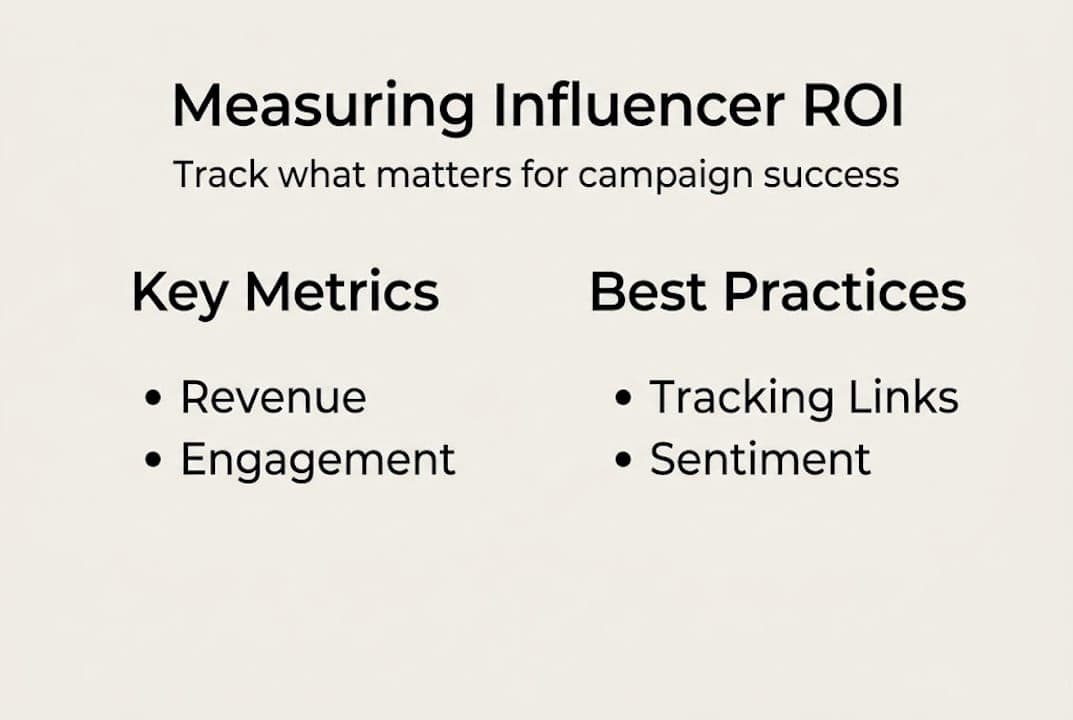
For measuring influencer ROI, go beyond likes. Track attributed revenue, cost per acquisition, and brand sentiment shifts. Pair this with AI for brand growth to automate reporting and surface insights faster than manual analysis ever could.
Risks, pitfalls, and how to ensure authenticity
Influencer marketing carries real risks, and ignoring them is how brands end up with wasted budgets or public relations problems. The biggest threat is fraudulent engagement.
Fake followers and bot-driven engagement inflate metrics without delivering real audience reach. An authenticity score below 70% is a serious red flag, and partnering with influencers who have inflated numbers can result in zero conversions despite impressive impression counts. Worse, it can damage your brand's credibility if the fraud becomes public.
Beyond bots, there are other pitfalls to watch for:
- Influencer scandals: A creator's off-platform behavior can become your brand's problem overnight.
- Audience mismatch: High follower counts mean nothing if their audience does not match your customer profile.
- Over-promotion fatigue: Influencers who post too many sponsored pieces lose trust with their audiences fast.
- Platform algorithm changes: A campaign built entirely around one platform's reach is vulnerable to sudden visibility drops.
"Vetting an influencer is not optional. It is the foundation of every campaign that actually works."
Best practices for risk mitigation include using AI-powered vetting tools to analyze engagement patterns, follower growth curves, and comment authenticity. Spotting fake followers early saves budget and protects brand reputation. You should also build clear contractual clauses around content approval, disclosure requirements, and behavior standards.
For ongoing monitoring, set up alerts for brand mentions tied to your influencer campaigns. If sentiment shifts, you want to respond fast. AI tools for vetting influencers can automate much of this monitoring, flagging issues before they escalate.
Authenticity is not just a risk management tactic. It is a competitive advantage. Brands that consistently partner with credible, well-aligned creators build compounding trust over time, which translates directly into customer loyalty and long-term revenue.
The influencer marketing truth most guides miss
Here is the uncomfortable reality: most brands chase the wrong metrics. They want big follower counts and impressive reach numbers because those look good in reports. But reach without relevance is just noise.
The brands winning at influencer marketing in 2026 are not the ones with the biggest budgets or the flashiest celebrity deals. They are the ones building ongoing, relationship-driven partnerships with micro and nano creators who genuinely use their products. That consistency creates narrative depth that no one-off sponsored post can replicate.
Platform alignment matters more than most marketers admit. A creator who thrives on TikTok may be completely ineffective on LinkedIn, even with the same follower count. Matching creator style to platform culture is as important as matching demographics.
The future of this space is performance-based and AI-augmented. Brands that use data to continuously refine their creator mix, rather than locking into annual deals based on gut feel, will outperform everyone else. Proven influencer strategies point consistently toward sustained micro-relationships over high-cost macro campaigns. That is not a trend. It is a structural shift in how trust is built online.
Ready to elevate your growth with smart marketing tools?
Influencer marketing does not operate in a vacuum. The brands that see the strongest results combine creator partnerships with a solid organic foundation, consistent content, and data-driven decision-making.
At Babylovegrowth.ai, we help you build that foundation automatically. Our SEO automation platform generates AI-optimized content that ranks on Google and surfaces in ChatGPT results, giving your influencer-driven traffic somewhere powerful to land. Pair that with our organic traffic tool to amplify every campaign with compounding search visibility. If you are serious about scaling brand growth efficiently, this is where strategy meets execution.
Frequently asked questions
What is influencer marketing in simple terms?
Influencer marketing means partnering with trusted social media personalities to promote your brand to their engaged audiences in a credible, native way. It works because audiences trust creators they follow more than they trust traditional ads.
How do I measure the ROI of influencer marketing?
Track sales attributed to campaign-specific promo codes, engagement rates, and website traffic from influencer links. Industry benchmarks show an average ROI of $5 to $6 per dollar spent, with top campaigns reaching 480%.
Are nano influencers really more effective?
For most brands, yes. Nano and micro influencers often drive 3 to 15 times higher conversions than macro influencers because their audiences are smaller, more engaged, and more likely to act on recommendations.
How can brands avoid influencer marketing risks?
Use vetting tools to identify fake followers, review engagement quality carefully, and only partner with creators whose authenticity score exceeds 70%. Clear contracts covering content standards and disclosure requirements are also essential.