Importance of Community Building for Business Growth


Most American businesses see up to 75 percent improvement in customer retention when they invest in strong community building strategies. For small to medium business owners and digital marketers, creating real connections goes beyond simple networking. Understanding foundational community concepts will help you design spaces where engagement is higher, collaboration comes naturally, and lasting relationships support steady growth.
Table of Contents
- Community Building Defined And Core Concepts
- Key Types Of Business Communities
- Benefits Of Engaged Online Communities
- Strategies For Fostering Community Growth
- Common Mistakes In Community Building
Key Takeaways
| Point | Details |
|---|---|
| Community Building Importance | Creating strong community connections enhances engagement, satisfaction, and overall performance in professional and educational settings. |
| Strategies for Success | Key strategies include clear communication, inclusive participation, and celebrating individual contributions for effective community development. |
| Types of Business Communities | Different business communities serve unique purposes, from local networks to online platforms, each facilitating collaboration and resource sharing. |
| Common Pitfalls | Failing to establish clear goals and recognition systems can lead to disengagement and hinder the success of community-building efforts. |
Community Building Defined and Core Concepts
Community building represents a strategic approach to creating meaningful connections among individuals who share common interests, goals, and experiences. At its core, this process involves intentionally designing environments where members feel genuinely welcomed, supported, and empowered to contribute their unique perspectives.
The fundamental concept of community building extends beyond simple networking or casual interactions. Fostering a sense of belonging requires deliberate effort to establish shared understanding, mutual respect, and collaborative potential. This means creating spaces where individuals can authentically engage, feel valued, and work toward collective objectives.
Successful community building typically involves several key strategies: establishing clear communication channels, promoting inclusive participation, recognizing individual contributions, and developing shared governance mechanisms. In professional and educational contexts, these approaches translate into tangible benefits. Research demonstrates that strong community environments enhance learning outcomes, increase member satisfaction, and improve overall group performance.
Pro Tip: Start Small and Build Gradually: Begin your community building efforts by creating low-stakes interaction opportunities that allow members to connect naturally and comfortably, gradually increasing complexity and depth of engagement.
Key Types of Business Communities
Business communities represent diverse networks that connect professionals, entrepreneurs, and organizations with shared goals and interests. These communities span multiple categories, each serving unique strategic purposes in supporting business growth and collaboration.
The most prominent types of business communities include local business networks, industry-specific groups, online platforms, professional development circles, mission-driven collectives, innovation hubs, and customer-focused ecosystems. Local business communities, for instance, foster regional economic connections, while industry-specific groups enable targeted knowledge sharing among professionals with similar technical expertise.
Entrepreneurial networks play a critical role in supporting business launches and talent development. These social organizations bring together diverse professionals like lawyers, engineers, scientists, and investors, creating collaborative environments that facilitate resource exchange, mentorship, and strategic partnerships. Online platforms have dramatically expanded these networking opportunities, enabling global connections that transcend traditional geographic limitations.
Here is a comparison of common business community types and their unique purposes:
| Community Type | Primary Purpose | Typical Members |
|---|---|---|
| Local Business Network | Foster regional collaboration | Small business owners |
| Industry-Specific Group | Share specialized knowledge | Professionals in same sector |
| Entrepreneurial Network | Enable resource exchange | Founders, investors, advisors |
| Online Platform | Facilitate global connections | Diverse, cross-industry members |
| Innovation Hub | Support creative collaboration | Startups, researchers, mentors |
| Customer Ecosystem | Strengthen brand loyalty | Clients, users, advocates |
Pro Tip: Strategic Community Selection: Research and join business communities that align closely with your specific professional goals, industry sector, and personal development objectives to maximize networking and learning potential.
Benefits of Engaged Online Communities
Online communities represent powerful ecosystems that drive meaningful connections and transformative business opportunities. Platforms for connection and collaboration enable businesses to create dynamic environments where members can share experiences, exchange insights, and build lasting relationships.
The strategic advantages of engaged online communities extend far beyond simple networking. These digital spaces facilitate continuous interaction, knowledge transfer, and trust-building among professionals. By creating structured platforms for dialogue, businesses can accelerate learning, foster innovation, and develop robust support networks that transcend traditional communication barriers.
Learning environments in online communities demonstrate remarkable potential for driving cognitive engagement and professional development. They provide members with opportunities to crowdsource solutions, receive peer feedback, and access collective intelligence that can dramatically accelerate individual and organizational growth. The most effective communities combine structured learning pathways with organic, member-driven interactions that create genuine value.
Pro Tip: Active Community Participation: Encourage consistent, meaningful contributions from members by creating clear engagement guidelines, recognizing valuable insights, and maintaining a positive, inclusive interaction environment.
Strategies for Fostering Community Growth
Successful community growth requires a multifaceted approach that combines intentional design, consistent engagement, and strategic communication. Creating inclusive environments demands deliberate efforts to establish spaces where members feel genuinely valued, heard, and motivated to contribute.
Key strategies for nurturing community development include establishing clear communication channels, designing interactive platforms, and implementing recognition mechanisms that celebrate member contributions. Effective communities prioritize creating opportunities for meaningful connections, whether through structured networking events, collaborative projects, or peer-learning initiatives that encourage knowledge exchange and mutual support.
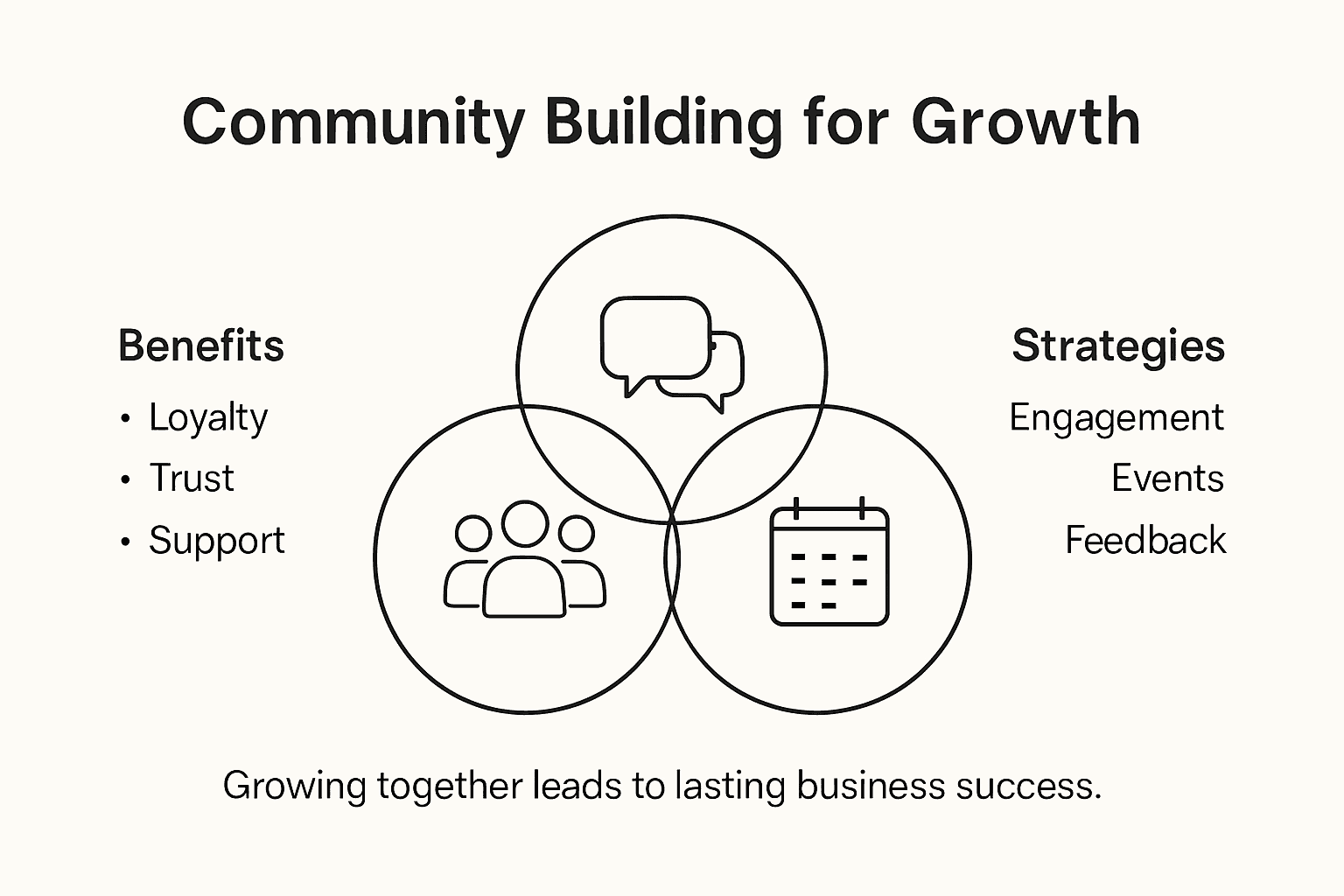
Promoting connectedness and peer learning requires developing robust interaction frameworks that transcend traditional communication barriers. This involves creating multiple engagement touchpoints, such as discussion forums, virtual meetups, mentorship programs, and collaborative problem-solving spaces that enable members to interact dynamically and build lasting professional relationships.
This table highlights strategies for successful community growth and their practical outcomes:
| Strategy | Practical Outcome |
|---|---|
| Clear Communication Channels | Reduced misunderstandings |
| Interactive Platforms | Enhanced engagement and participation |
| Recognition Mechanisms | Increased member motivation |
| Structured Networking Events | Stronger professional connections |
| Peer-Learning Initiatives | Accelerated member skill development |
Pro Tip: Strategic Engagement Design: Develop a comprehensive engagement roadmap that includes diverse interaction opportunities, clear participation guidelines, and adaptive communication strategies tailored to your community's unique dynamics and member preferences.
Common Mistakes in Community Building
Building successful online communities requires strategic awareness and proactive management. Critical mistakes in community development often stem from fundamental misunderstandings about member engagement, trust-building, and sustainable interaction models.
One of the most prevalent errors is neglecting to establish clear community goals and values from the outset. Many organizations create digital spaces without defining explicit expectations, communication norms, or shared objectives. This lack of structure leads to fragmented interactions, reduced member motivation, and ultimately, community disintegration. Successful communities require transparent guidelines, consistent moderation, and a well-articulated mission that resonates with members' professional and personal aspirations.
Classroom and professional community environments highlight the importance of fostering genuine belonging and meaningful participation. Common pitfalls include superficial engagement strategies, inconsistent communication, and failure to recognize and celebrate member contributions. Organizations frequently underestimate the psychological need for acknowledgment, connection, and personal validation within collaborative spaces.
Pro Tip: Diagnostic Community Health: Regularly conduct member satisfaction surveys, track engagement metrics, and be willing to adaptively redesign your community's structure based on direct feedback and evolving member needs.
Elevate Your Business Growth Through Strategic Community Building
Building a thriving community is essential for business success as highlighted in the article "Importance of Community Building for Business Growth." You understand the challenge of creating meaningful engagement and sustaining dynamic interactions that foster trust and collaboration. Key concepts like inclusive participation, clear communication, and active member recognition are crucial for growth and loyalty but can be difficult to execute alongside your business priorities.
That is where automation and data-driven strategies become your allies. At Babylovegrowth.ai, we simplify organic growth by providing AI-powered content and backlink strategies designed to enhance your online presence effortlessly. Our platform helps you attract the right audience through optimized articles and a personalized 30-day content plan so that you can nurture a vibrant online community around your brand.
Experience the power of building connections backed by smart SEO and consistent visibility. With features focused on ranking high on Google and ChatGPT, combined with detailed business analysis, your community will grow stronger and more engaged. Discover how to transform your community building challenges into scalable success by visiting Babylovegrowth.ai today.

Take charge of your business growth now. Empower your community strategies with proven AI technology and start your free trial at Babylovegrowth.ai. The best time to build lasting connections and elevate your brand is now.
Frequently Asked Questions
What is community building and why is it important for business growth?
Community building is the strategic process of creating meaningful connections among individuals with shared interests and goals. It's important for business growth because strong communities enhance collaboration, knowledge sharing, and support, ultimately leading to improved member satisfaction and better overall performance.
What are the key types of business communities?
Key types of business communities include local business networks, industry-specific groups, entrepreneurial networks, online platforms, innovation hubs, and customer ecosystems. Each serves unique purposes, such as fostering collaboration, sharing specialized knowledge, or strengthening brand loyalty.
How can online communities benefit businesses?
Engaged online communities facilitate continuous interaction, knowledge transfer, and trust-building among professionals. They enable businesses to crowdsource solutions, accelerate learning, and foster innovation, leading to personal and organizational growth.
What common mistakes should be avoided in community building?
Common mistakes in community building include failing to establish clear goals and values, neglecting effective communication, and not recognizing member contributions. These errors can lead to fragmented interactions and reduced motivation among community members.