Importance of Blog Updates for Lasting SEO Growth


Most American e-commerce websites see a measurable lift in organic traffic after consistent blog updates, yet many overlook the real value behind this practice. For digital marketing managers at growing businesses worldwide, knowing when and how to refresh content can mean the difference between stagnant search rankings and steady growth. This article sheds light on why blog updates play a crucial role in SEO strategy and how small improvements can strengthen both authority and online visibility.
Table of Contents
- Defining Blog Updates And Their SEO Role
- Types Of Blog Updates And Strategic Choices
- How Updates Influence Rankings And Traffic
- Timing, Frequency, And Update Workflows
- Common Pitfalls When Updating Blogs
Key Takeaways
| Point | Details |
|---|---|
| Importance of Blog Updates | Regular blog updates enhance search engine visibility and user engagement, critical for a strong SEO strategy. |
| Types of Effective Updates | Focus on content expansion, statistical refreshes, and structural optimizations to improve relevance and SEO performance. |
| Impact on Rankings and Traffic | Consistent updates improve search rankings through enhanced crawl frequency and user engagement metrics. |
| Avoiding Common Pitfalls | Ensure substantial content improvements and technical accuracy to maintain SEO value during updates. |
Defining Blog Updates and Their SEO Role
Blog updates represent strategic content modifications designed to enhance a website's search engine performance and user engagement. Effective blog management involves regular content refreshes that signal active website maintenance to search algorithms, ultimately improving organic search visibility.
Updating blogs goes beyond simple text revisions. These updates can include adding new research, updating statistical data, incorporating recent industry developments, and refining existing content to align with current search intent. Modern search engines prioritize websites demonstrating consistent content quality and relevance, making blog updates a critical component of sustainable SEO strategy.
The primary SEO benefits of blog updates include improved indexing frequency, enhanced keyword targeting, and increased opportunities for internal linking. By systematically refreshing content, digital marketers can maintain higher search rankings, attract more targeted organic traffic, and establish their website as an authoritative information source in their specific industry niche.
Pro tip: Schedule quarterly content reviews to identify and update blog posts that are more than 12 months old, ensuring your website maintains peak search engine performance and relevance.
Types of Blog Updates and Strategic Choices
Successful blog update strategies encompass multiple approaches tailored to specific content goals and audience needs. Business blogging strategies reveal that effective updates typically fall into several distinct categories designed to maximize SEO performance and reader engagement.
The primary types of blog updates include content expansion, statistical refreshes, structural optimization, and topical reengineering. Content expansion involves adding new insights, examples, or research findings to existing posts, making them more comprehensive and valuable. Statistical refreshes ensure numerical data remains current, which signals relevance to search engines and maintains the blog's credibility. Structural optimization focuses on improving readability, adding internal links, and enhancing metadata to improve search visibility.
Technical blog updates also play a crucial role in SEO maintenance. These can include optimizing header tags, improving page load speed, ensuring mobile responsiveness, and refining keyword targeting. Digital marketers should approach blog updates strategically, prioritizing content that demonstrates the most potential for improved search rankings and user engagement. This might mean focusing on high-traffic posts, updating outdated information, or realigning content with emerging search intent trends.
Here's a comparison of key blog update types and their strategic impact:
| Update Type | Main Objective | SEO Impact |
|---|---|---|
| Content Expansion | Add depth and insights | Greater keyword coverage |
| Statistical Refresh | Keep data current | Signals relevance |
| Structural Optimization | Improve layout and links | Boosts page SEO readability |
| Topical Reengineering | Align with new trends | Targets emerging keywords |
Pro tip: Create a quarterly content audit spreadsheet tracking each blog post's performance metrics, last update date, and potential optimization opportunities to streamline your blog update strategy.
How Updates Influence Rankings and Traffic
Blog updates directly impact search engine rankings through multiple interconnected mechanisms that signal content relevance and quality. Organic traffic strategies demonstrate that consistent content refinement can significantly improve a website's search visibility and user engagement metrics.
Search engines like Google prioritize websites that demonstrate active content management and provide current, valuable information. When blogs are systematically updated, they generate several ranking signals including increased crawl frequency, improved time-on-page metrics, reduced bounce rates, and enhanced keyword relevance. Fresh content triggers search engine algorithms to recognize the website as an authoritative and up-to-date resource, which can lead to higher positioning in search results for targeted keywords.

The traffic generation potential of blog updates extends beyond immediate search ranking improvements. Regular updates create opportunities for internal linking, attract return visitors, and increase the likelihood of social media sharing and external backlink acquisition. Digital marketers who implement strategic update cycles can expect compounding benefits, where each content refresh incrementally contributes to improved organic search performance and audience trust.
Pro tip: Track your blog posts' performance using Google Analytics and prioritize updates for content that shows declining traffic or engagement rates.
Timing, Frequency, and Update Workflows
Developing a strategic approach to blog content updates requires careful consideration of timing and systematic workflows. Google ranking strategies emphasize the importance of creating predictable yet flexible content maintenance processes that align with search engine algorithms and audience expectations.
The optimal update frequency varies across different industries and content types, but most digital marketing experts recommend a structured approach. High-performing blogs typically implement quarterly comprehensive reviews, with smaller incremental updates occurring monthly. Critical elements to consider include content age, current performance metrics, emerging industry trends, and keyword relevance. Some evergreen content might require minimal updates, while time-sensitive or rapidly evolving topics demand more frequent refreshes to maintain accuracy and search visibility.
Successful update workflows typically involve a multi-stage process that includes performance tracking, content auditing, research compilation, strategic editing, and technical optimization. Digital marketers should develop a standardized template for content updates that includes specific checkpoints such as keyword relevance assessment, competitor content comparison, user engagement metrics analysis, and technical SEO improvements. This systematic approach ensures that blog updates are not random but strategically aligned with overall marketing objectives and search engine ranking goals.
Pro tip: Create a color-coded content calendar that categorizes blog posts by update priority, using green for high-performing content, yellow for medium-impact posts, and red for articles requiring immediate revision.
Common Pitfalls When Updating Blogs
Navigating blog updates requires careful strategy to avoid common mistakes that can negatively impact SEO performance and content quality. Blogging strategies for 2025 reveal several critical pitfalls digital marketers must proactively address when refreshing blog content.
One of the most significant errors is superficial updating that fails to provide genuine value. Many content creators mistakenly believe that minor grammatical corrections or small text changes constitute meaningful updates. In reality, effective blog updates demand substantial improvements such as adding current research, addressing new industry developments, incorporating advanced insights, and realigning content with evolving search intent. Merely changing publication dates without meaningful content enhancement can actually trigger negative signals from search engine algorithms, potentially reducing the post's ranking potential.
Technical pitfalls present another substantial risk during blog updates. Digital marketers frequently overlook critical technical elements like maintaining original URL structures, preserving existing internal and external links, ensuring mobile responsiveness, and protecting established page authority. Significant content restructuring without proper technical considerations can lead to unintended consequences such as broken links, reduced page ranking, and disrupted user experience. Successful blog updates require a holistic approach that balances content refinement with technical preservation, ensuring that improvements genuinely enhance rather than compromise the original content's search performance.
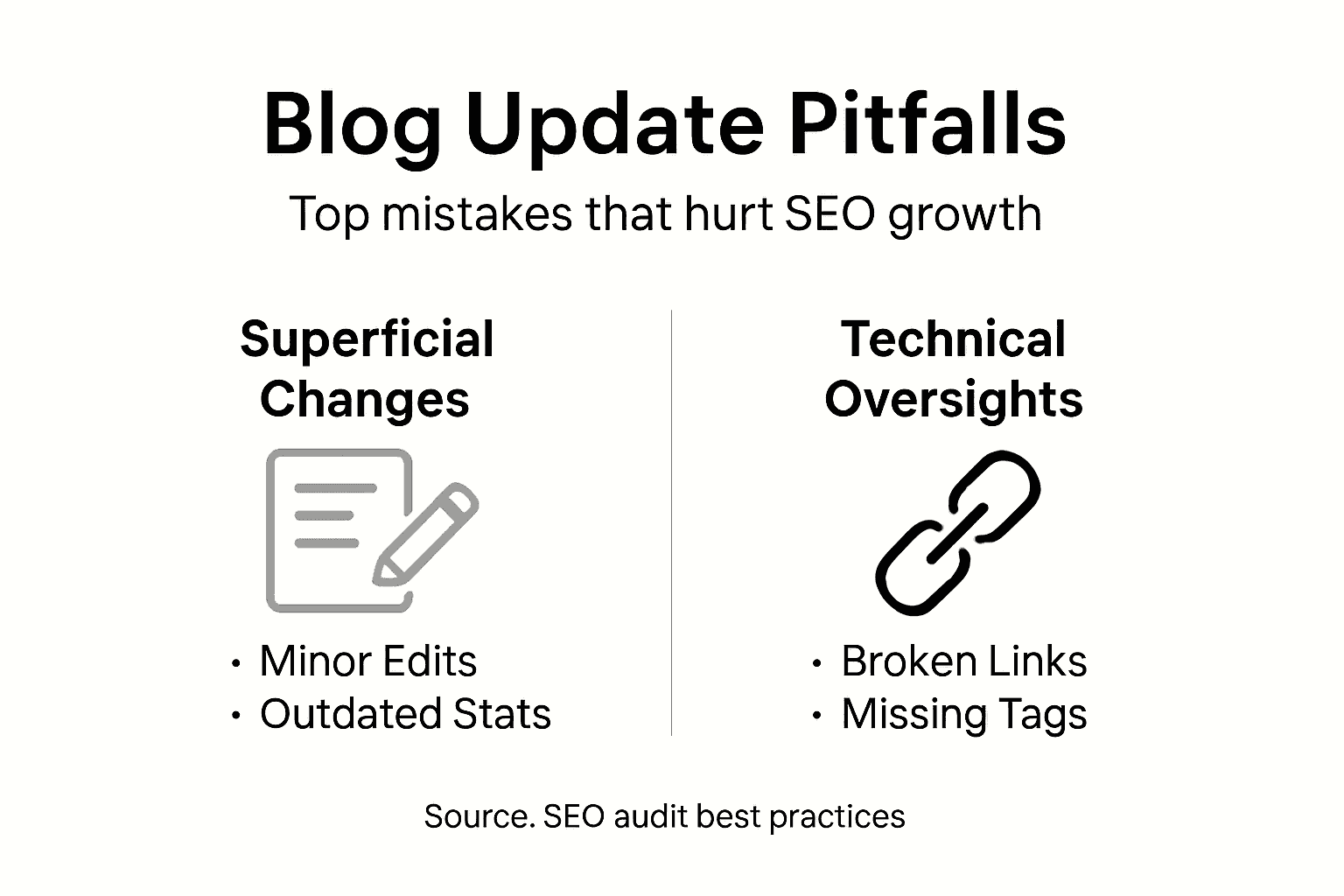
This table summarizes common SEO pitfalls and their consequences:
| Pitfall | Description | Potential Negative Effect |
|---|---|---|
| Superficial editing | Only grammar or minor text fixes | Minimal SEO improvement |
| Ignoring technical SEO | Overlook links, URLs, or structure | Ranking drops, broken links |
| Publication date changes | Update date but not content | Loss of search engine trust |
| Disrupted mobile layout | Not maintaining mobile experience | Higher bounce rates |
Pro tip: Create a comprehensive update checklist that includes technical verification steps, ensuring every blog revision maintains existing SEO value while introducing meaningful improvements.
Unlock Lasting SEO Growth with Smart Blog Updates and AI Automation
The article highlights the critical challenge of keeping blogs fresh and authoritative to improve search engine rankings and maintain organic traffic. You recognize the importance of strategic blog updates such as content expansion, statistical refreshes, and structural optimization that drive lasting SEO benefits. Yet staying on top of these ongoing enhancements while avoiding common pitfalls can feel overwhelming and time-consuming.
Babylovegrowth.ai offers an all-in-one AI-powered platform designed to take the complexity out of meaningful blog updates and SEO growth. Our solution automatically generates high-quality, Google and ChatGPT-optimized articles tailored to your business goals. With a 30-day personalized content plan and a backlinks exchange ecosystem, it empowers marketers and business owners to consistently refresh and enhance their blog content with minimal effort. This automation boosts keyword relevance, improves crawl frequency, and keeps your site aligned with evolving search trends so you never lose momentum.
Ready to transform your blog update strategy and achieve sustainable SEO success? Start your journey today by discovering how our AI-driven tools help you maintain peak content performance and amplify your organic reach. Learn more about building powerful content strategies with Babylovegrowth.ai SEO solutions. Take control of your growth with automation designed for long-term impact.
Frequently Asked Questions
What are blog updates?
Blog updates are strategic content modifications made to improve a website's search engine performance and user engagement. They can include adding new research, updating statistical data, and refining content to meet current search intent.
Why are blog updates important for SEO?
Blog updates are important for SEO as they enhance indexing frequency, improve keyword targeting, and create opportunities for internal linking, resulting in higher search rankings and more targeted organic traffic.
How often should I update my blog posts?
Most experts recommend conducting quarterly comprehensive reviews of your blog, with smaller incremental updates every month, especially for high-traffic or time-sensitive content.
What are common mistakes to avoid when updating blogs?
Common mistakes include superficial updates that don't add real value, ignoring technical SEO aspects, changing publication dates without meaningful content improvement, and disrupting mobile layouts, which can negatively affect search performance.