Importance of Networking in Marketing: Boosting Growth


Trying to grow an e-commerce business in Germany, United States, or Japan often feels like shouting into a crowded marketplace. Networking transforms that noise into real conversations and trust. For digital marketers and SEO professionals, building meaningful professional connections opens doors to organic growth, brand visibility, and collaboration opportunities that advertising budgets cannot provide. This article explores the practical concepts, types, and proven strategies behind networking that create lasting relationships and fuel your business success.
Table of Contents
- Defining Networking In Marketing And Core Concepts
- Types Of Networking For Marketers And Seo Professionals
- How Networking Drives Organic Growth And Visibility
- Practical Examples: Partnerships, Backlinks, And Knowledge Sharing
- Common Networking Mistakes And How To Avoid Them
Key Takeaways
| Point | Details |
|---|---|
| Genuine Networking | Focus on building authentic relationships based on trust and mutual value rather than merely exchanging contact information. |
| Strategic Approach | Leverage both online and offline networking opportunities to maximize reach and create valuable connections to drive organic growth. |
| Value First | Always offer value before asking for assistance; this fosters reciprocity and strengthens relationships. |
| Consistency Matters | Stay engaged with your network regularly through personalized follow-ups and consistent contributions to maintain strong connections. |
Defining networking in marketing and core concepts
Networking in marketing means building real relationships with people who can help your business grow. It's not just collecting business cards or LinkedIn connections—it's about creating genuine connections based on trust and mutual value.
What networking actually is
Building meaningful professional connections goes far beyond exchanging pleasantries. Effective networking involves authenticity, active listening, and genuinely adding value to the people you meet. When you network strategically, you're investing in relationships that benefit both parties over time.For small e-commerce businesses, networking creates opportunities that paid advertising alone cannot deliver. Think of it as building a community of people who understand your business, support your goals, and want to see you succeed.
Core concepts of marketing networking
Networking in marketing rests on several key pillars:
- Social capital: The relationships and connections you build that open doors professionally
- Trust and reciprocity: Giving value first, without expecting immediate returns
- Strategic relationship building: Finding the right people and settings where your ideal connections gather
- Both offline and online presence: Using in-person events, social media, and digital platforms to connect
- Authenticity: Being genuine rather than transactional in your interactions
Real networking transforms from transactional exchanges into lasting relationships built on trust, reciprocity, and shared values.
Why this matters for your business
Understanding digital marketing channels helps you see how networking amplifies your reach. A single relationship can lead to referrals, collaborations, backlink opportunities, and brand visibility—all of which feed into organic growth.Different cultures approach networking differently. What works at a United States business conference may differ from a German or Japanese approach. Recognizing these differences helps you network more effectively in diverse markets.
Networking also reduces your reliance on expensive advertising. When someone in your network refers you or shares your content, it carries more weight than a paid ad because it comes with a personal endorsement.
The digital transformation of networking
The rise of social media and online platforms has fundamentally changed how marketers network. You can now build relationships with people across the world without traveling, but the core principle remains: authenticity and genuine value creation matter more than ever.
Pro tip: Start with one networking activity per month that feels natural to you—whether that's joining an industry Slack community, attending a local marketing meetup, or actively engaging in relevant online forums. Consistency matters more than trying to do everything at once.
Types of networking for marketers and SEO professionals
Networking isn't one-size-fits-all. Different approaches work for different goals, and as a marketer or SEO professional, you need to master multiple types to build a comprehensive network that drives real business results.
Professional networking
Professional networking focuses on building relationships at industry events, conferences, and specialized meetups. This is where you connect with peers, competitors, and potential partners face-to-face.
For SEO professionals, industry conferences like Search Engine Land events or local SEO meetups offer direct access to people who understand your challenges. You'll learn about algorithm updates, share best practices, and discover collaboration opportunities that benefit everyone involved.
The key advantage here is credibility. When someone meets you in person and has a real conversation, they remember you more than a LinkedIn connection ever would.
Social networking
Social networking happens on platforms like LinkedIn, Twitter, and industry-specific communities. You build relationships with acquaintances and followers who share your interests and expertise.
For e-commerce marketers, Twitter conversations about conversion rate optimization or LinkedIn discussions about marketing trends are goldmines for networking. You can demonstrate expertise, learn from others, and build visibility without traveling.
Social networking is less formal but requires consistency. Showing up regularly and contributing thoughtfully matters more than occasional participation.
Online community networking
Building relationships through online platforms has become essential for marketers. Slack communities, Reddit forums, and industry-specific platforms let you connect with people globally and stay updated on trends.
Think of online communities as always-on networking events. You can answer questions, share insights, and build relationships with hundreds of people simultaneously. For SEO professionals, communities focused on link-building strategies, technical SEO, or content marketing are particularly valuable.
Here's how key types of networking differ in purpose and benefit:
| Networking Type | Key Purpose | Typical Setting | Unique Business Benefit |
|---|---|---|---|
| Professional Networking | Build industry credibility | Conferences, meetups | Access to expert connections |
| Social Networking | Expand daily visibility | LinkedIn, Twitter | Attract diverse opportunities |
| Online Community | Gain niche knowledge | Slack, forums | Rapid problem-solving network |
| Hybrid Approach | Maximize network impact | Offline & online | Consistent presence, wide reach |
Hybrid networking approaches
The most effective networks combine all three types:
- Attend events for deep, meaningful connections and credibility building
- Engage on social platforms for visibility and daily relationship maintenance
- Participate in online communities for niche expertise and global reach
- Leverage both offline and online to reinforce connections made in person
- Create consistency across all platforms so your brand message aligns
Diverse networking types aren't optional—they're necessary to stay competitive and access opportunities your competitors might miss.
Why this matters for SEO professionals
Networking directly impacts your SEO success. Relationships lead to backlink opportunities, guest posting collaborations, and organic partnerships that no tool can replicate. Someone in your network might know an editor at a high-authority site who needs your expertise.
You also stay ahead of algorithm changes because your network shares real-world insights before updates become public knowledge.
Pro tip: Pick one networking type to master first—whether that's attending monthly local events, becoming active in a specific Slack community, or engaging daily on LinkedIn. Build consistency in that one area before adding complexity with other types.
How networking drives organic growth and visibility
Networking isn't just about making friends in your industry. It's a direct engine for organic growth, backlinks, and visibility that no paid advertising can fully replicate. When you network strategically, you're building the infrastructure for sustainable business growth.

The visibility multiplier effect
Building authentic connections generates trust that translates into real visibility for your business. When someone in your network knows your work and trusts you, they become an amplifier for your content and expertise.
Think about this: A single person sharing your blog post with their audience carries far more weight than a cold advertisement. That's a warm recommendation backed by credibility.
Converting relationships into backlinks
For SEO professionals, backlinks are currency. But where do quality backlinks actually come from? Relationships. When you've built genuine connections with editors, content creators, and industry leaders, you have direct access to link-building opportunities.
Your network becomes your link-building shortcut:
- Guest posting opportunities from people who know your writing quality
- Resource page placements from contacts in your niche
- Collaborative content that naturally links between sites
- Referrals to editors looking for subject matter experts
- Social amplification that signals authority to search engines
Organic growth through networking isn't luck—it's a result of consistent relationship investment that compounds over time.
Building social capital for long-term growth
Professional networking enhances visibility by establishing you as a trusted authority in your field. Social capital—the goodwill and credibility you build—becomes your most valuable business asset.When you have real relationships with influencers and industry figures, maximizing your organic reach becomes easier. They mention you, reference your work, and introduce you to their audiences.
Real visibility across platforms
Networking amplifies your presence everywhere. Someone in your network might feature you on their podcast, mention you in an article, or recommend you to their email list. Each of these is organic visibility earned through relationship investment, not purchased advertising.
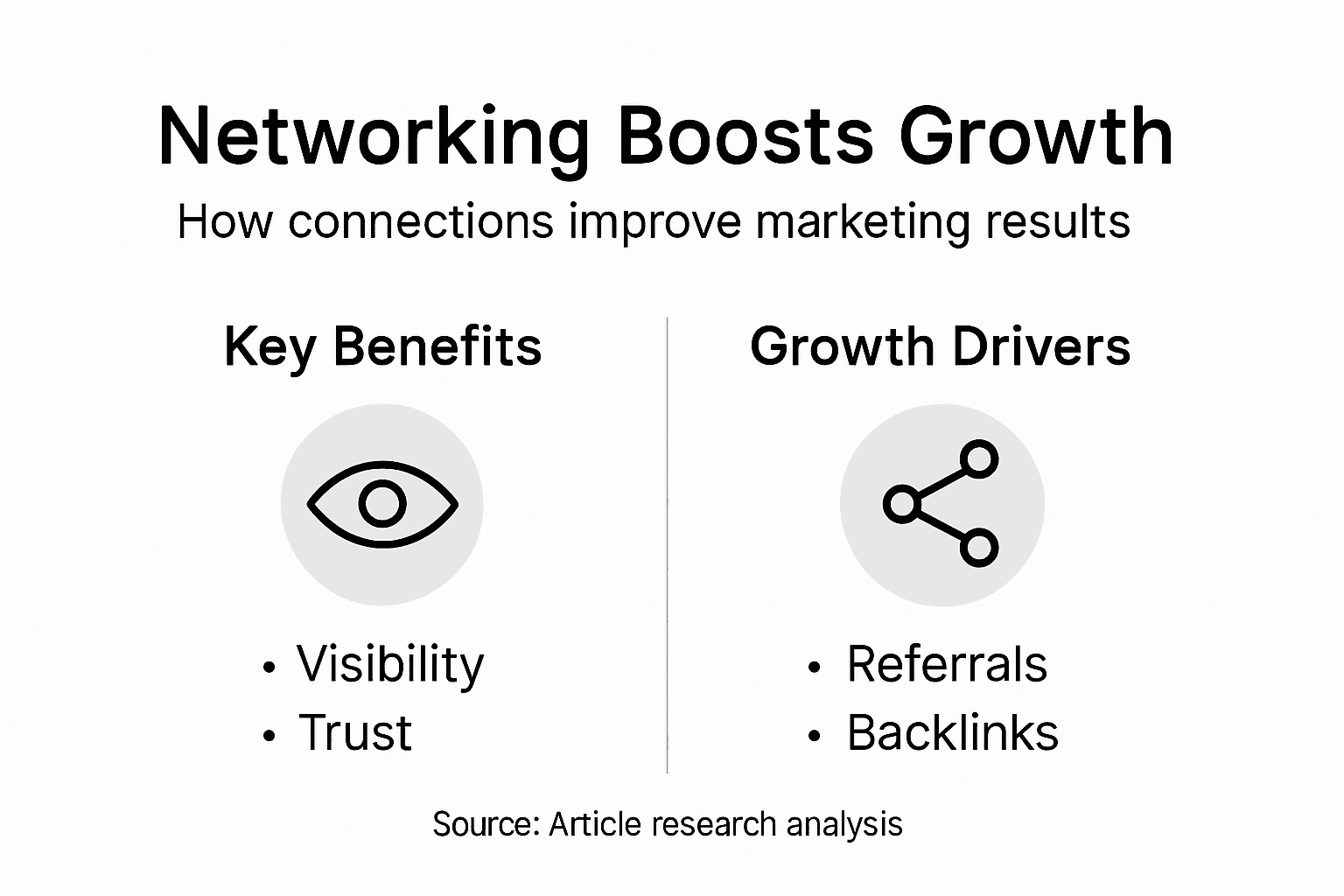
You also gain access to industry knowledge before it becomes public. Algorithm updates, emerging trends, and opportunities reach you faster through your network than through generic news sources.
Competitive advantage through relationships
Your competitors likely have similar tools, similar content strategies, and similar budgets. But they may not have the relationships you do. That's your competitive moat. Someone who knows you personally is more likely to collaborate with you than with a stranger.
This directly translates to partnerships, joint ventures, and cross-promotions that drive organic growth without spending money on ads.
Pro tip: Map out five people in your industry whose work you admire, then find three genuine ways to add value to their business within the next month—share their content, introduce them to contacts, or offer feedback on their projects. Authentic value-giving creates the foundation for visibility-driving relationships.
Practical examples: partnerships, backlinks, and knowledge sharing
Networking becomes most valuable when it translates into concrete business outcomes. Real partnerships, quality backlinks, and industry knowledge don't appear randomly—they flow from relationships you've deliberately built and maintained.
Partnership opportunities through networks
One of your contacts mentions they're launching a new product and need expertise in your area. That's a partnership opportunity born from your network. Maybe it's a co-branded webinar, a joint content series, or a formal business partnership.
These collaborations happen because someone already knows your work quality and trusts you enough to take that risk together. You skip the entire vetting process.
Common partnership types include:
- Co-authored content with industry peers on topics neither could tackle alone
- Webinar collaborations combining your audiences and expertise
- Product integrations where complementary services work together
- Affiliate relationships promoting each other's offerings
- Joint ventures launching new initiatives together
Converting connections into quality backlinks
Understanding why backlinks matter is the first step. The second is knowing where they actually come from. That editor you met at a conference last year? She publishes a resource guide and mentions you. That's a backlink earned through relationship.Real backlink strategies through networking:
- Resource page placements where you contact site owners you know
- Guest posts published on sites you've already built relationships with
- Quote requests from journalists in your network
- Roundup articles featuring opinions from people in your circle
- Case studies and interviews featuring your work
Backlinks from people who know you and trust your expertise carry more weight than links from strangers.
Knowledge sharing accelerates growth
Your network isn't just for extracting value—it's for sharing what you know. When you contribute insights to Slack communities, answer questions on LinkedIn, or mentor someone in your field, you build credibility that attracts opportunities.
This two-way exchange creates sticky relationships. Someone helps you understand a technical SEO problem, and months later, they refer you to a high-profile client. Reciprocity builds loyalty that transactions cannot.
Real examples in action
A marketing manager joins three industry Slack communities. She answers questions about email segmentation consistently. An e-commerce founder in one of those communities notices her expertise and asks her to audit his email strategy. That consulting gig came from knowledge sharing, not pitching.
An SEO professional connects with a content editor at a major publication at a networking event. Six months later, the publication publishes an article featuring five SEO experts. Our professional is included because the editor already knew her reputation.
These aren't coincidences. They're the predictable results of consistent networking.
Pro tip: Document three specific networking wins you've already achieved—a referral, a backlink, a collaboration—then identify what relationship made each one possible. Use this pattern to replicate success with new contacts in your network.
Common networking mistakes and how to avoid them
Networking fails when people approach it transactionally rather than relationally. Most mistakes stem from trying to extract value instead of building genuine connections. Learning what not to do is just as important as knowing what to do.
The self-promotion trap
You meet someone at a networking event and immediately start talking about your services. Wrong move. Starting conversations with self-promotion instead of curiosity kills the relationship before it starts.
People remember how you made them feel, not your elevator pitch. Lead with genuine interest in their business, challenges, and goals. Ask questions. Listen more than you talk.
Treating LinkedIn like casual social media
Sharing memes and personal photos has its place, but LinkedIn is a professional platform. Your profile should position you as someone worth knowing and potentially collaborating with. Use it to showcase expertise, not just stay busy.
Avoid these common LinkedIn mistakes:
- Generic connection requests without a personalized message
- No visible expertise in your headline or summary
- Inconsistent engagement—going silent for months then spamming
- Vague messaging that doesn't explain what you actually do
- Neglecting profile basics like a professional photo and clear bio
Networking fails when you forget that relationships require consistency, authenticity, and genuine interest in others.
Failing to follow up
You meet someone interesting. You exchange contact info. Then nothing. That connection dies because you didn't nurture it. Follow-up separates people who network effectively from those who waste time at events.
Within a week of meeting someone, send a personalized message referencing something specific from your conversation. Offer value. Reference something they mentioned they were working on. Keep the momentum alive.
Not offering value first
The best networkers give before they ask. Share an article relevant to someone's work. Make an introduction between two people who should know each other. Offer genuine feedback on their content or ideas.
This creates reciprocity naturally. People remember who helped them without expecting immediate returns.
Fear of reaching out
Many professionals hesitate to contact someone they don't know well or haven't spoken to recently. This fear costs you partnerships and opportunities. People generally respond well to respectful, genuine outreach.
The worst they can say is no. Most say yes if your message shows authentic interest rather than thinly veiled sales pitches.
Ignoring your existing network
Don't overlook the people you already know. Your current network often holds your best opportunities. Check in with contacts you haven't spoken to in six months. Comment meaningfully on their posts. Keep relationships warm.
The following table summarizes common networking mistakes and their consequences:
| Mistake | Why It Happens | Impact on Relationships | How to Overcome |
|---|---|---|---|
| Self-promotion focus | Seeking quick gains | Diminishes trust and rapport | Lead with curiosity first |
| Neglecting follow-up | Lack of planning | Lost potential opportunities | Schedule timely check-ins |
| Not offering value | Transactional mindset | Weakens reciprocity | Share resources proactively |
| Ignoring current network | Overlooked contacts | Missed collaboration chances | Reconnect and engage monthly |
Pro tip: Create a simple spreadsheet with 20 key contacts and schedule monthly touchpoints—one email, one comment, one share of their content per person. Consistency beats intensity when building lasting relationships.
Unlock Your Marketing Network's Full Potential with AI-Powered SEO
Building genuine connections and leveraging those relationships is key to marketing success, but managing consistent, high-impact outreach and content can quickly become overwhelming. If you are struggling to convert your networking efforts into measurable organic growth, backlinks, and lasting visibility, Babylovegrowth.ai offers the perfect solution. Our AI-driven platform streamlines your content strategy by creating automated, high-quality articles optimized for Google and ChatGPT, helping you nurture your network with valuable insights and grow your authority seamlessly.
Start transforming your relationships into real SEO results today by trying out Babylovegrowth.ai. Experience a 30-day personalized content plan designed to amplify your visibility while tapping into our backlink exchange ecosystem to maximize your organic reach. Don’t wait to build the social capital your business deserves. Visit Our Landing Page to begin your journey toward scalable, cost-effective growth powered by AI.
Frequently Asked Questions
What is networking in marketing?
Networking in marketing entails building genuine relationships with people that can help your business grow. It's about creating connections based on trust and mutual value, rather than merely exchanging contacts.
How does networking contribute to organic growth?
Networking facilitates organic growth by generating referrals, backlinks, and collaborations, leading to increased brand visibility and credibility. Authentic connections often result in more effective promotion than paid advertising.
What are the different types of networking for marketers?
The main types of networking for marketers include professional networking (at events and conferences), social networking (on platforms like LinkedIn and Twitter), and online community networking (in forums and Slack groups). Each type serves unique purposes and benefits.
How can I effectively follow up after a networking event?
To effectively follow up, send a personalized message within a week referencing your conversation. Offer value related to their interests or projects. This action helps nurture the connection and keeps the relationship alive.