Implement an effective SEO audit workflow in 2026


You know the frustration of running SEO audits that feel scattered and incomplete. Without a structured workflow, critical technical issues slip through the cracks, content gaps go unnoticed, and backlink opportunities vanish. Digital marketing professionals waste hours duplicating effort or chasing the wrong metrics. A systematic SEO audit workflow transforms this chaos into a repeatable process that consistently identifies optimization opportunities, prioritizes fixes by impact, and drives measurable improvements in organic visibility and traffic.
Table of Contents
- Preparing For An SEO Audit Workflow
- Step-By-Step Execution Of Your SEO Audit Workflow
- Common Challenges And How To Avoid Them During SEO Audits
- Verifying And Applying SEO Audit Findings For Maximum Impact
- Explore Powerful SEO Audit And Keyword Tools From BabyLoveGrowth
- What Is An SEO Audit Workflow And Why Is It Important?
- How Do AI Tools Improve SEO Audit Workflows?
- What Are Common Mistakes To Avoid In SEO Audits?
- How Can I Measure The Success Of My SEO Audit Workflow?
Key takeaways
| Point | Details |
|---|---|
| Structured workflows boost consistency | A clear SEO audit workflow ensures comprehensive coverage of technical, content, and backlink dimensions every time |
| Preparation drives success | Defining objectives and assembling tools upfront prevents wasted effort and missed issues during execution |
| AI accelerates accuracy | Automated tools and AI-powered analysis detect issues faster and more reliably than manual methods |
| Prioritization maximizes impact | Categorizing findings by traffic potential and urgency focuses resources on high-value fixes |
| Verification closes the loop | Tracking post-audit KPIs and resolution rates proves ROI and refines future workflows |
Preparing for an SEO audit workflow
Successful audits start long before you crawl your first URL. Preparation sets the foundation for efficiency and completeness. Begin by defining clear audit objectives that align with your business priorities, whether improving rankings for specific keywords, fixing technical barriers, or building backlink authority. Without focused goals, audits become aimless data collection exercises that overwhelm teams without driving action.
Next, assemble your technical toolkit. You need crawlers to map site structure and identify indexability issues, speed testing tools to measure Core Web Vitals, and analytics platforms to establish performance baselines. Prepare keyword research software to uncover content gaps and backlink analyzers to evaluate link profiles. Having these resources ready prevents mid-audit scrambling and keeps momentum.
Assign clear roles if you work with a team. Designate who handles technical checks, who reviews content quality, and who manages backlink analysis. Solo practitioners should create a detailed checklist that sequences tasks logically, preventing critical steps from being forgotten. Document your workflow template so each audit follows the same systematic approach.
Pro Tip: Create a shared spreadsheet or project management board that tracks audit progress in real time. This visibility keeps stakeholders informed and ensures accountability for each workflow phase.
| Preparation Element | Purpose | Tools/Resources |
|---|---|---|
| Objective Definition | Align audit to business goals | Strategy docs, stakeholder input |
| Technical Tools | Crawl, test, analyze site health | Screaming Frog, PageSpeed Insights |
| Keyword Research | Identify content gaps | SEMrush, Ahrefs, BabyLoveGrowth |
| Backlink Analysis | Evaluate link profile quality | Majestic, Moz, Ahrefs |
| Team Coordination | Assign roles and deadlines | Asana, Trello, Google Sheets |
Finally, gather baseline data before starting the audit. Export current rankings, traffic metrics, and conversion rates. This snapshot becomes your before picture, essential for measuring SEO performance improvements after implementing fixes. Without it, you cannot prove the audit's impact or justify resource allocation for optimization work.
Step-by-step execution of your SEO audit workflow
With preparation complete, execute your audit in a logical sequence that builds comprehensive coverage. Start with technical SEO because foundational issues here block everything else. Crawl your site to identify broken links, redirect chains, and orphaned pages. Check robots.txt and XML sitemaps for errors that prevent search engines from discovering content. Analyze page speed and Core Web Vitals, as slow sites hemorrhage rankings and traffic. Automated SEO audits detect these technical problems faster and more accurately than manual review, freeing you to focus on interpretation and strategy.

Next, audit on-page elements systematically. Review title tags and meta descriptions for length, keyword inclusion, and uniqueness. Examine heading structure to ensure proper hierarchy and semantic clarity. Evaluate content quality by checking for thin pages, duplicate content, and keyword cannibalization. Look for missing alt text on images and broken internal links that damage user experience and crawlability.
Move to keyword and content gap analysis. Compare your current keyword rankings against competitors to identify opportunities where you lack coverage or rank poorly. Use AI in SEO audits to accelerate this process, as AI tools rapidly surface patterns and gaps that would take hours to spot manually. Map existing content to search intent, flagging pages that miss the mark or need updating.
Pro Tip: Group audit findings into three priority tiers: critical issues blocking indexing or causing severe UX problems, high-impact opportunities with strong traffic potential, and lower-priority optimizations for future sprints. This categorization prevents paralysis and focuses immediate effort where it matters most.
- Technical foundation check: Verify crawlability, indexability, site speed, mobile responsiveness, and HTTPS implementation
- On-page element review: Audit metadata, headings, content quality, internal linking, and image optimization
- Keyword gap analysis: Identify missing topics, weak rankings, and content opportunities using competitive data
- Backlink profile assessment: Evaluate link quality, identify toxic links, and spot link building opportunities
- Issue prioritization: Categorize findings by severity and potential impact to guide optimization roadmap
- Documentation: Record all findings, evidence, and recommendations in a structured report for stakeholder review
| Audit Dimension | Key Checks | Common Issues Found |
|---|---|---|
| Technical SEO | Crawl errors, speed, mobile | Broken redirects, slow pages, mobile issues |
| On-Page SEO | Metadata, headings, content | Duplicate titles, thin content, poor structure |
| Content Strategy | Keyword coverage, intent match | Topic gaps, outdated content, cannibalization |
| Backlink Profile | Link quality, anchor diversity | Toxic links, weak authority, lost links |
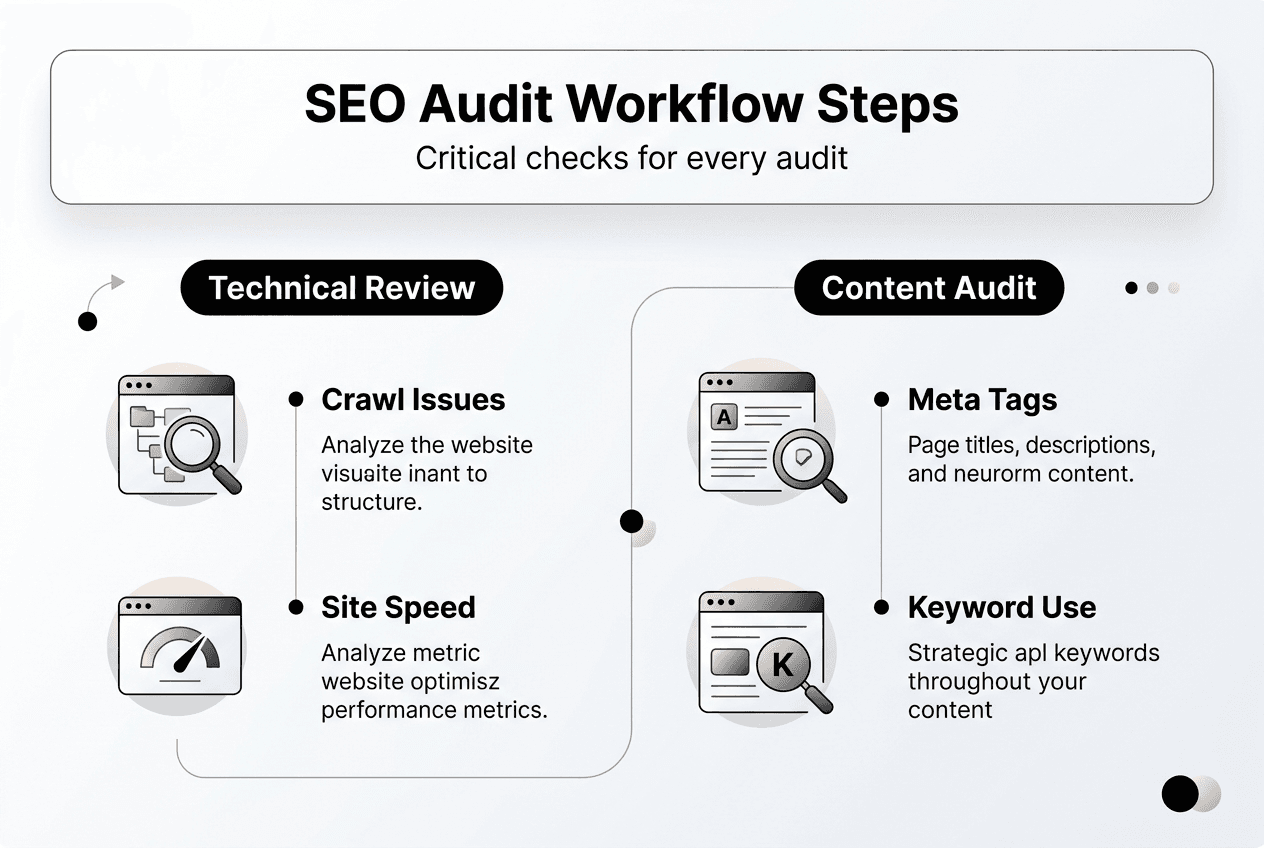
Document everything as you go. Capture screenshots of errors, export data tables, and write clear descriptions of each issue. This documentation becomes your audit deliverable and the foundation for your optimization roadmap. Without thorough records, findings get lost and fixes lack context.
Common challenges and how to avoid them during SEO audits
Even experienced marketers encounter pitfalls that undermine audit effectiveness. Rushing through checks to meet deadlines creates blind spots where critical issues hide. Allocate sufficient time for each audit phase, recognizing that thoroughness beats speed. A complete audit that takes three days delivers far more value than a superficial scan completed in three hours.
Many audits fail by focusing too narrowly on one dimension. Teams obsess over technical SEO while ignoring content gaps, or they chase backlinks without fixing on-page fundamentals. Incomplete audits often stem from lacking clear scope or skipping key areas like backlink analysis. Use comprehensive checklists that force coverage of technical, content, and off-page factors equally.
Poor documentation sabotages even well-executed audits. Findings scribbled in random notes or stored only in someone's head cannot drive action. Create standardized templates that capture issue descriptions, locations, severity, and recommended fixes. Share these documents with stakeholders in formats they can actually use, whether spreadsheets, presentations, or project management tickets.
- Overlooking mobile optimization: With mobile-first indexing, ignoring mobile UX and performance cripples rankings
- Skipping backlink analysis: Link profiles directly impact authority; neglecting this dimension leaves major opportunities untapped
- Ignoring search intent: Ranking for keywords that do not match user intent wastes resources and delivers poor results
- Failing to benchmark: Without baseline metrics, you cannot measure improvement or prove audit ROI
- Inconsistent methodology: Changing your approach between audits makes trend analysis impossible
Pro Tip: Schedule regular checkpoint meetings during longer audits. These touchpoints keep stakeholders informed, surface questions early, and prevent last-minute surprises that derail implementation.
"The biggest audit mistake is treating it as a one-time event rather than an ongoing workflow. SEO landscapes shift constantly, and yesterday's perfect site develops issues tomorrow. Build audits into your regular rhythm."
Maintain clear communication throughout the process. Update stakeholders on progress, flag unexpected findings immediately, and explain technical issues in business terms they understand. Marketing directors care about traffic and conversions, not crawl budgets and schema markup. Translate technical findings into business impact to secure buy-in for optimization work.
Verifying and applying SEO audit findings for maximum impact
Audits only create value when findings drive action. After documenting issues, develop a verification system that confirms fixes actually resolve problems. Retest technical issues after implementation to ensure they no longer appear in crawls. Monitor rankings for pages you optimized to verify improvements. This quality control prevents wasted effort on incomplete or incorrect fixes.
Prioritize your fix list ruthlessly. Not all issues deserve immediate attention. Focus first on problems blocking indexing or causing severe UX damage, as these directly suppress traffic. Next, tackle high-impact opportunities where small changes unlock significant ranking or traffic gains. Save minor optimizations for later sprints when critical work completes.
Tracking KPIs after audits helps agencies prove ROI and optimize ongoing SEO strategies. Establish a measurement framework before starting fixes, defining which metrics demonstrate success for each optimization category. Technical fixes should improve crawl efficiency and page speed. Content updates should boost rankings and engagement. Backlink work should increase referring domains and authority scores.
| Priority Level | Issue Types | Expected Impact | Timeline |
|---|---|---|---|
| Critical | Indexing blocks, major technical errors | Immediate traffic recovery | 1-7 days |
| High | Content gaps, broken UX, slow pages | Significant ranking gains | 2-4 weeks |
| Medium | Metadata optimization, internal linking | Incremental improvements | 4-8 weeks |
| Low | Minor content updates, image optimization | Marginal gains | 8+ weeks |
Communicate progress transparently with stakeholders. Share before and after metrics that demonstrate audit impact. Highlight wins like recovered rankings, increased organic traffic, or improved conversion rates. When fixes underperform expectations, explain why and adjust strategy accordingly. This honest dialogue builds trust and secures continued investment in SEO.
Pro Tip: Create a rolling audit calendar that revisits different site sections quarterly. This ongoing approach catches new issues early and maintains optimization momentum instead of treating audits as annual emergencies.
Continuously refine your workflow based on results and feedback. After each audit cycle, conduct a retrospective asking what worked well, what caused friction, and what you would change next time. Update your templates and checklists to incorporate lessons learned. This iterative improvement makes each audit more efficient and effective than the last.
- Establish clear success metrics: Define KPIs for each optimization category before starting fixes
- Create implementation roadmaps: Break fix lists into phased sprints with realistic timelines and resource requirements
- Assign ownership: Designate specific team members responsible for each fix category to ensure accountability
- Monitor continuously: Track rankings, traffic, and technical health weekly to catch regressions quickly
- Document outcomes: Record which fixes delivered results and which underperformed to inform future prioritization
Explore powerful SEO audit and keyword tools from BabyLoveGrowth
Implementing an effective audit workflow requires the right tools. BabyLoveGrowth offers platforms designed specifically to streamline each workflow phase. Our keyword discovery platform accelerates preparation by surfacing content gaps and clustering related terms, giving you a clear roadmap before the audit even starts.

During execution, leverage our AI SEO audit tool to automate technical checks and content analysis. This speeds detection of issues that manual review might miss while freeing your team to focus on strategic interpretation. After identifying backlink opportunities during your audit, use our SEO link building platform to systematically improve your link profile through automated outreach and relationship building. These integrated tools transform audit workflows from manual slogs into efficient, repeatable systems that consistently drive organic growth.
What is an SEO audit workflow and why is it important?
An SEO audit workflow is a structured, repeatable process for systematically analyzing all dimensions of a website's search optimization health. It ensures audits cover technical infrastructure, on-page elements, content strategy, and backlink profiles comprehensively rather than spotting random issues. Workflows prevent critical problems from slipping through gaps while maintaining consistency across multiple audits. They help teams prioritize fixes by impact, communicate findings clearly to stakeholders, and track improvements over time, transforming audits from overwhelming data dumps into actionable optimization roadmaps.
How do AI tools improve SEO audit workflows?
AI automates tedious data collection and pattern recognition tasks that consume hours during manual audits. AI-powered SEO audit tools accelerate keyword and backlink analysis and improve issue detection accuracy by processing massive datasets faster than humans can. They spot subtle patterns like content cannibalization or crawl inefficiencies that manual review often misses. This speed and precision lets marketers focus on strategic decisions and optimization planning rather than mechanical data gathering, making workflows both faster and more thorough.
What are common mistakes to avoid in SEO audits?
Common audit mistakes include missing backlink analysis and neglecting mobile SEO, which leaves major ranking factors unexamined. Rushing through checks to meet deadlines creates blind spots where critical technical errors hide. Poor documentation sabotages implementation because teams cannot remember or locate findings weeks later. Focusing too narrowly on one dimension like technical SEO while ignoring content gaps or user experience issues produces incomplete optimization roadmaps that underdeliver results.
How can I measure the success of my SEO audit workflow?
Monitor rankings for target keywords, organic traffic trends, and technical health metrics like page speed and crawl errors before and after implementing fixes. Tracking KPIs helps agencies and marketers prove SEO audit ROI and refine strategies over time by connecting specific fixes to measurable outcomes. Use audit issue resolution rates as workflow efficiency indicators, measuring how quickly your team closes findings and whether fixes actually resolve problems. Establish baseline metrics before starting optimizations so you can demonstrate clear before and after improvements to stakeholders.
Recommended
Smart SEO,
Faster Growth!
Most Read Articles
Generative Engine Optimization (GEO)
Learn how Generative Engine Optimization (GEO) helps your content rank in AI search engines like ChatGPT and Google AI. This comprehensive guide explains the differences between SEO and GEO, why it matters for your business, and practical steps to implement GEO strategies for better visibility in AI-generated responses.
DylenJan 18, 2025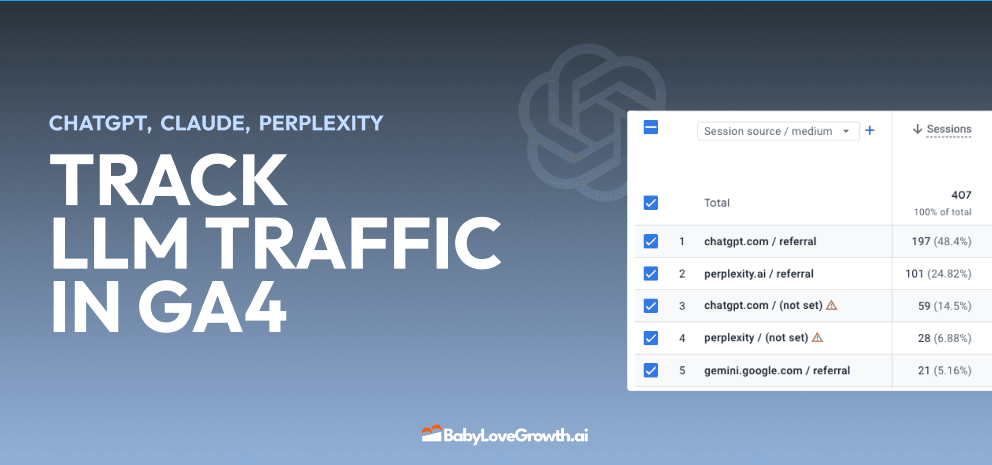
Track LLM Traffic in Google Analytics 4 (GA4)
Learn how to track and analyze traffic from AI sources like ChatGPT, Claude, Perplexity, and Google Gemini in Google Analytics 4. This step-by-step guide shows you how to set up custom filters to monitor AI-driven traffic and make data-driven decisions for your content strategy.
DylenMar 18, 2025
How to Humanize AI Text with Instructions
Learn practical techniques to make AI-generated content sound more natural and human. This guide covers active voice, direct addressing, concise writing, and other proven strategies to transform robotic text into engaging content.
DylenApril 7, 2025
Open AI Revenue and Statistics (2024)
Comprehensive analysis of OpenAI financial performance, user engagement, and market position in 2023. Discover key statistics including $20B valuation, $1B projected revenue, and 100M+ monthly active users.
DylenOctober 03, 2025