How to use data for insights to drive growth in 2026


You collect mountains of data every day, but turning those numbers into strategies that actually grow your business feels like solving a puzzle with missing pieces. Most business owners and marketers struggle to bridge the gap between raw analytics and actionable insights that boost organic traffic and revenue. This guide walks you through practical, AI-driven methods to transform your data into clear strategies for 2026 success. You'll learn how to prepare your data, extract meaningful patterns, avoid costly mistakes, and continuously refine your approach to stay ahead of competitors.
Table of Contents
- Preparing Your Data And Tools For Insightful Analysis
- Step-By-Step Process To Transform Data Into Actionable Insights
- Common Pitfalls And How To Avoid Them When Using Data For Insights
- Measuring Success And Continuously Refining Insights For Growth
- Optimize Your Organic Growth With BabyLoveGrowth AI Tools
- Frequently Asked Questions
Key takeaways
| Point | Details |
|---|---|
| Proper preparation matters | Clean, organized data and the right AI-powered tools are essential before analysis begins. |
| Follow a structured process | A clear sequence from defining questions to implementing changes ensures reliable insights. |
| Avoid common pitfalls | Focus on meaningful metrics, eliminate bias, and maintain data integrity throughout analysis. |
| Measure and refine continuously | Regular KPI tracking and adjustment cycles optimize organic growth over time. |
Preparing your data and tools for insightful analysis
Before you can extract useful insights, you need the right foundation. Start by identifying which data types matter most for your business goals. Customer behavior patterns, SEO performance metrics, content engagement rates, and conversion data form the core of actionable intelligence. Without these elements organized and accessible, even the best analysis falls flat.
Organize your data through centralized dashboards that connect multiple sources into one view. Scattered spreadsheets and disconnected platforms create blind spots that hide valuable patterns. Clean your data regularly by removing duplicates, fixing errors, and updating outdated entries. Poor data quality leads to flawed conclusions that waste time and money.
Choose analytics tools that integrate AI for deeper pattern recognition. Traditional platforms show you what happened, but analytics in marketing ROI tools powered by machine learning reveal why it happened and what to do next. SEO automation platforms, customer behavior trackers, and content performance analyzers should work together seamlessly.
Pro Tip: Schedule monthly data audits to verify accuracy and remove outdated information that skews your analysis.
Compare your options carefully before committing to a toolset:
| Tool Type | Key Features | Best For |
|---|---|---|
| AI-powered SEO platforms | Automated keyword tracking, content optimization, predictive analytics | Organic growth and search visibility |
| Customer analytics suites | Behavior tracking, segmentation, journey mapping | Understanding audience patterns |
| Content performance tools | Engagement metrics, conversion tracking, A/B testing | Optimizing marketing materials |
| Integrated dashboards | Multi-source data consolidation, real-time reporting | Comprehensive business intelligence |
The right combination depends on your specific needs and budget. Start with tools that solve your biggest pain points, then expand as you grow. Free trials let you test functionality before investing heavily.
Step-by-step process to transform data into actionable insights
Effective data analysis follows a clear sequence that prevents confusion and ensures reliable results. Each step builds on the previous one, creating a systematic approach that anyone on your team can follow.

First, define specific questions you need answered. Vague goals like "improve marketing" produce vague insights. Instead, ask "which content topics generate the most qualified leads?" or "what time of day do our emails get the highest click rates?" Clear questions guide your entire analysis process.
Second, collect and filter data aligned with your defined objectives. Ignore irrelevant metrics that distract from your core questions. If you're analyzing email performance, focus on open rates, click-through rates, and conversion data rather than social media engagement. Filtering saves time and sharpens your focus.
Third, apply AI-powered analytics tools to identify patterns and trends invisible to manual review. Machine learning algorithms process thousands of data points simultaneously, spotting correlations and anomalies that humans miss. These tools reveal which variables actually influence your outcomes versus which just happen to coincide.
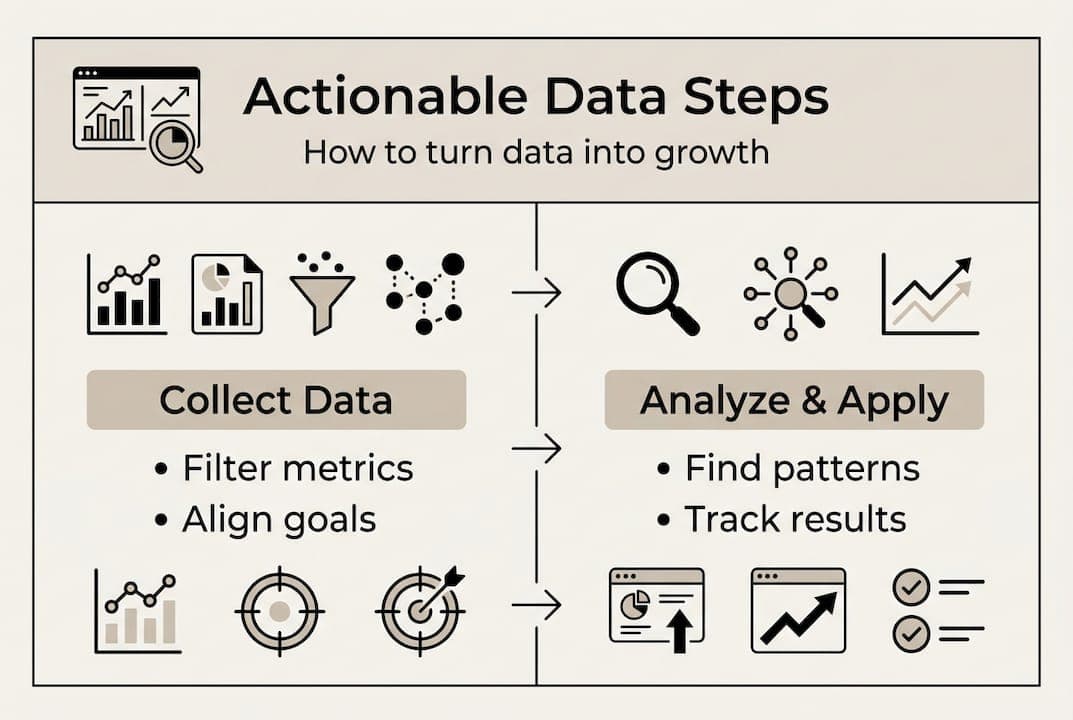
Fourth, interpret results to develop specific marketing and business strategies. Raw patterns mean nothing until you translate them into actions. If data shows blog posts with case studies convert 40% better than theory-focused articles, your strategy becomes clear: prioritize case study content. Data for content strategy transforms abstract numbers into concrete plans.
Fifth, implement changes systematically and monitor their impact through controlled tests. Roll out new strategies gradually rather than overhauling everything at once. This approach lets you isolate which changes actually drive improvements versus which have no effect or hurt performance.
Pro Tip: Document your analysis process and decisions so you can replicate successful approaches and avoid repeating mistakes.
Start with small pilot projects before scaling insights-driven decisions across your entire operation. Test new email subject lines with 10% of your list before sending to everyone. Launch content experiments on secondary pages before redesigning your homepage. Small tests reduce risk while building confidence in your data interpretation skills.
Common pitfalls and how to avoid them when using data for insights
Even experienced analysts fall into traps that undermine their conclusions. Recognizing these mistakes helps you avoid wasting resources on flawed strategies.
Vanity metrics tempt many marketers because they look impressive but drive no real business value. Total page views mean nothing if visitors bounce immediately. Social media followers don't matter if they never buy. Focus on metrics directly tied to revenue, qualified leads, and customer retention instead.
Confirmation bias sneaks into analysis when you unconsciously favor data supporting your existing beliefs. You might notice the three positive customer reviews while ignoring the twenty negative ones. Combat this by actively seeking contradictory evidence and asking colleagues to challenge your interpretations.
Data privacy violations damage trust and trigger legal consequences. Ensure you follow regulations like GDPR and CCPA when collecting, storing, and analyzing customer information. Transparency about data use builds credibility rather than eroding it.
Misinterpreting correlation as causation leads to decisions based on coincidence rather than actual cause and effect, wasting budget on ineffective tactics that happened to align with positive results by chance.
Cross-check insights with multiple data sources before taking action. If one analytics platform shows a traffic spike, verify it matches what other tools report. Discrepancies might indicate tracking errors rather than real changes. Analytics tools for SEO success provide more reliable conclusions when used together.
Outdated data produces outdated insights that no longer apply to current market conditions. Customer preferences shift, algorithms change, and competitor strategies evolve. Regular updates keep your analysis relevant and actionable. Set calendar reminders to refresh your data sources quarterly at minimum.
Ignoring context around your numbers creates incomplete pictures. A 50% traffic increase sounds great until you realize it came from bot traffic or irrelevant keywords. Always investigate the story behind the statistics before celebrating or panicking.
Measuring success and continuously refining insights for growth
Validating your insights-driven strategies requires clear metrics and systematic monitoring. Without measurement, you can't distinguish effective changes from wasted effort.
Define KPIs that directly connect to your business objectives. If your goal is organic growth, track organic traffic, keyword rankings, and conversion rates from organic visitors. If you focus on customer retention, monitor repeat purchase rates, customer lifetime value, and churn metrics. Generic KPIs like "engagement" lack the specificity needed for meaningful evaluation.
Set up automated reporting dashboards that update in real time. Manual report creation wastes hours and introduces delays that slow decision-making. Modern platforms generate visual reports automatically, highlighting trends and anomalies that need attention.
Compare reactive versus proactive approaches to understand why continuous refinement matters:
| Approach | Characteristics | Outcomes |
|---|---|---|
| Reactive | Analyzes data only when problems arise, responds to crises | Missed opportunities, constant firefighting, inconsistent results |
| Proactive | Monitors data continuously, adjusts before issues escalate | Sustained growth, competitive advantage, optimized performance |
Proactive strategies prevent problems rather than fixing them after damage occurs. Regular monitoring catches declining metrics early when corrections are simple and inexpensive.
Establish a continuous improvement cycle that becomes part of your routine operations. First, measure current performance against your KPIs. Second, analyze which factors influence those metrics positively or negatively. Third, adjust your strategies based on what the data reveals. Fourth, repeat the cycle to compound improvements over time.
Leverage marketing automation tools for SEO that suggest optimization opportunities automatically. AI systems identify underperforming content, recommend keyword adjustments, and flag technical issues without manual review. This automation frees your time for strategic decisions while ensuring nothing slips through the cracks.
Schedule quarterly strategy reviews where your team examines long-term trends rather than daily fluctuations. Short-term volatility often masks underlying patterns that only become clear over months. These reviews help you distinguish signal from noise and make confident strategic pivots when necessary.
Test variations systematically to validate which changes actually drive results. A/B testing, multivariate experiments, and controlled rollouts provide concrete evidence about what works. Gut feelings and assumptions often mislead, but properly designed tests reveal truth.
Optimize your organic growth with BabyLoveGrowth AI tools
Turning data into insights becomes significantly easier when you have the right AI-powered platform supporting your efforts. BabyLoveGrowth simplifies the entire process from data collection through strategy implementation, letting you focus on growing your business rather than wrestling with complex analytics.
Our SEO automation platform analyzes your performance data and generates optimized content that ranks on Google and ChatGPT without manual keyword research or guesswork. The backlink building software identifies high-quality link opportunities based on your niche and automates outreach, while our organic traffic tool monitors rankings and suggests adjustments in real time. These integrated solutions transform raw data into actionable growth strategies automatically, giving you the insights-driven advantage your competitors lack.
Frequently asked questions
What types of data are most valuable for gaining business insights?
Customer behavior data, website analytics, SEO metrics, and content performance statistics provide the foundation for actionable insights. Behavior data reveals what your audience wants and how they interact with your brand. Website analytics show which pages convert and where visitors drop off. SEO metrics indicate your visibility in search results and which keywords drive qualified traffic. Content performance data identifies which topics and formats resonate most with your audience. Choose data types aligned with your specific business goals rather than collecting everything available. Both quantitative metrics like conversion rates and qualitative feedback like customer reviews offer valuable perspectives that complement each other.
How can AI improve the process of extracting insights from data?
AI automates complex data processing that would take humans weeks to complete manually, identifying hidden patterns across thousands of variables simultaneously. Machine learning algorithms detect correlations and predict future trends based on historical patterns, accelerating decision-making dramatically. AI reduces human error by eliminating subjective bias and inconsistent analysis methods. Predictive analytics powered by AI forecast customer behavior, market shifts, and campaign performance before they happen, giving you time to adjust strategies proactively. Natural language processing translates complex data into plain English recommendations that anyone can understand and act on immediately.
What are the best practices to avoid common mistakes when analyzing data?
Focus exclusively on metrics that directly impact your business objectives rather than impressive-looking vanity numbers. Actively seek evidence that contradicts your assumptions to eliminate confirmation bias from your interpretations. Cross-check findings across multiple data sources to verify accuracy before implementing major changes. Maintain data integrity through regular cleaning, validation, and security protocols that prevent corruption or breaches. Invest in ongoing training for your team so everyone understands proper analysis techniques and common pitfalls. Use trustworthy, established tools with proven track records rather than untested platforms that might produce unreliable results.
How often should businesses review and update their data strategies?
Quarterly reviews provide the right balance between staying current and allowing enough time for meaningful patterns to emerge. Major campaigns or market shifts warrant immediate strategy reviews regardless of your regular schedule. Monthly check-ins on key metrics help you catch declining performance early when corrections are simple and inexpensive. Annual comprehensive audits examine your entire data infrastructure, tools, and processes to identify outdated approaches that need replacement. Continuous monitoring through automated dashboards keeps you informed daily without requiring manual review. The key is establishing a rhythm that matches your business pace while remaining flexible enough to adapt when circumstances change suddenly.