How to Use Content for Lead Generation Successfully


Over 60 percent of American marketers report that unclear audience targeting leads to wasted budgets and missed opportunities. Whether you run a startup or manage an established brand, knowing exactly who you want to reach and why is the first step toward effective lead generation. This guide highlights proven strategies that help you define your ideal audience, craft messages with precision, and set specific goals that turn interest into real leads.
Table of Contents
- Step 1: Define Target Audience and Lead Goals
- Step 2: Research Content Topics That Attract Leads
- Step 3: Create Compelling Content with Strong CTAs
- Step 4: Distribute Content Across Key Channels
- Step 5: Track Conversions and Optimize Strategies
Quick Summary
| Key Point | Explanation |
|---|---|
| 1. Define Your Target Audience | Identify specific traits and needs of potential leads to create relevant content that drives engagement and conversions. |
| 2. Conduct In-Depth Content Research | Use data-driven methods to find trending topics that resonate with your audience's problems for compelling content creation. |
| 3. Include Strong Calls to Action | Design CTAs that are clear and persuasive to prompt immediate engagement from readers and facilitate lead conversion. |
| 4. Optimize Multi-Channel Distribution | Identify and use key platforms where your audience is active, adapting your content presentation for each. |
| 5. Measure and Refine Performance | Track conversion metrics closely to gather actionable insights for continuous improvement of your lead generation strategy. |
Step 1: Define Target Audience and Lead Goals
Successful lead generation starts with crystal clear targeting. Your content strategy hinges on understanding exactly who you want to attract and what specific actions you want them to take. A well-defined target audience allows you to craft messages that resonate deeply and motivate potential customers to engage.
Defining your target audience requires strategic segmentation beyond basic demographics. While demographic characteristics play a crucial role, you need to dig deeper into psychographic and behavioral attributes. Consider factors like professional challenges, personal motivations, digital behavior patterns, and specific pain points your product or service solves. This nuanced approach transforms generic audience research into a precise targeting mechanism.
Start by creating detailed buyer personas that represent your ideal leads. Map out their professional roles, industry challenges, decision making processes, and potential interactions with your content. Develop clear lead goals that align with each persona tracking specific metrics such as email sign-ups, content downloads, webinar registrations, or direct sales inquiries. By connecting audience insights with measurable objectives, you create a targeted framework that turns content into a powerful lead generation engine.
Warning: Avoid the common pitfall of creating overly broad audience definitions. Specificity drives conversion rates more effectively than generalized targeting.
Step 2: Research Content Topics That Attract Leads
Researching content topics that effectively attract leads requires a strategic approach that goes beyond surface level guesswork. Your goal is to uncover subjects that not only capture attention but also demonstrate clear value to your target audience.
Start by analyzing audience demographics and market needs systematically. This means diving deep into your potential customers pain points, professional challenges, and information consumption habits. Use tools like keyword research platforms, social media listening software, and customer feedback channels to identify trending topics and recurring questions within your industry. The most compelling content addresses specific problems your audience is actively seeking solutions for.
Develop a comprehensive content research strategy that combines multiple intelligence gathering techniques. Interview existing customers, review online forums, analyze competitor content, and leverage industry reports to generate topic ideas. Prioritize subjects that intersect your expertise with your audiences genuine interests. Understanding buying behaviors and market preferences allows you to craft content that feels like a direct conversation rather than generic marketing material.
Warning: Avoid creating content based solely on intuition. Always validate your topic ideas with real audience data and measurable engagement metrics.
Step 3: Create Compelling Content with Strong CTAs
Creating compelling content that drives lead generation requires strategic thinking and precise execution. Your ultimate goal is to craft content that not only captures attention but also motivates readers to take immediate action through powerful and persuasive calls to action.
Effective calls to action are the critical bridge between engaging content and lead conversion. Design your CTAs to be direct, specific, and irresistibly valuable. Use action-oriented language that creates a sense of urgency and clearly communicates the benefit readers will receive. Words like "Unlock," "Discover," and "Get Instant Access" can transform passive readers into active leads. Strategically place these CTAs throughout your content where they feel natural and align with the reader's potential interest level.
Warning: Avoid generic or overly aggressive CTAs. Your call to action should feel like a natural next step in solving the reader's problem, not a sales pitch.
Step 4: Distribute Content Across Key Channels
Successful content distribution requires a strategic multichannel approach that maximizes your reach and engagement potential. Your objective is to place your carefully crafted content where your target audience is most likely to discover and interact with it.
Focusing marketing efforts on specific audience segments enables more precise and effective content distribution. Start by mapping out the digital platforms and communication channels your ideal leads frequently use. This might include professional networks like LinkedIn, industry specific forums, relevant social media platforms, email newsletters, and targeted online communities. Each channel demands a slightly different content presentation strategy adapted to its unique audience expectations and consumption patterns.
Understanding your target audiences demographics and behaviors is crucial for selecting the most impactful distribution channels. Develop a content distribution matrix that categorizes your content types with their optimal platforms. For instance, long form articles might perform best on LinkedIn or industry blogs, while short form video content could excel on YouTube or Instagram. Track engagement metrics closely to continuously refine your distribution strategy and allocate resources toward channels generating the highest quality leads.
Warning: Avoid spreading your content too thinly across every possible platform. Quality and relevance matter far more than total distribution volume.
Step 5: Track Conversions and Optimize Strategies
Measuring and analyzing your content lead generation performance is crucial for continuous improvement. Your goal is to transform raw data into actionable insights that refine your marketing approach and maximize lead generation potential.
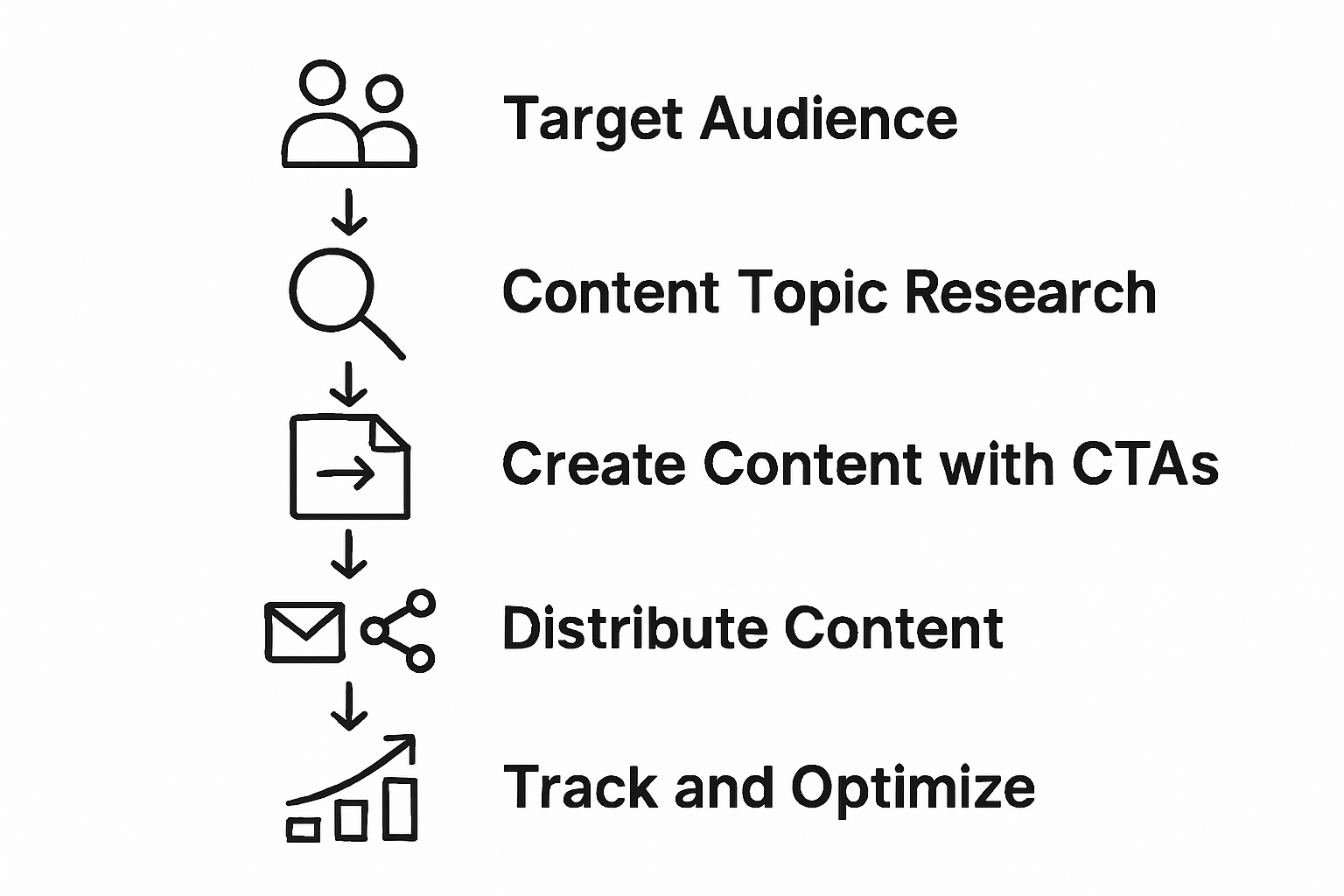
Technical SEO optimization plays a critical role in tracking conversions and improving lead generation efforts. Regularly audit and optimize on page elements like title tags, meta descriptions, internal linking structures, and content relevance. Use A B testing to experiment with different headlines, call to action placements, and content formats. Create a systematic approach to analyzing test results and implementing incremental improvements that progressively enhance your lead generation performance.
Warning: Avoid making drastic changes based on limited data. Gather substantial evidence and look for consistent patterns before significantly altering your content strategy.
Unlock the Power of AI-Driven Content for Lead Generation Success
The article highlights the challenge of crafting targeted, compelling content that converts leads effectively. If defining precise audience segments, creating strong calls to action, and distributing your content strategically feels overwhelming, you are not alone. Many business owners and marketers struggle to transform data insights into measurable results while staying ahead of SEO best practices. Babylovegrowth.ai solves these exact pain points by automating high-quality, SEO-optimized article creation combined with a personalized 30-day content plan that adapts to your unique business goals.
Experience how our AI-powered platform simplifies your content strategy by delivering content designed to rank on Google and ChatGPT with ease. Gain access to our backlink exchange ecosystem and detailed business analysis tools that refine your lead generation efforts step by step. Ready to move beyond guesswork and intuition by leveraging data-driven, automated content that speaks directly to your audience's needs?
Elevate your lead generation results today by visiting Babylovegrowth.ai to learn more and start your free trial. Explore how our platform's proven SEO methods and content automation can take your marketing to the next level.
Discover the difference that a targeted, AI-enhanced content strategy makes at Babylovegrowth.ai.
[Image:cta_image]
Take control of your content marketing with AI-powered tools designed to convert. Visit Babylovegrowth.ai now and start generating leads with confidence.
Frequently Asked Questions
How do I define my target audience for lead generation content?
To define your target audience, create detailed buyer personas that represent your ideal leads. Focus on their professional roles, industry challenges, and specific pain points your product or service addresses.
What topics should I research to create effective lead generation content?
Research topics by analyzing your audience’s pain points and professional challenges. Use feedback from existing customers and online forums to identify subjects that solve specific problems your audience is facing.
How can I create compelling content with effective calls to action (CTAs)?
Create compelling content by incorporating strong, action-oriented CTAs that highlight the benefits to the reader. For example, use phrases like "Unlock Exclusive Insights" to encourage immediate engagement.
What channels should I use to distribute my lead generation content?
Distribute your content across platforms where your target audience is most active, such as LinkedIn and relevant social media sites. Tailor your content presentation to fit each channel’s unique audience expectations.
How can I track the effectiveness of my lead generation strategies?
Track the effectiveness of your lead generation by using metrics such as conversion rates and time spent on page. Focus on gathering actionable insights from these data points to refine your strategy and improve performance over time.
What steps should I take to optimize my lead generation content?
Optimize your lead generation content by regularly auditing on-page elements like title tags and meta descriptions. Implement A/B testing for different content formats and CTAs to gradually enhance lead generation results.
Recommended
- What is Content Marketing? Understanding Its Importance
- Understanding Content Marketing Basics for Success
- Understanding Content Generation Meaning: Trends for 2025
- 8 Content Marketing Trends You Need to Follow
- Understanding the Importance of Customer Communication – My WordPress
- Video: The Tool You Need to Find and Nurture Highly Attractive Leads - Kicker Video
Smart SEO,
Faster Growth!
Most Read Articles
Generative Engine Optimization (GEO)
Learn how Generative Engine Optimization (GEO) helps your content rank in AI search engines like ChatGPT and Google AI. This comprehensive guide explains the differences between SEO and GEO, why it matters for your business, and practical steps to implement GEO strategies for better visibility in AI-generated responses.
DylenJan 18, 2025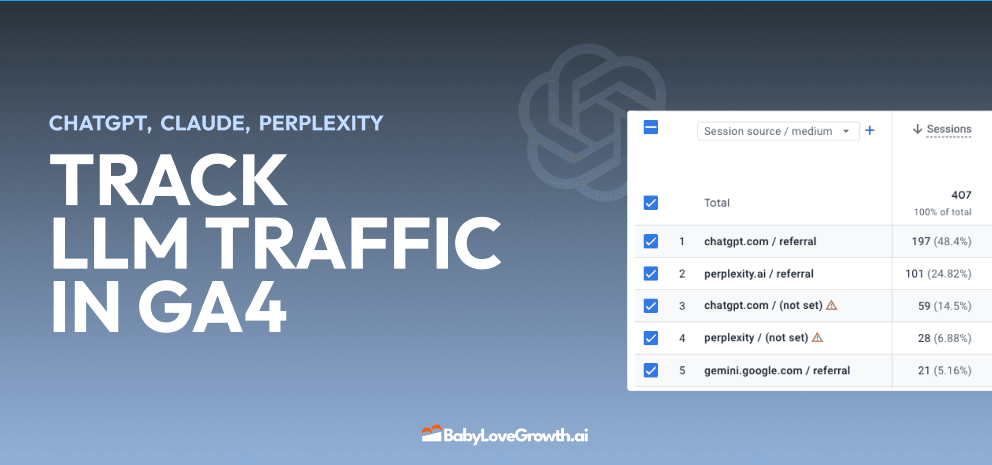
Track LLM Traffic in Google Analytics 4 (GA4)
Learn how to track and analyze traffic from AI sources like ChatGPT, Claude, Perplexity, and Google Gemini in Google Analytics 4. This step-by-step guide shows you how to set up custom filters to monitor AI-driven traffic and make data-driven decisions for your content strategy.
DylenMar 18, 2025
How to Humanize AI Text with Instructions
Learn practical techniques to make AI-generated content sound more natural and human. This guide covers active voice, direct addressing, concise writing, and other proven strategies to transform robotic text into engaging content.
DylenApril 7, 2025
Open AI Revenue and Statistics (2024)
Comprehensive analysis of OpenAI financial performance, user engagement, and market position in 2023. Discover key statistics including $20B valuation, $1B projected revenue, and 100M+ monthly active users.
DylenOctober 03, 2025