How to Improve User Engagement for Lasting Growth


Stagnant organic traffic can frustrate any Digital marketing manager whose SME relies on growth and visibility. Understanding why users interact—or disengage—with your content is the first step to unlocking meaningful progress. Incorporating behavioral, emotional, and cognitive engagement data empowers you to pinpoint actionable gaps and shape strategies that drive richer experiences, paving the way for AI-driven transformation and measurable business impact.
Table of Contents
- Step 1: Assess Current Engagement Metrics
- Step 2: Develop Targeted Content Strategies
- Step 3: Incorporate Interactive Features And Ai
- Step 4: Monitor And Optimize Engagement Results
Quick Summary
| Key Insight | Explanation |
|---|---|
| 1. Assess engagement metrics | Identify critical metrics such as page views, bounce rate, and conversion rates to understand current audience interactions with your content. |
| 2. Create targeted content | Develop content that addresses specific audience pain points and aligns with their needs for improved engagement and relevance. |
| 3. Use interactive features | Incorporate elements like quizzes and assessments to increase engagement and provide personalized experiences for your audience. |
| 4. Monitor and optimize | Establish a weekly review of engagement data to identify trends, enabling continuous improvement of your content strategy. |
Step 1: Assess Current Engagement Metrics
Before you can improve engagement, you need to understand where you stand right now. This step involves collecting and analyzing data that reveals how your audience actually interacts with your content across channels.
Start by identifying the metrics that matter most for your business goals:
- Page views and session duration show how long visitors stay on your content
- Bounce rate reveals the percentage of users leaving without taking action
- Click-through rates measure how many people engage with internal links or calls-to-action
- Scroll depth indicates how far readers progress through your pages
- Conversion rates track completed actions like signups, downloads, or purchases
- Social shares and comments reflect audience interest and willingness to amplify your content
Know your baseline metrics before implementing changes. You cannot measure improvement without understanding where you started.
Gather this data from your analytics platform, website dashboards, and any engagement tracking tools you use. Behavioral, emotional, and cognitive engagement data work together to create a complete picture of how audiences interact with your content.
Segment your data by content type, audience segment, and traffic source. A blog post attracting SME decision makers behaves differently than one targeting casual browsers. This segmentation reveals which content drives real business results.
Document your findings in a simple spreadsheet or dashboard. Include actual numbers, not just percentages. Knowing you have 8,500 monthly page views is more actionable than knowing your engagement is "good."
Use reflective questions and assessment frameworks to evaluate both quantitative metrics and qualitative indicators like audience feedback and engagement patterns.
Pro tip: Compare engagement metrics across your top 10 performing pieces. The patterns you discover (length, format, topic, timing) become your content creation blueprint for future growth.
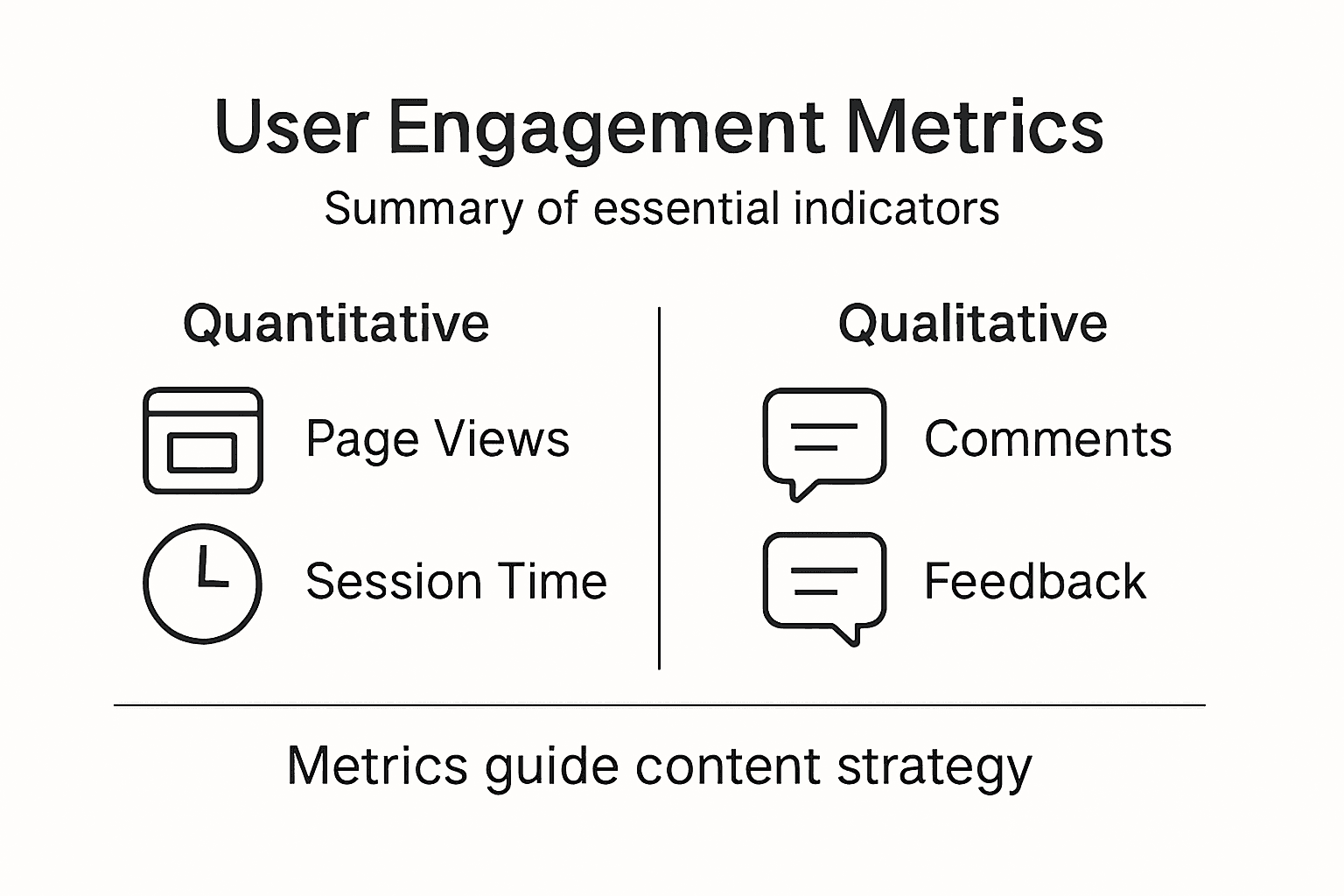
Here's a summary of how key engagement metrics influence content strategy planning:
| Engagement Metric | What It Reveals | Actionable Content Strategy Adjustment |
|---|---|---|
| Page Views | Content popularity | Increase similar topics or formats |
| Session Duration | Depth of audience interest | Add longer, more in-depth resources |
| Bounce Rate | Immediate relevance | Refine targeting and improve introductions |
| Conversion Rate | Business outcome effectiveness | Enhance calls-to-action and value propositions |
| Social Shares | Audience advocacy | Encourage sharing with share-friendly assets |
Step 2: Develop Targeted Content Strategies
With your engagement baseline established, you now need to build a content strategy that speaks directly to your audience's needs. This means moving beyond generic content to create pieces that solve specific problems your SME customers face.
Start by mapping your audience segments to their pain points. Who reads your content? Are they founders struggling with growth, marketing managers fighting budget constraints, or operations leaders seeking automation? Each group needs different content angles.
Create content pillars aligned with your business objectives:
- Education pieces that teach audience-specific solutions to their challenges
- Case studies and outcomes showing real results from similar companies
- Data-driven reports that establish your expertise and credibility
- Quick-reference guides addressing immediate, actionable problems
- Comparison content helping prospects evaluate options in your space
Your content succeeds when it solves a problem your audience actually has right now, not the problem you want them to have.
Align your content with audience preferences and engagement goals. This means selecting formats, topics, and distribution channels your specific audience favors. One segment might engage deeply with long-form guides while another prefers interactive tools or video content.

Prioritize personalization, accessibility, and visual storytelling to increase relevance. Data shows audiences engage more with content customized to their context, written for clarity, and presented in formats they prefer.
Document your strategy in a content calendar showing which pieces target which audience segments and which metrics you'll track. Include publication frequency, promotion channels, and success criteria for each piece.
Test your strategy on a small scale first. Publish 3-5 pieces following your framework and measure engagement against your baseline metrics. This reveals what resonates before you invest heavily.
Pro tip: Use your top-performing content from Step 1 as templates. Analyze why those pieces engaged your audience, then create similar pieces addressing adjacent pain points your metrics show going underserved.
Step 3: Incorporate Interactive Features and AI
Static content engages audiences only so far. To drive lasting growth, you need to add interactive elements and AI-powered personalization that keep visitors active and invested in your content experience.
Start by identifying where interactivity creates value. Interactive features work best when they serve a purpose beyond novelty. Consider adding these to your content strategy:
- Assessments and quizzes that help visitors evaluate their current situation or knowledge
- Calculators and ROI tools letting audiences see immediate, personalized results
- Interactive comparisons showing how different approaches stack up
- Dynamic content sections that adjust based on user input or behavior
- Polls and surveys gathering audience feedback while increasing engagement time
Interactive features succeed when they solve a visitor problem, not when they exist for their own sake.
Layering AI into interactive content amplifies results. User interaction with AI systems creates explicit, intentional engagement that keeps audiences invested longer than passive content consumption. This means using AI to personalize recommendations, adapt content difficulty, or provide real-time feedback.
Implement AI-powered personalization that dynamically adjusts experiences based on visitor behavior. For example, an assessment tool can show customized recommendations based on answers, or a content platform can surface pieces matching each visitor's interests and experience level.
Start small with one interactive element per major content piece. An assessment that categorizes visitors into three segments and shows segment-specific recommendations requires minimal setup but increases engagement measurably.
Track how interactive features perform against your baseline metrics. Measure time spent, return visits, and conversions from interactive content separately. This data shows you which formats deserve expansion.
Integrate humanized AI text into interactive features to maintain your brand voice. AI-generated recommendations and personalized copy should sound like your team wrote them, not a machine.
Pro tip: Begin with an interactive assessment targeting your highest-value audience segment. Use the data it generates to refine your content strategy and prove ROI before scaling to additional interactive elements.
The table below compares static versus interactive content approaches:
| Approach | Audience Engagement | ROI Potential | Data Insights Generated |
|---|---|---|---|
| Static Content | Moderate, short-term | Harder to attribute | Basic traffic and views |
| Interactive Tools | High, long-lasting | Direct, measurable | Granular behavioral signals |
Step 4: Monitor and Optimize Engagement Results
Launching your engagement strategy is just the beginning. Real growth comes from continuous monitoring and systematic optimization based on what your data reveals. This step turns your metrics into actionable improvements.
Set up a monitoring system that tracks performance weekly. You need visibility into what's working and what's not without waiting for monthly reports. Most analytics platforms allow you to build dashboards showing your key metrics at a glance.
Monitor these engagement indicators consistently:
- Traffic trends showing which content types and topics attract audiences
- Time-on-page metrics revealing which pieces hold attention longest
- Conversion rates by content piece and audience segment
- Return visitor rates indicating whether content creates loyalty
- Engagement velocity measuring how quickly new content gains traction
- Audience feedback through comments, emails, and social responses
Data only matters if you act on it. Set a weekly rhythm for reviewing metrics and identifying one optimization to test.
Implement feedback mechanisms and continuous monitoring frameworks that capture both quantitative metrics and qualitative audience signals. This combination reveals the full engagement picture.
Run monthly optimization cycles. Identify your lowest-performing content and either redesign it or retire it. Test format variations on your highest-potential pieces. Try different headlines, lengths, or distribution channels on similar content.
Analyze engagement strategies and content effectiveness by comparing performance across your content library. Which pieces drive conversions versus which just attract traffic? This distinction guides your investment decisions.
Document what works in a playbook. If long-form guides outperform blog posts for your audience, write more long-form guides. If interactive assessments convert better than static comparisons, prioritize assessments. Your playbook becomes your optimization blueprint.
Scale what works and kill what doesn't. Once you prove an approach generates engagement and conversions, allocate more budget there. Simultaneously, reduce investment in underperforming formats or topics.
Pro tip: Set up automated alerts for metric changes exceeding 15 percent month-over-month. This catches emerging trends and problems early, letting you respond before small changes become major issues.
Elevate Your User Engagement with AI-Powered SEO Solutions
Driving lasting growth means mastering user engagement through data-driven strategies and tailored content experiences. This article highlights the challenges of measuring engagement with metrics like session duration and bounce rate while emphasizing the need for interactive, personalized content that truly resonates with your audience. You are aiming to create high-impact, engaging content that not only attracts visitors but converts them consistently.
Babylovegrowth.ai is designed to solve exactly these pain points by automating your content creation with AI, delivering high-quality, SEO-optimized articles that align perfectly with your audience’s interests and behaviors. Our platform helps you implement key concepts such as targeted content strategies, interactive elements, and measurable SEO growth without the complexity of traditional methods. Using detailed business analysis alongside AI-driven backlink exchanges ensures your content ranks high on Google and ChatGPT, maximizing engagement and conversions.
Ready to transform your content engagement and boost lasting growth?
Discover how our platform combines automation with personalization to give your SEO strategy the edge it needs. Explore Babylovegrowth.ai to start your journey toward effortless organic traffic growth.
Take the first step to improve your user engagement today with Babylovegrowth.ai. Benefit from a personalized 30-day content plan, automated SEO workflows, and an innovative backlink ecosystem. Don’t let your competitors outpace you—experience scalable growth solutions built to make your business stand out now.
Frequently Asked Questions
How can I assess my current user engagement metrics?
To assess your current user engagement metrics, gather data on key indicators such as page views, session duration, and bounce rate. Begin by documenting these metrics in a spreadsheet to create a baseline, which will help you measure improvements over time.
What metrics should I focus on to improve user engagement?
Focus on metrics like conversion rates, click-through rates, and social shares to gauge user engagement effectively. Prioritize tracking these metrics weekly to see trends and identify areas for improvement.
How do I develop a content strategy that enhances user engagement?
Develop a content strategy by mapping your audience segments to their specific pain points and creating content that directly addresses those challenges. Use a content calendar to align your pieces with targeted metrics and ensure you are addressing the needs of your audience consistently.
What interactive features should I consider adding to my content?
Consider adding assessments, quizzes, and calculators as interactive features that engage visitors. Implement one interactive element per major content piece to see how it impacts engagement, testing its effectiveness and iterating as needed.
How often should I monitor engagement metrics for optimization?
Monitor engagement metrics weekly to have real-time visibility into your content performance. Use this data to identify at least one optimization to test each week, which can lead to continuous improvements in user engagement.
How do I ensure that my content resonates with my audience?
To ensure your content resonates, align it with audience preferences by selecting topics and formats they favor. Use feedback and engagement data to refine your approach, striving for content that feels personalized and relevant.
Recommended
Smart SEO,
Faster Growth!
Most Read Articles
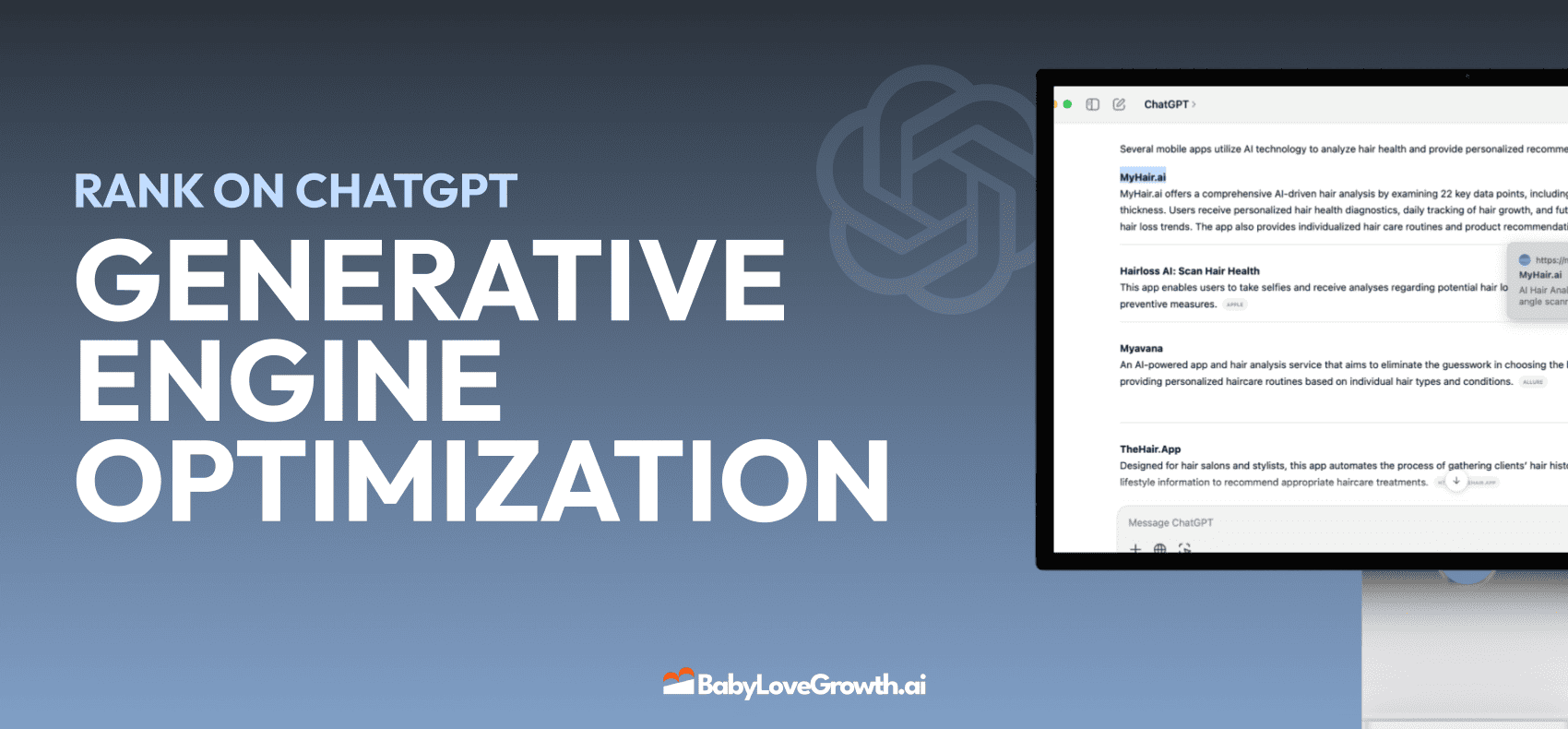
Generative Engine Optimization (GEO)
Learn how Generative Engine Optimization (GEO) helps your content rank in AI search engines like ChatGPT and Google AI. This comprehensive guide explains the differences between SEO and GEO, why it matters for your business, and practical steps to implement GEO strategies for better visibility in AI-generated responses.
DylenJan 18, 2025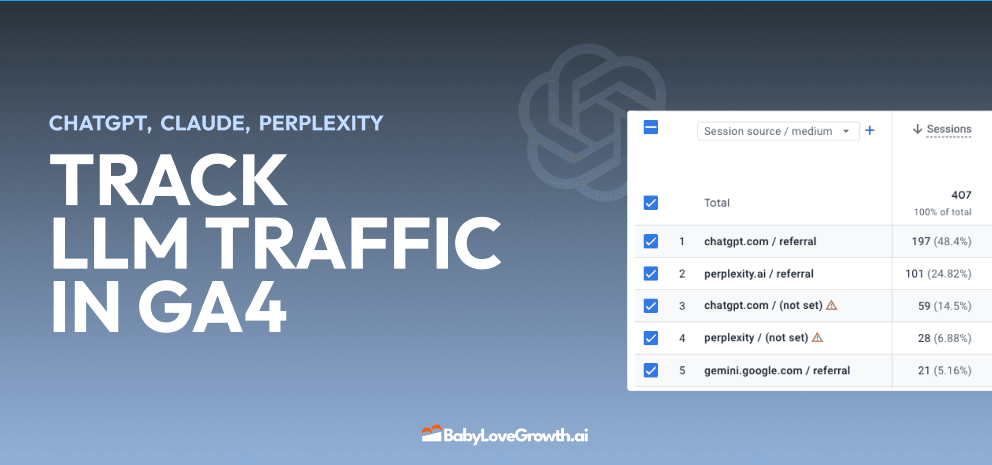
Track LLM Traffic in Google Analytics 4 (GA4)
Learn how to track and analyze traffic from AI sources like ChatGPT, Claude, Perplexity, and Google Gemini in Google Analytics 4. This step-by-step guide shows you how to set up custom filters to monitor AI-driven traffic and make data-driven decisions for your content strategy.
DylenMar 18, 2025
How to Humanize AI Text with Instructions
Learn practical techniques to make AI-generated content sound more natural and human. This guide covers active voice, direct addressing, concise writing, and other proven strategies to transform robotic text into engaging content.
DylenApril 7, 2025
Open AI Revenue and Statistics (2024)
Comprehensive analysis of OpenAI financial performance, user engagement, and market position in 2023. Discover key statistics including $20B valuation, $1B projected revenue, and 100M+ monthly active users.
DylenOctober 03, 2025