How to grow an email list: Proven strategies for 2026


Growing your email list can feel like an uphill battle, especially when you're juggling limited time and resources. Many small to medium business owners and digital marketers watch their subscriber counts stagnate while competitors seem to effortlessly build engaged audiences. The truth is that effective email list growth isn't about luck or massive budgets. It's about implementing proven, strategic tactics that attract the right people and convert them into loyal subscribers. This guide walks you through the exact preparation, execution, and verification steps you need to build a thriving email list that drives real business results.
Table of Contents
- Key takeaways
- Preparing to grow your email list
- Executing effective email list growth strategies
- Verifying and sustaining email list growth success
- Boost your email list growth with BabyLoveGrowth tools
- FAQ
Key Takeaways
| Point | Details |
|---|---|
| Clear growth goals | Define specific measurable objectives for your email list to guide strategy and content decisions. |
| Know your ideal subscriber | Create detailed audience profiles that describe problems, solutions tried, and content preferences to tailor tactics. |
| Right toolset selection | Choose an email platform with automation, segmentation, analytics, integration, and privacy compliance features that fit your budget and technical skills. |
| Build reliable infrastructure | Set up landing pages, signup forms, and welcome sequences and test every component before promotion. |
| Privacy compliant growth | Use permission based methods with clear privacy policies and easy unsubscribe options to protect subscribers and sender reputation. |
Preparing to grow your email list
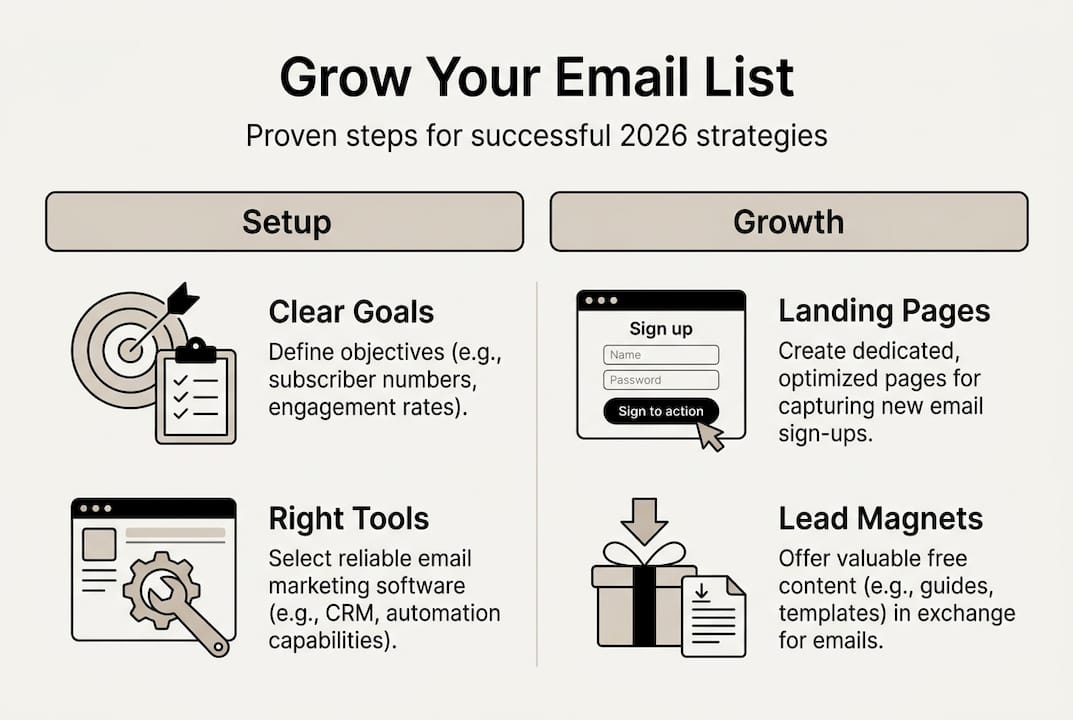
Success with email list growth starts with clear goals and understanding your target market. Before you launch any campaigns or create sign-up forms, you need solid groundwork that guides every decision you make.Start by defining specific, measurable objectives for your email list. Are you building this list primarily to drive product sales, nurture leads through a longer sales cycle, or establish thought leadership in your industry? Each goal requires different tactics and content approaches. A retail business might focus on promotional emails and exclusive discounts, while a B2B service provider needs educational content that builds trust over months.
Next, get crystal clear on who your ideal subscriber is. Create detailed audience profiles that go beyond basic demographics. What problems keep them awake at night? Which solutions have they already tried and found lacking? What type of content do they consume regularly? This deep understanding shapes everything from your lead magnet topics to your email tone and frequency.
Choosing the right tools forms another critical preparation step. Your email marketing guide should include selecting a platform that matches your technical skills and budget. Consider these essential criteria:
- Automation capabilities that let you set up welcome sequences and behavioral triggers
- Segmentation features for targeting specific subscriber groups with relevant content
- Analytics dashboards that track opens, clicks, and conversions in real time
- Integration options with your existing CRM, website, and e-commerce platforms
- Compliance tools that help you follow privacy regulations automatically
Set up your foundational infrastructure before you start promoting sign-up opportunities. This means creating dedicated landing pages, embedding subscription forms on high-traffic website pages, and designing welcome email sequences that deliver immediate value. Test every form and automation workflow to ensure they function smoothly.
Privacy compliance isn't optional in 2026. Build your list exclusively through permission-based methods where subscribers actively choose to receive your emails. Make your privacy policy easily accessible, include clear unsubscribe options in every message, and store subscriber data securely. These practices protect both your subscribers and your sender reputation.
Pro Tip: Document your email list growth process from day one. Create a simple spreadsheet tracking what tactics you try, when you implement them, and what results they generate. This historical data becomes invaluable for identifying patterns and making informed decisions as you scale.
Executing effective email list growth strategies
With your foundation in place, it's time to implement specific tactics that attract subscribers and convert them into engaged list members. These strategies have been tested across thousands of businesses and consistently deliver results when executed properly.
Lead magnets serve as your primary conversion tool. These valuable resources convince visitors to exchange their email address for something they genuinely want. The most effective lead magnets solve a specific, urgent problem your target audience faces right now. Consider these high-performing options:
- Comprehensive guides or ebooks that provide step-by-step solutions
- Exclusive discounts or early access to new products for subscribers only
- Templates, checklists, or tools that save significant time or effort
- Webinars or video training sessions featuring expert insights
- Free trials or samples that demonstrate your product's value
| Lead Magnet Type | Best For | Average Conversion Rate | Implementation Difficulty |
|---|---|---|---|
| Ebooks/Guides | B2B services, education | 15-25% | Medium |
| Discounts/Coupons | E-commerce, retail | 20-30% | Low |
| Templates/Tools | Marketing, productivity | 25-35% | Medium to High |
| Webinars | High-ticket services | 30-40% | High |
| Free Trials | SaaS, subscription services | 10-20% | Low to Medium |
Your lead magnet only works if people see it and can easily access it. This requires landing page optimization that removes friction and focuses visitor attention on a single action. Follow this proven sequence for creating high-converting landing pages:
- Write a compelling headline that clearly states the benefit subscribers will receive
- Add 2-3 bullet points highlighting specific outcomes or features of your lead magnet
- Include a relevant image or mockup that visualizes what they're getting
- Design a prominent, contrasting call-to-action button with action-oriented text
- Keep form fields minimal, requesting only the email address initially
- Add social proof elements like testimonials or subscriber counts if available
- Remove navigation menus and other distracting links that provide exit paths
- Optimize page load speed to prevent abandonment from slow performance
Optimizing landing pages significantly increases email sign-ups by creating a focused experience that guides visitors toward conversion. Every element on the page should either support the conversion goal or be removed.

Promotion determines how many people see your lead magnet offer. Leverage multiple channels to maximize reach and test which sources deliver the highest quality subscribers. Social media platforms let you target specific demographics and interests with paid promotions. Create eye-catching graphics that stop the scroll and communicate your offer's value in seconds. Pin lead magnet posts to the top of your profiles and mention them regularly in your organic content.
Paid advertising accelerates list growth when you've validated your offer converts well organically. Start with small budgets on platforms where your audience spends time. Facebook and Instagram ads work well for B2C businesses, while LinkedIn delivers better results for B2B targeting. Google Search ads capture people actively looking for solutions you provide.
Content marketing automation enhances efficient email list growth by scaling your promotional efforts without proportional time investment. Set up automated social media posts that regularly promote your lead magnets. Use chatbots on your website to offer relevant lead magnets based on which pages visitors view. Implement exit-intent popups that present your offer when someone is about to leave your site.Pro Tip: Run A/B tests continuously on every element of your email acquisition funnel. Test different headlines, images, button colors, form placements, and offer descriptions. Even small improvements in conversion rate compound dramatically over time. A landing page that converts at 25% instead of 20% generates 25% more subscribers from the same traffic investment.
Verifying and sustaining email list growth success
Building your list is only the beginning. Maintaining list health and ensuring sustainable growth requires ongoing measurement, refinement, and strategic adjustments based on real performance data.
Monitoring analytics helps refine email growth tactics and improve conversion rates over time. Track these essential metrics weekly to understand what's working and what needs attention:- Subscription rate showing how many website visitors convert to subscribers
- Source attribution revealing which channels deliver the most and best subscribers
- Welcome email open and click rates indicating initial engagement quality
- List growth rate measuring net new subscribers after accounting for unsubscribes
- Engagement metrics like opens and clicks for your regular email campaigns
- Conversion rates from subscribers to customers showing list quality and relevance
These numbers tell the story of your list's health and highlight opportunities for improvement. A high subscription rate but low engagement suggests your lead magnet attracts the wrong audience or sets incorrect expectations. High unsubscribe rates after welcome emails indicate a mismatch between what you promised and what you're delivering.
Avoid these common mistakes that undermine list growth and damage sender reputation. Buying email lists might seem like a shortcut, but it destroys deliverability and violates regulations in most jurisdictions. These contacts never gave you permission and will mark your emails as spam. Sending too many emails too quickly overwhelms subscribers and triggers mass unsubscribes. Find the frequency sweet spot through testing, typically starting with weekly sends and adjusting based on engagement data.
Neglecting list segmentation treats all subscribers identically despite having different interests, behaviors, and stages in the customer journey. Create segments based on signup source, engagement level, purchase history, and stated preferences. Send targeted content that resonates with each group's specific needs and interests.
Permission-based, compliant email marketing isn't just about following rules. It builds genuine relationships with people who want to hear from you, creating a sustainable asset that drives business growth for years. Shortcuts and aggressive tactics might inflate numbers temporarily but ultimately damage the trust and deliverability that make email marketing effective.
Regularly clean your list by removing inactive subscribers who haven't opened or clicked in 90-180 days. This improves your engagement metrics and sender reputation while reducing costs on platforms that charge per subscriber. Before removing people permanently, send a re-engagement campaign offering something valuable and asking if they want to stay subscribed.
Pro Tip: Implement progressive profiling to learn more about subscribers over time without overwhelming them initially. Start by collecting just an email address, then gradually request additional information through preference centers, surveys, and behavioral tracking. This data enables increasingly sophisticated segmentation and personalization that boost engagement and conversions.
Maintain list momentum by continuously testing new lead magnets, promotion channels, and landing page variations. What works today might lose effectiveness as audience preferences shift and competition increases. Stay curious about emerging platforms and tactics while doubling down on proven performers. Balance innovation with optimization to sustain steady growth that compounds over months and years.
Boost your email list growth with BabyLoveGrowth tools
The strategies in this guide work even better when supported by the right technology and automation. BabyLoveGrowth provides AI-driven tools specifically designed to help small and medium businesses increase organic traffic and convert more visitors into email subscribers.
Our organic traffic tool creates optimized content that ranks on Google and ChatGPT, driving qualified visitors to your lead magnet landing pages. More targeted traffic means more email sign-ups from people genuinely interested in what you offer. The traffic automation platform builds high-quality backlinks that boost your domain authority and search rankings, creating a sustainable source of new visitors without ongoing ad spend.
Integrate backlink building software with your content strategy to amplify reach and establish authority in your niche. When your content appears across multiple reputable sites, you attract subscribers from diverse sources while building brand recognition. These tools work together to create a growth engine that feeds your email list continuously.
Pro Tip: Combine these automation tools with the email growth tactics covered in this guide for maximum impact. Use AI-generated content to create lead magnets faster, leverage backlinks to promote your subscription pages, and track which traffic sources convert best to subscribers. This integrated approach multiplies results beyond what any single tactic delivers alone.
FAQ
What is the best way to start growing an email list?
Start by clearly defining your target audience and specific goals for the list. Create a compelling lead magnet that solves a real problem your ideal subscribers face right now. Build an optimized landing page focused solely on converting visitors to subscribers, then promote it through channels where your audience already spends time. Track your results from day one so you can identify what works and refine your approach continuously.
How can I keep my email subscribers engaged over time?
Segment your list based on subscriber behavior, interests, and where they are in the customer journey. Send personalized, relevant content regularly but avoid overwhelming people with too many messages. Use interactive elements like surveys, polls, and exclusive offers to boost engagement and make subscribers feel valued. Monitor your open and click rates closely, adjusting your strategy when you notice engagement declining.
What common mistakes should I avoid when growing an email list?
Never buy email lists or add people without their explicit permission, as this damages deliverability and violates privacy laws. Don't neglect segmentation and personalization, treating all subscribers identically regardless of their interests or behaviors. Avoid sending too many promotional emails without providing genuine educational value. Always maintain compliance with privacy regulations like GDPR and CAN-SPAM to protect subscriber trust and your sender reputation.
How long does it take to build a substantial email list?
List growth speed depends on your traffic volume, conversion rates, and promotional efforts. A small business with 1,000 monthly website visitors converting at 2% gains 20 subscribers monthly, reaching 240 in a year. Increase traffic through SEO and paid ads while optimizing conversion rates through testing, and you can accelerate growth significantly. Focus on quality over speed, as engaged subscribers deliver far more value than a large, unresponsive list.
Should I use popups to grow my email list?
Popups can be highly effective when implemented strategically and respectfully. Use exit-intent popups that appear only when someone is about to leave your site, or timed popups that show after visitors have spent enough time to understand your value. Avoid aggressive popups that appear immediately and block content, as these frustrate users and harm the experience. Always make popups easy to close and ensure they're mobile-friendly. Test different popup types, timing, and offers to find what works best for your specific audience.
Recommended
Smart SEO,
Faster Growth!
Most Read Articles
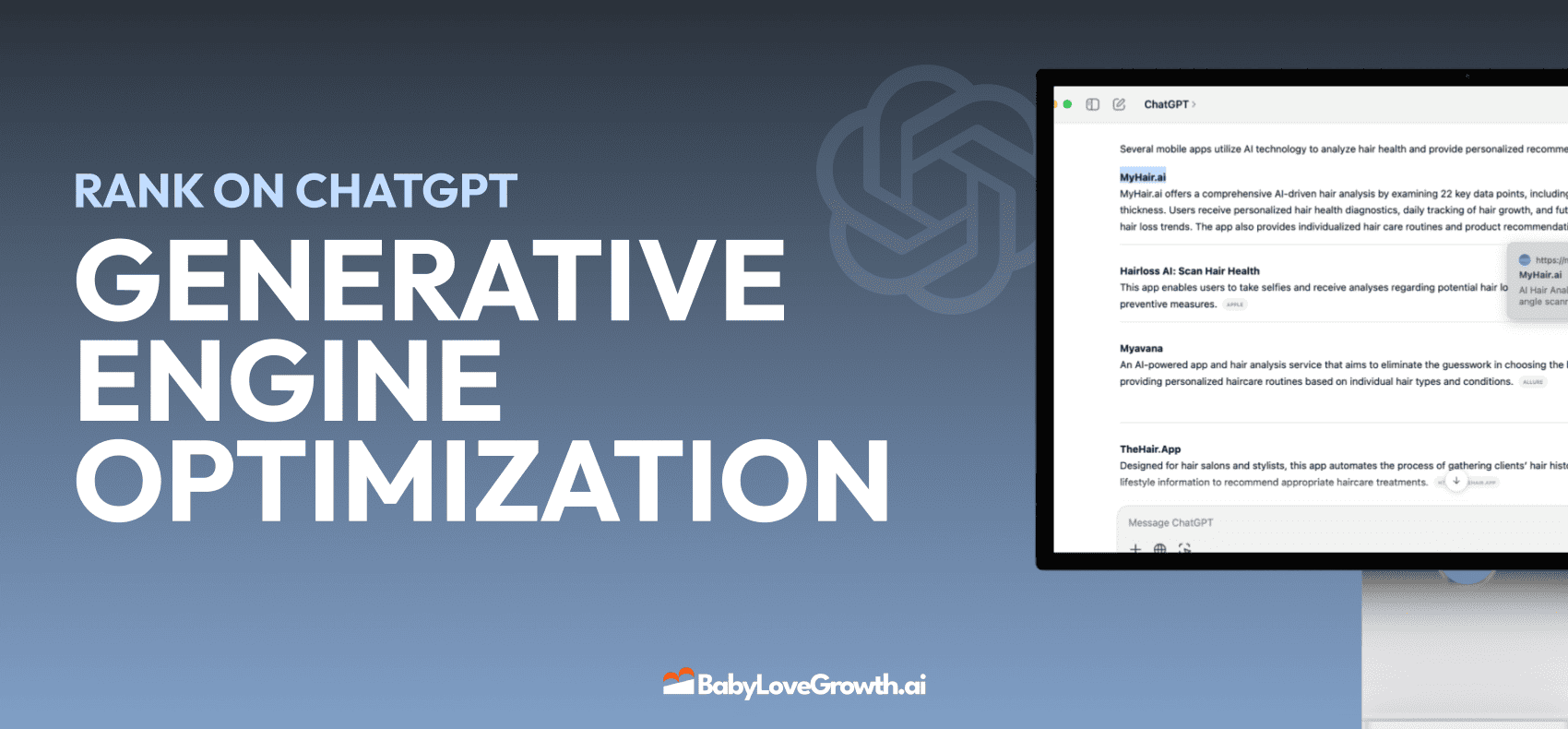
Generative Engine Optimization (GEO)
Learn how Generative Engine Optimization (GEO) helps your content rank in AI search engines like ChatGPT and Google AI. This comprehensive guide explains the differences between SEO and GEO, why it matters for your business, and practical steps to implement GEO strategies for better visibility in AI-generated responses.
DylenJan 18, 2025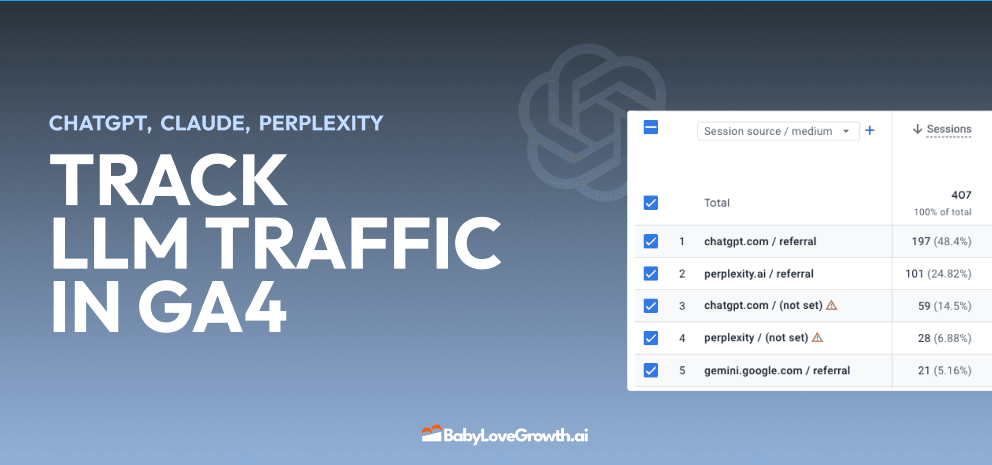
Track LLM Traffic in Google Analytics 4 (GA4)
Learn how to track and analyze traffic from AI sources like ChatGPT, Claude, Perplexity, and Google Gemini in Google Analytics 4. This step-by-step guide shows you how to set up custom filters to monitor AI-driven traffic and make data-driven decisions for your content strategy.
DylenMar 18, 2025
How to Humanize AI Text with Instructions
Learn practical techniques to make AI-generated content sound more natural and human. This guide covers active voice, direct addressing, concise writing, and other proven strategies to transform robotic text into engaging content.
DylenApril 7, 2025
Open AI Revenue and Statistics (2024)
Comprehensive analysis of OpenAI financial performance, user engagement, and market position in 2023. Discover key statistics including $20B valuation, $1B projected revenue, and 100M+ monthly active users.
DylenOctober 03, 2025