How to Foster Brand Loyalty With AI Content Strategies


Building true brand loyalty can feel elusive when every click and comment carries weight. For entrepreneurial marketers, understanding the story behind every customer interaction is the key to meaningful connection. Embracing AI lets you go far beyond surface analytics, drawing on engagement metrics like click-through rates, dwell time, and sentiment signals for a holistic view of brand equity. This guide shows how systematic measurement and advanced automation can transform scattered data into actionable insights that elevate both engagement and customer loyalty worldwide.
Table of Contents
- Step 1: Assess Current Brand Engagement Metrics
- Step 2: Identify Loyal Audience Segments
- Step 3: Automate Personalized Content Creation
- Step 4: Leverage AI To Optimize Customer Touchpoints
- Step 5: Monitor Results And Adjust Strategies
Quick Summary
| Key Insight | Explanation |
|---|---|
| 1. Analyze Brand Engagement Metrics | Gather and assess data to understand customer interactions with your brand across digital platforms for strategy development. |
| 2. Identify Loyal Customer Segments | Use advanced analysis techniques to discover and target high-value audience groups showing consistent engagement. |
| 3. Automate Content Creation | Implement AI to dynamically generate personalized marketing materials tailored to specific audience segments efficiently. |
| 4. Optimize Customer Touchpoints | Leverage AI strategies to manage customer interactions, ensuring seamless and personalized experiences across channels. |
| 5. Monitor and Adjust Strategies | Continuously evaluate performance metrics and adapt strategies based on data-driven insights to enhance brand engagement. |
Step 1: Assess current brand engagement metrics
Understanding your brand's current engagement landscape is crucial for developing targeted AI content strategies. You'll start by collecting and analyzing comprehensive data points that reveal how customers currently interact with your brand across digital platforms.
To effectively measure brand engagement, focus on these critical metrics:
- Click-through rates from marketing content
- Social media interaction volumes
- Customer sentiment signals derived from feedback
- Website dwell time and user behavior patterns
- Conversion rates from content touchpoints
Most businesses overlook the nuanced insights available through advanced analytics. Quantifying engagement behaviors requires sophisticated techniques like regression modeling and sentiment analysis. These methods go beyond surface-level metrics, providing deep understanding of how customers truly perceive and interact with your brand.
The key is transforming raw data into actionable strategic insights that drive meaningful customer connections.
Start by auditing your current content performance across channels. Use AI-powered analytics tools to aggregate data from social media, website interactions, email campaigns, and customer support platforms. Look for patterns in user engagement - which content types generate the most interaction? Where do potential customers drop off?
Pro tip: Conduct a quarterly comprehensive engagement audit to track evolving customer interaction trends and adjust your AI content strategy accordingly.
Step 2: Identify loyal audience segments
Discovering and understanding your most valuable customer groups is critical for developing targeted AI content strategies. You'll use advanced segmentation techniques to pinpoint audience segments that demonstrate consistent engagement and potential long-term value.
Advanced customer segmentation methods help businesses move beyond generic demographic targeting. Key approaches include:- Recency, frequency, monetary (RFM) analysis
- Behavioral pattern tracking
- Purchase history examination
- Engagement level classification
- Machine learning clustering techniques
Algorithmic approaches provide deeper insights than traditional segmentation. Modern AI-powered tools can analyze complex data points to distinguish between truly loyal customers and those attracted only by temporary promotions.
Customer loyalty isn't about a single transaction - it's about consistent, meaningful interactions across multiple touchpoints.
To effectively segment your audience, integrate data from multiple sources: website analytics, social media interactions, email engagement metrics, and customer support records. Look for consistent patterns of interaction that indicate genuine brand affinity.

Pro tip: Refresh your audience segments quarterly to capture evolving customer behaviors and maintain the precision of your targeting strategies.
Step 3: Automate personalized content creation
Transforming your content strategy requires leveraging AI technologies that can dynamically generate personalized marketing materials tailored to specific audience segments. By implementing intelligent automation, you'll create more engaging and relevant content at unprecedented scale.
AI-driven content creation technologies enable businesses to craft highly targeted digital experiences. Key automation strategies include:- Machine learning content generation
- Dynamic template customization
- Real-time audience behavior tracking
- Automated content variation testing
- Personalization algorithm implementation
Generative AI solutions now support comprehensive marketing workflows, allowing rapid content production while maintaining brand consistency. These advanced tools analyze user data points to create nuanced, contextually relevant materials that resonate with specific customer segments.
Effective personalization transforms generic content into meaningful customer conversations.
Start by selecting AI platforms that integrate seamlessly with your existing marketing infrastructure. Configure intelligent rules that trigger content variations based on user demographics, previous interactions, and predicted preferences. Continuously monitor performance metrics to refine your personalization algorithms.
Pro tip: Implement strict ethical guidelines and human oversight to ensure AI-generated content remains authentic and aligned with your brand voice.
Step 4: Leverage AI to optimize customer touchpoints
Optimizing customer interactions requires a strategic approach to AI-powered engagement across multiple digital channels. By implementing intelligent touchpoint management, you'll create seamless, personalized experiences that dramatically improve customer satisfaction and loyalty.
AI-enabled customer service strategies transform how businesses interact with their audience. Key optimization techniques include:- Predictive customer interaction modeling
- Real-time personalization algorithms
- Intelligent routing and response systems
- Multichannel engagement tracking
- Automated sentiment analysis
Successful AI touchpoint optimization goes beyond simple automation. It involves creating an intelligent ecosystem that anticipates customer needs, provides contextually relevant interactions, and delivers exceptional experiences across every interaction point.
Great customer experiences are built on understanding, not just responding.
Implement AI tools that can analyze customer behavior in real-time, creating dynamic interaction pathways that adapt to individual preferences. Integrate machine learning algorithms that continuously improve interaction quality by learning from previous customer engagements and feedback loops.
Pro tip: Develop a comprehensive AI interaction mapping that tracks customer journeys across all touchpoints, ensuring consistent and personalized experiences.
Step 5: Monitor results and adjust strategies
Successful AI content strategies require continuous evaluation and precise refinement. You'll develop a systematic approach to tracking performance metrics and making data-driven adjustments that keep your brand engagement dynamic and responsive.
AI marketing strategy evaluation demands comprehensive monitoring across multiple dimensions. Critical tracking elements include:- Performance metric benchmarking
- Consumer feedback analysis
- Content engagement rate tracking
- Predictive model validation
- Real-time strategy adjustment
Effective monitoring goes beyond surface-level metrics. Advanced AI technologies enable sophisticated tracking that reveals nuanced insights about customer interactions, content effectiveness, and potential optimization opportunities.
Data doesn't just measure performance - it tells a story about your brand's connection with customers.
Implement a robust analytics framework that captures granular performance data across all content channels. Use machine learning algorithms to automatically detect patterns, anomalies, and potential improvement areas in your AI-driven content strategies.
Pro tip: Schedule monthly strategic reviews where human expertise critically evaluates AI-generated insights to ensure alignment with broader business objectives.
Compare the benefits of human vs. AI-driven content strategy:
| Strategy Aspect | Human-Led Approach | AI-Driven Approach |
|---|---|---|
| Speed | Manual, slower updates | Instant, real-time adjustments |
| Personalization | Basic demographic targeting | Dynamic, behavior-based customization |
| Data Analysis | Prone to bias, time-consuming | Objective, scalable insights |
| Consistency | Varies by team | Uniform brand-compliant output |
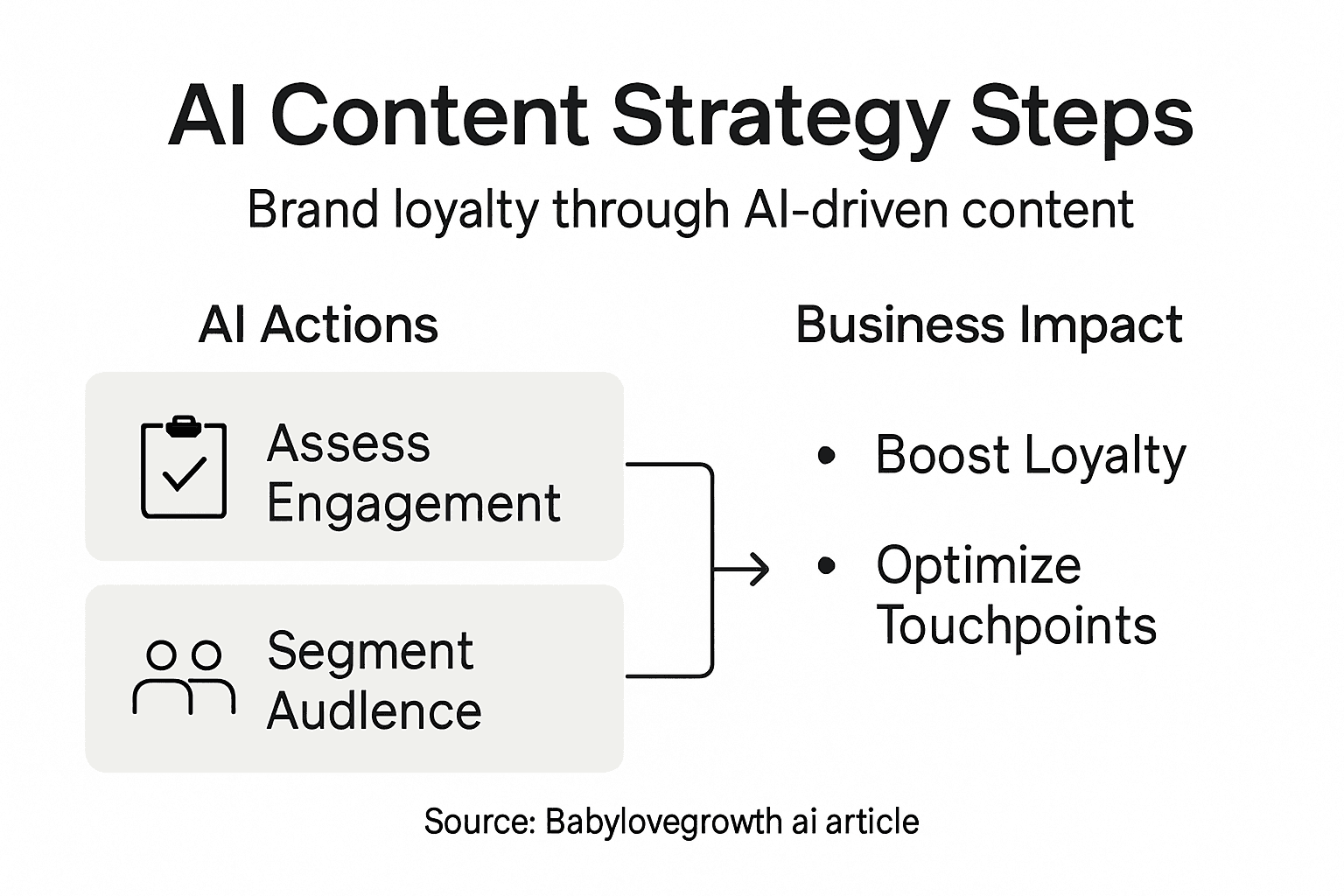
Here's a summary of how AI enhances each stage of content strategy:
| Step | AI Functionality | Business Impact |
|---|---|---|
| Assess Engagement | Advanced analytics reveal deep insights | More effective content adjustments |
| Audience Segmentation | Machine learning clusters loyal users | Targeted campaigns drive retention |
| Content Personalization | Automated generation tailors messaging | Increased conversion and engagement |
| Touchpoint Optimization | Real-time responses boost satisfaction | Seamless, multichannel experiences |
| Results Monitoring | Predictive tracking uncovers trends | Faster, data-driven improvements |
Boost Brand Loyalty With AI-Powered Content That Connects
Struggling to transform your brand engagement into lasting loyalty? The article highlights the challenge of creating consistent, personalized experiences that truly resonate at scale. Key pain points include analyzing deep customer insights, segmenting loyal audiences with precision, and automating content personalization without losing authenticity. These goals require smart AI tools that can adapt quickly and keep customer touchpoints optimized in real time.
Babylovegrowth.ai addresses these exact challenges by delivering automated, high-quality content crafted to rise in Google and ChatGPT rankings while building genuine connections. Our platform simplifies AI-driven content creation with personalized 30-day plans and backlink ecosystems designed to enhance organic traffic and foster strong customer loyalty.
Here's how we help you succeed:
- Advanced AI analytics to assess and adapt your brand engagement
- Dynamic content personalization tailored to loyal audience segments
- Automated SEO strategies that keep your content relevant and authoritative
Ready to revolutionize your brand loyalty with intelligent AI content strategies that work for you?
Empower your marketing with Babylovegrowth.ai. Start your free trial now to automate your SEO and content creation effortlessly. Discover how our automated content plans unlock scalable growth and keep your customers coming back. Don’t let competitors outsmart you—take control today.
Frequently Asked Questions
How can I assess my brand's current engagement metrics effectively?
Start by collecting data on click-through rates, social media interactions, and customer sentiment signals. Analyze these metrics within 30 days to identify which content types resonate most with your audience.
What methods can I use to identify loyal audience segments?
Utilize advanced techniques such as Recency, Frequency, Monetary (RFM) analysis and machine learning clustering to segment customers. Conduct this analysis quarterly to ensure your targeting strategies remain accurate and relevant.
How can I automate personalized content creation for my audience?
Implement AI-driven content creation technologies that allow for dynamic template customization based on user behavior. Set up content automation processes to generate personalized materials regularly, aiming for a production increase of up to 40% in your campaign output.
What are the key strategies for optimizing customer touchpoints?
Incorporate predictive modeling and real-time personalization algorithms to enhance customer interactions across digital channels. Start by mapping out key customer touchpoints and adjusting your engagement strategies monthly for improved satisfaction.
How do I monitor the results of my AI content strategies effectively?
Establish a monitoring framework that benchmarks performance metrics and analyzes consumer feedback. Review this data monthly to make real-time adjustments that improve overall engagement by at least 15%.
Why is it important to involve human oversight in AI-generated content?
Human oversight ensures that the content aligns with brand voice and values while maintaining authenticity. Schedule regular checks every month to evaluate AI outputs and ensure they meet your brand standards.
Recommended
Smart SEO,
Faster Growth!
Most Read Articles
Generative Engine Optimization (GEO)
Learn how Generative Engine Optimization (GEO) helps your content rank in AI search engines like ChatGPT and Google AI. This comprehensive guide explains the differences between SEO and GEO, why it matters for your business, and practical steps to implement GEO strategies for better visibility in AI-generated responses.
DylenJan 18, 2025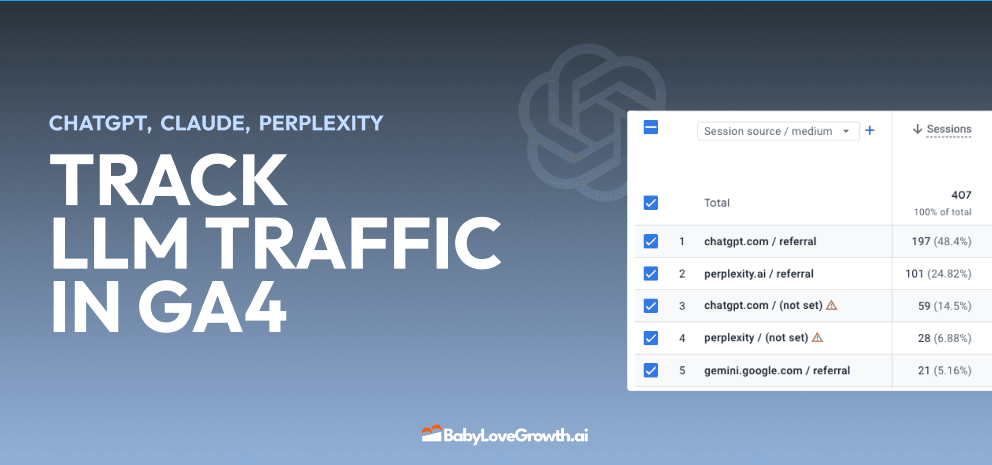
Track LLM Traffic in Google Analytics 4 (GA4)
Learn how to track and analyze traffic from AI sources like ChatGPT, Claude, Perplexity, and Google Gemini in Google Analytics 4. This step-by-step guide shows you how to set up custom filters to monitor AI-driven traffic and make data-driven decisions for your content strategy.
DylenMar 18, 2025
How to Humanize AI Text with Instructions
Learn practical techniques to make AI-generated content sound more natural and human. This guide covers active voice, direct addressing, concise writing, and other proven strategies to transform robotic text into engaging content.
DylenApril 7, 2025
Open AI Revenue and Statistics (2024)
Comprehensive analysis of OpenAI financial performance, user engagement, and market position in 2023. Discover key statistics including $20B valuation, $1B projected revenue, and 100M+ monthly active users.
DylenOctober 03, 2025