How to Create Effective Surveys for Actionable Insights


Getting useful feedback from your customers can feel like aiming in the dark without clear goals and the right questions. For digital marketers trying to sharpen customer feedback and boost content-driven SEO, the survey process starts with precision at every step. By focusing on SMART survey objectives and audience targeting, Canadian and American e-commerce leaders can turn every response into actionable insight that shapes winning strategies and deeper connections.
Table of Contents
- Step 1: Define Survey Goals And Audience
- Step 2: Design Clear And Engaging Questions
- Step 3: Choose Optimal Survey Platforms
- Step 4: Distribute Surveys Strategically
- Step 5: Analyze Responses For Actionable Insights
Quick Summary
| Key Point | Explanation |
|---|---|
| 1. Define SMART survey goals | Set Specific, Measurable, Achievable, Relevant, and Time-bound objectives to guide your research. |
| 2. Create engaging questions | Use simple language, mix question types, and ensure clarity to maintain respondent interest. |
| 3. Choose the right platform | Select a survey platform that fits your needs, ensuring data security and user accessibility. |
| 4. Distribute surveys strategically | Use varied channels and timing to optimize response rates and engage your target audience fully. |
| 5. Analyze for actionable insights | Clean and segment data, visualize findings, and create clear recommendations for decision-makers. |
Step 1: Define survey goals and audience
Crafting an effective survey begins with crystal-clear goals and a precisely targeted audience. Your survey's success hinges on understanding exactly what insights you want to uncover and who can best provide those perspectives.
Start by establishing SMART survey objectives - goals that are Specific, Measurable, Achievable, Relevant, and Time-bound. For digital marketers, this might mean defining concrete outcomes like understanding customer satisfaction, evaluating product preferences, or measuring content engagement. Strategic survey planning requires breaking down broad goals into specific, actionable research questions.
Identifying your target audience is equally critical. Consider these key demographic and behavioral characteristics:
- Age range
- Professional role or industry
- Geographic location
- Purchasing behaviors
- Previous interaction with your brand
Audience segmentation allows you to craft questions that resonate specifically with your chosen respondent group. This targeted approach ensures higher response rates and more nuanced insights.The more precisely you define your audience, the more meaningful and accurate your survey results will be.
Pro Tip: Before launching your survey, conduct a small pilot test with 5-10 people matching your target demographic to validate question clarity and survey flow.
Step 2: Design clear and engaging questions
Creating survey questions that capture meaningful insights requires strategic thinking and careful crafting. Your goal is to design questions that are both informative and compelling, encouraging respondents to provide thoughtful and accurate feedback.
Effective questionnaire design demands a balanced approach that minimizes bias and maximizes clarity. To achieve this, focus on these critical question design principles:- Use simple, straightforward language
- Avoid technical jargon or complex terminology
- Keep questions concise and focused
- Mix closed and open-ended question types
- Ensure each question directly relates to your research objectives
Structure your survey with a combination of question formats to maintain respondent engagement:
- Multiple-choice questions for quick, quantifiable data
- Rating scale questions to measure intensity of opinions
- Open-ended questions for deeper, qualitative insights
Survey question construction requires careful consideration of question sequence and potential respondent interpretation. Logical question progression helps maintain respondent interest and reduces confusion.Clarity is the cornerstone of reliable survey data. Each question should be immediately understandable without requiring additional explanation.

Pro Tip: Always preview your survey from a respondent's perspective, asking yourself: "Would I understand and feel motivated to answer these questions?"
Step 3: Choose optimal survey platforms
Selecting the right survey platform can make or break your research efforts. Your choice will impact everything from data collection and respondent engagement to overall analysis quality.
Survey platform selection requires careful consideration of multiple factors that align with your specific research goals. Digital marketers and researchers need platforms that offer:- Robust data collection mechanisms
- Mobile-friendly interfaces
- Advanced reporting and analytics
- Customizable question types
- Reasonable pricing structures
- Integration capabilities with existing tools
Platform compatibility becomes crucial when targeting diverse audiences. Some key considerations include:
- Device responsiveness
- Cross-platform accessibility
- User experience design
- Data security features
- Export and analysis options
The right survey platform transforms raw data collection into meaningful strategic insights.
Survey mode selection significantly influences data quality and representativeness. Online platforms offer cost-effective solutions, but remember that each mode has unique strengths and limitations. Digital survey tools can dramatically streamline your research process when chosen strategically.
Here's a summary of survey platform selection considerations and their business value:
| Consideration | Why It Matters | Business Impact |
|---|---|---|
| Mobile compatibility | Enables wider audience reach | Higher response rates |
| Data security features | Protects user information | Builds respondent trust |
| Integration options | Syncs with other tools | Streamlined data workflows |
| Advanced analytics | Deeper insights possible | More actionable results |
| Custom question types | Supports research flexibility | More precise data collection |
Pro Tip: Always request a free trial or demo before committing to any survey platform to thoroughly test its features and compatibility with your specific research needs.
Step 4: Distribute surveys strategically
Successful survey distribution is about reaching the right people through the most effective channels at the perfect moment. Your distribution strategy can dramatically impact response rates and data quality.
Survey distribution tactics require a nuanced approach that considers multiple communication channels and audience preferences. Digital marketers should leverage a mix of distribution methods:- Email invitations
- Social media platforms
- Targeted website pop-ups
- Direct messaging
- Professional network connections
- Specialized online community forums
Timing and frequency play critical roles in survey participation. Consider these strategic distribution principles:
- Send surveys during peak engagement hours
- Use personalized invitation language
- Segment your audience precisely
- Implement automated reminder sequences
- Track response rates in real-time
Strategic survey distribution transforms passive communication into active participant engagement.
Multiple distribution channels help reduce sampling bias and increase overall response diversity. Intelligent distribution approaches allow you to capture insights from broader, more representative audience segments.
Pro Tip: Create a distribution spreadsheet tracking each channel's performance, noting response rates and demographic reach to continuously refine your survey strategy.
Step 5: Analyze responses for actionable insights
Transforming raw survey data into meaningful strategic recommendations requires a systematic and nuanced analytical approach. Your goal is to uncover hidden patterns, validate hypotheses, and generate insights that drive real business decisions.
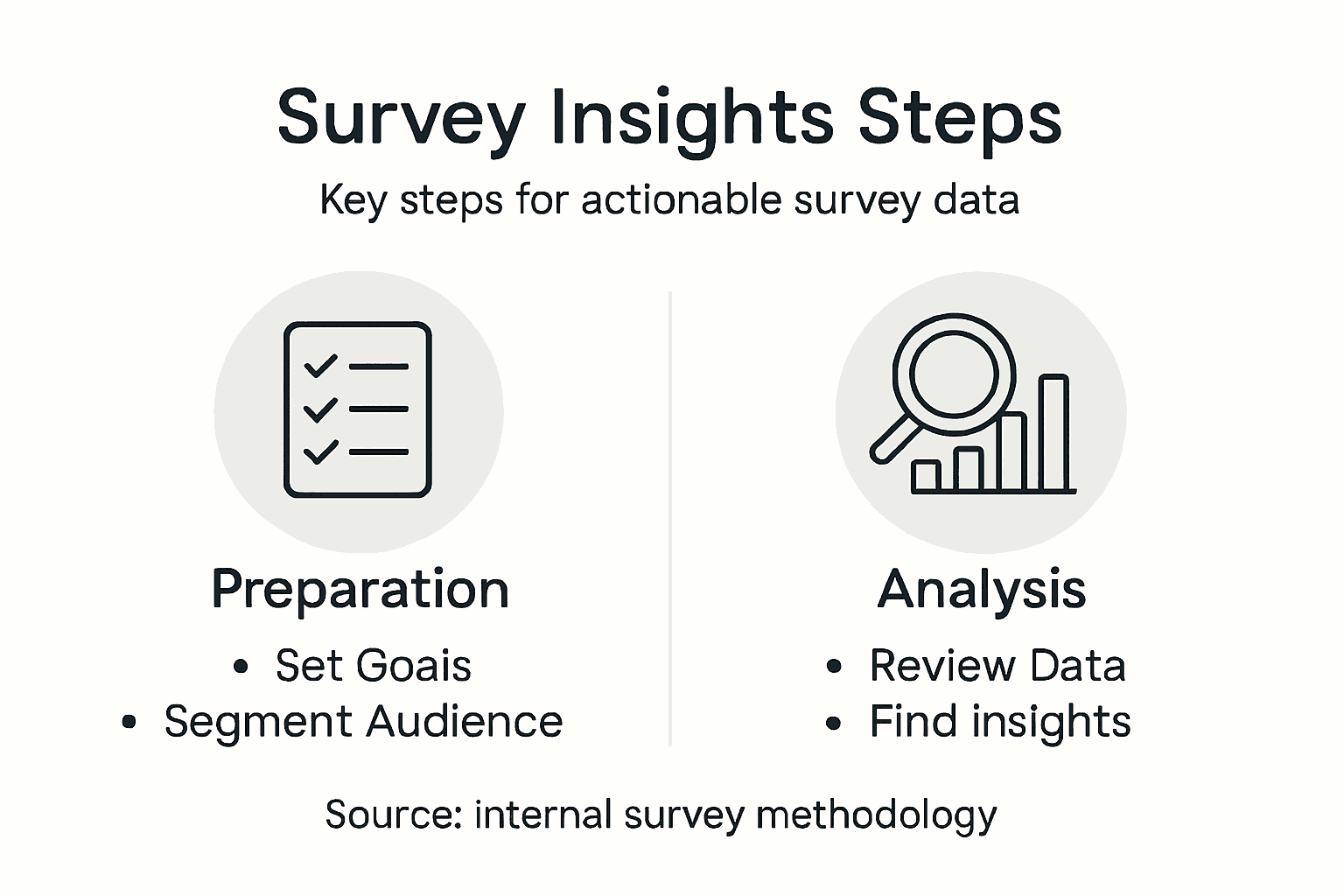
Survey data analysis involves multiple strategic steps to extract maximum value from your research:- Clean and organize raw data
- Segment responses by relevant demographics
- Apply appropriate statistical techniques
- Visualize key findings
- Translate data into clear recommendations
Analytical techniques vary depending on your survey's question types:
Compare how different question types contribute to analysis:
| Question Type | Typical Analysis Approach | Insight Provided |
|---|---|---|
| Multiple-choice | Descriptive statistics | Snapshot of preferences |
| Rating scale | Mean/median calculations | Intensity of opinions |
| Open-ended | Thematic coding | In-depth, qualitative insights |
- Quantitative questions require statistical analysis
- Qualitative responses need thematic coding
- Mixed-method surveys demand integrated approaches
Research insights should be more than just data points. Contextual interpretation helps transform statistical findings into compelling narratives that stakeholders can understand and act upon.Effective survey analysis turns numbers and text into strategic roadmaps for organizational improvement.
Pro Tip: Create a summary dashboard that highlights top 3-5 actionable insights, making your research findings immediately digestible for decision-makers.
Unlock Actionable Insights with AI-Powered Organic Growth Solutions
Creating effective surveys requires clear goals, precise audience targeting, and smart data analysis to gather actionable insights. If you find yourself overwhelmed by the challenge of turning survey data into meaningful growth strategies, you are not alone. Many marketers struggle to reliably increase engagement and convert insights into scalable results. Babylovegrowth.ai offers a seamless solution by automating high-quality, SEO-optimized content and integrating AI-driven backlink strategies that amplify your online visibility without the complexity.
Take control of your digital marketing with a platform designed to deliver measurable outcomes aligned with your survey findings. Benefit from personalized 30-day content plans, advanced business analysis, and simplified SEO automation that directly supports your marketing goals. Start transforming your data into increased organic traffic and higher Google rankings today by visiting Babylovegrowth.ai. Explore how our all-in-one SEO solution can complement your survey efforts and accelerate your path to growth.
Frequently Asked Questions
How do I define effective survey goals?
To define effective survey goals, establish objectives that are Specific, Measurable, Achievable, Relevant, and Time-bound (SMART). Break broad goals into specific research questions to clearly identify what insights you are seeking.
What are the best practices for designing survey questions?
Best practices for designing survey questions include using straightforward language, avoiding jargon, and mixing question types such as multiple-choice, rating scales, and open-ended questions. Aim for clarity and focus to ensure each question directly relates to your research objectives.
How can I choose the right survey platform?
Choose the right survey platform by evaluating its data collection capabilities, mobile-friendliness, customization options, and pricing. Test multiple platforms through free trials to determine which one best fits your specific research needs.
What strategies can I use to distribute surveys effectively?
Distribute surveys effectively by using a mix of channels such as email, social media, and online forums. Pay attention to timing, personalization, and audience segmentation to enhance engagement and increase response rates.
How should I analyze survey responses for actionable insights?
Analyze survey responses by cleaning and organizing the data, segmenting responses, and applying appropriate statistical techniques. Visualize key findings to uncover patterns and translate data into clear and actionable recommendations for decision-making.
Recommended
Smart SEO,
Faster Growth!
Most Read Articles
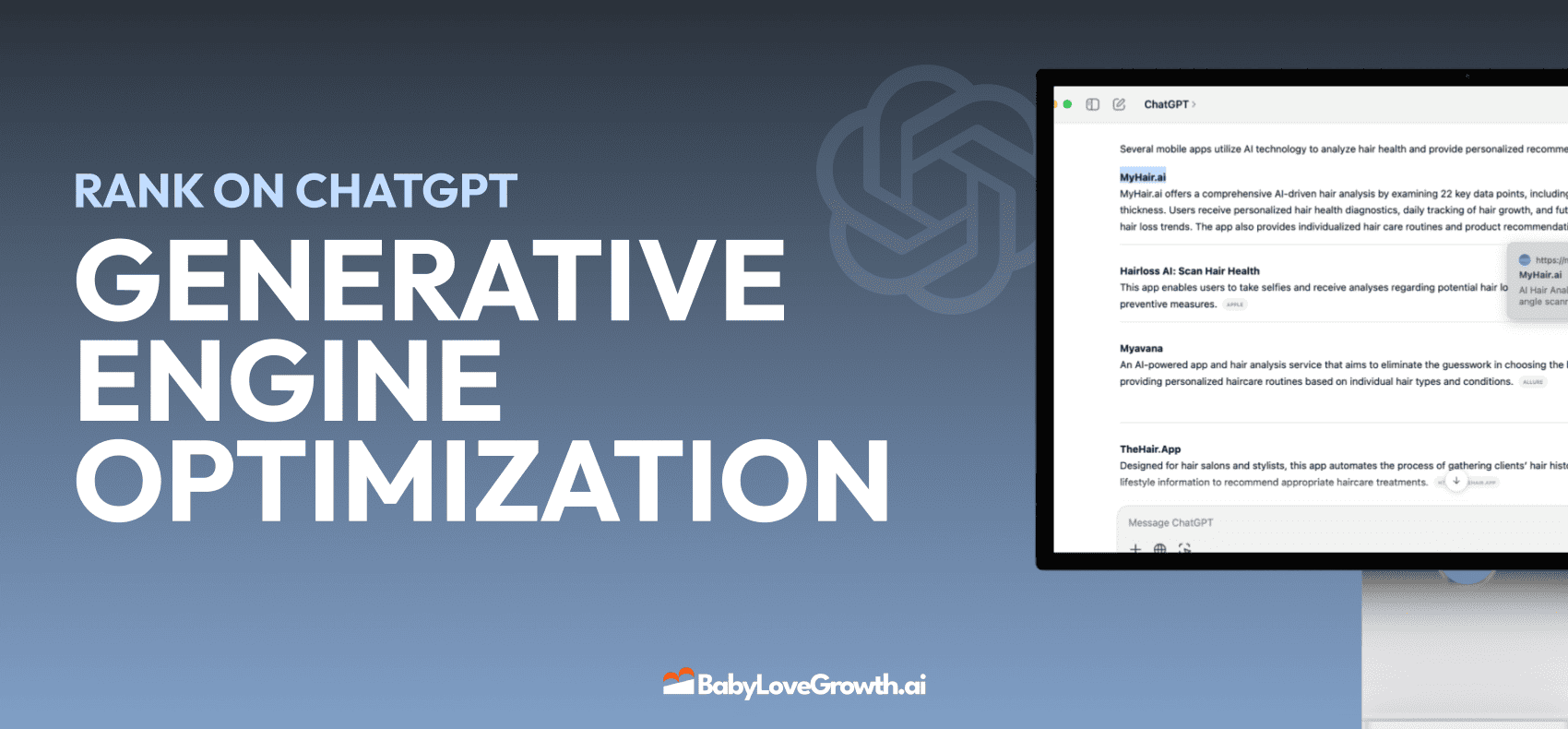
Generative Engine Optimization (GEO)
Learn how Generative Engine Optimization (GEO) helps your content rank in AI search engines like ChatGPT and Google AI. This comprehensive guide explains the differences between SEO and GEO, why it matters for your business, and practical steps to implement GEO strategies for better visibility in AI-generated responses.
DylenJan 18, 2025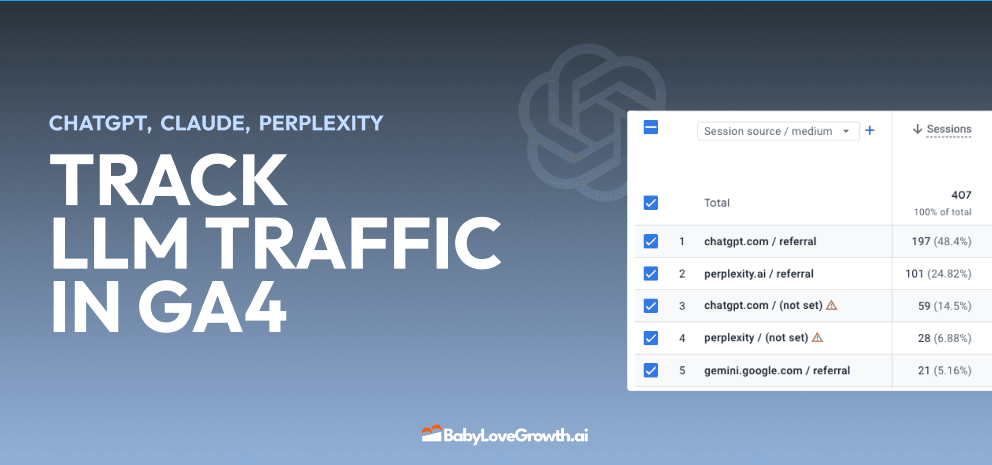
Track LLM Traffic in Google Analytics 4 (GA4)
Learn how to track and analyze traffic from AI sources like ChatGPT, Claude, Perplexity, and Google Gemini in Google Analytics 4. This step-by-step guide shows you how to set up custom filters to monitor AI-driven traffic and make data-driven decisions for your content strategy.
DylenMar 18, 2025
How to Humanize AI Text with Instructions
Learn practical techniques to make AI-generated content sound more natural and human. This guide covers active voice, direct addressing, concise writing, and other proven strategies to transform robotic text into engaging content.
DylenApril 7, 2025
Open AI Revenue and Statistics (2024)
Comprehensive analysis of OpenAI financial performance, user engagement, and market position in 2023. Discover key statistics including $20B valuation, $1B projected revenue, and 100M+ monthly active users.
DylenOctober 03, 2025