How to create buyer personas for targeted marketing success


TL;DR:
- Buyer personas are research-based profiles representing your ideal customers focused on motivations and behavior.
- Building and updating personas with real data enhances marketing effectiveness and aligns team efforts.
- Using AI tools alongside qualitative research streamlines persona development and maintains relevance over time.
You're investing real money in marketing, but your campaigns feel like they're landing in a void. Emails get ignored, ads underperform, and content fails to connect. The problem usually isn't your budget or your creative. It's that you're speaking to everyone and resonating with no one. Buyer personas fix that. They give you a structured, research-backed picture of your ideal customers so every message, channel, and offer can be calibrated to the people most likely to buy. This guide walks you through exactly how to build them.
Table of Contents
- What are buyer personas and why do they matter?
- What you need to prepare: Research, data, and team alignment
- Step-by-step: How to build effective buyer personas
- Common mistakes and how to avoid them
- AI, tools, and evolving best practices for 2026
- What most advice misses about buyer personas
- Supercharge your marketing with next-generation tools
- Frequently asked questions
Key Takeaways
| Point | Details |
|---|---|
| Focus on insights | Ground your buyer personas in real customer data, not assumptions. |
| Update regularly | Review and refresh personas at least every 6-12 months to stay relevant. |
| Use cross-functional input | Draw on both marketing and sales perspectives for more accurate personas. |
| Leverage AI carefully | Combine AI tools with human validation for best results in persona generation. |
What are buyer personas and why do they matter?
To understand how buyer personas make such an impact, let's first define what they are and what makes them essential.
Buyer personas are research-based semi-fictional profiles representing your ideal customers, including demographics, psychographics, behaviors, goals, challenges, and buying patterns. The word "semi-fictional" matters here. A persona isn't a real person, but it's built from real data. It represents a pattern you've observed across many customers, not a guess about who you wish would buy from you.For small and medium-sized businesses, personas are especially powerful because resources are limited. You can't afford to run ten different campaigns for ten different audiences. A well-built persona tells you where to focus, what to say, and which channels to prioritize.
Here's a quick comparison of what persona-driven marketing actually delivers versus generic campaigns:
| Metric | Persona-driven campaigns | Generic campaigns |
|---|---|---|
| Email open rate | 32% | 12% |
| Click-through rate (CTR) | 18% | 5% |
| Conversion rate | 8% | 1.5% |
A solid persona typically includes these core elements:
- Demographics: Age, job title, company size, location, income range
- Psychographics: Values, priorities, motivations, lifestyle factors
- Goals: What they're trying to achieve professionally or personally
- Challenges: The friction points blocking their progress
- Behaviors: How they research, consume content, and make purchase decisions
- Buying patterns: Decision timelines, who else is involved, what objections arise
"The best personas don't describe who your customers are. They describe why your customers act the way they do." This shift from demographic labeling to behavioral understanding is what separates useful personas from wall-art templates.
When you're unlocking audience needs at this level of detail, your content stops feeling like broadcast advertising and starts feeling like a direct conversation. That's when marketing actually works.
What you need to prepare: Research, data, and team alignment
Knowing why personas are vital, the next step is preparing the right resources, data, and team structure to build them effectively.

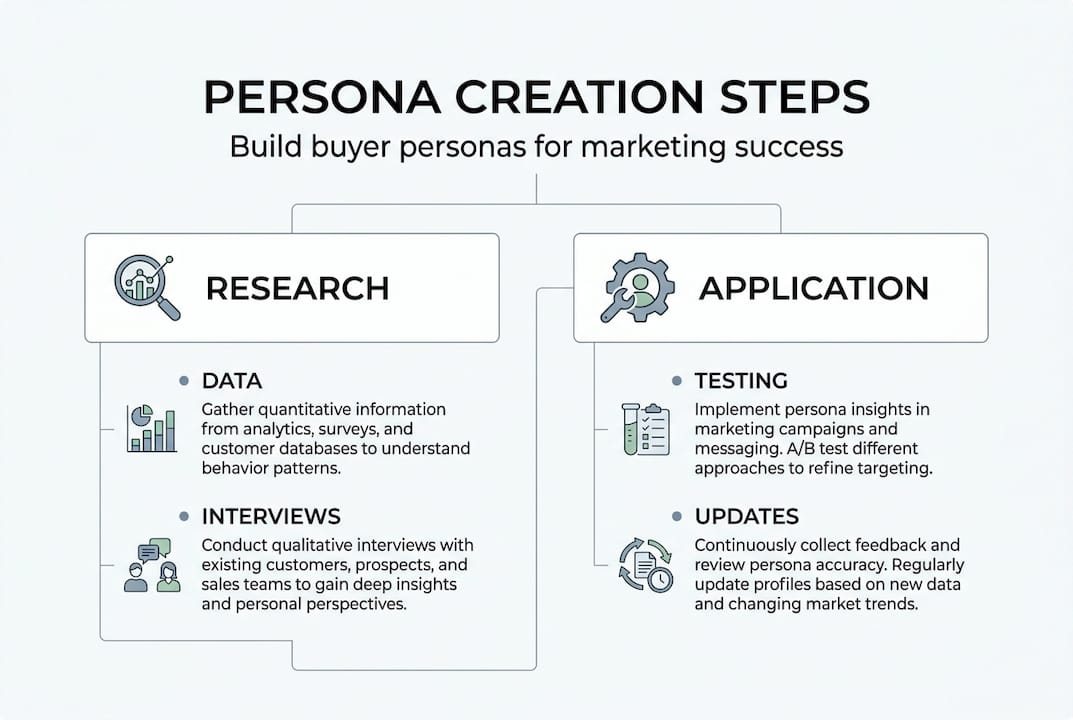
The standard methodology involves five steps: gather quantitative data from CRM, analytics, and social insights; conduct qualitative research via three to five interviews per persona with customers, sales, and support teams; identify patterns in goals, challenges, and objections; build profiles with demographics, day-in-life narratives, and direct quotes; then validate and update quarterly. Each step depends on the one before it, so skipping ahead creates gaps that undermine the whole persona.
Here's a practical breakdown of data sources and what each one gives you:
| Data source | What it reveals | Tools to use |
|---|---|---|
| CRM data | Purchase history, deal size, sales cycle length | HubSpot, Salesforce |
| Web analytics | Pages visited, time on site, traffic sources | Google Analytics |
| Customer surveys | Stated preferences, satisfaction levels | Typeform, Google Forms |
| Sales team interviews | Common objections, deal-breakers, buying triggers | Internal meetings |
| Customer service logs | Pain points, recurring frustrations | Zendesk, Intercom |
For SMEs, start with existing customers and prospects. Use free tools like HubSpot Make My Persona, and involve sales and customer service teams for cross-team alignment. This cross-functional input is often the most underrated part of persona research. Your sales team hears objections every day. Your support team knows exactly where customers get stuck. That knowledge is gold.
Before you start building, gather these materials:
- At least 90 days of CRM and analytics data
- A list of your top 10 to 20 best customers by revenue or loyalty
- A short interview script covering goals, challenges, and buying process
- Access to any existing customer survey data
- A shared document or tool where the whole team can contribute findings
Pro Tip: When identifying your target audience, don't rely solely on who is buying from you today. Ask your sales team who they wish they were selling to more often. That gap often reveals your most valuable underdeveloped segment.
Team alignment is non-negotiable. If marketing builds personas in isolation, sales will ignore them. If sales ignores them, the personas never get tested against real conversations. Schedule a kickoff meeting with marketing, sales, and customer service before you begin research. Agree on which segments matter most and what questions you're trying to answer. That shared ownership makes the resulting personas far more likely to actually get used.
Step-by-step: How to build effective buyer personas
With data gathered and your team ready, follow these key steps to craft reliable buyer personas.
-
Review your quantitative data first. Pull CRM reports to identify your highest-value customers by revenue, retention, or deal frequency. Look for patterns in company size, industry, geography, and purchase behavior. This tells you where your best opportunities already exist.
-
Layer in qualitative research through interviews. Recommended interviews are three to five per persona according to HubSpot, five to seven per Semrush, and ten to fifteen total for B2B contexts, reaching saturation when patterns start repeating. Aim for real customers, not just prospects. Ask open-ended questions about their goals, frustrations, how they found you, and what almost stopped them from buying.
-
Identify patterns across your data. After interviews, look for recurring themes. What challenges come up in every conversation? What goals do multiple customers share? What objections appear consistently? These patterns become the backbone of your persona.
-
Build out the full profile. Include demographics, a day-in-the-life narrative, direct quotes from interviews, primary goals, biggest challenges, preferred content formats, and the channels they use most. Give the persona a name and a photo. It sounds trivial, but it makes the persona feel real to your team.
-
Validate the profile with your sales and service teams. Share the draft persona and ask if it matches what they see in real conversations. Adjust based on their feedback before finalizing.
-
Update every quarter or at least every six to twelve months. Markets shift. Customer priorities evolve. A persona built in 2024 may not reflect your 2026 buyer accurately.
Start with three to five personas maximum. Trying to build eight or ten at once dilutes your focus and makes the process unmanageable. Once you've validated your first batch, you can always expand. Connecting persona insights to your AI brand-building strategies can also help you scale the right message to the right audience faster.
Common mistakes and how to avoid them
Even with careful preparation, it's easy to slip into common mistakes that undermine your personas' effectiveness.
The most damaging error is building personas on assumptions rather than real data. It feels faster to just brainstorm who your customer "probably" is, but those guesses embed bias directly into your strategy. Every persona decision downstream, from content topics to ad targeting, inherits that bias.
Avoid these common pitfalls: basing personas on assumptions instead of real data, overloading them with irrelevant demographics, creating too many personas, and neglecting inclusivity and bias in your research sample.
Here's a clear breakdown of what to avoid and why:
- Assumption-based personas: If you haven't talked to real customers, you're writing fiction. Always anchor personas in interview data and analytics.
- Demographic overload: Knowing your persona is a 38-year-old male with a college degree doesn't tell you why he buys. Focus on motivations, goals, and frustrations instead.
- Too many personas: More than five personas and your team loses focus. Prioritize the segments that drive the most revenue or strategic value.
- Homogeneous research samples: If you only interview customers who look and think like your founding team, your personas will reflect that narrow view. Deliberately recruit diverse interview subjects.
"A persona that tries to describe everyone ends up describing no one. Precision is the point."
There's also an important distinction between proto-personas and validated personas. Proto-personas are hypothesis-based and useful for initial research planning, but they should never drive actual decisions. They're a starting point, not a finished product. Treat them as a research roadmap, not a marketing strategy.
Pro Tip: Use AI for persona validation to cross-check patterns in your interview data against broader behavioral signals. AI tools can surface correlations you might miss manually, but always review the output with a human lens before acting on it.
One more mistake worth calling out: building personas and then filing them away. Personas that live in a shared drive and never get referenced in campaign briefs, sales scripts, or content calendars are wasted effort. Make them visible and make them mandatory in your planning process.
AI, tools, and evolving best practices for 2026
Looking forward, new tools and AI-driven workflows are changing how businesses develop and refine personas.
AI is emerging for persona generation and validation but requires human oversight. The best results come from combining AI capabilities with traditional qualitative and quantitative research, not replacing one with the other. AI can process large datasets, identify behavioral clusters, and generate draft persona profiles faster than any manual process. But it can't replicate the nuance of a real customer conversation.
Here's how to build a smart tool stack for persona development in 2026:
- HubSpot Make My Persona: Free, guided persona builder ideal for SMEs starting from scratch
- Google Analytics 4: Behavioral data including user journeys, traffic sources, and engagement by segment
- Typeform or Google Forms: Survey tools for gathering quantitative customer feedback at scale
- AI writing assistants: Useful for synthesizing interview transcripts and identifying recurring themes quickly
- CRM platforms: Integrate personas directly into HubSpot or Salesforce to track performance by segment over time
Update personas quarterly or every six to twelve months and integrate them into your CRM for ongoing performance tracking. This integration is what separates organizations that use personas strategically from those that treat them as a one-time deliverable. When your CRM tags deals by persona, you can measure which personas convert fastest, spend the most, and stay the longest. That data then feeds your next round of persona updates.
The AI use in buyer research space is evolving rapidly. Platforms can now analyze social listening data, review sentiment across review sites, and map behavioral patterns across thousands of interactions simultaneously. This kind of scale was previously available only to enterprise brands with large research budgets.
Pro Tip: Pair your persona work with a strong AI content workflow to translate persona insights directly into content briefs. When your content team knows exactly what each persona cares about, production becomes faster and output becomes more targeted. Your AI brand strategy growth also benefits when personas inform not just campaigns but the broader brand narrative.
What most advice misses about buyer personas
While these best practices are important, it's worth confronting a deeper truth often ignored in mainstream guides.
Most persona advice focuses on the build. Templates, frameworks, interview scripts, and profile formats get all the attention. What gets ignored is the use. A persona that sits in a Google Doc and gets referenced once a year isn't a strategic asset. It's a checkbox.
The real value of buyer personas comes from continuous integration across your entire organization. Sales scripts should reference persona language. Product roadmaps should be evaluated against persona priorities. Email sequences should be written with a specific persona in mind, not a generic "subscriber." When personas become part of the daily vocabulary of your team, they stop being a marketing exercise and start being a business operating system.
Don't be afraid to retire a persona. If your business shifts focus, if a segment stops converting, or if a new customer type emerges that doesn't fit existing profiles, update accordingly. Building long-term brand loyalty requires staying current with who your customers actually are, not who they were when you first built your personas. The businesses that treat personas as living documents consistently outperform those that treat them as a one-time project.
Supercharge your marketing with next-generation tools
If you're ready to act on these strategies, modern automation and analytics can make persona-driven marketing faster and more effective.
Babylovegrowth.ai is built for exactly this moment in your growth journey. Once you know who your personas are, the next challenge is consistently creating content that speaks to them and getting that content in front of the right people. Our platform automates high-quality, persona-aligned articles optimized for both Google and ChatGPT, so your message reaches your ideal customers wherever they're searching. Use our organic traffic tool to build a 30-day content plan tailored to your top personas, and tap into our Google and ChatGPT traffic backlink exchange ecosystem to accelerate your visibility without the agency price tag.
Frequently asked questions
What is the ideal number of buyer personas for a small business?
Limit to three to five personas to stay focused and actionable. Creating too many personas dilutes your team's focus and makes it harder to execute targeted campaigns effectively.
How often should I update my buyer personas?
Review and update your personas every quarter or at least every six to twelve months. Updating personas regularly ensures they reflect current customer behavior, market shifts, and evolving business priorities.
Do I need both qualitative and quantitative research for buyer personas?
Yes. Effective personas are insights-based, combining qualitative interviews with quantitative data from CRM and analytics rather than relying on assumptions alone.
Can AI replace manual work in persona creation?
AI can streamline persona generation, but human oversight remains essential for accuracy. Qualitative research and real customer conversations provide nuance that AI tools cannot replicate on their own.
What if my business's target market changes?
Update or revise your personas to reflect the shift. Reviewing personas quarterly ensures your marketing strategy stays aligned with who your ideal customers actually are right now.
Recommended
Smart SEO,
Faster Growth!
Most Read Articles
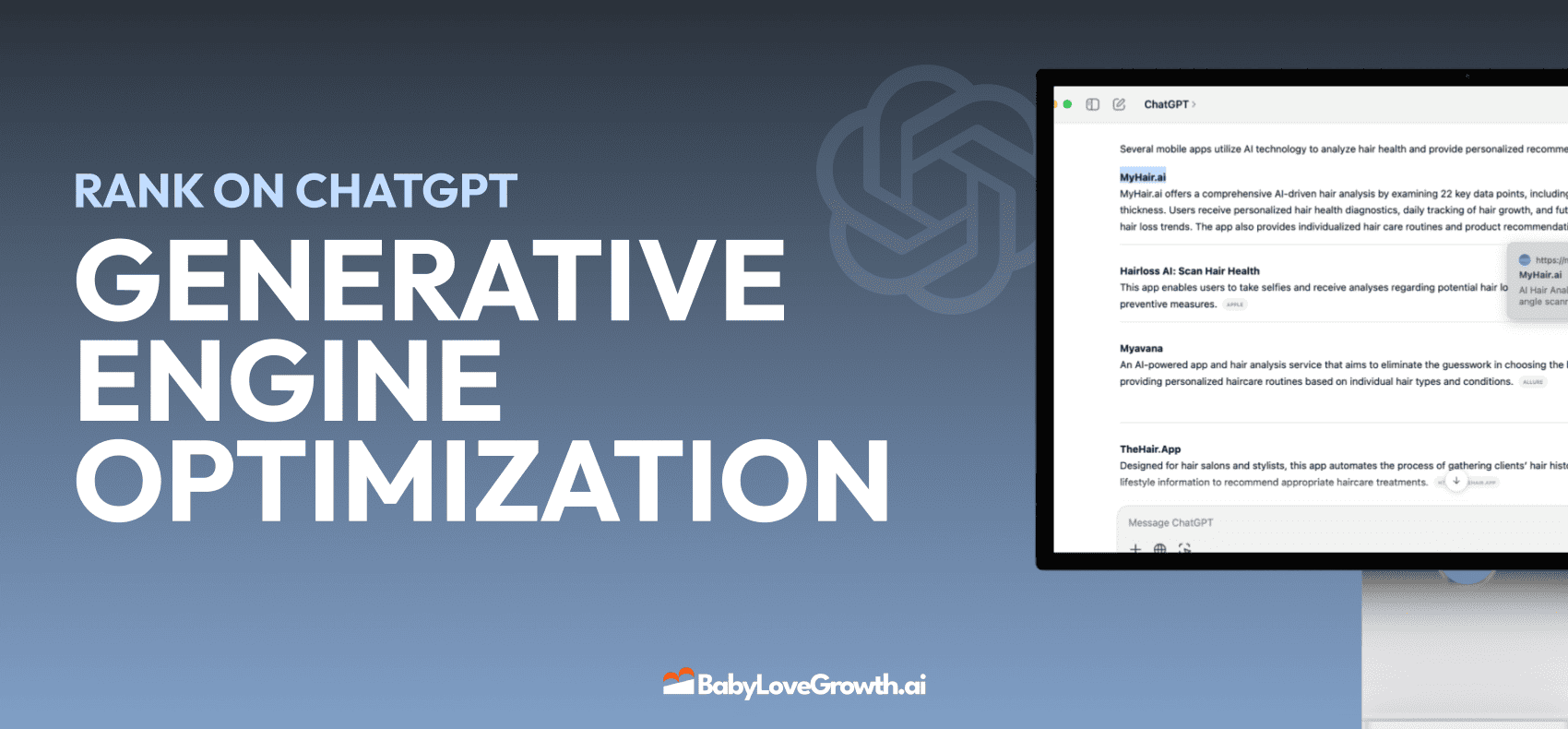
Generative Engine Optimization (GEO)
Learn how Generative Engine Optimization (GEO) helps your content rank in AI search engines like ChatGPT and Google AI. This comprehensive guide explains the differences between SEO and GEO, why it matters for your business, and practical steps to implement GEO strategies for better visibility in AI-generated responses.
DylenJan 18, 2025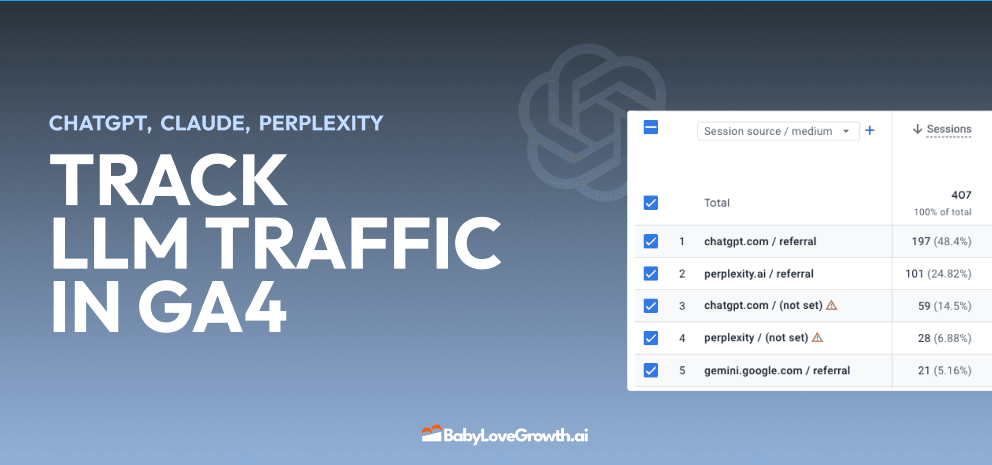
Track LLM Traffic in Google Analytics 4 (GA4)
Learn how to track and analyze traffic from AI sources like ChatGPT, Claude, Perplexity, and Google Gemini in Google Analytics 4. This step-by-step guide shows you how to set up custom filters to monitor AI-driven traffic and make data-driven decisions for your content strategy.
DylenMar 18, 2025
How to Humanize AI Text with Instructions
Learn practical techniques to make AI-generated content sound more natural and human. This guide covers active voice, direct addressing, concise writing, and other proven strategies to transform robotic text into engaging content.
DylenApril 7, 2025
Moz DA vs Ahrefs DR: Which Metric Should You Actually Use?
Moz Domain Authority and Ahrefs Domain Rating look similar but measure very different things. Learn what each score actually tells you, when to use each one, and what to track instead for real SEO results in 2026.
DylenApr 23, 2026
Open AI Revenue and Statistics (2024)
Comprehensive analysis of OpenAI financial performance, user engagement, and market position in 2023. Discover key statistics including $20B valuation, $1B projected revenue, and 100M+ monthly active users.
DylenOctober 03, 2025
"Search Google or Type a URL": What It Means & What to Do
Learn what "Search Google or type a URL" actually means, how your browser decides whether to search or navigate, and what to do if your address bar starts behaving unexpectedly. Includes browser settings guides for Chrome, Firefox, Edge, and Safari.
DylenApr 21, 2026