How to Boost Organic Traffic Naturally for Brands


Most American businesses underestimate just how much their SEO strategy shapes online success. With more than 90 percent of all website traffic beginning with a search engine, failing to optimize can leave you invisible to potential customers. Understanding where your brand currently stands and setting precise goals is the first step toward attracting quality visitors and driving consistent organic growth. This guide reveals proven steps any American company can follow to boost their search rankings and capture lasting attention.
Table of Contents
- Step 1: Assess Current SEO Performance And Set Clear Goals
- Step 2: Identify High-Impact Keywords And Content Opportunities
- Step 3: Implement AI-Driven Content And Link Building Strategies
- Step 4: Optimize Site Structure And Technical SEO Elements
- Step 5: Monitor Results And Refine Strategies For Growth
Quick Summary
| Key Point | Explanation |
|---|---|
| 1. Assess Current SEO Performance | Conduct a comprehensive audit of SEO metrics like organic traffic, keyword rankings, and click-through rates to identify areas for improvement. |
| 2. Set Specific, Measurable Goals | Establish clear targets such as increasing organic traffic by a specific percentage within a defined timeframe to track progress effectively. |
| 3. Identify High-Impact Keywords | Use advanced keyword research tools to find long-tail keywords that align with audience intent and your brand's content capabilities. |
| 4. Utilize AI for Content Creation | Leverage artificial intelligence tools to enhance content development and streamline link-building efforts, ensuring quality remains a priority. |
| 5. Regularly Monitor and Adapt Strategies | Implement a tracking system to analyze performance metrics and adjust your SEO strategies based on data insights for ongoing growth. |
Step 1: Assess current SEO performance and set clear goals
Understanding your brand's current search engine performance requires a systematic evaluation that goes beyond surface level metrics. Digital marketing measurement frameworks recommend starting with a comprehensive audit that examines multiple performance indicators.
Begin by analyzing key SEO metrics like organic traffic volume, keyword rankings, click through rates, and search visibility. Use tools that provide detailed insights into your website's current search performance. Look specifically at which pages generate the most organic traffic, which keywords are driving quality visitors, and where potential optimization opportunities exist. Pay special attention to pages with high impressions but low click through rates these represent significant growth potential.
One crucial tip: set specific numeric goals that are measurable and time bound. Instead of vague objectives like "improve search rankings," target something concrete such as "increase organic traffic by 25% within six months" or "rank on the first page for 10 additional target keywords." These precise goals will help you track progress and maintain accountability in your SEO strategy. By establishing clear benchmarks and regularly monitoring performance, you create a roadmap for continuous improvement and sustainable organic growth.
The next step involves developing a strategic content plan that aligns with your performance assessment and identified goals.
Step 2: Identify high-impact keywords and content opportunities
Building a successful organic traffic strategy starts with discovering keywords that bridge your brand's unique value with audience search intent. Strategic keyword monitoring helps businesses track performance and identify emerging opportunities for connecting with potential customers.
Begin your keyword research by understanding your target audience's language and search behaviors. Utilize advanced keyword research tools to uncover search volumes, competition levels, and potential traffic opportunities. Focus on long tail keywords that demonstrate specific user intent rather than broad generic terms. Analyze search trends, looking for keywords with consistent or growing search volumes that align with your brand's expertise and content capabilities.

A critical tip for effective keyword identification is balancing search volume with user intent and content relevance. Creating high value evergreen content that comprehensively addresses user questions can help establish your brand as an authoritative resource. Prioritize keywords that allow you to develop in depth content that provides genuine value to your target audience. Look for topics where you can offer unique insights or solve specific problems your potential customers are experiencing.
The next phase involves developing a content strategy that strategically targets these high impact keywords and transforms them into compelling, informative content.
Step 3: Implement AI-driven content and link building strategies
Taking your SEO strategy to the next level requires leveraging artificial intelligence to streamline content creation and link building processes. Technical website audits help identify critical performance opportunities that can be optimized through intelligent automation.
AI powered tools can dramatically accelerate your content development workflow by generating topic ideas, creating initial content drafts, and identifying potential link building opportunities. Focus on using AI to augment human creativity rather than replace it completely. Analyze AI generated content suggestions against your brand voice and strategic objectives. Use machine learning algorithms to discover content gaps in your industry and develop unique perspectives that address unmet audience needs.
A critical strategy involves combining AI insights with human expertise to build high quality backlinks. Look for opportunities where AI can help identify relevant websites partner platforms and potential link exchange opportunities. Website analytics provide crucial insights into audience behavior and content performance that can guide your link building approach. Prioritize building relationships with authoritative websites in your niche and create content that naturally attracts organic backlinks through exceptional value and insights.
The next step involves monitoring and refining your AI driven content and link building strategies to ensure continuous improvement and optimal performance.
Step 4: Optimize site structure and technical SEO elements
Improving your website's technical infrastructure is crucial for enhancing organic search performance and user experience. Technical site audits provide actionable insights into crawlability and indexing challenges that can dramatically impact your search engine rankings.
Focus on creating a logical and intuitive site architecture that enables both search engines and users to navigate your content effortlessly. Implement a clear hierarchical structure with well organized URL paths that reflect content categories. Ensure your website loads quickly across all devices by optimizing image sizes reducing server response times and leveraging browser caching. Pay special attention to mobile responsiveness as search engines prioritize sites that provide seamless experiences across different screen sizes.
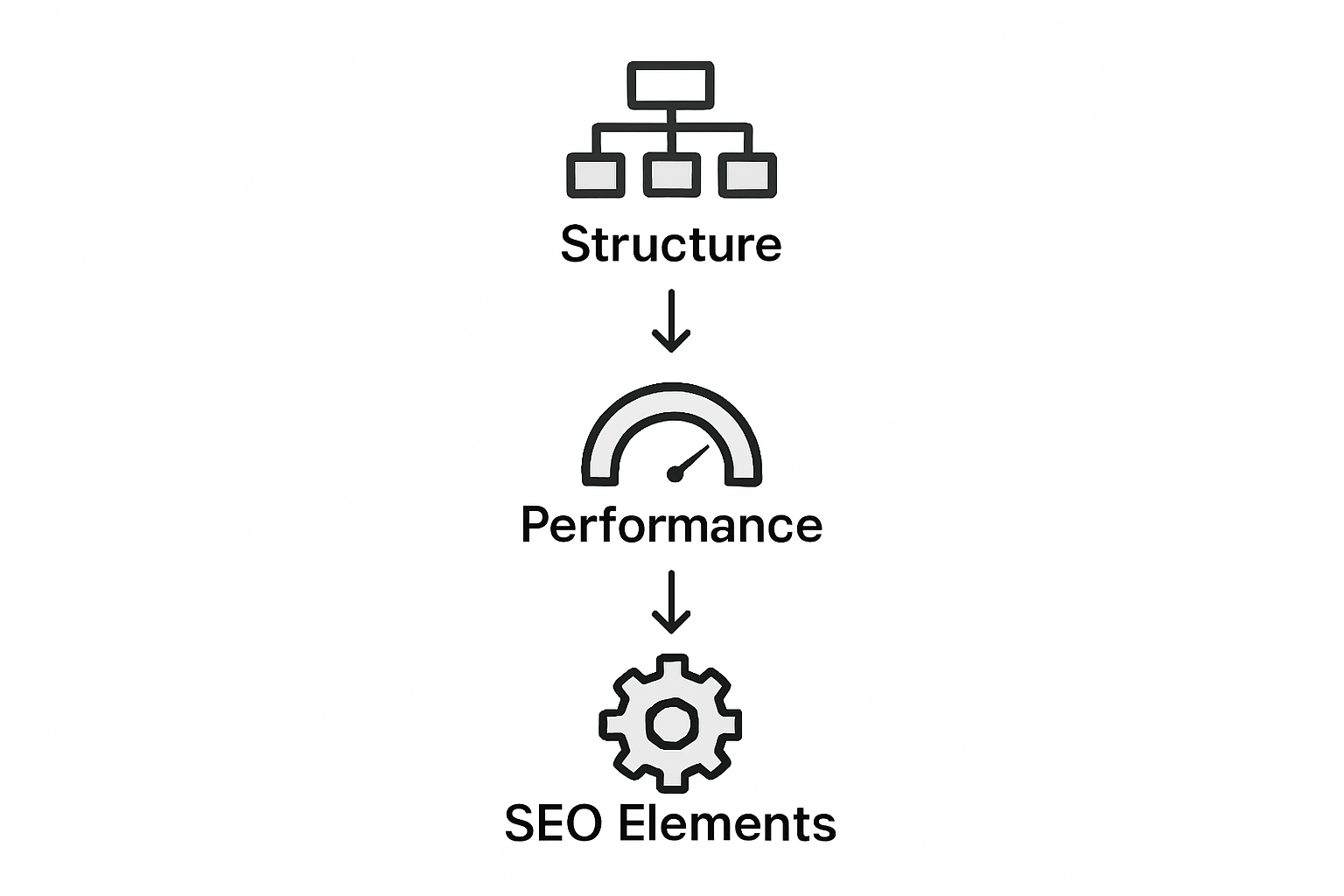
Website analytics offer critical insights into user behavior and site performance that can guide your technical optimization efforts. Implement structured data markup to help search engines understand your content context more effectively. Verify that your robots.txt file and XML sitemap are correctly configured to facilitate proper crawling and indexing. Regularly check for and fix broken links redirect chains and duplicate content issues that could negatively impact your search engine rankings.
The next phase involves developing a comprehensive monitoring strategy to track and continuously improve your technical SEO performance.
Step 5: Monitor results and refine strategies for growth
Successful organic traffic growth requires consistent tracking and strategic adaptation of your SEO efforts. Monitoring and analyzing SEO performance helps identify emerging trends and opportunities that can drive continuous improvement.
Establish a comprehensive tracking system using advanced analytics tools that provide deep insights into your organic search performance. Focus on key metrics such as organic traffic volume keyword rankings conversion rates and user engagement signals. Compare your performance against baseline measurements to understand the effectiveness of your implemented strategies. Pay close attention to pages with increasing or decreasing performance look for patterns in user behavior and identify potential areas for optimization.
Setting measurable goals is critical for evaluating your SEO strategy effectiveness and maintaining strategic momentum. Conduct regular competitor analyses to benchmark your performance and uncover potential gaps in your approach. Create a quarterly review process where you systematically assess your content performance traffic trends and keyword rankings. Be prepared to pivot your strategy based on data insights experiment with new content approaches and continuously refine your organic growth tactics.
The final stage involves integrating your learnings into a dynamic long term organic growth strategy that adapts to changing search landscape and audience needs.
Unlock Natural Organic Growth With AI-Powered SEO Solutions
The article highlights the vital challenge of boosting organic traffic through clear goal setting, strategic keyword targeting, and continuous performance monitoring. Many brands struggle with actionable insights on how to optimize content, leverage AI for scalable link building, and address technical SEO hurdles. If you are aiming to increase your organic traffic by 25 percent or master content planning that matches search intent effectively, it is time to go beyond traditional methods.
Babylovegrowth.ai offers an all-in-one SaaS platform designed to solve these specific pain points. From automated keyword discovery and 30-day content plans to AI-driven backlink building and technical website audits, our platform ensures your SEO strategy is both data-driven and future-ready. Utilizing automated structured data markup and daily SEO articles, we help transform your SEO goals into measurable growth across Google and AI-powered search engines like ChatGPT.

Take control of your organic search success today. Visit Babylovegrowth.ai to start scaling your brand visibility with AI-enhanced SEO strategies that adapt and grow with your business. Don’t wait to turn insights into action and build a lasting presence in competitive search landscapes.
Frequently Asked Questions
How can I assess my brand's current SEO performance?
To assess your brand's current SEO performance, conduct a comprehensive audit that examines metrics like organic traffic volume, keyword rankings, and click-through rates. Use analytics tools to identify which pages drive traffic and set specific metrics to achieve, like increasing organic traffic by 25% within six months.
What steps should I take to identify high-impact keywords for my content?
Begin by understanding your audience's language and searching habits. Use advanced keyword research tools to discover long-tail keywords with user intent, and target phrases that have steady search volumes to create valuable and relevant content.
How can I effectively implement AI-driven content strategies?
Leverage AI-powered tools to streamline your content creation process by generating topic ideas and drafting initial content. Assess AI-generated suggestions to ensure they align with your brand's voice and add unique insights to your content.
What technical SEO elements should I optimize on my website?
Focus on improving your website's loading speed, mobile responsiveness, and site architecture to enhance user experience and search performance. Ensure your URLs are organized logically, and regularly check for broken links or duplicate content that can harm your rankings.
How can I monitor my SEO results and refine my strategies?
Establish a tracking system using advanced analytics to monitor key metrics like organic traffic and keyword rankings. Review your results quarterly to identify trends and areas for improvement, and be ready to adjust your strategies based on data insights and changing audience needs.
Recommended
- Organic Traffic Tool | Grow Search Traffic with Data-Driven Insights
- Content Strategy Platform | Plan Data-Driven Content with AI
- SEO Automation Platform | Automate Your Entire SEO Workflow
- Domain Authority Boost | Increase DA with Proven Strategies
Smart SEO,
Faster Growth!
Most Read Articles
Generative Engine Optimization (GEO)
Learn how Generative Engine Optimization (GEO) helps your content rank in AI search engines like ChatGPT and Google AI. This comprehensive guide explains the differences between SEO and GEO, why it matters for your business, and practical steps to implement GEO strategies for better visibility in AI-generated responses.
DylenJan 18, 2025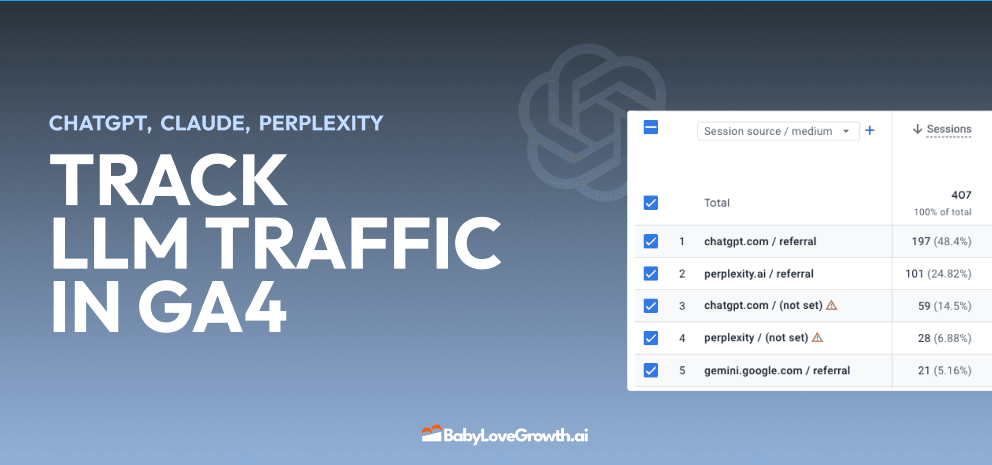
Track LLM Traffic in Google Analytics 4 (GA4)
Learn how to track and analyze traffic from AI sources like ChatGPT, Claude, Perplexity, and Google Gemini in Google Analytics 4. This step-by-step guide shows you how to set up custom filters to monitor AI-driven traffic and make data-driven decisions for your content strategy.
DylenMar 18, 2025
How to Humanize AI Text with Instructions
Learn practical techniques to make AI-generated content sound more natural and human. This guide covers active voice, direct addressing, concise writing, and other proven strategies to transform robotic text into engaging content.
DylenApril 7, 2025
Open AI Revenue and Statistics (2024)
Comprehensive analysis of OpenAI financial performance, user engagement, and market position in 2023. Discover key statistics including $20B valuation, $1B projected revenue, and 100M+ monthly active users.
DylenOctober 03, 2025