How to Automate SEO Tasks for Higher Organic Traffic


Struggling with slow manual SEO workflows can stall organic growth for even the most agile SaaS teams. Before diving into automation, workflow assessment becomes the key to uncovering process gaps and hidden inefficiencies that hold back online visibility. By mapping tasks and gathering feedback across your current strategy, you’ll discover which SEO steps will yield the greatest impact from automation and set the stage for data-driven progress.
Table of Contents
- Step 1: Assess Current SEO Workflows
- Step 2: Select and Integrate Automation Tools
- Step 3: Configure AI-Driven Content Generation
- Step 4: Automate Backlink Acquisition and Tracking
- Step 5: Monitor Results and Optimize Continuously
Quick Summary
| Key Insight | Explanation |
|---|---|
| 1. Assess Your Current Workflows | Map out your existing SEO processes to identify bottlenecks and inefficiencies for optimization. |
| 2. Choose the Right Automation Tools | Select SEO automation tools that integrate seamlessly with existing workflows and enhance optimization. |
| 3. Implement AI Content Generation | Utilize AI-driven tools to create high-quality, semantically rich content tailored to user intent. |
| 4. Automate Backlink Management | Leverage automated tools to streamline backlink acquisition, tracking, and management for improved authority. |
| 5. Continuously Monitor and Optimize | Regularly analyze SEO performance metrics to make data-driven adjustments and refine strategies. |
Step 1: Assess Current SEO Workflows
Assessing your current SEO workflows is the critical first step toward successful task automation. By identifying existing processes, bottlenecks, and inefficiencies, you'll create a strategic roadmap for optimization and increased organic traffic.
To effectively evaluate your SEO workflows, start by mapping out your current processes using comprehensive workflow assessment techniques. This involves documenting each step of your SEO strategy, from keyword research to content creation and performance tracking. Key areas to examine include:
- Keyword research methodologies
- Content development and optimization processes
- Link building and backlink strategies
- Performance tracking and reporting
- Manual intervention points in your current workflow
Engaging your team members during this assessment is crucial. Conduct structured interviews and gather feedback about current pain points and time-consuming tasks. Identify repetitive activities that consume significant manual effort and could potentially benefit from automation.
Effective workflow assessment uncovers hidden inefficiencies that prevent your SEO strategy from reaching its full potential.
Document each step thoroughly, noting the time spent, tools used, and potential bottlenecks. Create a detailed flowchart that visualizes your entire SEO workflow, highlighting areas where manual intervention can be reduced or eliminated.

Here is a summary of common SEO workflow bottlenecks and their business impacts:
| Workflow Stage | Typical Bottleneck | Business Impact |
|---|---|---|
| Keyword Research | Manual data collection | Slow decision making |
| Content Creation | Repetitive formatting tasks | Delayed publishing schedules |
| Link Building | Tracking outreach manually | Missed partnership opportunities |
| Performance Reporting | Aggregating scattered metrics | Inaccurate performance insights |
| On-Page Optimization | Manual metadata updates | Inconsistent sitewide SEO quality |
Pro tip: Use screen recording and time-tracking tools to objectively measure the duration and complexity of each SEO task in your current workflow.
Step 2: Select and Integrate Automation Tools
Choosing and integrating the right SEO automation tools will transform your digital marketing strategy, enabling you to streamline complex processes and maximize organic traffic potential. Your goal is to find solutions that seamlessly integrate with your existing workflows while providing powerful optimization capabilities.
Start by evaluating tools that offer comprehensive SEO automation features. Consider platforms with robust capabilities like WordPress SEO plugins that provide integrated solutions for multiple optimization tasks. When selecting automation tools, focus on key criteria such as:
- Compatibility with your current content management system
- Automated sitemap generation
- Real-time content analysis capabilities
- Schema markup support
- Multi-language optimization features
- Analytics and performance tracking
Prioritize tools that offer API integrations and flexible customization options. Look for platforms that can automatically handle repetitive tasks like metadata optimization, internal linking, and content auditing. Evaluate each tool's ability to reduce manual interventions while maintaining high-quality SEO standards.
Successful SEO automation requires selecting tools that enhance your existing processes without creating additional complexity.
During the selection process, request demos and conduct thorough testing to ensure the tool meets your specific workflow requirements. Pay close attention to user interface, learning curve, and the depth of automation features offered.
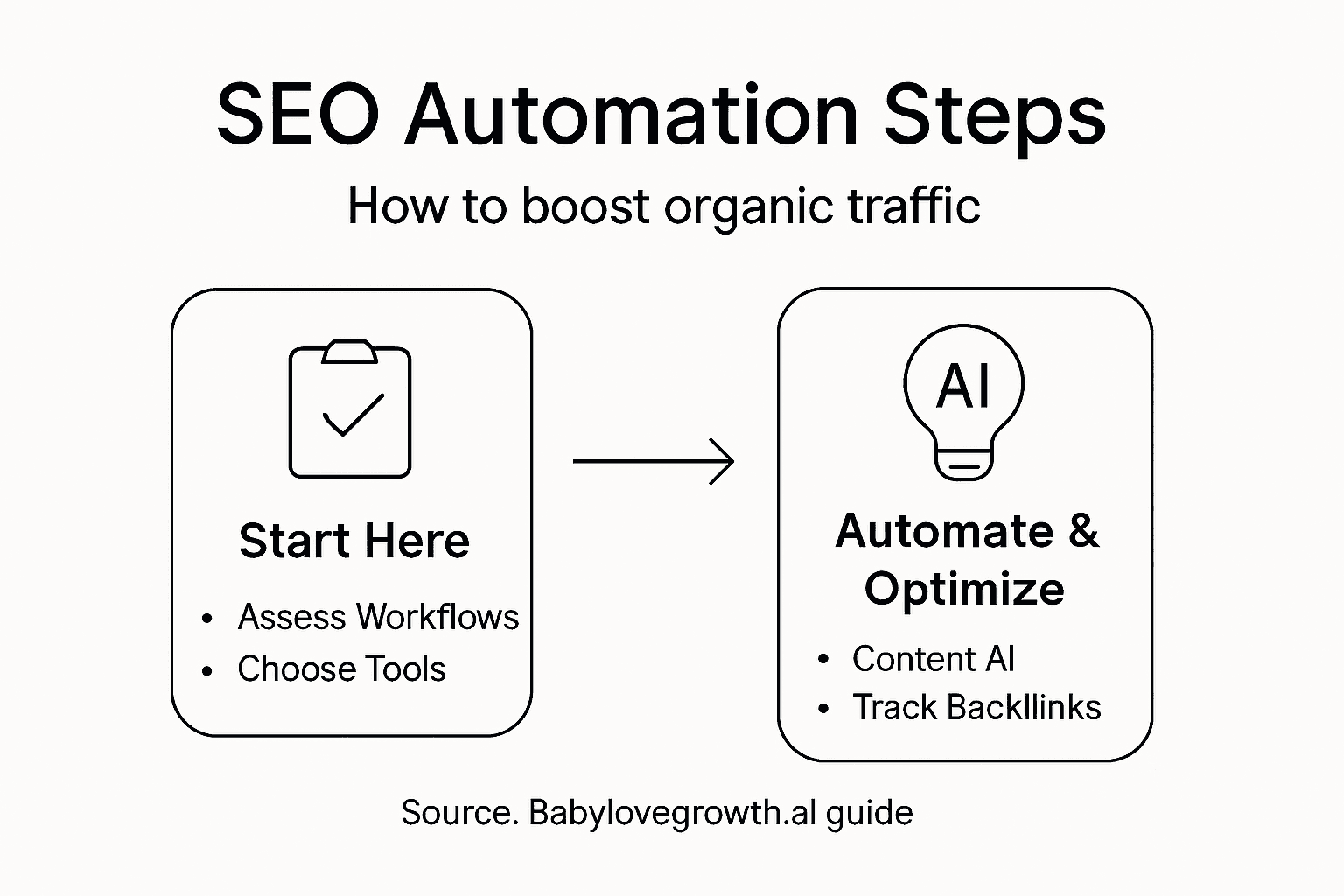
Use this table to compare key benefits of different SEO automation tools:
| Tool Type | Best For | Example Business Benefit |
|---|---|---|
| CMS-integrated plugins | Unified content optimization | Faster sitewide improvements |
| Dedicated analytics tools | Deep performance tracking | Early issue detection |
| AI content assistants | Scalable, high-quality copywriting | Enhanced content velocity |
| Link monitoring systems | Backlink management | Reduced risk of toxic links |
Pro tip: Schedule overlapping tool trials to comprehensively compare automation capabilities and identify the most seamless solution for your specific SEO needs.
Step 3: Configure AI-Driven Content Generation
Configuring AI-driven content generation is a strategic approach to creating high-quality, search-optimized content that resonates with both human readers and AI search algorithms. Your objective is to leverage advanced generative technologies to produce authoritative, semantically rich content that maximizes organic visibility.
Begin by understanding generative engine optimization strategies that enhance content retrievability. This involves structuring your content to align with AI search model requirements, focusing on semantic depth and authoritative signaling. Key configuration steps include:
- Implementing clear, hierarchical content structures
- Embedding expert-level topical insights
- Ensuring semantic coherence and depth
- Integrating E-E-A-T (Experience, Expertise, Authoritativeness, Trustworthiness) signals
- Optimizing for retrieval-augmented generation systems
Develop a comprehensive content strategy that goes beyond traditional keyword stuffing. AI-driven content generation requires a nuanced approach that prioritizes meaningful, context-rich information. Focus on creating content that demonstrates genuine expertise and provides comprehensive coverage of your chosen topics.
Successful AI content generation is not about volume, but about creating semantically intelligent and authoritative content that genuinely serves user intent.
Experiment with different AI writing tools, carefully reviewing and refining their output to maintain high-quality standards. Continuously train your AI models by providing feedback and manually editing generated content to improve accuracy and relevance.
Pro tip: Develop a custom prompt library that includes specific instructions about your brand voice, target audience, and content quality expectations to consistently generate more precise AI-generated content.
Step 4: Automate Backlink Acquisition and Tracking
Automate backlink acquisition and tracking to systematically improve your website's search engine authority and organic visibility. By implementing sophisticated automation strategies, you can build a robust link profile that enhances your digital marketing performance without consuming excessive manual resources.
Start by leveraging automated backlink monitoring tools that provide comprehensive link tracking and management capabilities. These advanced systems help you maintain a high-quality backlink profile by continuously analyzing link status, authority metrics, and potential risks. Key automation strategies include:
- Integrating link-building network platforms
- Setting up automatic toxic link detection
- Monitoring domain authority changes
- Tracking link acquisition rates
- Generating comprehensive backlink reports
Develop a strategic link acquisition approach that focuses on obtaining contextual, high-quality backlinks from relevant websites. Automated systems can help you identify potential linking opportunities, track link performance, and maintain a diverse and natural backlink profile that search engines value.
Effective backlink automation transforms link building from a manual, time-consuming task into a streamlined, data-driven strategy.
Configure your tracking tools to provide real-time alerts about significant changes in your backlink landscape. This proactive approach allows you to quickly respond to potential link quality issues and continuously optimize your link-building efforts.
Pro tip: Implement a rotating backlink strategy that diversifies your link sources across multiple unique domains and IP addresses to maintain a natural and penalty-resistant link profile.
Step 5: Monitor Results and Optimize Continuously
Continuous monitoring and optimization represent the strategic heartbeat of your automated SEO workflow, transforming raw data into actionable insights that drive organic growth. Your ultimate goal is to create a dynamic, responsive system that consistently adapts and improves your digital marketing performance.
Leverage Python-powered SEO monitoring scripts to extract comprehensive performance data and identify optimization opportunities. These automated analysis tools provide real-time insights into critical SEO metrics, enabling precise and timely strategic adjustments. Key monitoring components include:
- Tracking keyword ranking fluctuations
- Analyzing on-page SEO factors
- Detecting broken links and redirects
- Measuring page load performance
- Monitoring competitor digital strategies
Develop a systematic optimization framework that transforms monitoring data into strategic actions. By continuously analyzing performance metrics, you can proactively identify trends, address potential issues, and refine your SEO approach before they impact your organic visibility.
Effective SEO optimization is not a destination, but a continuous journey of incremental improvements and strategic adaptations.
Implement a regular review cycle where you assess performance data, validate hypotheses, and make targeted optimizations. Focus on understanding the underlying patterns and correlations in your SEO metrics to make informed, data-driven decisions.
Pro tip: Create automated dashboards that aggregate key performance indicators, enabling quick visual assessments and rapid strategic pivots based on real-time SEO intelligence.
Unlock Effortless SEO Automation with Babylovegrowth.ai
Automating SEO tasks can feel overwhelming when trying to manage keyword research, content generation, backlink tracking, and performance monitoring all at once. The challenge is clear: repetitive manual workflows slow progress and create bottlenecks that stunt organic traffic growth. This article highlights how AI-powered automation and strategic tool integration are essential to solving these pain points and driving superior results.
At Babylovegrowth.ai, we understand the critical need for seamless SEO automation tailored for modern AI-driven search platforms like ChatGPT and Google. Our platform removes complexity by providing daily SEO-optimized articles, automated publishing, and intelligent backlink acquisition. This all-in-one approach leverages advanced AI to boost your website’s visibility while eliminating time-consuming manual tasks. Experience how our AI visibility tracking and autopilot system keep your SEO efforts on track and continuously optimized.
Ready to transform your SEO workflow and maximize organic traffic effortlessly Explore how Babylovegrowth.ai can automate your content creation, backlink building, and performance monitoring today. Take control of your SEO strategy with cutting-edge AI solutions designed to put your brand ahead in the evolving landscape of search engine algorithms. Visit Babylovegrowth.ai now to start your journey toward higher rankings and lasting online growth.
Frequently Asked Questions
How do I assess my current SEO workflows?
Start by mapping out each step of your SEO strategy, from keyword research to content creation. Document the time spent and tools used, and engage your team to identify bottlenecks, making this a collaborative effort.
What criteria should I use to select automation tools for SEO?
Focus on compatibility with your content management system, features like automated sitemap generation, and analytics capabilities. Prioritize tools that integrate well with your current processes to enhance efficiency and reduce manual efforts.
How can I configure AI-driven content generation for my SEO strategy?
Implement clear content structures and focus on creating semantically rich, authoritative content. Experiment with different AI writing tools and provide feedback on their output to improve quality and relevance over time.
What strategies should I use for automating backlink acquisition and tracking?
Utilize automated backlink monitoring tools to manage and track your link profile effectively. Set up alerts for significant changes and maintain a diverse link profile by targeting high-quality, relevant websites.
How often should I monitor and optimize my automated SEO tasks?
Establish a regular review cycle, ideally every month, to track performance metrics and address any issues. Consistently analyze data to identify trends and refine your SEO strategies for improved visibility.
What is the expected outcome of automating my SEO tasks?
By implementing automation in your SEO processes, you can increase efficiency, reduce manual labor, and ultimately achieve higher organic traffic. Aim to see measurable improvements in traffic and rankings within 30–60 days.
Recommended
Article generated by BabyLoveGrowthSmart SEO,
Faster Growth!
Most Read Articles
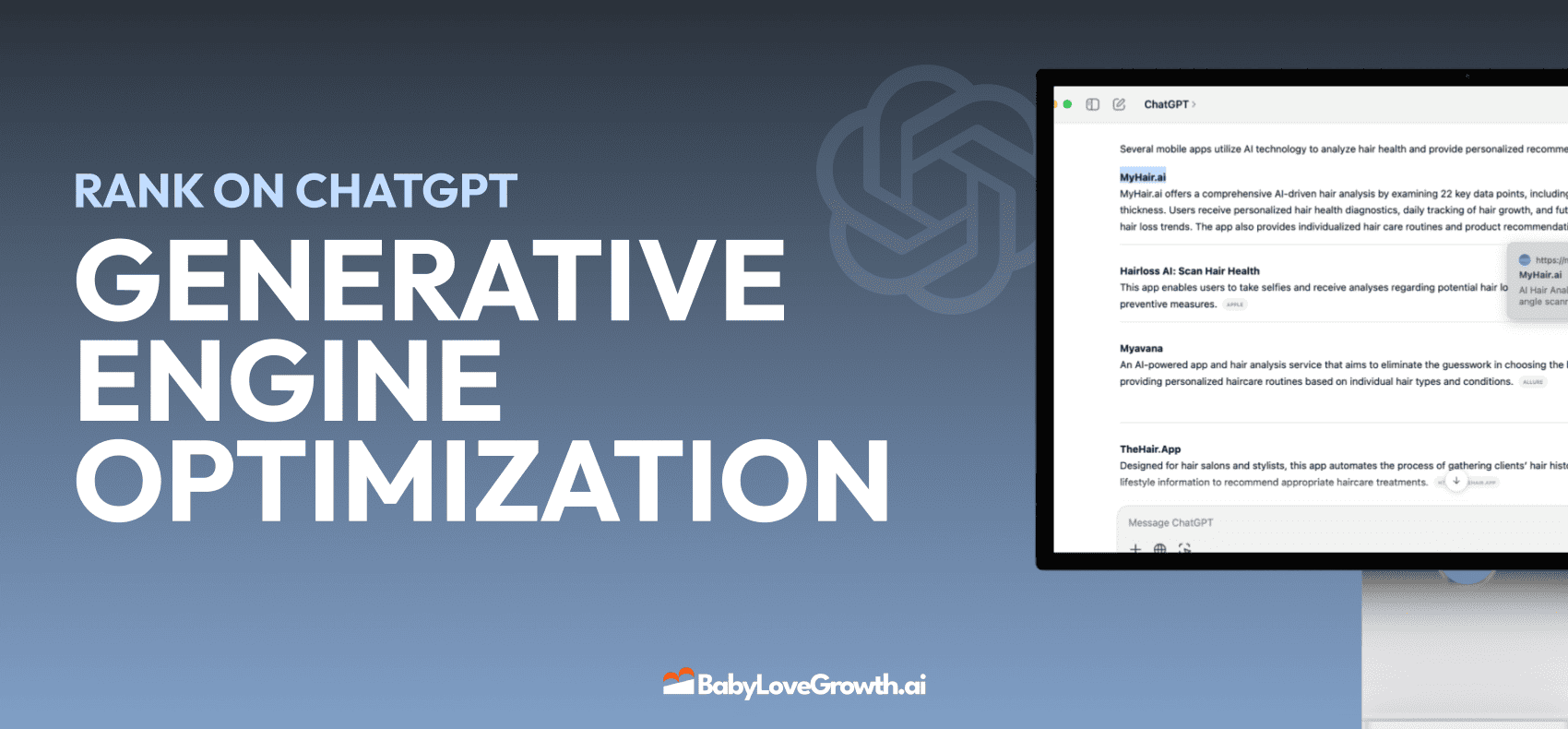
Generative Engine Optimization (GEO)
Learn how Generative Engine Optimization (GEO) helps your content rank in AI search engines like ChatGPT and Google AI. This comprehensive guide explains the differences between SEO and GEO, why it matters for your business, and practical steps to implement GEO strategies for better visibility in AI-generated responses.
DylenJan 18, 2025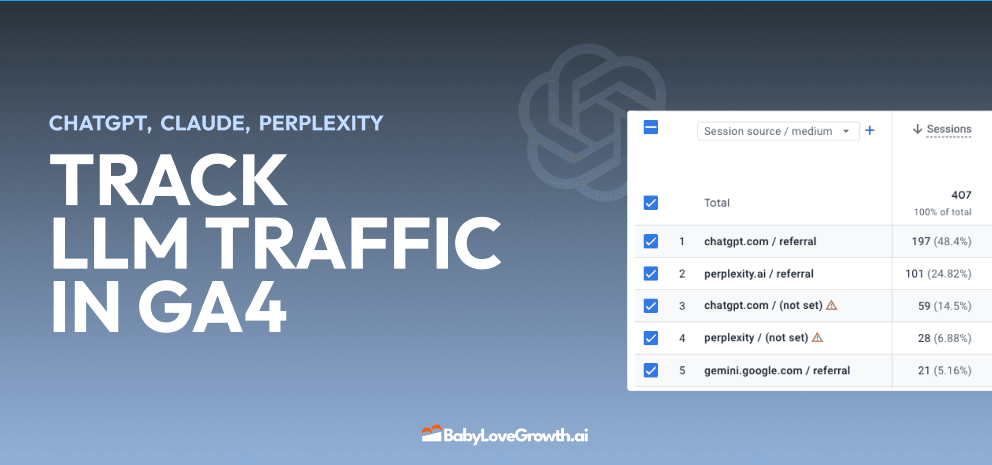
Track LLM Traffic in Google Analytics 4 (GA4)
Learn how to track and analyze traffic from AI sources like ChatGPT, Claude, Perplexity, and Google Gemini in Google Analytics 4. This step-by-step guide shows you how to set up custom filters to monitor AI-driven traffic and make data-driven decisions for your content strategy.
DylenMar 18, 2025
How to Humanize AI Text with Instructions
Learn practical techniques to make AI-generated content sound more natural and human. This guide covers active voice, direct addressing, concise writing, and other proven strategies to transform robotic text into engaging content.
DylenApril 7, 2025
Open AI Revenue and Statistics (2024)
Comprehensive analysis of OpenAI financial performance, user engagement, and market position in 2023. Discover key statistics including $20B valuation, $1B projected revenue, and 100M+ monthly active users.
DylenOctober 03, 2025