How Online Reviews Drive 35% More Revenue for SMBs in 2026


Online reviews aren't just feedback—they're your most powerful growth engine. 70-93% of consumers read reviews before making a purchase, and businesses that actively manage their online reputation see measurable revenue increases. Yet many small business owners still treat reviews as optional, missing out on conversions, credibility, and even better loan terms. This guide reveals how mastering online reviews unlocks real business growth, from boosting sales to improving your financial standing.
Table of Contents
- Why online reviews matter for every business
- The impact of reviews on revenue and growth
- Trust, credibility, and loan access: Beyond sales
- Managing the risk: Negative reviews and reputation pitfalls
- How to maximize the benefits: Review management strategies
- Grow your online presence with AI-powered content
- Frequently asked questions
Key Takeaways
| Point | Details |
|---|---|
| Reviews drive buying decisions | Most consumers check online reviews before purchasing, so reviews play a direct role in sales growth. |
| Revenue rises with higher ratings | A one-star increase can mean up to 9% more revenue for small businesses. |
| Responding builds trust | Timely replies to reviews recover trust and attract more positive feedback. |
| Even lenders check reviews | Positive online ratings can improve SBA loan offers and business financing terms. |
| Authenticity beats perfection | A mix of positive and addressed negative reviews builds credibility more than a perfect 5-star profile. |
Why online reviews matter for every business
Online reviews have replaced traditional word-of-mouth recommendations as the primary trust signal for consumers. When someone searches for your business, they're not just looking at your website—they're reading what your customers say about you. This shift fundamentally changes how businesses compete and grow.
Nearly every buyer now checks reviews before purchasing. 76% of consumers check local business reviews regularly, and this behavior spans all industries and demographics. Reviews influence both search engine rankings and consumer trust simultaneously, creating a compounding effect on visibility and conversions.
Businesses without reviews face an immediate disadvantage:
- Potential customers skip over listings with no reviews or low ratings
- Search engines rank businesses with active review profiles higher
- Competitors with strong review presence capture market share
- New customers assume businesses without reviews are either new or problematic
The impact on ecommerce SEO extends beyond rankings. Reviews provide fresh, user-generated content that search engines value, while also answering customer questions that might otherwise go to competitors. According to review statistics, businesses with robust review management systems consistently outperform those treating reviews as an afterthought.
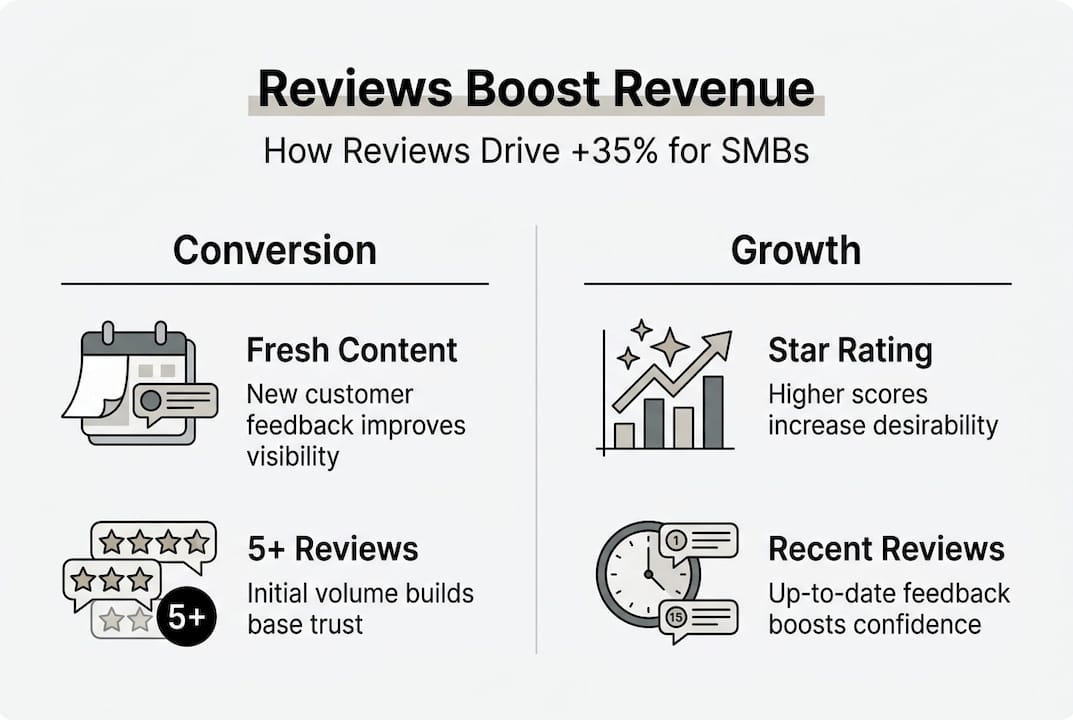
Your review profile serves as your digital storefront. Just as a physical store with dirty windows and poor lighting drives customers away, a neglected online reputation sends buyers to competitors. The businesses boosting e-commerce sales through reviews understand this connection and treat reputation management as a core business function.
The impact of reviews on revenue and growth
The financial impact of online reviews is measurable and substantial. A one-star rating increase leads to 5-9% revenue growth for small and medium businesses, with the effect amplified for businesses in competitive markets. This isn't correlation—it's direct causation backed by multiple academic studies.
Review volume matters as much as star ratings. Products with 5+ reviews are 270% more likely to be purchased compared to those without reviews. Customers need social proof before committing, and a handful of reviews provides that validation.
| Rating Increase | Revenue Impact | Conversion Lift |
|---|---|---|
| 0.5 stars | 2.5-4.5% | 15-20% |
| 1.0 star | 5-9% | 30-40% |
| 1.5 stars | 7.5-13.5% | 45-60% |
Recent reviews outperform older ones significantly. A business with 50 reviews from the past three months converts better than one with 200 reviews spread over three years. Customers want current information that reflects your business today, not your performance from years ago.

Pro Tip: Set quarterly targets for both star ratings and review count. Track your average rating, total reviews, and review velocity (reviews per month) as key performance indicators alongside traditional metrics like revenue and customer acquisition cost.
The businesses building a strong digital footprint understand that reviews compound over time. Each positive review makes the next sale easier, creating a flywheel effect. This is why using user feedback for SEO delivers long-term competitive advantages that paid advertising cannot match.
According to this review management study, businesses that systematically collect and respond to reviews see sustained growth rates 15-25% higher than competitors who don't. The effect persists across economic cycles because consumer trust remains valuable regardless of market conditions.
Trust, credibility, and loan access: Beyond sales
Online reviews influence more than customer purchasing decisions—they shape how lenders, partners, and suppliers view your business. Banks and financial institutions increasingly use online ratings when evaluating loan applications, recognizing that review profiles predict business stability and customer satisfaction.
Higher Yelp ratings improve SBA loan terms: a 0.5-star increase equals 25 basis points lower interest spread and 6% less collateral required. This translates to thousands of dollars in savings over a typical five-year business loan. Your online reputation literally affects your cost of capital.
| Stakeholder | Trust Signal | Business Impact |
|---|---|---|
| Customers | Purchase confidence | Higher conversion rates |
| Lenders | Business stability | Better loan terms |
| Partners | Reliability indicator | Stronger partnerships |
| Suppliers | Payment likelihood | Favorable credit terms |
The credibility boost extends to business development opportunities. When evaluating potential partners, companies check online reviews to assess reliability and customer satisfaction. A strong review profile opens doors that marketing materials alone cannot.
Building brand authority online requires consistent positive signals across multiple platforms. Reviews serve as third-party validation that your business delivers on its promises. This matters when competing for contracts, negotiating with suppliers, or seeking investment.
"Online reviews have become the universal trust currency for businesses. They influence not just sales, but every relationship your business forms." — Small Business Finance Research
The businesses successfully building online authority recognize that reviews create compound credibility effects. Each positive review strengthens your position with customers, lenders, and partners simultaneously. This loan outcomes study demonstrates how online reputation management delivers financial benefits beyond the obvious sales impact.
Managing the risk: Negative reviews and reputation pitfalls
Negative reviews represent both a threat and an opportunity. Unaddressed negative reviews deter 60-94% of consumers and cost businesses approximately 30 customers each. However, professionally handled negative reviews can actually increase trust and drive more positive reviews.
The cost of ignoring negative feedback compounds over time:
- Lost customers who never contact you directly
- Damaged search rankings as review scores drop
- Reduced conversion rates across all marketing channels
- Decreased employee morale when negative reviews go unaddressed
Timely, transparent responses to negative reviews restore trust and demonstrate accountability. Customers reading your responses see how you handle problems, which often matters more than the original complaint. A business that responds professionally to criticism appears more trustworthy than one with only perfect reviews.
Pro Tip: Create a response playbook that outlines how to handle different types of negative reviews. Designate a response lead who monitors reviews daily and has authority to resolve customer issues. Speed matters—respond within 24 hours whenever possible.
The businesses focused on review fraud prevention understand that authenticity matters more than perfection. Customers expect some negative reviews and become suspicious when they see none. A 4.2-4.5 star average with a mix of reviews converts better than a perfect 5.0 rating.
Using user feedback for SEO means treating negative reviews as valuable data. They reveal operational issues, product problems, and service gaps that you can fix. Addressing these issues improves your business while demonstrating responsiveness to customers.
"The businesses that thrive aren't those without negative reviews—they're the ones that respond professionally and use feedback to improve."
According to research on the impact of review responses, businesses that reply to negative reviews see 12-15% higher review volume overall. Customers are more likely to leave positive reviews when they see you're actively engaged with feedback.
How to maximize the benefits: Review management strategies
Effective review management requires systematic processes, not occasional attention. The businesses seeing the strongest results treat reviews as a core business function with dedicated resources and clear accountability.
Follow these steps for proactive review management:
- Set up monitoring systems that alert you immediately when new reviews appear across all platforms
- Create response templates for common scenarios while maintaining authentic, personalized replies
- Establish review solicitation processes that ask satisfied customers for feedback at optimal moments
- Track key metrics including average rating, review velocity, response rate, and sentiment trends
- Integrate review insights into product development, service improvements, and training programs
- Benchmark against competitors to understand your relative position and identify improvement opportunities
AI-powered monitoring tools can track reviews across dozens of platforms simultaneously, analyze sentiment, and prioritize responses based on urgency and impact. This automation ensures no review goes unnoticed while freeing your team to focus on meaningful customer interactions.
Avoid these common pitfalls:
- Soliciting only positive reviews (platforms penalize this behavior)
- Offering incentives for reviews (violates most platform policies)
- Responding defensively to criticism
- Ignoring positive reviews while only addressing negative ones
- Letting review management become inconsistent
Aim for 100+ reviews with a 4.2-4.5 star average to maximize conversions. This range signals quality while maintaining authenticity. Businesses in this sweet spot convert 15-20% better than those with perfect ratings.
Pro Tip: Businesses replying to over 25% of reviews earn 35% more revenue than those with lower response rates. Prioritize responding to all negative reviews and at least 30-40% of positive ones to maximize this effect.
The businesses using reviews for growth understand that review management isn't about controlling your reputation—it's about earning it through consistent delivery and responsive engagement. This approach to building brand authority creates sustainable competitive advantages.
Review benchmarks vary by industry, but the principles remain consistent: collect reviews systematically, respond professionally, and use feedback to improve your business continuously.
Grow your online presence with AI-powered content
Managing online reviews is just one piece of building a strong digital presence. While reviews drive immediate trust and conversions, consistent content creation amplifies your visibility and establishes long-term authority in your market.
Babylove Growth combines AI-powered content generation with strategic SEO to help businesses scale their online presence without the traditional time and cost barriers. Our platform creates high-quality, optimized articles that rank on Google and ChatGPT, driving organic traffic that complements your review management efforts.
We provide a 30-day personalized content plan tailored to your business, complete with automated article creation and a backlinks exchange ecosystem that accelerates your domain authority. This integrated approach means your positive reviews appear alongside authoritative content, creating a comprehensive digital presence that converts visitors into customers. Start your free trial today and see how AI-driven content strategy transforms your organic growth trajectory.
Frequently asked questions
How many reviews should my business aim for?
Aim for at least 100 reviews with a rating between 4.2 and 4.5 stars to maximize customer conversions and credibility. This range signals quality while maintaining authenticity that customers trust.
Do negative reviews always hurt sales?
Not when addressed professionally. Responding to negative reviews increases trust and drives more reviews overall, but unaddressed negatives can deter up to 94% of potential customers.
Can online reviews really influence business loan terms?
Yes. Higher Yelp ratings improve SBA loan terms—a 0.5-star increase equals 25 basis points lower interest spread and 6% less collateral required, saving thousands over typical loan terms.
How should I handle fake or review bombing incidents?
Promptly flag suspicious reviews with platform support, respond transparently to legitimate concerns, and use verification tools to maintain trust. 30-55% of reviews face suspicion, making authentication processes essential.
Does responding to reviews actually increase my sales?
Absolutely. Businesses replying to more than 25% of reviews earn up to 35% more revenue than those with lower response rates, as engagement signals commitment to customer satisfaction.
Recommended
Smart SEO,
Faster Growth!
Most Read Articles
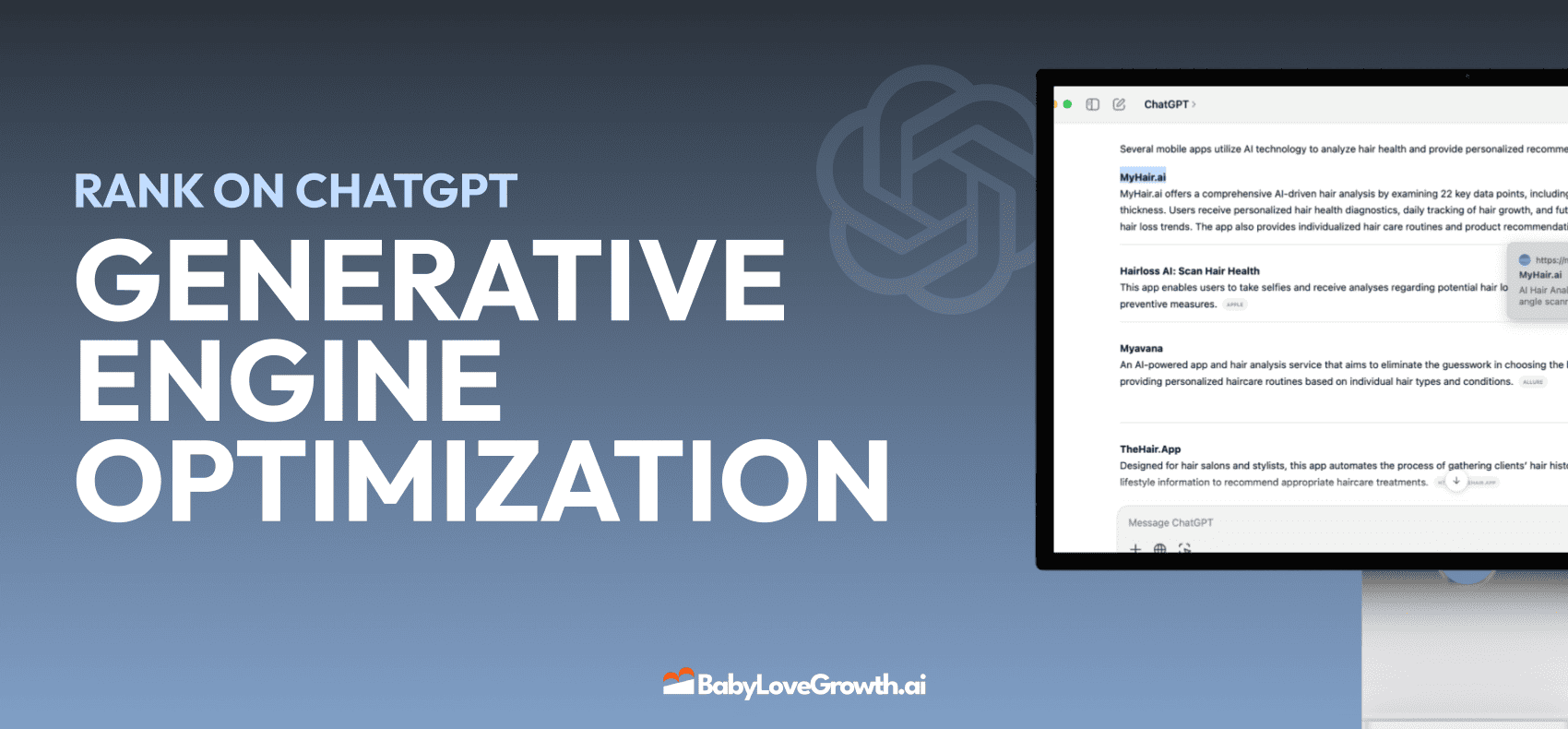
Generative Engine Optimization (GEO)
Learn how Generative Engine Optimization (GEO) helps your content rank in AI search engines like ChatGPT and Google AI. This comprehensive guide explains the differences between SEO and GEO, why it matters for your business, and practical steps to implement GEO strategies for better visibility in AI-generated responses.
DylenJan 18, 2025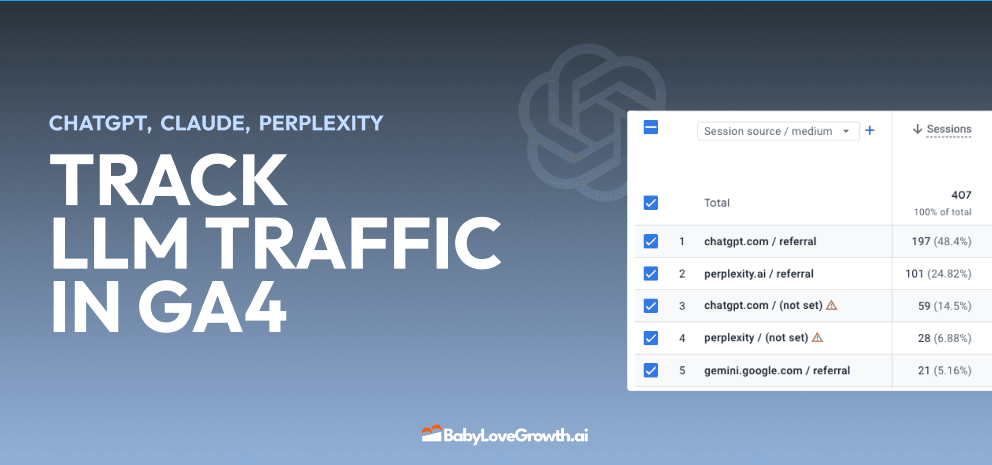
Track LLM Traffic in Google Analytics 4 (GA4)
Learn how to track and analyze traffic from AI sources like ChatGPT, Claude, Perplexity, and Google Gemini in Google Analytics 4. This step-by-step guide shows you how to set up custom filters to monitor AI-driven traffic and make data-driven decisions for your content strategy.
DylenMar 18, 2025
How to Humanize AI Text with Instructions
Learn practical techniques to make AI-generated content sound more natural and human. This guide covers active voice, direct addressing, concise writing, and other proven strategies to transform robotic text into engaging content.
DylenApril 7, 2025
Open AI Revenue and Statistics (2024)
Comprehensive analysis of OpenAI financial performance, user engagement, and market position in 2023. Discover key statistics including $20B valuation, $1B projected revenue, and 100M+ monthly active users.
DylenOctober 03, 2025