7 Essential Content Marketing Tips for Agency Growth


Trying to get consistent results from your content marketing can feel overwhelming if you do not have a proven roadmap. Agencies often find their digital efforts scattered, lacking the clear structure needed to drive real growth. When you miss these building blocks, every campaign becomes a guessing game instead of a targeted strategy.
There are clear steps you can use to pull your content together and create measurable impact. Backed by research, these methods focus on powerful actions like setting goals, selecting keywords, and optimizing performance. You will find the practical tools to connect with your target audience and achieve your business objectives.
Get ready to uncover specific ways that leading agencies deliver quality, visibility, and authority through content. Each strategy ahead offers direct steps to transform your process and spark lasting results.
Table of Contents
- Set Clear Goals For Content Campaigns
- Perform In-Depth Keyword Research
- Create Quality Content Consistently
- Use Structured Data Markup For SEO
- Build Effective Internal And External Links
- Leverage AI Tools For Content Automation
- Track Performance And Optimize Strategies
Quick Summary
| Key Message | Explanation |
|---|---|
| 1. Set Specific Content Goals | Establish measurable objectives aligned with broader business goals to ensure purposeful content creation. |
| 2. Conduct Thorough Keyword Research | Understand audience search behavior through systematic analysis to improve content visibility and relevance. |
| 3. Maintain Consistent Quality in Content | Deliver high-quality content regularly to engage audiences and enhance brand authority in the market. |
| 4. Utilize Structured Data Markup | Implement structured data to improve how search engines interpret content, boosting visibility and click-through rates. |
| 5. Regularly Track Performance Metrics | Systematically monitor key metrics to analyze content effectiveness and refine strategies for continuous improvement. |
1. Set Clear Goals for Content Campaigns
Establishing precise content marketing goals is the strategic foundation for transforming your agency's digital presence. Without clear objectives, your content becomes a scattered collection of disconnected efforts instead of a purposeful roadmap for growth.
When developing content goals, focus on creating specific measurable outcomes that align directly with your agency's broader business objectives. This approach ensures every piece of content serves a deliberate purpose and contributes to tangible results.
- Increase organic website traffic by specific percentage
- Generate qualified leads within target industry segments
- Improve engagement rates on key marketing channels
- Build brand authority through thought leadership content
- Drive conversions through strategic content positioning
Content goals transform random marketing activities into a structured, intentional growth strategy.
To effectively set content goals, start by analyzing your current performance metrics and identifying gaps. Developing a strategic content calendar helps agencies map out precise objectives that can be tracked and optimized over time.
Successful goal setting requires understanding your target audience's needs and aligning content precisely with their pain points. This means diving deep into audience research, analyzing search intent, and crafting content that directly addresses specific challenges.
Agencies should establish key performance indicators (KPIs) that provide clear benchmarks for measuring content success. These might include metrics like website traffic, engagement rates, lead generation numbers, and conversion percentages.
Pro tip: Conduct quarterly content goal reviews to ensure your strategy remains adaptive and responsive to changing market dynamics.
2. Perform In-Depth Keyword Research
Keyword research is the strategic foundation that transforms your content from invisible noise to targeted communication. Understanding which terms your target audience actually searches for can dramatically improve your content's visibility and engagement.
Effective keyword research goes beyond simple guesswork. It requires a systematic approach that combines data-driven insights with deep understanding of audience intent. Strategic keyword selection involves multiple critical components:
- Analyzing search volume for potential keywords
- Understanding user search intent
- Identifying long-tail keyword opportunities
- Evaluating keyword difficulty and competition
- Mapping keywords to specific content stages
Keyword research is not about finding words. It's about discovering your audience's language.
Agencies must leverage multiple research tools to uncover comprehensive keyword insights. This means exploring beyond traditional search engines and examining platforms like academic databases, industry forums, and social media discussions.
The most effective keyword strategies consider both high-volume search terms and niche-specific long-tail keywords. These precise phrases often have lower competition and higher conversion potential, allowing your content to target specific audience segments more effectively.
When conducting keyword research, focus on understanding the context behind search queries. Look for patterns in how your target audience describes their challenges, needs, and desired solutions.
Pro tip: Continuously update your keyword research quarterly to stay aligned with evolving industry trends and audience search behaviors.
3. Create Quality Content Consistently
Creating high-quality content is the cornerstone of successful digital marketing strategies. Consistency transforms content from a sporadic effort into a powerful engine of audience engagement and brand growth.
High-quality content drives meaningful audience interaction by delivering precise value and actionable insights. This requires a strategic approach that goes beyond surface-level information.Key elements of consistent, high-quality content include:
- Maintaining a predictable publishing schedule
- Delivering in-depth research and original insights
- Addressing specific audience pain points
- Ensuring content reflects current industry trends
- Presenting information with clarity and precision
Consistency is not about volume. It's about delivering meaningful value every single time.
Successful content creation demands a systematic workflow that balances creativity with strategic planning. This means developing a robust content framework that includes thorough research, meticulous editing, and continuous performance analysis.
Agencies should focus on creating content that goes beyond generic information. Dive deep into topics, provide unique perspectives, and offer solutions that genuinely help your target audience solve their most pressing challenges.
To maintain quality, implement a rigorous content review process. This involves multiple stages of research, drafting, expert review, and optimization before publication.
Pro tip: Develop a content repository with pre-researched topics and insights to maintain consistent quality during high-pressure periods.
4. Use Structured Data Markup for SEO
Structured data markup is the secret weapon that transforms how search engines understand and display your content. By providing explicit context about your web pages, you can dramatically improve your visibility and click-through rates.
Structured data helps search engines interpret content by adding technical context to your web pages. Think of it as a translator that explains your content's meaning directly to search algorithms.Key benefits of implementing structured data include:
- Enhanced search result appearances
- Increased visibility in search results
- Improved click-through rates
- More accurate content indexing
- Potential for rich result features
Structured data turns basic search results into informative, eye-catching displays.
Agencies should focus on implementing structured data using formats like JSON-LD. This approach allows you to embed machine-readable information that explains the context and meaning of your content without changing the visible page layout.
The most effective structured data strategies involve mapping your content to specific schema types. This means identifying the precise type of content you're publishing—whether it's an article, event, product, or service—and using the appropriate markup.
Implementation requires careful attention to detail. Validate your structured data using official tools to ensure compliance with search engine guidelines and maximize potential SEO benefits.
Pro tip: Create a systematic process for implementing structured data across all content types to ensure consistent and comprehensive markup.
5. Build Effective Internal and External Links
Link building is the strategic backbone of content marketing that connects your digital ecosystem and signals authority to search engines. A well-crafted linking strategy transforms your content from isolated pieces into a powerful interconnected network.
External links enhance content credibility by creating strategic connections across digital platforms. These links serve as critical signals that validate your content's reliability and depth of research.Key principles of effective link building include:
- Select highly relevant authoritative sources
- Balance internal and external link distribution
- Maintain link quality over quantity
- Regularly audit and update existing links
- Create contextually meaningful link connections
Quality links are the bridges that connect your content to the broader digital landscape.
Agencies should develop a systematic approach to link building that prioritizes user experience and search engine optimization. This means carefully selecting external references that provide genuine value to your audience while demonstrating comprehensive research.
Internal linking requires an equally strategic approach. Create a logical content hierarchy that guides readers through related topics on your website. This not only improves user navigation but also helps search engines understand the relationships between different content pieces.
When incorporating external links, focus on websites with established authority in your industry. Academic publications, government resources, and recognized industry leaders make excellent linking targets.
Pro tip: Develop a quarterly link audit process to remove broken links and refresh your content's external reference ecosystem.
6. Leverage AI Tools for Content Automation
Artificial intelligence is transforming content marketing from a manual, time-consuming process into a streamlined, intelligent workflow. AI tools offer unprecedented capabilities for creating, optimizing, and scaling content production with remarkable efficiency.
AI tools enhance content generation by providing powerful automation and optimization strategies. These technologies are not about replacing human creativity but augmenting and accelerating content development processes.Key advantages of AI content automation include:
- Rapid content generation and ideation
- Enhanced research and summarization capabilities
- Improved content personalization
- Consistent quality and tone maintenance
- Efficient workflow optimization
AI is not a replacement for human creativity. It's an amplifier of human potential.
Agencies should approach AI tools strategically, viewing them as collaborative intelligence platforms that support and elevate human expertise. This means using AI for initial drafting, research compilation, and content structuring while maintaining human oversight and creative direction.
Implementing AI tools requires careful selection and understanding of their specific capabilities. Look for platforms that offer robust features like natural language processing, content analysis, and seamless integration with existing marketing workflows.
Critical considerations include maintaining ethical standards, ensuring content originality, and continuously refining AI-generated materials through human expertise and editorial review.
Pro tip: Develop a systematic workflow that combines AI-generated drafts with human creativity and domain expertise for optimal content results.
7. Track Performance and Optimize Strategies
Performance tracking is the strategic compass that guides content marketing efforts from guesswork to precision. By systematically measuring and analyzing key metrics, agencies can transform raw data into actionable insights that drive continuous improvement.
Performance tracking enables strategic optimization through comprehensive measurement and analysis. This approach transforms content marketing from a reactive process into a proactive, data-driven strategy.Critical performance metrics to track include:
- Organic traffic growth rates
- Engagement metrics like time on page
- Conversion rates across different content types
- Social media interaction and sharing
- Lead generation and quality
Data transforms assumptions into strategic decisions.
Agencies should develop a multidimensional performance tracking framework that goes beyond surface-level metrics. This means creating a holistic view of content performance that connects individual content pieces to broader business objectives.
Effective performance optimization requires continuous monitoring and agile adaptation. Set up regular review cycles where you analyze performance data, identify trends, and make strategic adjustments to your content approach.
Utilize advanced analytics tools that provide deep insights into content performance. Look for platforms that offer granular tracking, predictive analytics, and comprehensive reporting capabilities.
Pro tip: Establish a quarterly performance review process that combines quantitative metrics with qualitative insights to drive strategic content refinement.
Below is a comprehensive table summarizing the main strategies and best practices for effective content campaigns as discussed in the article.
| Strategy | Description | Key Considerations |
|---|---|---|
| Clear Goal Setting | Define precise, measurable objectives that align with broader business goals. | Use performance metrics and KPIs to track effectiveness and adjust strategies as needed. |
| In-Depth Keyword Research | Incorporate strategic identification of keywords to increase visibility and engagement. | Analyze search intent and prioritize long-tail keywords for specific audience targeting. |
| Consistent Content Creation | Create valuable and original content regularly to engage audiences effectively. | Maintain a publishing schedule and implement a rigorous quality review process. |
| Structured Data Markup Implementation | Enhance search engine comprehension and visibility using structured data. | Use JSON-LD format and validate data for SEO compliance. |
| Link-Building Strategies | Develop a balance of internal and external links to enhance content authority. | Prioritize relevant, authoritative sources and regularly audit existing links. |
| Leveraging AI Tools | Utilize AI for efficient content generation, optimization, and scaling. | Maintain ethical standards and combine AI processes with human creativity for best results. |
| Performance Tracking and Optimization | Monitor and analyze key metrics to refine content strategies. | Utilize advanced analytics tools and conduct periodic reviews for continuous improvement. |
Boost Your Agency Growth with AI-Powered Content Solutions
If you are looking to conquer the challenges of setting clear content goals, performing in-depth keyword research, and creating high-quality consistent content then Babylovegrowth.ai offers the perfect solution. Our platform automates SEO and content marketing tasks so you can focus on strategic growth instead of manual workflows. With features like daily SEO articles, 30-day content plans, automatic structured data markup, and intelligent link building you will transform your agency’s content from scattered efforts into a powerful growth engine.
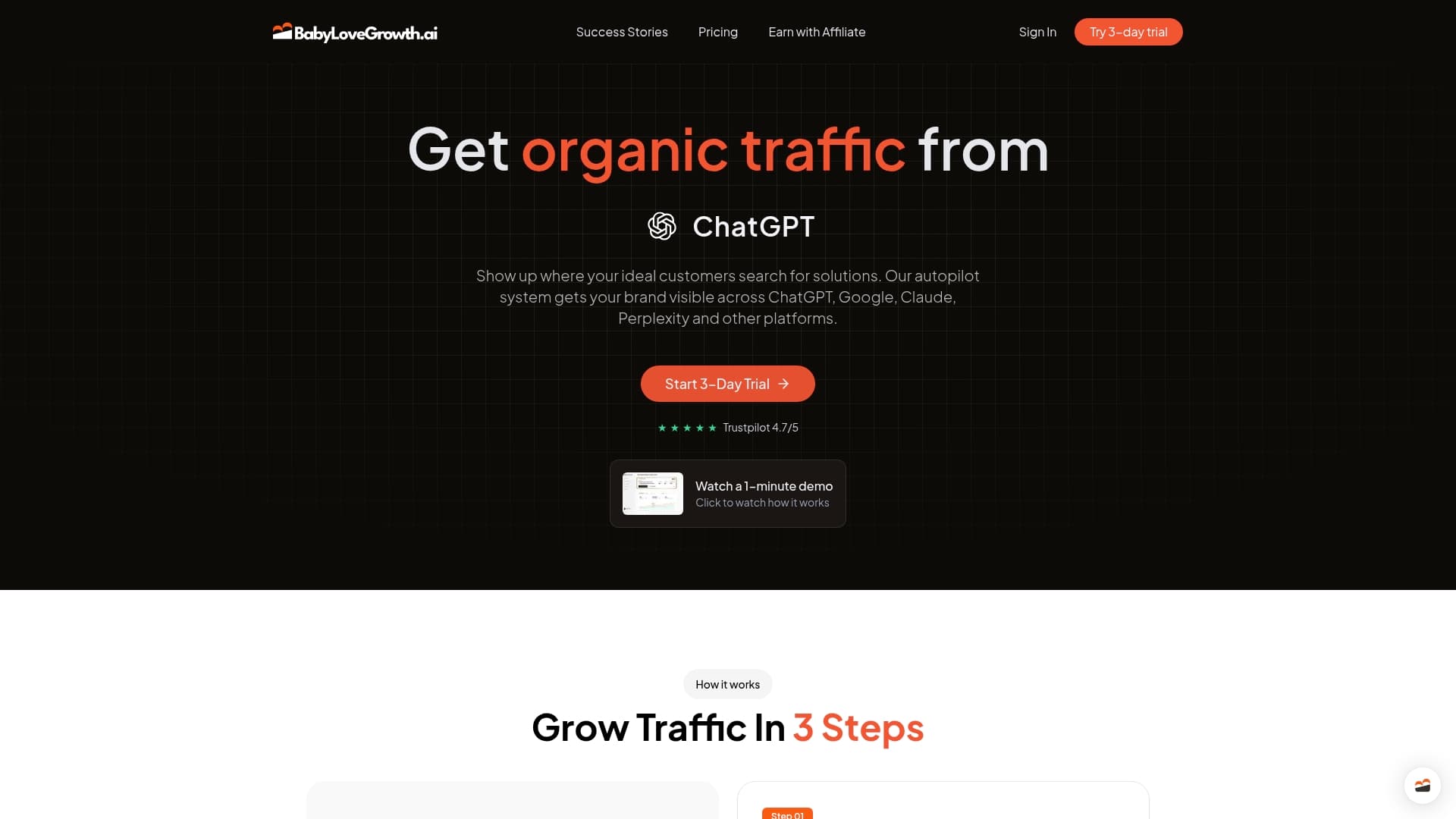
Take control of your agency’s digital presence right now. Experience how Babylovegrowth.ai combines AI-driven keyword discovery, content planning, and backlink building to deliver measurable results. Discover more about our approach to strategic content calendars and automated SEO tools that propel your brand visibility across Google and AI search engines. Don’t wait to elevate your content marketing strategy—start optimizing for long-term success today.
Frequently Asked Questions
How can I set clear content marketing goals for my agency?
To set clear content marketing goals, start by identifying specific, measurable outcomes that align with your agency's overall business objectives. Focus on metrics like increasing organic traffic by 20% or generating a specific number of qualified leads within the next quarter.
What key performance indicators should I track for content success?
Key performance indicators (KPIs) to track include organic traffic growth rates, engagement metrics like time spent on page, and conversion rates across different content types. Regularly analyze these metrics to assess the effectiveness of your content strategy and make necessary adjustments.
How often should I perform keyword research for my content?
You should perform keyword research at least quarterly to stay up-to-date with evolving industry trends and audience search behaviors. This will help ensure your content remains relevant and effectively targets your audience's needs.
What are the best practices for creating high-quality content?
Best practices for creating high-quality content include maintaining a consistent publishing schedule, providing in-depth research, and addressing your audience's specific pain points. Strive to deliver meaningful value with each piece of content to enhance audience engagement.
How can I effectively implement structured data markup for SEO?
To implement structured data markup effectively, choose formats like JSON-LD and ensure you are mapping your content correctly to specific schema types. Validate your structured data with official tools to maximize its potential SEO benefits and improve search result visibility.
What steps should I take to track performance and optimize my content strategy?
To track performance and optimize your content strategy, establish a multi-dimensional performance tracking framework. Set up regular review cycles to analyze performance data, identify trends, and adjust your content as needed to enhance results.