Content freshness: The key to 72% better SEO rankings


Refreshed content improves SEO rankings in 72% of cases, yet most marketing teams still treat publishing as a one-and-done task. They write a piece, hit publish, and move on, assuming the work is finished. It is not. Search engines continuously re-evaluate content, and what ranked well six months ago may be quietly slipping today. Understanding content freshness is no longer optional for digital marketers or business owners who want sustained organic growth. In this guide, you will learn exactly what freshness means in modern SEO, how it drives rankings and brand visibility, and how to build a practical update process that compounds results over time.
Table of Contents
- What is content freshness and why does it matter?
- How content freshness impacts SEO and brand visibility
- Content freshness vs. AI-generated content: Why originality still wins
- Practical steps to audit and refresh your content
- Why content freshness is your SEO secret weapon in 2026 and what most experts miss
- Drive your SEO success with AI-powered content tools
- Frequently asked questions
Key Takeaways
| Point | Details |
|---|---|
| Freshness boosts SEO | Regularly updated content improves search rankings for most sites. |
| Originality trumps AI sameness | Unique, up-to-date information signals authority and differentiates your brand from AI-generated content. |
| Strategic audits drive results | Scheduled content reviews and updates offer a smarter path to sustained organic growth than just creating more content. |
| Intent matters | Updating content to match searcher needs is more impactful than superficial edits. |
What is content freshness and why does it matter?
Content freshness is not simply about publishing new articles. It refers to how recently and meaningfully your existing content has been updated relative to what searchers actually need right now. A page written in 2022 that still quotes 2021 statistics is stale, even if it was once your top performer. Search engines detect freshness through several signals: the date of last modification, the depth of changes made, how often a page earns new backlinks, and whether the content aligns with current search intent.
Here is where many marketers get it wrong. They assume that posting frequently is the same as maintaining freshness. It is not. Publishing ten thin articles a month does nothing for a high-value page that is slowly losing ground to competitors who are actively updating their content. Freshness is about quality of change, not volume of output.
Key freshness signals search engines evaluate include:
- Date of last meaningful content update
- Changes in on-page data, statistics, or examples
- New internal and external links added
- Shifts in how users engage with the page (time on page, bounce rate)
- Recency of backlinks pointing to the page
As freshness signals differentiate your brand and align with Google's E-E-A-T framework (Experience, Expertise, Authoritativeness, Trustworthiness), stale content becomes a credibility risk, not just a ranking risk. Google's algorithms now treat outdated information as a trust signal failure, especially in competitive niches like finance, health, and technology.
"Content that reflects current knowledge and genuine expertise is what both users and algorithms reward. Freshness is not a trick. It is a trust signal."
Understanding the content refresh SEO impact is the first step. The second is recognizing that freshness directly feeds into search ranking and growth in ways that new content alone cannot replicate.
How content freshness impacts SEO and brand visibility
Google prioritizes up-to-date content for ranking competitive topics, and this preference has intensified as AI-driven search engines like Perplexity and ChatGPT pull from the most current, authoritative sources available. If your content is outdated, it is not just ranking lower. It is being excluded from AI-generated answers entirely.

Here is a snapshot of what freshness improvements typically deliver for small and medium-sized businesses:
| Metric | Before content refresh | After content refresh |
|---|---|---|
| Organic traffic | Declining or flat | 20-40% increase within 90 days |
| Average ranking position | Page 2 or lower | Page 1 movement for target keywords |
| Click-through rate | Below industry average | Improved with updated meta data |
| Backlink acquisition | Stagnant | New links from citing updated data |
| Brand authority signals | Weakening | Strengthened through E-E-A-T alignment |
The mechanics work like this. When Googlebot crawls your site and detects substantial changes, it re-indexes the page and re-evaluates its relevance. Pages that show a pattern of regular, meaningful updates get crawled more frequently, which means ranking changes happen faster. This is a compounding advantage.
Here is a simple process for prioritizing which pages to refresh first:
- Identify pages that ranked in positions 5 to 20 and have since dropped
- Flag any page with statistics or data older than 18 months
- Check which pages have lost backlinks or seen engagement drop
- Prioritize pages in high-competition topics where competitors have recently updated
- Review pages tied to seasonal trends or industry changes
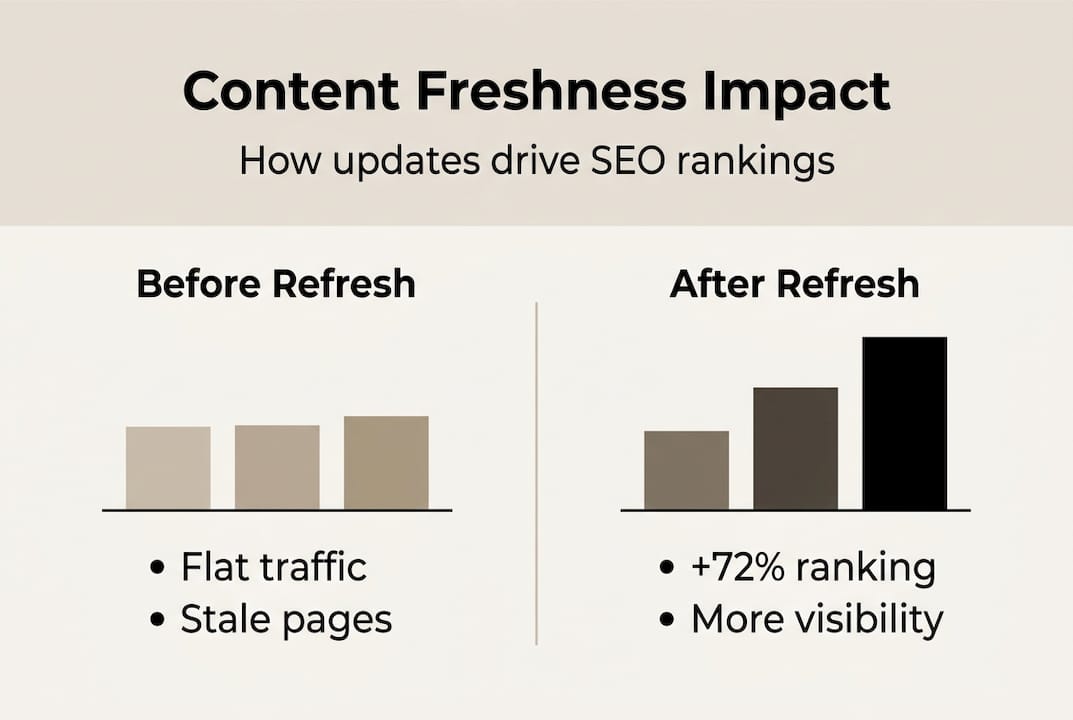
Stat to know: Updating content improves rankings in 72% of cases, making content refreshes one of the highest-ROI activities in any content strategy. Understanding how ranking drives growth helps you frame this not as maintenance, but as a growth investment. Pair this with a solid content marketing checklist and you have a repeatable system.
Content freshness vs. AI-generated content: Why originality still wins
The rise of AI content tools has created a paradox. Marketers can now produce more content faster than ever, but the web is flooded with articles that say the same things in slightly different words. Search engines are getting better at detecting this sameness, and they are not rewarding it.
Original intent and value set fresh content apart from AI-driven duplication. This is not an argument against using AI in your workflow. It is an argument for using it strategically, with human insight layered on top.
| Feature | Original fresh content | AI-generated content (unedited) |
|---|---|---|
| E-E-A-T alignment | Strong, reflects real expertise | Weak, lacks firsthand experience |
| SEO outcome | Sustained ranking improvements | Short-term gains, rapid decay |
| Reader trust | High, builds brand authority | Low, often generic and forgettable |
| Update value | Meaningful, signals active expertise | Often cosmetic, algorithms detect this |
| Longevity | Compounds over time | Depreciates quickly |
The practical implication is clear. A single well-researched article that you update quarterly with new data, fresh examples, and refined insights will outperform ten AI-generated articles that nobody links to or shares. Quality signals accumulate. Volume without quality does not.
Pro Tip: When refreshing content, add a short "Updated [Month, Year]" note near the top of the page. This signals freshness to both readers and crawlers, and it builds trust by showing you actively maintain your content.
If you want to understand the full picture of AI-generated content SEO impact, it is worth studying marketing content examples that have succeeded through originality rather than volume. The brands winning in search right now are those that understand AI's role in content strategy as an assistant, not a replacement for genuine expertise.
Practical steps to audit and refresh your content
Knowing freshness matters is one thing. Building a system to maintain it is another. The good news is that a content freshness audit does not require expensive tools or a large team. It requires a clear process and consistent execution.
Signs your content is going stale:
- Organic traffic to a page has dropped more than 20% over 60 days
- The page references statistics or events from more than two years ago
- Competitors have published more detailed or current versions of the same topic
- The page no longer matches what users are actually searching for
- Engagement metrics like time on page or scroll depth are declining
Regular content audits are key to maintaining SEO performance, and here is how to run one effectively:
- Export your top 50 pages by traffic from Google Analytics or Search Console
- Check ranking trends for each page over the past 6 months
- Review content age and flag any page with data older than 18 months
- Assess search intent alignment by searching your target keyword and comparing your page to current top results
- Score each page on a simple scale: needs minor update, needs major update, or needs full rewrite
- Schedule updates based on priority, starting with pages closest to page 1 that have slipped
Pro Tip: Build a recurring content review cycle into your quarterly marketing calendar. Set measurable KPIs for each refresh, such as a 15% traffic increase or a 3-position ranking improvement within 90 days. This turns content maintenance from a vague task into a trackable growth activity.
Avoid the most common pitfall: making only cosmetic edits. Changing a few words or updating a date without adding genuine new value will not move the needle. Algorithms are sophisticated enough to detect whether a change is meaningful. Explore content update strategies and your updated content marketing checklist to build a refresh process that actually delivers results.
Why content freshness is your SEO secret weapon in 2026 and what most experts miss
Here is the uncomfortable truth most content marketing advice skips over. The brands dominating search in 2026 are not the ones publishing the most. They are the ones maintaining the best. There is a massive difference.
Most marketing teams are wired to create. New blog posts, new campaigns, new formats. But the value of content refresh is that it compounds existing authority rather than starting from zero every time. A page with 200 backlinks that you update thoughtfully will almost always outperform a brand-new page on the same topic.
In the AI era, originality and intent-alignment differentiate brands in ways that volume never can. Search engines are increasingly rewarding iterative improvement over sheer output. This is a structural shift, not a temporary trend.
The teams that will build the strongest content moats in 2026 are those treating their existing content library as a living asset, not a static archive. If you are still measuring content success purely by publish volume, you are optimizing for the wrong metric. Start measuring the percentage of your top pages that have been meaningfully updated in the last 90 days. That number will tell you more about your future rankings than your monthly publish count ever will.
Drive your SEO success with AI-powered content tools
Maintaining content freshness at scale is genuinely difficult without the right systems in place. Manual audits take time, and most teams do not have a clear process for identifying which pages need attention and when.

Babylovegrowth.ai is built specifically for this challenge. The platform's AI SEO audit tool surfaces content gaps and freshness issues across your entire site, so you always know where to focus your update efforts. Pair that with AI keyword discovery to find the exact search intent your refreshed content should target, and you have a complete system for turning content maintenance into a consistent growth driver. Stop guessing which pages need work. Let the data tell you.
Frequently asked questions
How often should I update my website's content for SEO?
Aim for quarterly reviews across your full content library, but update high-impact pages immediately any time information changes, rankings drop, or a competitor publishes a stronger version. Regular audits are what separate growing brands from stagnant ones.
What types of content updates matter most for Google rankings?
Major updates that add current data, address shifts in user intent, or introduce genuinely new insights move rankings far more than minor wording changes. Originality and intent-alignment are the key differentiators Google's algorithms now reward.
Does AI-generated content affect the need for freshness?
Yes, significantly. Unique, regularly updated content stands out sharply against the wave of AI-generated sameness flooding the web, and originality differentiates brands in ways that maintain long-term authority and trust with both users and search engines.
Recommended
Smart SEO,
Faster Growth!
Most Read Articles
Generative Engine Optimization (GEO)
Learn how Generative Engine Optimization (GEO) helps your content rank in AI search engines like ChatGPT and Google AI. This comprehensive guide explains the differences between SEO and GEO, why it matters for your business, and practical steps to implement GEO strategies for better visibility in AI-generated responses.
DylenJan 18, 2025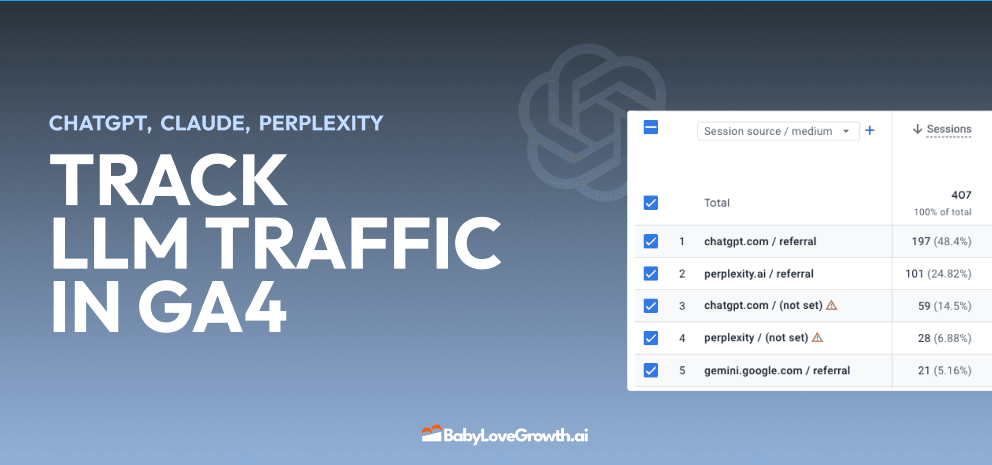
Track LLM Traffic in Google Analytics 4 (GA4)
Learn how to track and analyze traffic from AI sources like ChatGPT, Claude, Perplexity, and Google Gemini in Google Analytics 4. This step-by-step guide shows you how to set up custom filters to monitor AI-driven traffic and make data-driven decisions for your content strategy.
DylenMar 18, 2025
How to Humanize AI Text with Instructions
Learn practical techniques to make AI-generated content sound more natural and human. This guide covers active voice, direct addressing, concise writing, and other proven strategies to transform robotic text into engaging content.
DylenApril 7, 2025
Open AI Revenue and Statistics (2024)
Comprehensive analysis of OpenAI financial performance, user engagement, and market position in 2023. Discover key statistics including $20B valuation, $1B projected revenue, and 100M+ monthly active users.
DylenOctober 03, 2025